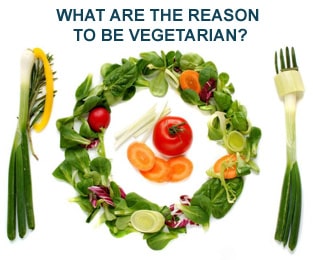
What are the Reason to be Vegetarian?
Overview
- While fish can serve as the main dietary supply of the long-chain omega-3s eicosapentaenoic acid and docosahexaenoic acid, that have been shown to be essential in supporting brain health, low intake of eicosapentaenoic acid and docosahexaenoic acid in vegetarians doesn’t adversely affect mood, based on a new research (Nutr J. 2010;9:26. DOI:10.1186/1475-2891-9-26).
- A study team from Arizona State University conducted a cross-sectional study to check the mood of vegetarians who never eat fish with the mood of healthy omnivorous adults.
- An overall total of 138 healthy Seventh Day Adventist adults residing in Arizona and California (64 vegetarians and 79 non-vegetarians) were enrolled in the study and completed a health history questionnaire, food frequency questionnaire and 2 psychometric tests, the Depression Anxiety Stress Scale and also the Profile of Mood States..
- Vegetarians had significantly lower mean intakes of eicosapentaenoic acid, docosahexaenoic acid and also the omega-6 arachidonic acid; they had higher intakes of the omega-3 alpha-linolenic acid and the omega-6 linoleic acid.
- “Seed oils are the richest sources of α-linolenic acid, notably those of rapeseed (canola), soybeans, walnuts, flaxseed (Linseed oil), clary sage seeds, perilla, chia, and hemp.”
- However, the vegetarians also reported considerably less negative emotion than omnivores in psychometric tests. Mean total psychometric scores were positively associated with the mean intakes of eicosapentaenoic acid, docosahexaenoic acid and arachidonic acid, and inversely associated with alpha-linolenic acid and linolenic acid intake.
- The study team noted there is also the chance that vegetarians may make smarter dietary choices and could generally be healthier and happier.
- In a skillet or frying pan heat the oil and when hot, add garlic and zucchini. Raise heat and stir often to finish their cooking. They need to be golden and crispy outside and tender inside. Cook the pasta, drain and sauté in pan with zucchini, basil and yeast. Serve immediately.
- Zucchini contain fewer calories and also have no fat. However they are an excellent source of potassium, e vitamin, ascorbic acid, folate, lutein and zeaxanthin.
- Many of these nutrients are extremely sensitive to heat and to enjoy their benefits you need to look for a quick method to cook or even eat raw in salads.
- From the therapeutic perspective, zucchini have laxative, refreshing, anti-inflammatory, diuretic and detoxifying action.