Language:
         
 
About Us | Business Opportunities | Shipping & Return Policy | Resources
Secure Site View Cart google search for herbal  products
Herbal supplements

Herbs for Diabetes - Ayurvedic View of Diabetes

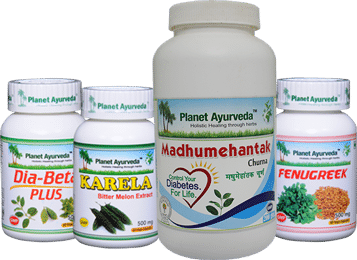
Madhu-Meh-Aantak Churna

Herbs for Diabetes and its complications

Madhu-Meh-Aantak Churna$ 22.95   |  Quantity : 200 gm    |   Buy Now!    |    Larger View

Scroll down to read about herbal remedies for Diabetes

Prameha (Diabetes)
and Ayurveda

The word Prameha is derived from the 'Miha sechane' which means watering. Pra means excess of urine in both frequency and volume. Prameha, thus, becomes self-explanatory and holds the twin meanings of "Prabhutha mutratha" or excessive urination and "Avilmutratha" or turbid urine.
HISTORICAL PERSPECTIVE
A chronological study of the Ayurvedic classics and the samgraha texts shows changing trends of emphasis on its study and practice. It is very interesting to note the prameha has been described eloquently and elaborately in Charak samhita chikistha sthana’s sixth chapter. In Shusurata samhita it is found in nidana sthana’s sixth chapter and in Chikitsha sthana’s 11th, 12th and 13th chapter. While Madava nidana describes it in its 33rd chapter, which is Prameha nidana.


GENETICAL PERSPECTIVE

Genetical view regarding prameha are clearly mentioned by Charaka and Shusurata samhita. They have given a specific word 'Beej dosha' i.e., which means a “defect in genes” if transliterated to English. Beej means seed and dosha means defect. Charaka has described anatomy of beej as below:
Beej = Semen or Shukra
Beej bhaga = Chromosome

Sushrutha has said that kshetra, ambu, beeja and ritu are the four factors involving genetic factor of any diseases, and these mean:

Kshetra =
Woman’s reproductive organs
Beej =
Sperm
Ambu =
Watery contents that gives nutrition to fetus
Ritu = Environment around the fertilized ovum or fetus

Also the physical and mental stages including dietary habits of pregnant lady can cause changes in the body of the offspring.

OJAS AND PRAMEHA
Ojas is essence of life, extract of all the dhatus (body tissue), which manifests in the form of bala (strength). Normally all the physical, psychic, sensory and motor functions are determined by ojas. The appearance of ojas is supposed to be like ghee (in purity and luster), taste is supposed to be like honey, and smell like fried paddy. In diabetes mellitus normal quantity of ojas in the body hampered in two ways:
i) By obstruction in vessels (Srotorodha)
ii) By degeneration of the body contents (Dhatukshaya)

ETIOLOGICAL FACTORS OF PRAMEHA

"Aashyasukham swapnasukham dadhinigramyoodkanuprasaa pyaamsi Navaaanpaanam gudvayikritam ch prameha hetu kapahakrich swaramn.

--
Inactivity
-- Excessive sleep
-- Excessive use of curd
-- Meat soup of the domestic, aquatic and marshy animals, and
-- New cereals and drinks
-- Products of gud or jaggery
-- All other kapha-promoting regimens

PURVARUPA (PROMODAL) SYMPTOMS OF PRAMEHA

They are as follows:

1. Prabhutavilamootrata (polyuria):
Swedawaha srotoavrodha causes increased urinary out put with turbidity

2. Madhuratava in mutra :
Glycosuria

3.Dantadiham mala sanchaya:
Due to ama, deposits are seen in mouth

4. Panipada daha :
Abundance of unutilized glucose in the blood. This causes disturbance in the equilibrium of dhatus and doshas in the body exposing body to further complications. It gives rise to padapani daha, which means burning sensation of feet and palm.

5.Chikkanta -
Stickiness.

 
6. Trishna (Thirst and Polydipsia) :
In the process of lypolysis, more water is utilized which results into activation of thirst center in the brain.

7. Swadasyata :
Sweetness is experienced in the mouth due to increase in the sugar level.

TYPES OF PRAMEHA

A) HETU BEDHAS (As per etiology)

1. Sahaja prameha :
Juvenile or congenital diabetes
2. Kulaja :
Familial
3. Apathyaja :
Due to improper dietary habits

B) DEHA PRAKRITI BEDHAS (As per features of the body)

1. Sthula pramehi :
Obese-related
2. Krisha pramehi :
Leanness-related

C) MUTRA VIKARA BHEDHAS (Various Types As per urinary abnormality)

1. Kaphaja :
Kapha causes pramehas by affecting medhas thus altering lipid metabolism), muscles and body fluid situated in urinary bladder. They are of ten types as:

-- UDAKAMEHA (Chronic nephritis, Diabetes insipidus) =  
Watery urine
-- ISKHUMEHA (Alimentary glycosuria) =  
Like sugar cane
-- SAANDRAMEHA (Phosphaturia) =  
Viscous urine
-- SAANDRAPRASAADMEHA =  Having solid precipitate
-- SUKLAMEHA (Chyleuria, albuminuria) =  
White
-- SUKRAMEHA (Spermaturia) =  
Urine with semen
-- SITAMEHA =  
Cold urine
-- SAINYAMEHA =  
Delayed and very slow impulse of urination
-- LALMEHA (Albuminaria) =
Saliva-like urine
-- SIKTAMEHA (Lithuria) =  
Urine with gravels

2. Pittaja : Pitta aggravated by hot things causes the same by affecting medas, muscles and body fluid situated in urinary bladder. They are of six types as :

-- KCHARAMEHA (Alkanuria) =
Urine like alkali
-- KAALAMEHA (Indikanuria) =
Black urine
-- NILAMEHA (Indikanuria) =
Blue urine
-- HARIDRAMEHA (Biluria) =
Turmeric-like urine
-- MANJISTHAMEHA (Urobilinuria) =
Urine is lighter
-- RAKTAMEHA (HAEMETURIA) =
Urine is deep red


3. Vataja :
Vayu, on relative diminution of other two doshas, draws on the dhatus in urinary bladder and thus causes Prameha. Prameha caused by vata and associated with pain has blackish or reddish urine. They are of four types as:
-- MAJJAMEHA (Albuminuria) = Urine with majja
-- OJOMEHA (Diabetes mellitus) =
Urine with ojas
-- VASAMEHA (Lipuria) =
Urine with vasa
-- HASTIMEHA (Prostatitis) =
Urine with lasika

PREVENTION

Proteins:
Intake of protein content should be normal i.e., 1gm/kg. In children it may be increased.

Fats:
Fats should be moderate; excessive intake of fats forbidden.

Carbohydrate:
Carbohydrate intake must be minimized in order to reduce blood sugar.

Calories:
Total calories should be adequate for the growing children and underweight persons. In obese patients it might be necessary to reduce calories.

Minerals:
Adequate amount should be supplied.

Vitamins:
Vitamin-B complex group should be taken to prevent and treat polyneuritis.

Drinks:
Sweet drinks and carbohydrate drinks should be avoided. Cakes, pastries, cream, dried and caned fruits, sweet pickles, and meats should be avoided.

Soups:
Thin vegetable soups supply fewer calories. So obese persons are encouraged to take large quantities which would fill up their stomach and give them a sense of satiety.

Green vegetables:
Diabetics should consume large amount of green vegetables, which are poor source of calories. Brinjals, spinach, and tomatoes can be consumed in plenty. Salads with lime or vinegar are useful.
Fruits:

Dried fruits and nuts should be avoided, and so should be bananas and mangoes. Orange and apples can be taken.

Desserts:
Sweets and ice cream or custard are not allowed.

Cooking media:
Ghee, oils, butter all are rich in calories so an obese diabetic is allowed only 1 teaspoonful per meal.

Tea and coffee:
Tea and coffee are permitted but milk and sugar should be regulated.

 MANAGING PRAMEHA OR DIABETES BY AYURVEDA
Managing pramahea through Ayurveda is a comprehensive therapeutic modality that yields best outcome when treatment is individualized. It involves extensive dietary modifications, lifestyle changes and use of regimen derived from herbs/ food supplements like Momordica charantia, Phaseolus vulgaris, Allium sativum, Allium cepa, Trigonella foenum graeceum, Syzigium jambolana, Murraya koenigii, Tinospora cordifolia, Emblica offcinalis, Gymnema sylvestre, Eugenia jambolana, Azadirachta indica, and Shilajitu, apart from yoga asanas.
a) Diet restrictions - Avoid foods that increase kapha dosha like potatoes, rice, sugar, fatty foods and avoiding alcohol.
b) Exercise - Regular physical exercise is a must for diabetics. Practising yogic asanas like 'Halasan', 'Paschimottanasan" are found effective.
c) Panchakarma Therapy - The greatest benefit of Panchakarma is that it reduces the insulin resistance in the tissues in diabetics which is the primary goal in treating the diabetes.
i.e., Ayurveda also addresses the diet modification by eliminating sugar and simple carbohydrates, and emphasizing complex carbohydrates. Protein is limited, as excessive intake can damage the kidneys. Fat is also limited because there is often a deficiency of pancreatic enzymes, making fat digestion difficult. Since many diabetics have autoantibodies, Panchakarma is typically used for this cleansing the same. This begins with herbal massages and an herbal steam sauna, followed by fasting to cleanse the body. This is followed by an herbal purge for the liver, pancreas, and spleen. Colon therapy is next, first to cleanse the digestive tract and then to reconstitute the system.


Madhu-Meh-Aantak ChurnaMadhu-Meh-Aantak Churna

Herbs for Diabetes and its complications

$ 22.95   |  Quantity : 200 gm    |   Buy Now!    |    Larger View


Madhumehantak Churna is a potent combination of rejuvenating herbs used in Ayurveda since 5000 B.C. They are most effective herbs for diabetes and its complications. These herbs act together in a synergistic manner and are effective in lowering the blood sugar levels naturally. Latest researches on Salacia oblonga and Pterocarpus proves their efficacy in controlling diabetes and prevention of complications. Vizaysaar bark is used in many countries now for making wooden “Miracle” tumbler/glass for keeping the water overnight and consuming early morning to keep the sugar level under control. This product is a combination of unique herbs to effectively control diabetes. The herbs Bitter gourd, Gymnema and Eugenia has their definite role in bringing the level of diabetes under control.

Herbs in Madhu-Meh-Aantak Churna: Madhumehantak is purely a herbal formulation without any chemicals added into it. The ingredients are frequently used in Ayurvedic system of medicine since 5,000 B.C. without any side effects.

Dosage

1 to 2 teaspoonful to tablespoonfuls twice daily, 1/2 hour before meals, either with plain water or with iced tea (Sugar free) or apple juice.

Ingredients:

S. No. Herb Used English Name Latin Name Quantity
1. Saptrangi Salacia Salacia oblonga 30 gm
2 Vizaysaar Kino Tree Pterocarpus marsupium 30 gm
3. Bilwa Patra Stone Apple Aegle marmelos 20 gm
4. Gurmaar Gymnema Gymnema sylvestrae 20 gm
5. Giloy Tinospora Tinospora cordifolia 20 gm
6. Daru haldi Barberry Berberis aristata 10 gm
7. Neem Patra Margosa Tree Azadirachta indica 10 gm
8. Methi Fenugreek T.foenum graecum 10 gm
9. Jamun Java Plum Eugenia jambolina 10 gm
10. Karela Bitter Gourd Momordica charantia 10 gm
11. Tulsi Holy Basil Ocimum sanctum 10 gm
12. Amla Indian Gooseberry Emblica officinalis 10 gm
13. Sadabahar Periwinkle Vinca rosea 10 gm
14. Babool Gum Arabic tree Acacia Arabica 10 gm

Click to Read an Article by Dr. Vikram Chauhan - MD (Ayruveda)
How these herbs are useful in Diabetes

Real Testimonials -

Dear Dr. Chauhan,

I am a diabetic with non-alcoholic fatty liver disease and, until a few weeks ago, liver enlargement. Because of this I had lost my appetite, I had nausea, a heavy sensation in my abdomen, skin rashes and multiple allergies. Because of my liver problems my blood sugar levels went higher and my diabetes was more difficult to control. When I started taking Madhumehantak Churna for diabetes and Yakrit Plihantak Churna for liver ailments I noticed an immediate relief. After one month I had reduced my insulin requirements a great deal. My liver was no longer sligthly enlarged. My appetite was back and my nausea gone. My skin rashes cleared up completely and I have had no allergies since. My liver is not as fatty anymore. I do not dare to be without these products. They may have saved my life even.

Thank you very much-"40 year old female user in Sweden."

   
Similar Herbal Supplements
Tulsi Capsules Curcumin Capsules Karela Saar
Tulsi Products, Herbal Products of Tulsi, Tulsi based Medicines, Basil, Holy Basil based Products, Basil Vegetarian Capsules, Tulsi Capsules Curcumin Capsules, Curcumin Manufacturers, Curcumin KARELA SAAR (Pure Bitter gourd + Amla Juice)
 

Natural Herbs For Stress

Home Remedies for Stress


Featured Supplement

Garcinia based Products, Garcinia capsules, Garcinia Products, Garcinia Based Herbal ProductsGarcinia

Garcinia capsules are useful in all forms of obesity.

$31.00 (2 Bottles)

Buy Now


Newsletter Subscription
Tell A Friend
Herbal Tablets
All of our products are
100 % Vegetarian, Natural Dietary Supplements and Purely Ayurvedic Products

Check our Ancient Herbal tablet based products


Herbal Products for Pets
Herbal Products for Your Pets

Ask Our Experts


drvikram@planetayurveda.com


Herbal Products
Select Your Disease
Herbal Tablets
Natural Herbs A to Z
DISCLAIMER : The information presented at this page is not intended to replace the services of a health practitioner licensed in the diagnosis or treatment of illness or disease. Any application of the material in this text is at the reader's discretion and sole responsibility. If you have a persistent medical condition or your symptomsare severe please consult a physician. Statements on this web site about health conditions and remedies have not been evaluated by the U.S. Food and Drug Administration
Home | About Ayurveda | Herbal Products | Pure Herb Powders | Herbal Tablets| Home Remedies | Nutrients A to Z | Site Map | Contact Us | Resources
Copyright © 2008. www.planetayurveda.com. All Rights Reserved.
Web Media Managed By : Pramarsh