


All About Sjogren’s Syndrome and its Ayurvedic Treatment; Venus Williams also Struggled with it
Abstract
Sjögren’s disease is a chronic, progressive systemic autoimmune disorder classically characterised by immune-mediated destruction of the exocrine glands, leading to mucosal dryness, primarily keratoconjunctivitis sicca (dry eyes) and xerostomia (dry mouth). Pathologically, the condition is driven by focal lymphocytic infiltration—predominantly CD4+ T-lymphocytes and hyperactive B-lymphocytes—into the salivary, lacrimal, and other exocrine tissues, severely inhibiting glandular secretion. However, contemporary molecular immunology and epidemiological research establish that Sjögren’s disease is not a localised exocrinopathy; it is an aggressive, multi-organ systemic illness. The disease predominantly affects women, typically presenting between the ages of 40 and 55. It manifests either as an isolated clinical entity (Primary Sjögren’s) or secondary to established rheumatic conditions such as Rheumatoid Arthritis (RA) or Systemic Lupus Erythematosus (SLE). Beyond secondary complications like dental caries, oral candidiasis, and visual impairment, advanced clinical data demonstrate that the syndrome systemically targets the thyroid-metabolic axis, invades the central and peripheral nervous systems, and carries a profound 44-fold increased risk for the development of Non-Hodgkin lymphoma. Prominent public figures, including multi-grand slam tennis champion Venus Williams, have publicly documented their long-term struggles with the profound fatigue and systemic manifestations of this disease.
Introduction
Sjögren’s disease represents a highly complex paradigm within modern clinical rheumatology and immunology. While historically categorised alongside benign localised dry syndromes, it affects between 0.5% and 1.0% of the global population, making it a widespread autoimmune reality. Translated into clinical numbers, between 400,000 and 3.1 million individuals in the United States alone navigate this diagnosis. The clinical demographic peaks sharply in females, with a female-to-male ratio of roughly 9:1, typically crystallising during the perimenopausal years of 45 to 55. Although early medical literature suggested that Sjögren’s syndrome does not alter overall life expectancy, modern long-term cohort studies completely challenge this view. When the hyper-reactive immune apparatus migrates from exocrine tissues to deeper visceral organs, it induces systemic inflammatory changes within connective tissues, joints, muscles, and vital vascular systems. These extra-glandular manifestations transition the disease from a manageable discomfort to a high-severity systemic condition. Timely, aggressive diagnostic identification and specialised multi-centric treatment are imperative to halt irreversible parenchymal tissue damage, control systemic vasculitis, and mitigate the risk of haematological malignancy.
Signs And Symptoms: The Clinical Spectrum
The clinical presentation of Sjögren’s disease spans from localised exocrine failure to profound, widespread systemic tissue degradation.
Exocrine/Sicca Manifestations
- Xerostomia: Severe dryness of the oral cavity due to salivary hypofunction. This leads to an inability to swallow dry food without fluids, burning sensations, loss of taste, and rapid acceleration of tooth decay and periodontal disease.
- Keratoconjunctivitis Sicca: Chronic destruction of lacrimal tissue reduces tear volume and alters the tear film composition. Patients report a constant gritty, sandy sensation in the eyes, hyperemia (redness), photophobia, and filamentary keratitis.
- Dermal and Mucosal Sicca: Widespread dry skin (xeroderma), dry throat causing a chronic non-productive cough, dry nasal passages leading to epistaxis (nosebleeds), and dry vagina resulting in severe dyspareunia and recurrent localised infections.
Systemic And Extra-Glandular Manifestations
- Profound Autoimmune Fatigue: A debilitating, central fatigue that does not resolve with rest, severely disrupting daily activities and physical performance.
- Musculoskeletal Pain: Symmetric, non-erosive polyarthritis, migratory arthralgia, and diffuse inflammatory muscle pain (myalgia).
- Gastrointestinal and Metabolic Disturbances: Chronic heartburn, acid indigestion, and severe trouble swallowing (dysphagia) secondary to oesophageal mucosal dryness and dysmotility.
- Cutaneous Vasculitis: Palpable purpura, skin rashes, and livedo reticularis, indicating active underlying small-vessel inflammation.
Disease Classification: Primary Vs. Secondary
Sjögren’s disease is diagnostically stratified into two distinct clinical classifications:
1. Primary Sjögren’s Disease
This designation applies when the systemic autoimmune process develops in isolation, completely independent of any other pre-existing connective tissue or rheumatic disorder. Patients manifest exocrine dysfunction alongside systemic, neurological, or haematological complications directly driven by the primary Sjögren’s immunological blueprint.
2. Secondary Sjögren’s Disease
This classification occurs when the syndrome emerges as a secondary complication in a patient already diagnosed with an established autoimmune condition. The most common triggers include:
- Rheumatoid Arthritis (RA): Where chronic joint synovitis matches with severe secondary sicca symptoms.
- Systemic Lupus Erythematosus (SLE): Creating a complex cross-over of multi-organ autoantibody attacks.
- Psoriatic Arthritis and Systemic Sclerosis (Scleroderma): Where dermal and microvascular changes are compounded by exocrine tissue infiltration.
Aetiology And Molecular Triggers
The precise initiation pathway of Sjögren’s disease involves a complex interaction between genetic predisposition, environmental triggers, and profound epigenetic dysregulation. The primary driver is a loss of immunological tolerance, leading the body’s defence mechanisms to mistakenly attack its own epithelial structures.
The Viral Trigger Hypothesis
Extensive biomedical research indicates that chronic, low-grade viral infections act as primary environmental triggers in genetically vulnerable individuals. These viruses exhibit a strong tropism for epithelial and glandular tissues, integrating into host cellular structures and initiating a sustained immune response:
- Hepatitis C Virus (HCV): Known to drive sialadenitis that clinically and histologically mimics primary Sjögren’s structures.
- Cytomegalovirus (CMV) and Epstein-Barr Virus (EBV): These herpes viruses establish lifelong latency within salivary gland epithelial cells. Periodic reactivation triggers a continuous release of pro-inflammatory cytokines, driving chronic lymphocytic homing.
Genetic Susceptibility
The underlying genetic architecture is highly linked to specific Human Leukocyte Antigen (HLA) classes, particularly HLA-DR3 and HLA-DQ2 alleles. These genetic variations alter how antigens are presented to T-cell receptors, leading to an overactivation of the Interferon (IFN) Pathway (the "Interferon Signature"). This sustained upregulation continuously drives B-cell maturation and autoantibody production.
Risk Factors
- Biological Sex: Females represent over 90% of all confirmed clinical cases, highlighting a powerful link to estrogen signalling and X chromosome genetic dosing.
- Chronological Age: While the disease can manifest across all life spans, including pediatric and young adult cohorts, it peaks in mature adults aged 40 to 55 and above.
- Co-existing Autoimmunity: A prior diagnosis of Hashimoto’s thyroiditis, Rheumatoid Arthritis, Celiac disease, or Lupus dramatically increases the probability of developing secondary Sjögren’s.
Advanced Scientific And Research-Based Insights
Recent clinical trials, molecular tracking, and epidemiological research have overturned old assumptions about Sjögren’s disease, confirming three profound systemic impacts.
1. The Thyroid-Sjögren’s Nexus And Widespread Metabolic Failure
High-authority clinical data show a definitive pathogenetic overlap between Sjögren’s disease and autoimmune thyroiditis (Hashimoto’s thyroiditis). These two conditions share standard HLA alleles and show a mirrored epithelial targeting mechanism. Because of this nexus, a massive cohort of Sjögren’s patients concurrently present with thyroid autoantibodies (Anti-TPO and Anti-TG).
When the autoimmune cascade targets the thyroid gland, the body’s central metabolic thermostat is compromised. Thyroid hormone imbalances directly impair cellular metabolism, mitochondrial efficiency, and protein synthesis across every single organ system in the body. This thyroid involvement creates a compounding systemic effect, severely magnifying the profound fatigue, dyslipidemia, endothelial dysfunction, and tissue degeneration already initiated by the primary autoimmune process.
2. Central And Peripheral Nervous System Invasion
Neurological manifestations are a well-documented, severe component of systemic Sjögren’s syndrome, affecting a substantial percentage of patients rather than being an occasional complication:
- Central Nervous System (CNS) Manifestations: Lymphocytic vasculitis and focal demyelinating lesions within the brain and spinal cord can mirror the clinical presentation of multiple sclerosis. Patients frequently suffer from transverse myelitis, optic neuritis, severe cognitive dysfunction (often referred to as "brain fog"), and focal motor or sensory deficits.
- Peripheral Nervous System (PNS) Manifestations: Small fiber neuropathy is remarkably prevalent, causing burning pain, paresthesia, and autonomic dysfunction, such as Postural Orthostatic Tachycardia Syndrome (POTS). Cranial neuropathies, particularly trigeminal neuralgia, also occur due to direct inflammatory infiltration of cranial nerve roots.
3. Haematological Transformation: The 44-Fold Lymphoma Risk
The most critical evidence of the systemic and lymphoproliferative nature of Sjögren’s syndrome is the malignant transformation of hyperactive B-lymphocytes. Due to chronic, unremitting B-cell activation, highly elevated levels of B-cell activating factor (BAFF), and continuous clonal expansion within inflamed tissues, patients with Sjögren’s syndrome carry up to a 44-fold increased risk of developing Non-Hodgkin Lymphoma—specifically Mucosa-Associated Lymphoid Tissue (MALT) lymphoma—compared to the general population. This stark, research-backed statistic underscores the absolute necessity of classifying and managing Sjögren’s as a systemic, malignant-potential lymphoproliferative disorder rather than a benign condition of localised dryness.
Modern Biomedical Diagnosis
A definitive diagnosis of Sjögren’s disease requires a multi-parametric approach combining objective ocular testing, serological analysis, and histopathological evaluation.
- Serological Autoantibody Profile: Blood panels screen for specific autoantibodies, notably Anti-SSA/Ro and Anti-SSB/La, alongside Rheumatoid Factor (RF) and elevated Antinuclear Antibodies (ANA).
- Schirmer’s Ocular Test: Measures tear production by placing a specialised filter paper strip inside the lower eyelid. A result of less than 5 millimetres in 5 minutes confirms objective lacrimal hypofunction.
- Ocular Surface Staining: Utilises Lissamine Green or Fluorescein dyes to objectively score corneal and conjunctival epithelial damage.
- Unstimulated Whole Salivary Flow: Measures the baseline production of saliva over a set timeframe to quantify salivary gland hypofunction.
- Minor Salivary Gland Biopsy (Gold Standard): Excision of minor salivary glands from the lower inner lip. Histopathological evaluation revealing a focus score of greater than or equal to 1 (defined as an aggregate of 50 or more lymphocytes per 4 square millimetres of glandular tissue) provides definitive, undeniable diagnostic validation.
The Case Study Of Venus Williams
The systemic reality of Sjögren’s disease is vividly illustrated by the medical journey of multi-Grand Slam tennis champion Venus Williams. Diagnosed in 2011 after battling unexplained, debilitating symptoms since 2004, her presentation highlights the classic challenges of clinical detection. For seven years, Williams experienced unexplained shortness of breath, profound fatigue, and muscle pain that directly compromised her elite athletic performance. Her recovery and ongoing management combine conventional medical treatments with lifestyle modifications. She famously adopted a strict, nutrient-dense raw vegan diet to systematically suppress systemic inflammatory pathways, balance cellular energy, and support her immune system. Her journey demonstrates that managing an advanced autoimmune disorder like Sjögren’s requires a comprehensive approach linking clinical therapies with targeted dietary and lifestyle interventions.

Ayurvedic Perspective And Pathogenesis (Samprapti)
In classical Ayurveda, autoimmune disorders are understood through the foundational lens of Tridosha Vaishamya (homeostatic imbalance), Rakta Dhatu Vitiation (blood tissue toxicity), and the systematic generation of Ama (toxic, antigenic metabolic byproducts). Sjögren’s disease cannot be categorised as a simple localised dry condition (Rukshata); it is a deep-seated, systemic metabolic and immunological crisis involving Dhatugata Vata (Vata dosha deeply entrenched in vital tissues) and progressive Ojakshaya (depletion of the vital immune essence).
The Role Of Agnimandya And Ama
The root of this pathology lies in Agnimandya—a systemic dampening of the central metabolic fire (Jatharagni) and tissue-specific cellular fires (Dhatvagni). When Agni fails, digested food undergoes fermentation, creating a toxic, sticky substance known as Ama. Ama acts as a systemic endotoxin, circulating through the channels (Srotas) and lodging within deep tissues. Because of its highly antigenic nature, the presence of Ama triggers a continuous, auto-aggressive reaction where the body’s defensive energies end up attacking its own cellular structures.
Dosha Infiltration And Manifestation
- Vata Dosha (Prana, Samana, and Vyana): The primary driver of the dryness and degeneration. The extreme upregulation of Vata’s Ruksha (dry), Khara (rough), and Laghu (light) qualities systematically dries up Kledaka Kapha in the digestive tract, Bodhaka Kapha in the mouth, and Tarpaka Kapha within the central nervous system. Vyana Vata, which controls systemic circulation, spreads this destructive dryness across every organ.
- Pitta Dosha (Tikshna and Ushna): The sharp and hot qualities of Pitta manifest as inflammatory Paka (autoimmune destruction). This explains the burning eyes, skin rashes, chronic heartburn, and the destructive inflammation observed in both the thyroid gland and small blood vessels (vasculitis).
- Rakta Dhatu Vitiation: In Ayurvedic haematology, Rakta Dhatu is intimately tied to immune expression. When vitiated Vata and Pitta merge with Rakta, they induce systemic inflammatory disorders, tissue hyper-reactivity, and cellular transformations.
Deep Penetration Into Majja Dhatu And Ojakshaya
As the disease progresses without intervention, the Vata-Ama complex penetrates into the Majja Dhatu (bone marrow and nervous tissue). This deep tissue invasion explains the profound neurological manifestations, including neuropathic pain, brain fog, and cranial nerve root inflammation. Ultimately, this chronic tissue destruction causes Ojakshaya. Ojas is the ultimate, refined essence of all seven bodily tissues, governing immune stability, physical strength, and cellular intelligence. When Ojas is depleted or displaced (Visramsa), the body loses its capacity to distinguish self from non-self, culminating in systemic multi-organ autoimmune destruction and the high-risk cellular mutations observed in advanced lymphoproliferative disorders like lymphoma.
Herbal Formulations for Sjogren Syndrome by Planet Ayurveda
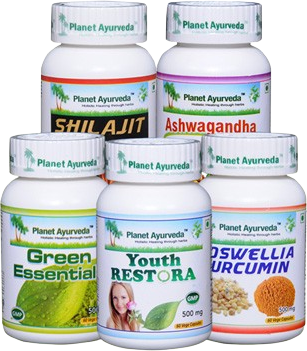
Planet Ayurveda is a GMP-certified Ayurvedic company that offers authentic herbal formulations prepared according to classical Ayurvedic principles. These herbal remedies are formulated using high-quality standardised extracts and natural ingredients to support immune balance, reduce inflammation, nourish body tissues, and manage the systemic manifestations associated with Sjögren’s syndrome. The Sjogren’s Syndrome Care Pack by Planet Ayurveda contains the following herbal formulations:
- Green Essentials
- Youth Restora
- Boswellia Curcumin
- Shilajit Capsules
- Ashwagandha Capsules
Products Description
1. Green Essentials
Green Essentials is a powerful herbal formulation enriched with nutrient-rich herbs such as Wheat Grass (Triticum aestivum), Grape Seed (Vitis vinifera), and Amla (Emblica officinalis). These herbs help reduce oxidative stress, support immune balance, improve energy levels, and manage dryness and inflammation commonly associated with this autoimmune disorder. It also nourishes body tissues and helps balance aggravated Vata and Pitta doshas.
Dosage: 1 Capsule twice daily after meals.
2. Youth Restora
Youth Restora contains a blend of rejuvenating herbs and natural ingredients, including Bhumi Amla (Phyllanthus niruri), Green Tea (Camellia sinensis), Grape Seed (Vitis vinifera), and Bovine Colostrum. Youth Restora supports the management of Sjögren’s syndrome by helping to regulate abnormal immune responses and reducing cellular stress caused by chronic autoimmune activity. Herbs like Bhumi Amla (Phyllanthus niruri) and Green Tea (Camellia sinensis) help protect glandular tissues from inflammatory damage, which may support healthier salivary and lacrimal gland function. Grape Seed (Vitis vinifera) improves microcirculation and provides powerful polyphenols that help protect nerves and connective tissues, while Bovine Colostrum supplies natural immunoglobulins and growth factors that aid tissue repair, vitality, and systemic nourishment in autoimmune fatigue conditions.
Dosage: 1 Capsule twice daily after meals.
3. Boswellia Curcumin
Boswellia Curcumin is a classical anti-inflammatory combination containing Shallaki (Boswellia serrata) and Curcumin (Curcuma longa). Both herbs are well known for their potent anti-inflammatory, antioxidant, and immunomodulatory effects. This formulation helps reduce joint inflammation, muscle pain, stiffness, and musculoskeletal discomfort associated with Sjögren’s syndrome. It also supports healthy immune function and protects tissues from chronic inflammatory damage.
Dosage: 2 Capsules twice daily after meals.
4. Shilajit Capsules
Shilajit Capsules are prepared from purified extract of Shilajit (Asphaltum punjabianum), a renowned Ayurvedic rasayana and adaptogenic substance. Shilajit helps improve strength, stamina, metabolism, and overall vitality. It supports healthy immune function, rejuvenates body tissues, enhances mental clarity, and assists in reducing fatigue and weakness commonly seen in autoimmune conditions. It also helps detoxify the body and maintain healthy cellular function.
Dosage: 1 Capsule twice daily after meals.
5. Ashwagandha Capsules
Ashwagandha Capsules are formulated using standardised extract of Ashwagandha (Withania somnifera), a highly valued Ayurvedic herb known for its adaptogenic, anti-inflammatory, and rejuvenating properties. Ashwagandha helps reduce stress, balance Vata and Pitta doshas, strengthen muscles, support nervous system health, and improve immunity. It is beneficial in reducing fatigue, inflammation, weakness, and metabolic imbalance associated with Sjögren’s syndrome.
Dosage: 1 Capsule twice daily after meals.
Panchkarma For Sjögren’s Disease
To reverse the severe Rukshata (dryness) driven by Vata and protect the organs from inflammatory Paka, specialised classical therapies are deployed:
- Snehana (Internal and External Oleation): The systemic application of medicated lipids to interrupt Vata’s dry, rough qualities. Internal oleation utilises Tikta Ghrita (bitter medicated ghee), which acts as a lipophilic carrier capable of passing through cellular walls to reduce deep-tissue inflammation.
- Swedana (Mild Sudation): Mild, specialised steam therapies designed to dilate the Srotas, mobilise bound toxins, and soften rigid tissues without aggravating Pitta.
- Nasya (Nasal Instillation): The administration of Anu Taila or Kumkumadi Taila through the nasal pathway. Because the nasal cavity is considered the gateway to the head, this therapy directly delivers lipophilic nutrients to the cranial nerves, helps protect the central nervous system, and relieves mucosal dryness in the oral and nasal cavities.
- Raktamokshana (Blood-Letting Therapy): Highly specialised, controlled bio-purification used to extract localised, Pitta-vitiated blood toxins, directly relieving systemic cutaneous vasculitis and severe joint inflammation.
- Lepa (Medicinal Herb Applications): The topical application of cooling, unctuous herbal pastes onto inflamed joints and skin rashes to immediately pacify localised Pitta and Vata distress.
- Anjana and Ashchotan (Ocular Therapies): The precise application of soothing, medicated collyriums and sterile herbal eye drops to lubricate the ocular surface, clear inflammatory debris, and support local corneal health.
- Tarpana (Ocular Rejuvenation): A premier therapy where a well of black gram dough is constructed around the eyes and filled with warm Triphala Ghrita. This provides deep, prolonged hydration to the lacrimal apparatus, halts gland degeneration, and treats severe keratoconjunctivitis sicca.
- Gandusha (Medicated Gargling): Holding warm, unctuous oils like Tila Taila (sesame oil) or Irimedadi Taila in the mouth for extended periods. This stimulates salivary secretion, coats the oral mucosa, prevents rampant dental decay, and relieves severe xerostomia.
Conclusion
Sjögren’s disease is a complex, multi-organ systemic disorder that extends far beyond the clinical presentation of dry eyes and dry mouth. Modern biomedical research clearly charts its invasive reach into the thyroid-metabolic axis, its degenerative effects on the central and peripheral nervous systems, and its significant risk of transformation into B-cell malignancies like Non-Hodgkin lymphoma. Managing this condition requires moving past superficial treatments. By integrating modern diagnostic vigilance with the deep tissue-purifying, neuroprotective, and Ojas-restoring therapeutic paradigms of classical Ayurveda, clinicians can establish comprehensive strategies. This combined approach works to digest systemic Ama, clear microchannel blockages, pacify hyper-reactive Vata and Pitta dynamics, and rebuild cellular intelligence. Ultimately, this comprehensive management model helps stabilise the immune system, protect vital internal organs, and restore lasting biological equilibrium.