


Allium cepa Linn./ Onion/ Plandu – Medicinal Properties, Benefits & Dosage
Abstract
Allium cepa L., commonly known as onion or bulb onion, is a widely cultivated vegetable belonging to the genus Allium and traditionally classified under the family Liliaceae (also referred to by some authors as Alliaceae). It is an essential component of Asian cuisines and is popularly regarded as the “Queen of the Kitchen” due to its extensive culinary use. Allium cepa is a perennial herb characterised by a subterranean bulb that serves as its stem, with one or two leafless flowering stalks reaching 75–180 cm in height. Its commercial cultivation is primarily carried out through thin, black seeds. Regular consumption of onion, especially in its raw form, is associated with numerous health-promoting effects, contributing significantly to overall bodily health and well-being.
Classical References Of Allium Cepa Linn./ Onion/ Plandu
- Bhavprakash Nighantu Haritkyadi varga
- Raj Nighantu Mulakadi varga
Scientific Classification Of Allium Cepa Linn./ Onion/ Plandu
- Kingdom: Plantae
- Division: Magnoliophyta
- Class: Liliopsida
- Order: Asparagales
- Family: Alliaceae
- Genus: Allium
- Species: Allium cepa
Synonym Of Allium Cepa Linn./ Onion/ Plandu
- Yavanesta – Favoured and commonly consumed by European (Yavana) people.
- Durgandha – Possesses a strong, unpleasant odour.
- Mukha Dushaka – Causes bad breath or foul smell from the mouth.
- Palandu
- Sukandaka – Having an attractive and well-formed bulb.
- Tīkshnakanda – Bulb with sharp, pungent, and penetrating potency.
- Dipana – Stimulates digestive fire (Agni).
- Rochana – Enhances taste perception and appetite.
- Vishvagandha – Spreads a strong smell throughout the body.
- Krimighna – Destroys worms and intestinal parasites.
- Bahupatra – Plant having numerous leaves.
Vernacular Names Of Allium Cepa Linn./ Onion/ Plandu
- English: Onion
- Sanskrit: Palandu / Polanduh
- Hindi: Pyaz / Piyaz
- Bengali: Pyanj
- Punjabi: Ganda
- Marathi: Kanda
- Gujarati: Dungri / Dungari / Kando
- Kannada: Nirulli / Irulli
- Telugu: Ullipaya / Yerra Gaddalu
- Tamil: Vengayam / Venkayam
- Malayalam: Chuvannulli
Habitat Of Allium Cepa Linn./ Onion/ Plandu
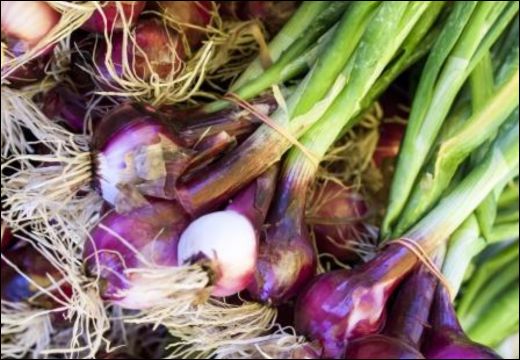
Onion (Allium cepa L.) has been cultivated for nearly 7,000–8,000 years and is a biennial herb, though it is grown almost throughout the year under cultivation. The plant generally attains a height of about 15–45 cm. It bears yellowish to bluish-green leaves that are cylindrical, hollow or slightly flattened on one side, forming a fan-like arrangement and extending up to the bulb. During maturity, stored food materials accumulate at the base of the leaves, leading to the swelling of the bulb. The fruit is a small, swollen capsule with three compartments containing black seeds. The rhizome or bulb may be red or white in colour, with white varieties known as Ksheera Palandu. Onion is believed to have originated in Central Asia and later spread across Southwest Asia and the Mediterranean region; today it is cultivated in over 175 countries worldwide. It thrives in both warm and cold climates and grows best in stone-free, loamy, well-drained soils that are rich in nitrogen, phosphorus, and potassium, with adequate sunlight and irrigation.
Morphology Of Allium Cepa Linn./ Onion/ Plandu
Allium tuberosum is a perennial, fibrous, herbaceous plant with an underground, fleshy, cylindrical bulb attached to a strong rhizome. It produces 4–9 grey-green, bluish leaves that are flat to slightly hemispherical, parallel-veined, and grow up to 40 cm in height, emitting a mild garlic-like aroma. The plant shows vigorous growth in summer and becomes dormant during winter. Flowering occurs from late July to early autumn, with a tall peduncle bearing an umbel of small, white, star-shaped, fragrant flowers that attract pollinators. Each flower is actinomorphic, bisexual, and composed of six tepals arranged in two whorls, six stamens, and a superior, trilocular ovary with axile placentation. The fruit is a loculicidal capsule containing black, triangular, endospermous seeds, and the plant propagates through seeds or clump division.
Varieties Of Allium Cepa Linn./ Onion/ Plandu
श्वेतकन्दश्च तत्रैको हरिद्रोऽन्य इति द्विधा ।।
(Raj Nighantu Mulkadi varga 56)
According to the above shloka, it is classified into two types: Shwetakanda (having a white bulb) and Haridrakanda (having a yellowish bulb).
Classical Categorisation Of Allium Cepa Linn./ Onion/ Plandu
- According to Dhanwantari Nighantu: Karavadi Varga
- According to Bhavprakash Nighantu: Haritkyadi varga
- According to Raj Nighantu: Mulakadi varga
Ancient Verse Of Allium Cepa Linn./ Onion/ Plandu
पलाण्डुर्यवनेष्टश्च दुर्गन्धो मुखदूषकः ।
पलाण्डुस्तु बुधैर्जेयो रसोनसदृशो गुणैः ॥
स्वादुः पाके रसेऽनुष्णः कफकृन्नातिपित्तला ।
हरते केवलं वातं बलवीर्यकरो गुरुः ॥
(Bhavprakash Nighantu Haritakyadi varga 226-227)
According to the above shloka, the synonyms of Onion are Palandu, Yavaneshta, Durgandha, and Mukhadushaka. Its qualities are considered similar to garlic. Onion is sweet in taste both in rasa (primary taste) and vipaka (post-digestive effect). It has a mildly heating potency (slightly ushna virya) and tends to increase Kapha, but it is not highly aggravating to Pitta. It helps pacify Vata, promotes strength and vitality, and is considered heavy (guru) in nature.
पलाण्डुः कटुको बल्यः कफपित्तहरो गुरुः ।
वृष्यश्च रोचनः स्निग्धो वान्तिदोषविनाशनः ।।
(Raj Nighantu Mulkadi varga 57)
According to the above shloka, Palandu is pungent in taste, acts as a tonic that enhances strength, and helps reduce Kapha and Pitta. It is heavy in nature, has aphrodisiac properties, stimulates appetite (rochana or stomachic), is unctuous, and possesses antiemetic effects.
पलाण्डुर्यवनेष्टश्च सुकन्दो मुखदूषकः ।
हरितोऽन्यः पलाण्डुश्च लतार्को दुर्दुमः स्मृतः ॥
पलाण्डुस्तद्गुणैर्च्यूनो विपाके मधुरस्तु सः ।
कफं करोति नो पित्तं केवलोऽनिलनाशनः ॥
अन्यः क्षीरपलाण्डुश्च वृष्यो मधुरपिच्छिलः ।
(Dhanvantari Nighantu Karavardi varga 66-67)
According to the above shloka, Yavaneshta, Sukanda, and Mukha Dushaka are recognised synonyms of Palandu, while Latarka and Dudruma specifically refer to fresh Palandu. It has a sweet post-digestive effect (madhura vipaka), tends to increase Kapha, remains relatively neutral toward Pitta, and helps pacify Vata, contributing to its therapeutic significance in traditional medicine.
Ayurvedic Properties Of Allium Cepa Linn./ Onion/ Plandu
- Taste (Rasa)- Pungent (Katu), Sweet (Madhur)
- Physical property (Guna) – Heavy (Guru), Unctuous (Snigdha)
- Potency (Veerya )- Hot Potency (Usna)
- Post-digestion effect (Vipaka)- Sweet (Madhur)
- Effect on tridosha– Balance Vata dosha, neutral towards Pitta Dosha and aggravated Kapha dosha
Therapeutic Indications Of Allium Cepa Linn./ Onion/ Plandu
Onion Seed Benefits
- Vrushya – Aphrodisiac; improves vigour and vitality.
- Dantakeetajit – Helpful in dental caries and oral health.
- Pramehajit – Beneficial in urinary tract disorders and diabetes.
Onion Juice Benefits
- Snigdhangatva – Provides body lubrication and lustre.
- Gaurata – Imparts heaviness and nourishment.
- Kantimata – Improves skin complexion.
- Vahnerdeepti – Enhances digestive strength.
- Charma Shuddhi – Helps detoxify and purify the skin.
- Vrushatva – Acts as an aphrodisiac.
- Deerghamayu – Supports longevity; anti-ageing effect.
- Balakara – Improves strength and immunity.
- Varnakara – Enhances skin tone and complexion.
- Ojaskara – Boosts immunity and vitality.
- Swarakara – Improves voice tone and quality.
- Saumanyasya – Promotes mental calmness.
- Badhira – helps in certain hearing problems.
Systemic Actions Of Allium Cepa Linn./ Onion/ Plandu
External Uses
- The external application of its paste helps relieve inflammation and has a scraping action. It is useful in swellings associated with wounds and various skin disorders. Its juice is beneficial for eyesight and ear pain. In wound-related swelling and skin conditions such as Vyanga, Nyacha (facial discolouration), and Kilasa (vitiligo), the juice or paste can be applied externally. For reduced vision, its juice mixed with honey may be used as Anjana (collyrium), and the juice can also be instilled in the ear to relieve ear pain.
Internal Uses
- Nervous System – It has analgesic (pain-relieving) properties but is considered less beneficial for the brain, as it may increase Raja and Tamo dosha. It is indicated in neurological pain, sciatica, joint pain, hysteria, rabies, and convulsions.
- Digestive System – It stimulates liver function, acts as an appetiser, and enhances taste perception. It is useful in conditions such as loss of appetite, constipation, haemorrhoids, jaundice, and rectal prolapse.
- Circulatory System – Due to its hot and unctuous nature, it supports heart function and helps reduce oedema. The red variety of onion also exhibits styptic (hemostatic) properties.
- Respiratory System – It is beneficial in cough, especially in weak individuals, and helps expel phlegm.
- Skin – Owing to its sulphur content, it is helpful in various skin disorders.
- Satmikarana – It promotes body strength and helps enhance ojas (vitality and immunity).
Chemical Composition Of Allium Cepa Linn./ Onion/ Plandu
- Organosulfur Compounds Allicin, alliin, diallyl mono-, di-, tri- and tetrasulfides, thiosulfinates, thiols, cepaenes, zwiebelanes, cycloalliin, S-alk(en)yl cysteine sulphoxides.
- Sulfur Amino Acids & Peptides Cysteine, methionine, γ-glutamyl peptides, cystine.
- Flavonoids Quercetin, kaempferol, anthocyanins, quercetin-4′-glucoside, quercetin-3,4′-diglucoside.
- Phenolic Compounds & Acids Protocatechuic acid, ferulic acid, p-coumaric acid, vanillic acid, catechol, other phenolics.
- Glycosides & Saponins Cyanidin glycosides, furostanol saponins, steroidal saponins.
- Volatile Compounds Thiophenes, propanethial-S-oxide (lachrymatory factor), volatile onion oil with mono-, di-, tri- and tetrasulfides.
- Carbohydrates & Sugars Fructose, glucose, sucrose, fructooligosaccharides, xylose, galactose, mannose.
- Phytosterols & Steroids Sterols, diosgenin.
- Other Secondary Metabolites Alkaloids, tannins, terpenoids, glycosides, organosulfur derivatives.
- Nutrients & Minerals Potassium, phosphorus, calcium, magnesium, selenium, folic acid.
- Vitamins & Macronutrients Water (~90%), proteins, fibre, carbohydrates, fats.
- Enzymes Alliinase (key enzyme involved in sulfur compound formation).
Actions And Properties Of Various Chemical Constituents Of Allium Cepa Linn./ Onion/ Plandu
For Cardiovascular System
Allium cepa Linn. (onion) helps in the management of cardiovascular diseases mainly due to its rich content of bioactive compounds such as quercetin, organosulfur compounds, anthocyanins, and other polyphenols. Quercetin acts as a strong antioxidant and anti-inflammatory agent that helps lower blood pressure, improve endothelial function, and prevent oxidation of LDL cholesterol, thereby reducing the risk of atherosclerosis. Organosulfur compounds like cysteine sulfoxides and thiosulfinates help regulate lipid levels by lowering cholesterol and triglycerides while also preventing platelet aggregation, which reduces the risk of thrombosis, stroke, and heart attack. Anthocyanins, especially present in red onions, provide antioxidant protection and support insulin secretion, helping control metabolic factors linked to heart disease. Additionally, minerals like chromium improve insulin sensitivity and glucose tolerance. Together, these actions protect heart cells, reduce oxidative stress, improve circulation, and support overall cardiovascular health.
For Digestive System
Allium cepa Linn. (onion) helps manage digestive disorders due to the presence of important phytochemicals such as organosulfur compounds, flavonoids (especially quercetin), fructooligosaccharides (FOS), saponins, and dietary fiber. Quercetin acts as a strong antioxidant and anti-inflammatory agent that protects the gastric mucosa, reduces inflammation, and inhibits Helicobacter pylori, which is associated with gastric ulcers. Organosulfur compounds released when onions are cut exhibit antimicrobial activity against harmful gut bacteria like E. coli and Salmonella, while also providing anti-ulcer and antispasmodic effects. Fructooligosaccharides function as prebiotics, nourishing beneficial intestinal bacteria such as Lactobacillus and improving overall gut health. Saponins help reduce intestinal spasms and discomfort, while dietary fiber supports proper bowel movement and digestion. Together, these actions promote digestive balance, protect the gastrointestinal lining, and enhance overall digestive function.
For Ear Problems
Allium cepa Linn. (onion) is traditionally used for managing ear problems such as earache and mild infections due to its rich content of organosulfur compounds, flavonoids like quercetin, and other bioactive constituents. Organosulfur compounds such as thiosulfinates, diallyl disulfide, diallyl trisulfide, and ajoene exhibit strong antibacterial and antiseptic properties that help control infection-causing microbes. Quercetin acts as a potent anti-inflammatory and antioxidant agent, reducing swelling, pain, and protecting ear tissues from oxidative damage. Compounds like cepaenes further help by inhibiting inflammatory pathways (COX and LOX), thereby easing inflammation. When an onion is crushed, volatile sulfur compounds are released, providing additional soothing and anti-inflammatory effects. Warm onion juice applied externally or traditionally instilled in the ear is believed to reduce pain, fight infection, and promote comfort through these combined actions.
Aphrodisiac Activity
Allium cepa Linn. (red onion) is considered beneficial for sexual health due to its rich content of flavonoids, organosulfur compounds, antioxidants, and essential trace minerals. Quercetin, a major flavonoid, exhibits PDE5 inhibitory activity that may help improve erectile function while protecting sperm from oxidative damage. Organosulfur compounds such as S-methyl cysteine sulfoxide, diallyl trisulfide, and thiosulfinates enhance nitric oxide production, promoting better blood flow to reproductive organs and supporting erection. Other flavonoids like isorhamnetin and kaempferol act as antioxidants that protect sperm membranes and support spermatogenesis. Anthocyanins present in red onions further reduce oxidative stress and may support testosterone balance, while minerals like selenium and zinc strengthen antioxidant defences. Together, these compounds help improve libido, enhance sperm quality, support hormone balance, and protect reproductive tissues.
Practical Uses / Health Benefits Of Allium Cepa Linn./ Onion/ Plandu
- Onion paste applied to swellings, wounds, or inflammations helps reduce pain and promotes healing.
- Warm onion juice or onion-processed oil instilled into the ear helps relieve earache, discharge, and related ear problems.
- Fresh onion juice (about 10–15 ml) is traditionally taken to support vision and improve digestion and appetite.
- Fried onion slices in ghee are used internally for cough, asthma, hoarseness, and respiratory congestion.
- Onion paste is applied to blackheads, moles, discolouration, vitiligo patches, acne, and itching for skin benefits.
- Slightly heated onion paste is applied externally for sciatica, joint pain, nerve pain, and arthritic conditions.
- Onion juice drops in the nostrils help manage nasal bleeding, blockage, and heat-related nosebleeds.
- Onion boiled with milk or taken with jaggery, ghee, or sugar candy is traditionally used for piles and bleeding disorders.
- Regular intake of onions improves vitality, libido, sperm quality, and general body strength.
- Onion with buttermilk, black pepper, or salt is used to improve digestion, cholesterol balance, fatigue, and excess body fat.
- Onion juice combined with honey, ginger, garlic, basil, or aloe vera supports respiratory health, cough, cold, asthma, and immunity.
- Application of onion juice on gums, teeth, or the mouth helps reduce gum bleeding, toothache, dental caries, and oral microbes.
- Onion juice or paste applied to burns, insect bites, scorpion stings, bruises, and wounds helps reduce pain and inflammation.
- Onion preparations are used for hair growth, dandruff, lice removal, scalp health, and improving skin complexion.
- Regular consumption helps improve haemoglobin, stamina, sleep, memory, nervous strength, and resistance to infections.
- Onion intake is traditionally linked with benefits in diabetes, cholesterol control, heart health, obesity, and kidney stones.
- Onion juice with honey or other ingredients is used for sore throat, fever, dysentery, vomiting, and digestive disorders.
- Onion oil prepared with coconut, mustard, or sesame oil is applied for joint pain, wounds, cracked heels, and ear issues.
- Raw or cooked onion is widely used as a vegetable worldwide for nutrition, antioxidant support, and overall health maintenance.
Parts Used Of Allium Cepa Linn./ Onion/ Plandu
- Bulb
- Seeds
Dosage Of Allium Cepa Linn./ Onion/ Plandu
- Onion Juice- 10-20 ml
- Seed Powder- 1-3 gms
Classical Products Of Allium Cepa Linn./ Onion/ Plandu
- Murivenna Oil
Conclusion
Allium cepa Linn. (onion) is a nutritionally rich and therapeutically valuable plant widely used in both diet and traditional medicine. It contains important bioactive compounds such as organosulfur compounds, flavonoids (especially quercetin), vitamins, minerals, and antioxidants that contribute to its diverse health benefits. Onion is known for supporting digestive health, cardiovascular function, immunity, respiratory wellness, skin health, and overall vitality. Its antimicrobial, anti-inflammatory, antioxidant, and cardioprotective properties make it beneficial in managing various health conditions. Regular consumption in appropriate amounts promotes general well-being and enhances physiological strength, highlighting its significance as both a food and a medicinal plant.
Frequently Asked Questions (FAQ’s)
1. What Is The Family Name Of Allium Cepa?
Allium cepa belongs to the family Amaryllidaceae.
2. What Is The Common Name Of Allium Cepa?
The common name of Allium cepa is Onion.
3. What Are The Benefits Of Onions?
Onions support heart health, digestion, immunity, skin health, and have antioxidant, anti-inflammatory, and antimicrobial properties.
4. What Are The Uses Of Plandu For Hair?
Plandu (onion) juice is used to promote hair growth, reduce hair fall, control dandruff, and improve scalp health.
5. What Are The Benefits Of Plandu?
Plandu improves digestion, boosts strength and immunity, supports heart health, enhances libido, and benefits skin and respiratory health.
6. What Is The Botanical Name Of Plandu?
The botanical name of Plandu is Allium cepa Linn.