


Amomum subulatum Roxb./ Amomum/ Nepal or Greater Cardamom/ Black Cardamom/ Badi Elaichi – Medicinal Properties, Benefits & Dosage
Abstract
Amomum subulatum Roxb., commonly called Badi Elaichi or Greater Cardamom, is an important medicinal and aromatic spice belonging to the Zingiberaceae family. It is a perennial herb primarily cultivated in moist, hilly regions near water sources across the Eastern Himalayan belt, including India, Nepal, and Bhutan. The spice is valued both for culinary flavouring and its long-standing use in traditional Ayurvedic and Unani medicine. Its seeds contain about 2–4% volatile oil, with 1,8-cineole as the principal bioactive component contributing to its aroma and therapeutic potential. India, particularly the Himalayan state of Sikkim, plays a major role in global production. Historical references indicate its medicinal application dates back to ancient Ayurvedic literature, reflecting its enduring pharmacological and cultural relevance.
Classical References Of Amomum Subulatum Roxb./ Amomum/ Nepal Or Greater Cardamom/ Black Cardamom/ Badi Elaichi
- Bhavprakash Nighantu Karpooradi Varga
- Raj Nighantu Pippalyadi varga
Scientific Classification Of Amomum Subulatum Roxb./ Amomum/ Nepal Or Greater Cardamom/ Black Cardamom/ Badi Elaichi
- Kingdom: Plantae
- Division: Magnoliophyta
- Class: Liliopsida
- Order: Zingiberales
- Family: Zingiberaceae
- Genus: Amomum
- Species: Amomum subulatum
Synonym Of Amomum Subulatum Roxb./ Amomum/ Nepal Or Greater Cardamom/ Black Cardamom/ Badi Elaichi
- Brihad Ela / Sthula Ela / Mahaila – Indicates larger pod size compared to small cardamom.
- Trividodhbuta / Triputa – Refers to the three-edged or three-angled structure of the pod.
- Surabhi Twak / Tvak Sugandhika / Divyagandha – Suggests pleasant aroma and fragrant seeds.
- Puta – Named due to the characteristic capsule or pod-like shape.
- Badra Ela / Bhadraila – Implies auspicious or beneficial cardamom.
- Bahula – Denotes abundance or fullness of the pod.
- Patraila – Associated with leafy or bract-like structure.
- Pruthveeka – Indicates earthy association or terrestrial growth habit.
- Chandrabala – Symbolises cooling or soothing nature (According to Raj Nighantu).
- Nishkuti
- Kanyaka
Vernacular Names Of Amomum Subulatum Roxb./ Amomum/ Nepal Or Greater Cardamom/ Black Cardamom/ Badi Elaichi
- English: Black Cardamom, Greater Cardamom, Nepal Cardamom
- Hindi: Badi Elaichi, Bari Elachi
- Urdu: Heel Kalan, Poorbi Elaichi
- Sanskrit: Sthula Ela, Bhadraila
- Bengali: Badh Elach, Baara Eliach
- Gujarati: Elaicho, Mothi Elchi
- Kannada: Dodda Elakki, Nepdi Yalakki
- Tamil: Periya Elam, Kattu Elam
- Telugu: Pedda Elakulu
- Malayalam: Valiya Elam, Perelam
- Marathi: Mothi Elayachi
- Oriya: Bada Aleicha
- Punjabi: Budi Elaichi
- French: Cardamome
- German: Kardamom
- Italian: Cardamomo
- Spanish: Cardamomo
- Burmese: Phalazee
- Chinese: Ts’ao-k’ou
- Persian: Qakilahe Kalan
- Indonesian: Kapulaga
- Indian regional variants: Elaichi, Ilayachi, Ilaichi
Habitat Of Amomum Subulatum Roxb./ Amomum/ Nepal Or Greater Cardamom/ Black Cardamom/ Badi Elaichi
Amomum subulatum is a large perennial, evergreen, herbaceous monocot plant primarily native to the Eastern Himalayan region. It thrives in moist, shaded, hilly environments, particularly near streams and marshy slopes where humidity and organic soil are abundant. The plant is widely distributed across northeastern India, including Sikkim, Darjeeling, Assam, and northern West Bengal, as well as Nepal and Bhutan. It is also cultivated in several Southeast Asian countries such as Thailand, Laos, and Indonesia due to suitable climatic conditions. Nepal is the largest producer, followed by India and Bhutan, with Sikkim being the major cultivation area in India. The crop grows best in cool, humid climates with rich forest soil, making the Himalayan subtropical zones ideal for its cultivation.
Morphology Of Amomum Subulatum Roxb./ Amomum/ Nepal Or Greater Cardamom/ Black Cardamom/ Badi Elaichi
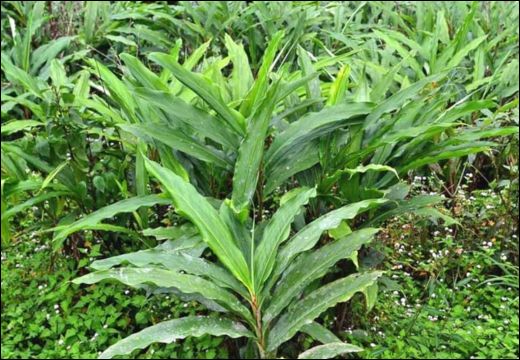
Amomum subulatum is a tall, evergreen, perennial monocot herb belonging to the Zingiberaceae family, usually attaining a height of about 1.5–3 meters. It possesses elongated creeping rhizomes that produce erect leafy shoots and flowering spikes. The leaves are large, oblong-lanceolate, smooth, and green on both surfaces, measuring about 30–60 cm in length with sheath-like bases forming pseudostems. Flowers arise on short peduncles, enclosed in reddish bracts, and typically bloom during the spring season, with each flower remaining open for a few days. The fruit is a trilocular capsule, oval to globular, about 20–25 mm long, dark reddish-brown when mature. Each capsule contains numerous aromatic seeds embedded in a sticky pulp. The seeds have a membranous aril rich in essential oils and calcium oxalate crystals, contributing to their characteristic aroma and medicinal value.
Varieties Of Amomum Subulatum Roxb./ Amomum/ Nepal Or Greater Cardamom/ Black Cardamom/ Badi Elaichi
Many varieties of large cardamom are found in India, among which Amomum aromaticum Roxb., commonly known as Morang Elaichi in Hindi and Bengali, is widely cultivated in eastern Bengal and nearby Assam regions. It is also referred to as Bengal Cardamom. The plant is mainly grown in the humid foothills of the Himalayas, particularly in Assam and Bengal. Its shoots arise in clusters from the rhizome and may reach about 1 meter in height. The flowers are pale yellow and appear in compact inflorescences arising near the base. The fruits are oval or nutmeg-shaped, somewhat rough, and divided into three compartments. Each fruit contains numerous seeds, approximately 3 mm in length.
In Kerala, another plant known as Peucedanum grande C.B. Clarke is sometimes used under the name Sthula Ela, which some scholars identify as Bafli. Similarly, the name Harenuka has also been traditionally used as a synonym for large cardamom in certain classical references.
Classical Categorisation Of Amomum Subulatum Roxb./ Amomum/ Nepal Or Greater Cardamom/ Black Cardamom/ Badi Elaichi
- According to Kaiyadeva Nighantu: Aushadhi Varga
- According to Bhavprakash Nighantu: Karpooradi varga
- According to Raj Nighantu: Pippalyadi varga
- According to Dhanwantari Nighantu: Shatapushpadi Varga
Ancient Verse Of Amomum Subulatum Roxb./ Amomum/ Nepal Or Greater Cardamom/ Black Cardamom/ Badi Elaichi
एला स्थूला च बहुला पृथ्वीका त्रिपुटाऽपि च ॥
भद्रेला बृहदेला च चन्द्रबाला च निष्कुटिः ।
स्थूलैला कटुका पाके रसे चानलकृल्लघुः ॥
रूक्षोष्णा श्लेष्मपित्तास्त्रकण्डूश्वासतृषाऽपहा ।
हृल्लासविषबस्त्यास्यशिरोरुग्वमिकासनुत् ॥
(Bhavprakash Nighantu Karpooradi varga 60-62)
According to the above shloka, Ela, Sthula, Bahula, Prithvika, Triputa, Bhadrela, Brihadela, Chandrabala, Nishkuti, and Sthulaela are Sanskrit names traditionally used for large cardamom. In Ayurveda, large cardamom is described as having a pungent taste (Katu Rasa) both before and after digestion. It is considered digestive-stimulating (Agnijanaka), light to digest (Laghu), dry in quality (Ruksha), and hot in potency (Ushna Virya). It is believed to help balance Kapha and Pitta dosha and is traditionally used in conditions such as blood disorders, itching, respiratory issues, excessive thirst, nausea, toxin exposure, and disorders related to the bladder, mouth, and head. It is also regarded as beneficial in relieving vomiting and cough.
स्थूलैला बृहदैला त्रिपुटा त्रिदिवोद्भवा च भद्रैला।
सुरभित्वक् महैला पृथ्वी कन्या कुमारिका चैन्द्री॥
कायस्था गोपुटा कान्ता धृताची गर्भसम्भवा।
इन्द्राणी दिव्याख्या च विज्ञेयाऽष्टादशाह्वया॥
(Raj Nighantu Pippalyadi varga 83-84)
According to the above shloka, the synonyms of large cardamom are Sthulaila, Vrihadaila, Triputa, Tridivodbhava, Bhadraila, Surabhi-twaq, Mahaila, Prithvi, Kanya, Kumarika, Aindri, Kayastha, Goputa, Kanta, Grhitachi, Garbhasambhava, Indrani and Divyagandha.
एलाद्वयं शीतलतिक्तमुक्तं सुगन्यि पित्तार्त्तिकफापहारि ।
करोति हृद्रोगमलार्त्तिवस्ति-शूलघ्नमत्र स्थविरा गुणाढ्या ।।
(Raj Nighantu Pippalyadi varga 87)
Both varieties of Ela are considered cooling, slightly bitter, and aromatic, and are traditionally used to balance aggravated Kapha and Pitta dosha. They are regarded as beneficial in heart-related conditions and disorders associated with excretory functions (Mala-vikara). Ela is also valued for supporting urinary comfort and helping relieve bladder or urinary tract discomfort. Among the two types, the larger variety is generally considered more potent and therapeutically effective.
भद्वैला बृहदेला तु त्रिपुटा त्रिदिवोद्भवा ।
स्थूलैला त्वक्सुगन्धा च पृथ्वीका कन्यका पुटा ॥
एला तिक्ता च लघ्वी स्यात्कफवातविषव्रणान् ।
बस्तिकण्ठरुजो हन्ति मुखमस्तकशोधिनी ॥
(Dhanwantari Nighantu Shatapushpadi varga 46-47)
The herb is traditionally known by several synonyms, including Bhadraila, Triputa, Tridivodbhava, Tvak Sugandha, Prithvīka, Kanyka, and Puta. In Ayurvedic literature, it is described as having a slightly bitter taste and light digestive quality, with properties that help balance aggravated Vata and Kapha dosha. It is traditionally considered useful in conditions related to poisoning, ulcers, and disorders of the urinary bladder and throat. Additionally, it is believed to support mental clarity and contribute to the rejuvenation and strengthening of brain function.
Ayurvedic Properties Of Amomum Subulatum Roxb./ Amomum/ Nepal Or Greater Cardamom/ Black Cardamom/ Badi Elaichi
- Taste (Rasa)- Pungent (Katu)
- Physical property (Guna) – Light (Laghu), Dry (Ruksha)
- Potency (Veerya )- Hot Potency (Usna) (According to Bhavprakash Nighantu)
- Post-digestion effect (Vipaka)- Katu (Pungent)
- Effect on tridosha– Balance Pittaand Kapha dosha
Therapeutic Indications Of Amomum Subulatum Roxb./ Amomum/ Nepal Or Greater Cardamom/ Black Cardamom/ Badi Elaichi
- Rochani – Improves taste perception and helps in anorexia (loss of appetite).
- Kasa – Useful for cough and cold.
- Vatasra – Traditionally indicated in gout.
- Shwasa – Helpful in asthma and chronic respiratory disorders.
- Hrullasa – Relieves nausea.
- Trushna – Helps manage excessive thirst.
- Kandu – Beneficial in itching and pruritus.
- Shiroroga – Supports relief from headache.
- Vastiroga – Useful in urinary tract disorders.
- Asyaroga – Beneficial in oral diseases.
- Vami – Helps control vomiting.
- Visha – Traditionally used in toxic conditions or poisoning.
- Kantaruja – Helps relieve throat pain and sore throat.
Systemic Actions Of Amomum Subulatum Roxb./ Amomum/ Nepal Or Greater Cardamom/ Black Cardamom/ Badi Elaichi
External Use
Chewing the herb helps reduce foul breath, relieves colic, supports skin health, and aids wound healing. Its decoction is useful for gargling in dental and oral disorders. The paste can be applied to the forehead to relieve headaches and is also beneficial in various skin conditions when used externally.
Internal Uses
1. Nervous System
Helpful in managing neurological pain and supporting nerve function.
2. Digestive System
Acts as a carminative and digestive stimulant, promotes proper dosha movement, enhances bile secretion, and is useful in vomiting, excessive thirst, anorexia, abdominal distension, and liver disorders.
3. Respiratory System
Assists in expelling aggravated Kapha dosha and is beneficial in cough and breathing difficulties.
4. Excretory System
Promotes urine output and is useful in dysuria and urinary tract infections.
5. Circulatory System
Works as a mild cardiac stimulant, supporting heart function.
6. Fever Management (Tapakrama)
Useful in fever conditions with cooling (Sitaprasamana) effect.
7. Satmikarana
Possesses anti-toxic properties and helps counteract poisonous effects.
Chemical Composition Of Amomum Subulatum Roxb./ Amomum/ Nepal Or Greater Cardamom/ Black Cardamom/ Badi Elaichi
- Various extracts contain carbohydrates, flavonoids, amino acids, steroids, triterpenoids, glycosides, tannins, alkaloids, fixed oils, and fats.
- Presence of pigments like anthocyanins, aurones, and flavanones has also been reported.
- The essential oil mainly contains 1,8-cineole (65–80%), responsible for its characteristic aroma.
- Other volatile constituents include terpenyl acetate (trace–5%) and monoterpene hydrocarbons (5–17%).
- Important monoterpenes include limonene, sabinene, terpinenes, pinenes, and terpineols (about 5–7%).
- Seeds contain starch (~43%), crude fiber (~22%), protein (~6%), along with essential oils and fats.
- Phenolic compounds are present (~0.00366% w/w as gallic acid) and total flavonoids (~0.0361% w/w).
- Glycosides identified include subulin, petunidin-3,5-diglucoside, and leucocyanidin-3-O-β-D-glucopyranoside.
- Steam-distilled oil contains cineole, α- and β-pinenes, sabinene, p-cymene, terpinene-4-ol, α/β-terpineol, nerolidol, bisabolene, and terpinyl acetate.
- Other isolated compounds include protocatechuic acid, protocatechualdehyde, and related phenolic derivatives.
- These phytochemicals contribute to antioxidant, antimicrobial, digestive, and aromatic medicinal properties.
Actions And Properties Of Various Chemical Constituents Of Amomum Subulatum Roxb./ Amomum/ Nepal Or Greater Cardamom/ Black Cardamom/ Badi Elaichi
Hepatoprotective Activity
Amomum subulatum (greater or black cardamom) supports digestive and liver health mainly due to its rich volatile oil content, especially 1,8-cineole (eucalyptol), along with flavonoids and phenolic acids. This compound exhibits antiseptic, anti-inflammatory, and gastric motility-regulating effects, helping relieve indigestion, gastritis, and digestive discomfort. Flavonoids such as epicatechin provide antioxidant and anti-inflammatory benefits, while phenolic acids like vanillic acid contribute to liver protection. Monoterpenes, including α-terpineol and limonene, further enhance anti-inflammatory and antioxidant actions. These phytochemicals collectively help reduce liver enzyme levels, prevent oxidative damage, and support detoxification. Additionally, the essential oil improves gastric mucosal protection and bile secretion, promoting better digestion and overall liver function.
Cardioprotective Activity
The cardioprotective effects of Amomum subulatum (black cardamom) are mainly linked to its rich essential oil content, particularly 1,8-cineole, along with other bioactive compounds such as terpineol, limonene, pinene, myrcene, bisabolol, epicatechin, and phenolic acids. These constituents help support heart health by reducing oxidative stress, inflammation, and lipid accumulation in cardiovascular tissues. The herb promotes vasorelaxation by influencing calcium channel activity, which helps regulate blood pressure and improve circulation. Its antioxidant properties protect cardiac cells from free-radical damage and lipid peroxidation. Anti-inflammatory effects further reduce markers linked with heart disease. Additionally, it may help lower cholesterol and triglycerides while improving fibrinolytic activity, thereby supporting overall cardiovascular function.
Nephroprotective Activity
The beneficial effects of Amomum subulatum (black cardamom) in urinary problems are mainly due to its rich essential oil content, which exhibits antimicrobial, diuretic, and antispasmodic properties. Its principal constituent, 1,8-cineole, along with terpineol, terpinen-4-ol, pinene, flavonoids, and phenolic acids, helps combat urinary infections by reducing microbial growth and inflammation. These compounds are known to disrupt bacterial cell membranes, thereby inhibiting pathogens commonly responsible for urinary tract infections. The herb also promotes mild diuresis, which aids in flushing out toxins and microbes from the urinary system. Antioxidant constituents further protect urinary tissues from oxidative stress. Overall, these combined actions help maintain urinary tract health and reduce discomfort associated with infections.
For Dental Problems
The role of Amomum subulatum (black cardamom) in managing dental problems is mainly linked to its essential oils, which possess antimicrobial, anti-inflammatory, and mild analgesic properties. Its major compound, 1,8-cineole, along with terpineol, pinene, terpinen-4-ol, flavonoids, and phenolic acids, helps control harmful oral microbes responsible for cavities, gum infections, and bad breath. These constituents exhibit strong antibacterial and antifungal actions that reduce dental plaque formation and inflammation of the gums. Antioxidant flavonoids further protect oral tissues from oxidative stress and irritation. Traditionally, seed decoction is used as a gargle to soothe toothache and oral infections. Overall, its combined antimicrobial and anti-inflammatory actions support oral hygiene and dental health.
Antidiabetic Activity
Amomum subulatum (black cardamom) supports diabetes management mainly due to its rich polyphenolic compounds that act as strong antioxidants and natural inhibitors of carbohydrate-digesting enzymes. Key constituents such as protocatechuic acid, flavonoids, tannins, and 1,8-cineole help regulate blood glucose by reducing oxidative stress and improving pancreatic cell function. These compounds slow the breakdown and absorption of carbohydrates by inhibiting α-amylase and α-glucosidase enzymes, which helps control post-meal sugar spikes. The essential oil component 1,8-cineole also enhances insulin sensitivity and reduces inflammation linked to metabolic disorders. Additionally, steroids and saponins present in the rind contribute further antioxidant and glucose-lowering effects. Some studies suggest the extract acts similarly to enzyme-inhibiting drugs by improving insulin response and maintaining glucose balance. Overall, its combined antioxidant, anti-inflammatory, and enzyme-modulating actions help support better glycemic control.
Practical Uses / Health Benefits Of Amomum Subulatum Roxb./ Amomum/ Nepal Or Greater Cardamom/ Black Cardamom/ Badi Elaichi
- Gargling with a decoction of black cardamom seeds may help relieve gum inflammation and oral infections. It also supports the freshness of breath and overall oral hygiene.
- Chewing a small amount of seed powder can naturally reduce bad breath. Its aromatic oils help maintain oral freshness.
- Cold infusion of the seeds may help improve indigestion, loss of appetite, and abdominal bloating. It supports healthy digestive secretions.
- Taking seed powder with honey may help ease cough and throat irritation. It also provides mild respiratory comfort.
- Applying seed paste externally may soothe skin issues like eczema or ringworm. Its natural compounds help calm irritation.
- Applying seed paste on the forehead may help reduce headache discomfort. The cooling and aromatic nature offers relaxation.
- Consuming 2–3 g of seed powder may help reduce nausea and motion sickness. It supports digestive stability.
- Oil prepared from the seeds may be massaged on painful or swollen areas. It may help relieve mild inflammation and discomfort.
- Seed infusion may support relief in kapha-related fever and congestion. It helps clear excess mucus naturally.
- External application of seed paste may help reduce pile swelling. It provides soothing support to the affected area.
- Aromatic seed oil used as nasal drops may support sinus comfort. It may help ease nasal congestion.
- Using seeds in cooking enhances flavour while aiding digestion. Regular dietary use may support respiratory comfort.
- A decoction gargle may help soothe throat irritation and mild lung congestion. It supports respiratory hygiene.
- Traditionally combined with other seeds, it may support urinary comfort. Such combinations are used in folk remedies.
Parts Used Of Amomum Subulatum Roxb./ Amomum/ Nepal Or Greater Cardamom/ Black Cardamom/ Badi Elaichi
- Fruit Pod
- Seeds
Dosage Of Amomum Subulatum Roxb./ Amomum/ Nepal Or Greater Cardamom/ Black Cardamom/ Badi Elaichi
- Seed Powder- 0.5-1.5 gms
Classical Products Of Amomum Subulatum Roxb./ Amomum/ Nepal Or Greater Cardamom/ Black Cardamom/ Badi Elaichi
- Drakshasav
- Chavyakarisht
- Lodhrasav
- Kumaryasav
- Balarisht
- Lavan Bhaskar Churna
- Babularisht
- Vidangarisht
- Kalmeghasav
- Ashwagandharisht
- Sarivadyasav
- Kalyanaka Ghrit
Planet Ayurveda Products With Amomum Subulatum Roxb./ Amomum/ Nepal Or Greater Cardamom/ Black Cardamom/ Badi Elaichi
- Badi Elaichi Powder
- Bronco Plan Syrup
- Drakshasav
- Chavyakarisht
- Lodhrasav
- Kumaryasav
- Balarisht
- Lavan Bhaskar Churna
- Detox Tea
- Babularisht
- Vidangarisht
- Kalmeghasav
- Ashwagandharisht
- Sarivadyasav
- Kalyanaka Ghrit
Conclusion
Amomum subulatum (Black Cardamom) is an important medicinal and culinary spice valued in Ayurveda and modern herbal medicine for its digestive, respiratory, antimicrobial, and antioxidant properties. Its rich phytochemical composition, especially essential oils like cineole and other terpenes, contributes to its therapeutic actions such as improving digestion, supporting respiratory health, enhancing circulation, and promoting urinary function. Traditionally, it is used for managing cough, digestive disorders, bad breath, skin conditions, and fever. Overall, this herb holds significant potential as a natural remedy with both nutritional and medicinal benefits, though proper usage and clinical evaluation are essential for safe therapeutic application.
Frequently Asked Questions (FAQ’s)
1. What Are The Medicinal Uses Of Amomum Subulatum?
It is traditionally used for digestive disorders, cough, oral infections, urinary issues, and inflammation due to its antimicrobial and carminative properties.
2. What Is The Common Name Of Amomum Subulatum?
The common name is Black Cardamom or Greater Cardamom.
3. What Is The Hindi Name Of Amomum Subulatum?
Its Hindi name is Badi Elaichi.
4. What Is The Family Name Of Amomum Subulatum?
It belongs to the Zingiberaceae (ginger family).
5. What Is The Sanskrit Name Of Amomum Subulatum?
Common Sanskrit names include Brihat Ela or Sthula Ela.
6. What Are The Benefits Of Amomum Subulatum?
It supports digestion, oral health, respiratory wellness, and metabolic balance due to its antioxidant, antimicrobial, and anti-inflammatory actions.