


Bhumiamla / Stone Breaker / Phyllanthus Niruri Or Phyllanthus Fraternus Or Phyllanthus Urinaria
Abstract
Bhumiamla (Phyllanthus niruri), commonly known as Stone Breaker, is a well-known medicinal herb in Ayurveda, widely valued for its Mutrala (diuretic), Ashmaribhedana (lithotriptic), Yakrit-uttejaka (liver-protective), and Pittashamaka (Pitta-pacifying) properties. It is traditionally indicated in urinary calculi (Ashmari), Mutrakricchra (dysuria), Kamala (jaundice), Yakrit vikara (liver disorders), and Prameha (urinary and metabolic disorders). Bhumiamla helps to cleanse the urinary tract, dissolve renal stones, and support healthy liver function by detoxifying Rakta and Pitta. It also exhibits Deepana and Pachana actions, aiding digestion and metabolism. Due to its broad therapeutic utility, Bhumiamla occupies an important place in classical Ayurvedic formulations as well as in contemporary herbal practice.
Classical Reference Of Bhumiamla (Phyllanthus Niruri)
Bhavprakash Nighantu Guduchyadi Varga Page no. 446
Scientific Classification Of Bhumiamla (Phyllanthus Niruri)
- Kingdom: Plantae
- Division: Magnoliophyta (Angiosperms)
- Class: Magnoliopsida (Dicotyledons)
- Order: Malpighiales
- Family: Phyllanthaceae
- Genus: Phyllanthus
- Species: Phyllanthus niruri
Synonyms Of Bhumiamla (Phyllanthus Niruri)
- Bhumyamali / Bhudhatri: "Ground-Amla." It looks like an Amla tree but is tiny and grows close to the ground (Bhumi).
- Tamali / Tamalika: Refers to its beautiful dark green color, resembling the leaves of the Tamala tree.
- Tali: A short name indicating its small, compact stature.
- Uccata: Refers to its growth habit, which is erect and upright despite being a small herb.
- Dradhapadi: "Strong-footed." It has a very firm and stable root system for such a delicate-looking plant.
- Vitunna / Vitunnika: "The pain-reliever." These names refer to its ability to soothe sharp or piercing pain, especially in the urinary tract.
- Caruta: Means "Beautiful." It refers to the elegant, symmetrical arrangement of its tiny leaves.
- Vrsya: Refers to its use as a vitalizing tonic that improves overall strength and vigor.
- Visaghni: "Poison-destroyer." It is used in Ayurveda to detoxify the liver and remove toxins from the blood.
- Bahupatrika: "Many-leaved." The plant has numerous tiny leaves arranged in rows.
- Bahuvirya: "Greatly potent." This indicates that the plant has immense medicinal strength despite its small size.
- Ahibhayada: Literally means "causing fear in snakes." Historically, it was used to treat venomous bites or believed to keep snakes away.
- Visvaparni: "World-leaf." This name suggests the herb is widely available or found all over the world.
- Himalaya: Refers to its cooling nature (like the cold Himalayas) or its ability to grow in diverse altitudes.
- Jata: Refers to the matted or dense appearance of the plant when it grows in clusters.
- Vira: "The Heroic One." It is a "brave" herb that fights off stubborn diseases like jaundice and kidney stones.
Vernacular Names Of Bhumiamla (Phyllanthus Niruri)
- Sanskrit: Bhumyamalaki, Bhumiamla, Tamalaki
- Hindi: Bhui Amla, Bhumi Amla
- English: Stone Breaker, Chanca Piedra, Gale of the Wind
- Punjabi: Bhui Amla
- Gujarati: Bhui Amla
- Marathi: Bhui Aavla
- Bengali: Bhui Amla
- Tamil: Keelanelli
- Telugu: Nela Usiri
- Kannada: Nela Nelli
- Malayalam: Keezhanelli
- Urdu: Bhumi Amla
Habitat Of Bhumiamla (Phyllanthus Niruri)
- Natural Habitat: Bhumiamla is a small, annual herb that naturally grows in open, moist, and slightly shaded areas. It is commonly found in wastelands, gardens, agricultural fields, roadsides, and forest clearings where soil moisture is moderate.
- Geographical Distribution: The plant is widely distributed throughout tropical and subtropical regions of the world. In India, Bhumiamla is commonly seen across plains, coastal belts, and low hilly regions. It is also native to and extensively found in Southeast Asia, Africa, Central and South America, and parts of the Caribbean.
- Soil Preference: Bhumiamla grows well in loose, well-drained sandy or loamy soils rich in organic matter. It can tolerate mildly acidic to neutral soil conditions and prefers soil that retains moderate moisture without waterlogging.
- Climatic Conditions: The herb thrives in warm and humid climates. It grows abundantly during the rainy and post-monsoon seasons and prefers temperatures typical of tropical environments.
- Growth Environment: Bhumiamla commonly grows as a weed in cultivated lands, gardens, and open grassy areas. It flourishes in disturbed soils and regenerates easily from seeds.
- Ecological Adaptability: Due to its hardy nature and rapid life cycle, Bhumiamla adapts easily to varying environmental conditions, making it a resilient and widely available medicinal plant.
Morphology Of Bhumiamla (Phyllanthus Niruri)
- Habit: Bhumiamla is a small, erect, delicate, annual herb. It commonly grows to a height of about 30–60 cm and is widely found as a seasonal weed in moist, open habitats.
- Root: The plant possesses a slender, well-developed taproot with few lateral branches. The root system provides firm anchorage and facilitates absorption of nutrients from loose and well-drained soil.
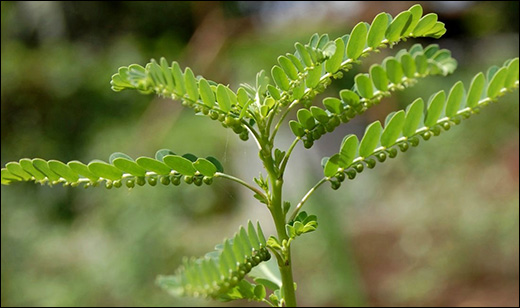
- Stem: The stem is erect, smooth, cylindrical, green to light brown, and profusely branched. Branches are slender and arranged in a pseudo-pinnate manner, giving the appearance of a compound leaf. The stem surface is glabrous and delicate in texture.
- Leaves: Leaves are simple, small, oblong to elliptic, and arranged alternately on the branchlets. They measure approximately 7–15 mm in length, are glabrous, light green in color, with entire margins, a rounded or slightly acute apex, and a short petiole. The leaves resemble those of the amla tree (Emblica officinalis), which is the basis for the name Bhumiamla (“ground amla”).
- Inflorescence: Flowers are solitary and axillary, arising from the leaf axils along the underside of the branchlets.
- Flowers: Flowers are very small, greenish-yellow, and unisexual. The plant is monoecious, bearing both male and female flowers on the same plant.
- Calyx: The calyx consists of 5–6 small, free, greenish sepals, which persist in the fruiting stage.
- Corolla: Corolla is absent; the flowers are apetalous, a characteristic feature of the genus Phyllanthus.
- Androecium: Male flowers contain three stamens, which may be free or slightly connate. The anthers are small and dehisce longitudinally.
- Gynoecium: Female flowers possess a tricarpellary, syncarpous ovary with three slender styles, each terminating in a stigma. The ovary is superior.
- Fruit: The fruit is a small, smooth, globose capsule, borne characteristically on the underside of the branchlets. It is green when immature and turns light green to yellowish-brown on maturity. On ripening, the capsule splits into three cocci.
- Seeds: Seeds are minute, angular, and light brown, enclosed within the cocci. They are smooth and hard, aiding in easy dispersal and regeneration.
Classical Categorisation (If Any) Of Bhumiamla (Phyllanthus Niruri)
- Bhavprakash Nighantu: Guduchyadi Varga
- Raj Nighantu: Parpatadi Varga
- Dhanwanthari Nighantu: Chandanadi Varga
Ancient Verses For Bhumiamla (Phyllanthus Niruri)
Verse No. 1
भूम्यामली तमाली च ताली चैव तमालिका ।
उच्चटा दृढ़पादी च वितुन्ना च वितुन्निका ।।
भूधात्री चारुटा वृष्या विषघ्नी बहुपत्रिका ।
बहुवीर्याऽहिभयदा विश्वपर्णी हिमालया ।
जटा वीरा च नाम्ना सा भवेदेकोनविंशतिः ।।
भूधात्री तु कषायाम्ला पित्तमेहविनाशिनी ।
शिशिरा मूत्ररोगार्त्तिशमनी दाहनाशिनी ।। Bhavprakash Nighantu Guduchyadi Varga Verse no 277-278
Verse Interpretation
Sanskrit Synonyms
- Bhumyamalaki: The plant looks like a tiny version of the Amla (Indian Gooseberry) tree but grows very low to the ground.
- Tamalaki: A classic name used to identify it as a member of the Amla family.
- Bahupatra: This translates to "Many Leaves." It describes the plant’s appearance, as its branches are covered in dozens of tiny, paired leaves.
- Bahuphala: This means "Many Fruits." If you look under the leaves, you will see a long row of tiny, berry-like fruits hanging underneath.
- Bhudhatri: This means "Earth Nurse" or "Mother of the Earth." In ancient medicine, the word for Amla also meant "nurse" because it heals so many things; this plant is the version that grows right on the soil.
- Shiva: This means "Auspicious" or "Healer." It is a title given to the plant because it is considered very kind to the body, especially the liver.
- Ajata: This refers to the plant having a "Clean Stem." It doesn’t have tangled roots or "hair" on the stalks, making it easy to identify.
Properties
- Taste: It is bitter (Tikta), astringent (Kashaya), and sweet (Madhura).
- Effect: It is cooling in nature (Hima) and increases Vata slightly (Vatakrit).
- Therapeutic Actions: It helps relieve thirst (Pipasa), cough (Kasa), bleeding disorders (Pittasra), aggravated Kapha Dosha, itching (Kandu), and wounds (Kshata).
Verse No 2
तामलक्यजटा ताली तमाली तु तमालिनी।
वितुन्ना भूम्यामलकी भूधात्री भ्वामलक्यपि ॥ Raj Nighantu Parpatadi Varga Verse No 91-93
Verse Interpretation
Synonyms of Bhumiamla
- Bhumyamali / Bhudhatri: "Ground-Amla." It looks like an Amla tree but is tiny and grows close to the ground (Bhumi).
- Tamali / Tamalika: Refers to its beautiful dark green color, resembling the leaves of the Tamala tree.
- Tali: A short name indicating its small, compact stature.
- Uccata: Refers to its growth habit, which is erect and upright despite being a small herb.
- Dradhapadi: "Strong-footed." It has a very firm and stable root system for such a delicate-looking plant.
- Vitunna / Vitunnika: "The pain-reliever." These names refer to its ability to soothe sharp or piercing pain, especially in the urinary tract.
- Caruta: Means "Beautiful." It refers to the elegant, symmetrical arrangement of its tiny leaves.
- Vrsya: Refers to its use as a vitalizing tonic that improves overall strength and vigor.
- Visaghni: "Poison-destroyer." It is used in Ayurveda to detoxify the liver and remove toxins from the blood.
- Bahupatrika: "Many-leaved." The plant has numerous tiny leaves arranged in rows.
- Bahuvirya: "Greatly potent." This indicates that the plant has immense medicinal strength despite its small size.
- Ahibhayada: Literally means "causing fear in snakes." Historically, it was used to treat venomous bites or believed to keep snakes away.
- Visvaparni: "World-leaf." This name suggests the herb is widely available or found all over the world.
- Himalaya: Refers to its cooling nature (like the cold Himalayas) or its ability to grow in diverse altitudes.
- Jata: Refers to the matted or dense appearance of the plant when it grows in clusters.
- Vira: "The Heroic One." It is a "brave" herb that fights off stubborn diseases like jaundice and kidney stones.
Medicinal Properties And Benefits
The herb, also referred to as Bhudhatri, possesses specific attributes that make it essential for treating metabolic and urinary conditions:
- Taste and Potency: It is characterized by an astringent (kasaya) and sour (amla) taste. Its natural energy is cold (sisira).
- Pitta Management: It effectively calms and quells pitta dosha (excess body heat).
- Urinary and Renal Support: It is used to treat prameha, which includes obstinate urinary disorders and diabetes.
- Pain Relief: It is highly effective in relieving colic pain associated with renal (kidney) disorders.
- Cooling Action: It is a primary remedy for controlling and soothing internal burning sensations.
Verse No. 3
तामलक्यजटा ताली तमाली तु तमालिनी।
वितुन्ना भूम्यामलकी भूधात्री भ्वामलक्यपि ॥ Dhanwanathari Nighantu Chandanadi Varga Verse no. 83
Verse Interpretation
Here are the synonyms and their specific meanings from the verse:
- Tamalakyajata: Born of or resembling the Tamala tree (often referring to its dark green leaves).
- Tali: Having a spreading nature or resembling a small palm-like arrangement.
- Tamali: The dark one; referring to the deep green hue of the foliage.
- Tamalini: A plant that is abundant with Tamala-like leaves.
- Vitunna (वितुन्ना): Having a "pricked" or tiny-patterned appearance (referring to the small fruits/seeds under the leaves).
- Bhumyamalaki (भूम्यामलकी): The Amalaki (Gooseberry) of the earth/ground.
- Bhudhatri (भूधात्री): The "Mother" or nourisher of the earth; also implies a ground-dwelling Amala.
- Bhvamalaki (भ्वामलकी): The Gooseberry that grows close to the soil.
Verse No. 4
भूडात्री मधुरा तिक्ता वीर्यतः शिशिरा स्मृता ।
पित्तं हन्ति कफास्त्रघ्नी दृष्टिदाहविनाशिनी ॥ Dhanwanathari Nighantu Chandanadi Varga Verse no. 84
Verse Interpretation
Actions and Therapeutics:
- Sweet and Bitter: Refers to the tastes (Madhura and Tikta).
- Cold: Refers to its potency (Shishira or Sheeta Virya).
- Pacifies Kapha and Pitta: It destroys or balances these two doshas (Pittam hanti kaphasthraghni).
- Cures blood diseases: Refers to its Asra (blood) cleansing properties.
- Eye-ailments and burning sensation: Destroys burning sensations and benefits the eyes (Drishtidahavinashini).
Ayurvedic Properties Of Bhumiamla (Phyllanthus Niruri)
- Rasa (Taste): Tikta (Bitter), Kashaya (Astringent), Madhura (Sweet)
- Guna (Qualities): Laghu (Light), Ruksha (Dry)
- Veerya (Potency): Sheeta (Cold)
- Vipaka (Post-Digestive Effect): Madhura (Sweet)
Action On Tridosha Of Bhumiamla (Phyllanthus Niruri)
Bhumiamla primarily acts as a Pitta–Kapha Shamaka herb and shows a balancing effect on aggravated doshas when used appropriately.
Therapeutic Indications Of Bhumiamla (Phyllanthus Niruri)
- Kamala (Jaundice)
- Pandu (Anemia)
- Raktapitta / Pittasrava (Bleeding disorders)
- Daha (Burning sensation)
- Trishna (Excessive thirst)
- Jwara (Fever)
- Kasa (Cough)
- Shwasa (Asthma)
- Kustha (Skin diseases)
- Visha (Poisoning / toxic conditions)
- Vrana (Wounds)
- Ashmari (Urinary stones)
- Mutrakricchra / Mutraroga (Urinary disorders)
- Prameha (Metabolic/urinary disorders)
- Yakrit Vikara / Pleeha Vriddhi (Liver & spleen disorders)
- Ajirna / Amlapitta (Indigestion, hyperacidity)
- Atisara (Diarrhea)
Systemic Actions Of Bhumiamla (Phyllanthus Niruri)
Digestive System (Annavaha Srotas)
- Deepana & Pachana: Improves digestion and corrects impaired Agni, especially in Pitta-related digestive disorders.
- Amlapitta-shamana: Reduces hyperacidity and burning sensations due to its cooling and bitter properties.
- Ruchya: Improves taste perception and appetite.
- Grahi (Mild): Kashaya rasa helps in controlling loose stools in Pitta-dominant Atisara.
Hepatobiliary System (Yakrit–Pleeha)
- Yakrit-utttejak & Yakrit-rasayana: Supports liver function, enhances bile flow, and aids in detoxification.
- Kamala-nashaka: Useful in jaundice and other Pitta-dominant liver disorders.
- Rakta-shodhana: Purifies blood by eliminating Pitta and Ama from circulation.
Urinary System (Mutravaha Srotas)
- Mutrala: Promotes urine flow and cleanses the urinary tract.
- Ashmari-bhedana (Clinically used): Helps in preventing and managing urinary calculi.
- Mutrakricchra-hara: Relieves burning and painful urination.
Circulatory & Blood System (Rakta Dhatu)
- Raktapitta-shamana: Controls bleeding disorders by pacifying aggravated Pitta in Rakta.
- Pandu-hara: Supports blood nourishment and is useful in anemia-like conditions.
- Daha-prashamana: Alleviates burning sensations and heat in the blood.
Respiratory System (Pranavaha Srotas)
- Kasa–Shwasa-hara: Helps in cough and asthma by reducing Pitta and Kapha irritation in the respiratory tract.
- Shothahara: Reduces inflammatory swelling of airways.
Integumentary System (Twak & Vrana)
- Kusthaghna: Useful in skin disorders associated with Rakta–Pitta vitiation.
- Vrana-ropana: Promotes wound healing and tissue regeneration.
- Krimighna: Acts against skin pathogens and microbial infections.
Chemical Composition Of Bhumiamla (Phyllanthus Niruri)
Lignans (Key Hepatoprotective & Antiviral Compounds)
These are the most important and well-studied constituents of Phyllanthus niruri:
- Phyllanthin
- Hypophyllanthin
- Niranthin
- Nirphyllin
- Phylltetralin
Responsible for liver protection, antiviral (especially Hepatitis B), and antioxidant actions.
Polyphenols & Tannins (Antioxidant & Anti-urolithiatic Activity)
- Corilagin
- Geraniin
- Ellagic acid
- Gallic acid
- Chebulagic acid
These compounds contribute to kidney stone prevention, antioxidant, anti-inflammatory, and antimicrobial effects.
Flavonoids (Anti-inflammatory & Antioxidant Action)
- Quercetin
- Quercitrin
- Rutin
- Kaempferol
- Astragalin
Support free-radical scavenging, vascular protection, and anti-inflammatory activity.
Terpenoids & Triterpenes (Anti-inflammatory & Protective Action)
- Lupeol
- β-Amyrin
- Oleanolic acid
Known for anti-inflammatory, hepatoprotective, and tissue-protective effects.
Sterols (Metabolic & Anti-inflammatory Support)
- β-Sitosterol
- Stigmasterol
- Campesterol
Contribute to anti-inflammatory, lipid-regulating, and general metabolic support.
Alkaloids (Supportive Bioactivity)
- Phyllanthine
- Nirurine
Minor constituents contributing to antimicrobial and systemic actions.
Other Bioactive Constituents
- Saponins
- Glycosides
- Fixed oils (trace amounts)
Support diuretic, detoxifying, and systemic balancing effects.
Practical Uses / Health Benefits Of Bhumiamla (Phyllanthus Niruri)
- Helpful in liver disorders such as Kamala (jaundice), fatty liver, hepatomegaly, and impaired liver function
- Acts as a hepatoprotective herb and supports liver detoxification and bile secretion
- Useful in kidney stones (Ashmari) by helping in breaking and preventing stone formation
- Beneficial in urinary disorders like Mutrakrichra (painful urination), Mutraghata (urinary obstruction), and burning micturition
- Supports management of Prameha (diabetes) by helping regulate blood sugar and metabolism
- Improves digestion and appetite; useful in Ajeerna (indigestion), Grahani, and Atisara (diarrhea)
- Pacifies aggravated Pitta dosha and reduces excess body heat and acidity
- Acts as a Raktashodhaka (blood purifier), helpful in skin disorders like acne, eczema, itching, and inflammatory skin conditions
- Useful in Jwara (fever), especially Pittaja and chronic fevers
- Possesses anti-inflammatory properties, helpful in swelling, pain, and mild inflammatory conditions
- Exhibits antimicrobial and antiviral activity, supporting the body during infections
- Helps in respiratory discomfort and mild cough due to its cooling and anti-inflammatory nature
- Acts as a natural detoxifying herb, supporting metabolic balance and overall health
Part(s) Used Of Bhumiamla (Phyllanthus Niruri)
Whole Plant
Dosage Of Bhumiamla (Phyllanthus Niruri)
- Leaf juice (Swarasa): 10–20 ml once or twice daily
- Bhumyamalaki powder (Churna): 3–6 grams per day
Home Remedies With Bhumiamla (Phyllanthus Niruri)
- Paste prepared from fresh leaves of Bhumyamalaki is applied externally to manage skin infections.
- Paste of the whole plant of Phyllanthus niruri, mixed with rock salt, is applied over painful and swollen areas, especially in cases of fractures.
- The roots are ground into a paste with lime juice or rice gruel and used as a collyrium for eye disorders such as conjunctivitis and blepharitis.
- Fresh leaf juice of Bhumyamalaki, administered in a dose of 15–20 ml on an empty stomach in the morning, is beneficial in indigestion, hyperacidity, and jaundice.
- Juice of the whole plant, taken in a dose of about 15 ml, is useful in fever, hepatomegaly, and splenomegaly.
- In cough and asthma, the juice of Phyllanthus niruri is used either internally with sugar candy or administered as nasal drops.
- For typhoid fever, herbal tea prepared from fresh leaves of Bhumyamalaki is traditionally consumed.
- Decoction of the whole plant, taken in a dose of approximately 30 ml, is used as a blood purifier and in the management of skin infections.
- Bhumyamalaki paste is traditionally taken along with buttermilk in the management of jaundice.
- A paste prepared from Bhumyamalaki with rock salt and sour rice gruel, rubbed thoroughly in a copper vessel, is applied externally over the eyelids to relieve eye pain.
- In Prameha (diabetes), Bhumyamalaki powder in a dose of about 20 g is administered internally along with Maricha (black pepper), traditionally taken as 20 seeds.
- The seeds of Bhumyamalaki are taken with rice water for about two weeks in cases of haemorrhage.
- For Pradara (excessive vaginal discharge), the root of Bhumyamalaki is administered with rice water for 2–3 days.
- Leaves and roots of the plant are made into a paste (Kalka) and taken with rice water to manage oedema and swelling.
- In chronic dysentery, the young shoots of the plant are given in the form of an infusion.
- For typhoid fever, Bhumyamalaki is boiled to prepare a herbal tea, which is then consumed.
Planet Ayurveda Products With Bhumiamla (Phyllanthus Niruri)
- Phyllanthus Niruri Capsules
- Bhumi Amla Powder
- Immune Bosster Capsules
- Mutrakrichantak Churna
- Yakrit Plihantak Churna
- Livo Plan Syrup
- Brahmi Chyawanprash
- Yakrit Plihantak Capsules
- Reno Plan Syrup
- Vikramprash
- Detox Tea
- Nephralka Capsules
- Liver Power
- Hair Growth Formula
- Daily Essentials
- Stono Plan Syrup
- Youth Restora
Research On Bhumiamla (Phyllanthus Niruri)
Scientific investigations carried out on Phyllanthus niruri have validated many of its traditional Ayurvedic uses and revealed a wide range of pharmacological activities.
- Experimental studies have shown that various extracts of Phyllanthus niruri possess strong antioxidant activity, attributed mainly to the presence of flavonoids, phenolic compounds, tannins, and other bioactive constituents. These antioxidants help neutralize free radicals and reduce oxidative stress.
- Several studies conducted on diabetic models indicate that Phyllanthus niruri exhibits antidiabetic potential, as it helps lower blood glucose levels, improves glucose tolerance, and inhibits carbohydrate-digesting enzymes, supporting its traditional use in Prameha (Diabetes).
- Research has also demonstrated notable antimicrobial activity of the plant extracts against a variety of bacterial strains, supporting its traditional application in infections and skin disorders.
- Anti-inflammatory studies reveal that leaf and whole-plant extracts significantly reduce inflammation and edema in experimental models. Additionally, gastroprotective and anti-ulcer effects have been observed, indicating its protective action on the gastric mucosa.
- Certain experimental studies suggest neuropharmacological effects, showing mild influence on central nervous system activity, although further detailed investigations are required in this area.
- Extensive pharmacological reviews report that Phyllanthus niruri exhibits hepatoprotective, antiviral, anti-urolithiatic, hypolipidemic, analgesic, cardioprotective, and anti-inflammatory activities, which strongly correlate with its traditional Ayurvedic indications, especially in liver and urinary disorders.
- Toxicological studies conducted on animals suggest that aqueous extracts of Phyllanthus niruri are generally safe and well tolerated at therapeutic doses; however, long-term and clinical safety evaluations are still limited.
Conclusion
Bhumiamla (Phyllanthus niruri / Phyllanthus fraternus) is an important Ayurvedic herb renowned for its wide therapeutic spectrum and strong correlation between classical indications and modern research findings. Its Mutrala, Ashmaribhedana, Yakrit-uttejaka, and Pittashamaka properties make it especially valuable in urinary calculi, liver disorders, metabolic diseases, and Pitta-dominant conditions. Classical texts highlight its usefulness in Kamala, Prameha, Raktapitta, and Jwara, while contemporary studies validate its hepatoprotective, antioxidant, anti-urolithiatic, antidiabetic, and antimicrobial activities. The presence of potent lignans, flavonoids, tannins, and polyphenols further strengthens its medicinal significance. Owing to its safety, efficacy, and versatility, Bhumiamla holds a prominent place in both classical formulations and modern Ayurvedic practice, including standardized herbal products such as those developed by Planet Ayurveda.