


Kantaki Karanj / Physic Nut / Caesalpinia Bonducella – Medicinal Properties, Benefits & Dosage
Abstract
Kantaki Karanj (Caesalpinia bonducella), commonly known as Physic Nut or Fever Nut, is an important medicinal plant described in Ayurveda for its potent Tikta–Kashaya Rasa (Bitter, Astringent Taste), Ushna Virya (hot Potency), and Katu Vipaka (Pungent Post Digestion Effect). It is widely valued for its Jwaraghna (antipyretic), Deepana–Pachana (digestive stimulant), Krimighna (anthelmintic), and Shothahara (anti-inflammatory) properties. Classical texts recommend Kantaki Karanj in conditions such as Jwara (fever), Krimi Roga (worm infestation), certain Vata-Kapha dominant disorders, etc. Different parts of the plant, especially the seeds, are traditionally used in formulations for enhancing immunity, improving metabolic functions, and managing chronic inflammatory conditions. Its broad therapeutic spectrum makes Kantaki Karanj a significant herb in both classical and folk Ayurvedic practices.
Classical Reference Of Kantaki Karanj (Caesalpinia Bonducella)
Bhavprakash Nighantu Guduchyadi varga Page no. 337
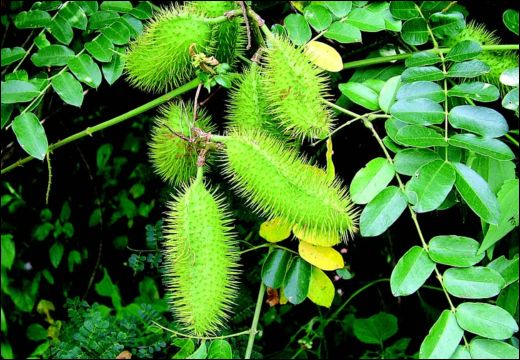
Scientific Classification Of Kantaki Karanj (Caesalpinia Bonducella)
- Kingdom: Plantae
- Subkingdom: Tracheobionta (Vascular plants)
- Superdivision: Spermatophyta (Seed plants)
- Division: Magnoliophyta (Angiosperms)
- Class: Magnoliopsida (Dicotyledons)
- Order: Fabales
- Family: Fabaceae (Leguminosae)
- Subfamily: Caesalpinioideae
- Genus: Caesalpinia
- Species: bonducella
Synonyms Of Kantaki Karanj (Caesalpinia Bonducella)
- Kantakikaranja: This name is attributed to the plant’s characteristic as a thorny or prickly shrub.
- Kuberaksha: This term refers to the seeds, which are noted for being similar in size to an eye.
- Putika: This designation stems from the plant’s notably foul or fetid odor.
- Additional Names: The plant is also commonly identified by the synonyms Karanji, Putikaranja, and Vitapakaranja.
Vernacular Names Of Kantaki Karanj (Caesalpinia Bonducella)
- Sanskrit: Kantaki Karanja, Latakaranja, Putikaranja
- Hindi: Karanjwa, Katkaranj, Ghotakaranja
- English: Fever Nut, Physic Nut, Gray Nicker
- Tamil: Kazharchikkai
- Telugu: Gacchakaya
- Kannada: Gajjiga, Kantaki Karanja
- Malayalam: Kazharchikka
- Marathi: Sagargota, Gajaga
- Gujarati: Karanj, Kantak Karanj
- Bengali: Natakaranja
- Punjabi: Karanj
- Urdu: Karanjwa
Habitat Of Kantaki Karanj (Caesalpinia Bonducella)
Geographical Distribution
Kantaki Karanj is widely distributed in tropical and subtropical regions of the world. It is commonly found throughout the Indian subcontinent, including India, Sri Lanka, Bangladesh, and nearby countries. The plant is also present in parts of Southeast Asia, tropical Africa, island regions, and coastal areas of the Americas, largely due to natural seed dispersal through ocean currents.
Climatic Requirements
The plant thrives in warm tropical climates and shows good tolerance to varying moisture conditions. It grows well in both humid and moderately dry environments, adapting easily to regions with seasonal rainfall and warm temperatures.
Natural Growing Areas
Kantaki Karanj commonly grows in coastal zones, particularly near beaches and sandy shores where it can withstand saline conditions. It is also found along riverbanks, plains, and low-lying lands with proper drainage. Additionally, it grows in scrub jungles, forest edges, dry deciduous forests, and secondary vegetation.
Soil Preferences
This species can grow in a wide range of soils, including sandy and loamy soils, provided they are well drained. It tolerates slightly acidic to mildly alkaline soils and does not require highly fertile land for survival.
Light Requirements
Kantaki Karanj prefers open sunlight for healthy growth and vigorous climbing. However, it can also survive in partial shade, especially in regions with higher humidity.
Altitudinal Range
The plant is mainly found in lowland areas, though it may occasionally occur in foothill regions at moderate elevations.
Growth Habit In Natural Habitat
In its natural environment, Kantaki Karanj grows as a perennial, thorny climber or scant shrub. It often spreads over nearby vegetation, fences, or structures and may form dense growth where environmental conditions are favorable.
Morphology Of Kantaki Karanj (Caesalpinia Bonducella)
- Habit: Kantaki Karanj is a perennial, woody climber or spreading shrub that grows vigorously by scrambling over nearby plants and supports. It is easily recognized by its strongly armed, thorny nature, which allows it to climb and spread effectively.
- Stem: The stem is hard, woody, and extensively branched, bearing numerous sharp, curved and straight prickles. Young stems may appear greyish or slightly hairy, while mature stems become firmer and rough in texture. The prickles provide mechanical support and protection.
- Leaves: The leaves are large, alternate, and bipinnately compound, giving the plant a feathery appearance. Each leaf is divided into several pairs of pinnae, and each pinna carries multiple small leaflets. The leaflets are oblong to elliptical in shape, with a rounded tip and smooth margins. The upper surface of the leaflet is generally smooth, whereas the lower surface may show fine hairiness. Leaves are soft and membranous in texture.
- Inflorescence: Flowers are arranged in elongated racemes, which arise mainly from the terminal or upper axillary regions of the branches. The inflorescence bears numerous flowers closely spaced along the axis.
- Flowers: The flowers are yellow in color and moderately sized. Each flower consists of five sepals and five petals. The stamens are prominent and usually bear hairy filaments, contributing to the characteristic appearance of the flower. Flowers are generally bisexual, though some may function as unisexual.
- Fruit: The fruit is a large, inflated pod that is ovoid to oblong in shape. The pod surface is densely covered with stiff, sharp spines, making it very distinctive. On maturity, the pod becomes dry and hard.
- Seeds: Each pod usually contains one or two hard seeds. The seeds are rounded to slightly oblong, smooth, and grey to ash-colored. They possess a thick seed coat, which enables them to remain viable for long periods and aids in dispersal, especially through water.
Classical Categorisation Of Kantaki Karanj (Caesalpinia Bonducella)
- Bhavprakash Nighantu: Guduchyadi Varga
Ancient Verses For Kantaki Karanj (Caesalpinia Bonducella)
Verse No. 1
करञ्जो नक्तमालश्च करजश्चिरबिल्वकः।
घृतपूर्णकरञ्जोऽन्यः प्रकीर्यः पूतिकोऽपि च ॥
स चोक्तः पूतिकरञ्जः सोमवल्कश्च स स्मृतः।
करञ्जः कटुकस्तीक्ष्णो वीर्योष्णो योनिदोषहृत्। कुष्ठोदावर्त्तगुल्मार्शोव्रणकृमिकफापहः ॥
Bhavprakash Nighantu Guduchyadi Varga Verse no. 119-120
Verse Interpretation
Classification And Synonyms
There are two main varieties of the Karanja plant mentioned in the text:
- Kantaka Karanja (The Thorny Variety): Known by the Sanskrit names Karanja, Naktamala, Karaja, and Chirabilvaka.
- Ghrita Karanja (The Smooth Variety): Known by the Sanskrit names Prakirya, Putika, Putikaranja, and Somavalka.
Medicinal Properties
Karanja is described as having a pungent taste (Katuka) and a sharp or penetrating quality (Tikshna). Its potency is hot (Ushna Virya), which means it has a warming effect on the body.
Therapeutic Benefits
The plant is used to treat and manage the following conditions:
- Reproductive Health: It helps in curing disorders of the female reproductive system (Yonidosha).
- Skin Diseases: It is effective against various skin disorders, including leprosy (Kushtha).
- Digestion and Bloating: It treats Udavarta (upward movement of gas or irregular bowel movements) and Gulma (abdominal tumors or masses).
- Piles: It is used in the treatment of hemorrhoids (Arsha).
- Wound Healing: It helps in cleaning and healing wounds (Vrana).
- Parasites: It acts as an anthelmintic to destroy intestinal worms (Krimi).
- Dosha Balance: It specifically helps in pacifying or removing excess Kapha dosha from the body.
Ayurvedic Properties Of Kantaki Karanj (Caesalpinia Bonducella)
- Rasa (Taste): Tikta (Bitter), Kashaya (Astringent)
- Guna (Properties): Laghu (light to digest), Ruksha (Dry)
- Veerya (Potency): Ushna (Hot)
- Vipaka (Post Digestion Effect): Katu (Pungent)
Action On Tridosha Of Kantaki Karanj (Caesalpinia Bonducella)
This herb pacifies Vata and Kapha Dosha.
Therapeutic Indications Of Kantaki Karanj (Caesalpinia Bonducella)
- Jwara (Fever)
- Vishama Jwara (Intermittent / Malarial fever)
- Madhumeha (Diabetes mellitus)
- Krimi Roga (Intestinal worm infestation)
- Agnimandya (Low digestive fire)
- Grahani (Malabsorption syndrome)
- Shotha (Inflammation / Edema)
- Sandhivata (Osteoarthritis)
- Vatarakta (Gout-like disorder)
- Kushta (Skin diseases)
- Kandu (Pruritus / Itching)
- Vrana (Chronic wounds / ulcers)
- Rakta Dushti (Blood vitiation)
- Daurbalya (General debility)
Systemic Actions Of Kantaki Karanj (Caesalpinia Bonducella)
- External Application: Kantaki Karanj oil is used externally for its analgesic and anti-inflammatory effects. Local application over affected joints helps in reducing pain, swelling, and inflammatory edema, especially in musculoskeletal and joint disorders.
- Digestive System (Annavaha Srotas): Acts as a carminative and digestive stimulant, supporting liver function and intestinal absorption. It is useful in helminthic infestations, liver and splenic disorders, abdominal colic, dysentery, indigestion, and anorexia.
- Circulatory System (Raktavaha Srotas): Functions as a blood-cleansing agent and is indicated in blood-borne and circulatory disorders, helping to correct systemic vitiation of Rakta.
- Respiratory System (Pranavaha Srotas): Pacifies Kapha dosha and is beneficial in cough, asthma, and other Kapha-dominant respiratory conditions.
- Excretory System (Mutravaha Srotas): Supports metabolic regulation and is indicated in diabetes and related urinary disturbances.
- Reproductive System (Artavavaha / Shukravaha Srotas): Traditionally used as a contraceptive agent to prevent unwanted pregnancy when administered under classical guidance.
- Skin (Tvak): Indicated in various skin disorders, helping to reduce inflammation and microbial involvement.
- Tapakrama (Fever Management): Useful in Vishama Jwara (intermittent fever). Traditionally, seed powder administered along with pepper powder is advised for managing fever patterns.
Chemical Composition Of Kantaki Karanj (Caesalpinia Bonducella)
- Bonducin (Bitter glycoside): Antipyretic, anti-inflammatory, digestive stimulant, supports glucose regulation.
- Flavonoids (Quercetin group): Strong antioxidant, anti-inflammatory, immunomodulatory.
- Saponins: Hypoglycemic, anthelmintic, lipid-lowering.
- Tannins: Antimicrobial, anti-diarrhoeal, wound-healing.
- β-Sitosterol: Anti-inflammatory, immunomodulatory, cardioprotective.
- Oleic & Linoleic Acids: Anti-inflammatory, skin-protective, metabolic support.
- Alkaloids (Caesalpinine): Analgesic, antimicrobial, digestive stimulant.
Practical Uses / Health Benefits Of Kantaki Karanj (Caesalpinia Bonducella)
- Helps in management of fever, especially intermittent and chronic fevers
- Supports blood sugar regulation in diabetes and metabolic imbalance
- Acts as a natural anti-inflammatory and pain-relieving agent, useful in joint disorders
- Improves digestive strength, relieves indigestion, colic, and loss of appetite
- Effective in intestinal worm infestations due to anthelmintic action
- Supports liver and spleen health, useful in hepatosplenic disorders
- Beneficial in diarrhoea and dysentery because of astringent and antimicrobial effects
- Helps in respiratory complaints like cough and asthma by pacifying Kapha
- Aids in skin disorders and wound healing through antimicrobial and anti-inflammatory action
- Enhances immunity and resistance to infections
- Traditionally used in urinary and metabolic disorders
- External application helps reduce joint pain, swelling, and inflammation
Part(s) Used Of Kantaki Karanj (Caesalpinia Bonducella)
- Seeds (Beeja)
- Seed Kernel
- Seed Oil
- Leaves (Patra)
Dosage Of Kantaki Karanj (Caesalpinia Bonducella)
- Seed Powder (Beeja Churna): 500 mg – 1 g, once or twice daily
- Seed Kernel Powder: 250 mg – 500 mg, once or twice daily
- Seed Oil (External use): As required, for local application
- Leaf Decoction (Kwatha): 20–40 ml, once daily
Home Remedies With Kantaki Karanj (Caesalpinia Bonducella)
- Its seeds are very beneficial for intermittent fever, common fever, continuous fever, cold fever (chills), and especially for Malaria. The powder of the seeds is given in a dose of 500–1000 mg with black pepper before the onset of fever. It should not be given on an empty stomach. It is considered as beneficial as quinine. It is also used as a tonic (restorative) after the fever has subsided.
- Using the seeds during puerperal fever (fever after childbirth) or during the postpartum period is beneficial in every way. It reduces fever, causes uterine contraction, reduces pain, purifies menstrual flow (or lochia), and if there are any ulcers/wounds, it heals them as well.
- To reduce pain in abdominal colic and for vomiting, about half the pulp of one seed is given with 2 or 3 cloves. In cases of colic, its inhalation (fumes/smoking) is also beneficial. For indigestion, it is used with asafoetida (hing). In cases of dyspepsia/poor digestion, its powder is given with black pepper and buttermilk. In blood-mixed diarrhea (dysentery), it is used along with cannabis (Ganja).
- A decoction (kwath) of the seeds is given to drink for tubercular cough (Kshayaja Kasa) and asthma/labored breathing.
- The seed powder is placed on castor (Eranda) leaves and tied over scrotal enlargement (hydrocele) and scrotal inflammation. It is also administered orally for these conditions. The juice of its leaves (Putikaranja) is beneficial in elephantiasis (Shlipada). Ground seeds mixed with castor oil are also tied over other types of inflammation/swelling.
- Oil extracted by pressing the seeds is applied to facial spots, acne (Tarunyapitika), and rheumatoid arthritis (Amavata). It is dropped into the ears for ear discharge (Karnasrava). It is beneficial for chronic ulcers and wounds. Oil prepared by boiling the seeds is also used in this manner.
- The roots and leaves are anti-pyretic (fever-reducing). The juice of the leaves is given for chronic fever, urticaria (Sheetapitta), skin disorders arising in the second stage of syphilis (Upadansha), worms, and liver disorders.
Research On Kantaki Karanj (Caesalpinia Bonducella)
- Anti-inflammatory, Antipyretic & Analgesic Activity: Experimental studies on seed extracts have shown significant reduction in inflammation, fever, and pain in animal models, supporting its traditional use in Jwara and Shotha.
- Antidiabetic Activity: Research involving chemically induced diabetic models demonstrates that seed and seed kernel extracts help lower blood glucose levels, improve lipid profiles, and enhance antioxidant defense, validating its role in Madhumeha and metabolic disorders.
- Immunomodulatory Effects: Ethanolic seed extracts have been reported to stimulate both humoral and cell-mediated immune responses, including increased phagocytosis and antibody production.
- Antiasthmatic And Antihistaminic Activity: Studies indicate that seed extracts stabilize mast cells, reduce eosinophil count, and inhibit histamine-mediated responses, supporting use in asthma and allergic respiratory conditions.
- Antimicrobial Activity: Seed and leaf extracts have shown inhibitory activity against various pathogenic bacteria, confirming antimicrobial and protective actions.
- Hypolipidemic Activity: Research findings suggest that seed kernel extracts help reduce serum cholesterol and triglyceride levels, contributing to lipid regulation and metabolic health.
- Antioxidant Potential: Multiple studies confirm strong free-radical scavenging activity of seed extracts, which aids in cellular protection and reduces oxidative stress.
- Reproductive And Hormonal Modulation: Emerging experimental studies suggest a possible role of seed extracts in hormonal balance and ovarian function regulation.
Conclusion
Kantaki Karanj (Caesalpinia bonducella) is a potent Ayurvedic medicinal plant with wide therapeutic applicability supported by both classical literature and modern scientific research. Classical texts highlight its Tikta–Kashaya Rasa (Bitter and Astringent), Ushna Virya (Hot Potency), and Katu Vipaka (Pungent post digestion effect), explaining its effectiveness in Jwara (fever), Krimi Roga (Worm Infestations), Shotha (Inflammation), and Kapha-Vata dominant disorders. Contemporary research further validates its antipyretic, anti-inflammatory, antidiabetic, immunomodulatory, antimicrobial, and antioxidant activities, particularly of the seeds and seed kernel. Its systemic actions on digestive, metabolic, respiratory, circulatory, and immune systems justify its extensive traditional use. When used in appropriate dosage under Ayurvedic supervision, Kantaki Karanj serves as a valuable herb for managing chronic inflammatory, metabolic, and infective conditions, bridging classical wisdom with evidence-based herbal medicine.