


Cerebrospinal Fluid (CSF) Analysis Test – Procedure, Indications, Results & Ayurvedic Perspective
Abstract
The central nervous system remains a sequestered cathedral of silver-threaded impulses, shielded by the vigilant blood-brain barrier. Yet, when neurological storms gather—be it the cellular mutiny of Multiple Sclerosis or the toxic infiltration of bacterial pathogens—this sanctuary becomes a site of biochemical upheaval. Cerebrospinal fluid (CSF) serves as the liquid archive of these silent crises. Through the art of the lumbar puncture, we siphon a sapphire-clear map of the brain’s hidden topography. By decoding protein surges and glucose depletions, we unmask the ghosts of neurodegeneration and infection, transforming microscopic whispers into a definitive diagnostic clarion call.Let’s discuss in detail!
Introduction
Cerebrospinal Fluid (CSF) Analysis is a critical diagnostic investigation used to evaluate disorders affecting the central nervous system (CNS), including the brain and spinal cord. Cerebrospinal fluid is a clear, colorless fluid that circulates within the ventricles of the brain and the subarachnoid space, providing mechanical protection, nutrient transport, and waste removal. The test is typically performed following a lumbar puncture (spinal tap), allowing laboratory assessment of physical characteristics, biochemical parameters (protein, glucose), cellular components, microbiological cultures, and immunological markers. CSF analysis plays a pivotal role in diagnosing infections such as meningitis, inflammatory conditions like multiple sclerosis, subarachnoid hemorrhage, malignancies, and various neurodegenerative disorders. Its precise interpretation aids clinicians in differentiating infectious, inflammatory, traumatic, and neoplastic etiologies, making it an indispensable tool in neurological practice.
What Happens During The Procedure?
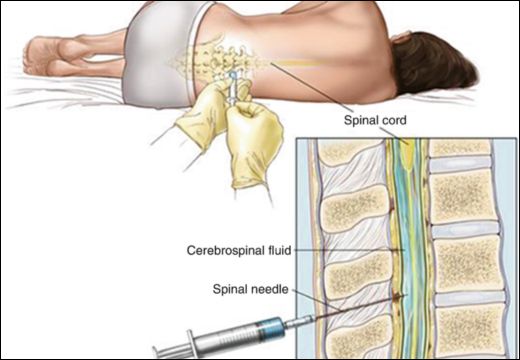
During the procedure—commonly referred to as a lumbar puncture or spinal tap—the clinical focus is on precision and maintaining a sterile environment to access the subarachnoid space safely.
1. Preparation And Positioning
The patient is typically placed in one of two positions designed to widen the gaps between the vertebrae:
- Lateral Decubitus: Lying on the side in a fetal position, knees drawn to the chest.
- Seated: Sitting on the edge of the bed, leaning forward over a bedside table. The clinician identifies the landmarks of the lower back (usually the L3-L4 or L4-L5 interspace) to ensure the needle enters well below where the solid spinal cord ends.
2. Anesthesia And Access
- Sterilization: The area is scrubbed with an antiseptic (like iodine or chlorhexidine).
- Local Anesthetic: A small needle is used to numb the skin and deeper tissues with lidocaine. You may feel a brief sting followed by a sensation of pressure.
- Needle Insertion: A thin, hollow spinal needle is carefully inserted. Once it pierces the ligamentum flavum and the dura mater, a subtle “pop” may be felt, signaling entry into the fluid-filled space.
3. Collection And Measurement
Once the needle is positioned, the clinician may perform the following:
- Opening Pressure: A manometer (a measuring tube) is attached to the needle to record the pressure of the fluid.
- Fluid Extraction: The CSF is allowed to drip naturally into three or four sterile vials. Usually, about 10–15 mL is collected.
- Tube Sequencing: The tubes are collected in a specific order to prevent contamination (e.g., Tube 1 for chemistry, Tube 3 for cell counts to avoid “traumatic tap” blood interference).
4. Post-Procedure Care
The needle is withdrawn, and a small bandage is applied. To minimize the risk of a “spinal headache” (caused by a temporary drop in fluid pressure), patients are often instructed to lie flat for 30 to 60 minutes and increase fluid intake.
Results Interpretation
Interpreting CSF results requires comparing the patient’s values against standard reference ranges. Clinicians look for “patterns” rather than isolated numbers to distinguish between viral, bacterial, and autoimmune conditions.
Standard Reference Ranges
| Component | Normal Range (Adult) |
|---|---|
| Appearance | Clear and Colorless |
| Opening Pressure | 10–20 cm H2O |
| Total Protein | 15–45 mg/dL |
| Glucose | 50–80 mg/dL (or >60% of blood glucose) |
| White Blood Cells (WBC) | 0–5 cells/µL (mostly lymphocytes) |
| Lactate | <2.5 mmol/L |
Indications Of Cerebrospinal Fluid (CSF) Analysis
Cerebrospinal fluid analysis is indicated in various neurological conditions where central nervous system (CNS) pathology is suspected. Major indications include:
Ayurveda View
In the Ayurvedic paradigm, the Cerebrospinal Fluid (CSF) is envisioned as Tarpaka Kapha, a localized manifestation of the water and earth elements seated within the Shiras (head). This “nourishing lubricant” acts as a vital buffer, shielding the delicate Majja Dhatu (nervous tissue) from the abrasive, drying qualities of Prana Vata (nerve impulses). Unlike the purely mechanical view of modern medicine, Ayurveda perceives this fluid as a medium for emotional contentment and sensory clarity; it “tarpayati” or satiates the sense organs, allowing for the seamless integration of external stimuli and internal consciousness. When the rhythmic flow of this fluid is compromised, neurological pathology arises. An excess of Vata—the principle of movement and dryness—evaporates the protective Tarpaka Kapha, leading to the “drying out” of the brain, which correlates to neurodegenerative conditions like Multiple Sclerosis or Parkinson’s. Conversely, an accumulation of Ama (metabolic toxins) or a sluggish Kapha can obstruct the fluid’s pathways, mirroring the modern understanding of Hydrocephalus or increased intracranial pressure.
Herbs To Restore Tarpaka Kapha
1. Ashwagandha (Withania somnifera)
Known as a Balya (strength-provider) and Vata-hara (Vata-pacifier), Ashwagandha is “Sattvic” in nature. It nourishes the Majja Dhatu (nervous tissue) by providing “unctuousness” to counter the dryness of aging. It is a premier Rasayana that grounds the nervous system, replenishing the structural “moisture” of Tarpaka Kapha. It is Classified as a potent adaptogen, it modulates the HPA axis to reduce cortisol. Research indicates its withanolides promote dendrite formation and neurite outgrowth, effectively aiding in the repair of the myelin sheath and protecting neurons from oxidative stress-induced apoptosis.
2. Amalaki (Phyllanthus emblica)
A rare Tridosha-hara (balances all three doshas), Amalaki is a powerhouse of Ojas (vitality). In neurology, it is used for its Chakshushya (vision-enhancing) and Sarvadosha-hara properties, ensuring the “cleanliness” of the CSF by removing Ama (metabolic toxins) that cloud the mind. It is one of the richest sources of stable Vitamin C and polyphenols. These act as high-capacity antioxidants that cross the blood-brain barrier to neutralize free radicals, preventing lipid peroxidation in the brain’s fatty tissues and maintaining the integrity of the blood-CSF barrier.
3. Giloy (Tinospora cordifolia)
Called Amrita (the nectar of immortality), Giloy is a bitter tonic that excels at Guduchi-Satva (purifying the essence). It stabilizes the Sadhaka Pitta (intellect/emotions) and clears the Srotas (channels) of the brain, ensuring the smooth circulation of Tarpaka Kapha. It is a sophisticated immunomodulator. Studies show it activates macrophages and modulates cytokine production, making it highly effective in reducing neuro-inflammation. Its alkaloids, like berberine, offer neuroprotective effects against toxins that would otherwise compromise the cerebrospinal environment.
4. Brahmi (Bacopa monnieri)
Named after Brahma (the creator), it is the ultimate Medhya Rasayana. It is Sheeta (cooling) and specifically targets the Shiras (head) to enhance Dhi (acquisition), Dhriti (retention), and Smriti (recall). It thickens the “lubricant” of Tarpaka Kapha to soothe a hyperactive mind. Its active bacosides facilitate the repair of damaged neurons by enhancing kinase activity. This promotes synaptic transmission and increases cerebral blood flow. It is clinically recognized for improving cognitive function and reducing anxiety by modulating serotonin and dopamine levels.
5. Mandukaparni (Centella asiatica)
Often confused with Brahmi, Mandukaparni is more Vayasthapana (anti-aging) and focuses on the micro-circulation of the brain. It is said to “awaken” the crown chakra and refine the quality of the Tarpaka Kapha to improve alertness and mental stamina. This is Known as Gotu Kola, it contains triterpenoid saponins (asiaticosides) that stimulate collagen synthesis and strengthen the walls of cerebral capillaries. This improves micro-circulation to the brain, ensuring that the CSF receives adequate nutrients and efficiently removes metabolic waste.
6. Punarnava (Boerhavia diffusa)
Literally meaning “the one that renews the body,” Punarnava is a master of Mutral (diuresis) and Shothahara (anti-inflammatory). In CSF dynamics, it is used to manage “Kapha-excess,” preventing the stagnation or buildup of fluid within the cranial cavity. It acts as a natural diuretic and nephroprotective agent. Its punarnavine alkaloid helps regulate fluid-electrolyte balance. In neurology, it is studied for its potential to manage intracranial pressure and reduce cerebral edema by facilitating the systemic excretion of excess fluids.
7. Shankhpushpi (Convolvulus pluricaulis)
This flower is considered the most specific Medhya herb for the mind’s “fluidity.” It acts on the Manovaha Srotas (channels of the mind) to stabilize the psyche. It prevents the “boiling” of Tarpaka Kapha caused by excess Pitta (heat/anger/stress). It acts as a psychotropic and anxiolytic. Research suggests it reduces the expression of stress-related genes and regulates the levels of acetylcholinesterase. This leads to improved memory consolidation and a significant reduction in mental fatigue and cortisol-induced neural damage.
8. Yashtimadhu (Glycyrrhiza glabra)
A Varnya and Kanthya herb that is deeply Snigdha (unctuous) and Madhura (sweet). It acts as a “refrigerant” for the brain. It provides the physical “mucus-like” quality needed to replenish Tarpaka Kapha when it has been scorched by Vata or Pitta. Licorice root contains glycyrrhizin, which has potent anti-inflammatory properties similar to hydrocortisone but without the side effects. It is neuroprotective against glutamate-induced excitotoxicity, effectively shielding the brain from over-stimulation and maintaining the chemical balance of the CSF.
Conclusion
In conclusion, cerebrospinal fluid (CSF) analysis remains a cornerstone investigation in modern neurological diagnostics. By providing direct insight into the biochemical, cellular, microbiological, and immunological status of the central nervous system, it enables accurate identification of infectious, inflammatory, hemorrhagic, autoimmune, and malignant conditions. The test not only supports early diagnosis but also assists in monitoring disease progression and therapeutic response. When interpreted alongside clinical findings and imaging studies, CSF analysis significantly enhances diagnostic precision and patient management. Its scientific reliability and clinical relevance make it an indispensable tool in comprehensive neurological evaluation and evidence-based medical practice.