


Ceruminoma – Causes, Symptoms, Treatment & Herbal Remedies
Abstract
Rare tumors present unique challenges in diagnosis and management due to their atypical manifestations and limited prevalence. Like, Ceruminoma, a tumor of the external auditory canal, exemplifies these difficulties, often mimicking common ear disorders and delaying identification. Early recognition, accurate histopathological classification, and appropriate intervention are essential to optimize patient outcomes. Understanding the clinical presentation, diagnostic modalities, and management strategies including surgical and adjuvant options enables effective treatment and reduces the risk of recurrence or complications. In this article, we shall discuss more about Ceruminoma and its management in the contemporary medicinal system and Indian traditional medicinal system of Ayurveda.
Introduction
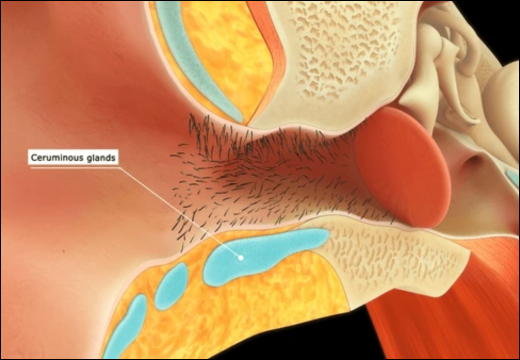
The external auditory canal (EAC) houses specialized ceruminous glands, which are modified apocrine sweat glands responsible for cerumen production. Tumors originating from these glands are uncommon, and their clinical recognition is often delayed due to nonspecific symptoms resembling chronic otitis or other ear disorders. Historically, the term “ceruminoma” was applied broadly to a spectrum of both benign and malignant lesions. Contemporary classification emphasizes histological specificity, including benign subtypes such as ceruminous adenoma, pleomorphic adenoma, and syringocystadenoma papilliferum, and malignant variants like ceruminous adenocarcinoma, adenoid cystic carcinoma, and mucoepidermoid carcinoma. Accurate classification is crucial, as prognosis, recurrence risk, and therapeutic strategies differ significantly between benign and malignant tumors.
Epidemiology
Ceruminous gland tumors are rare, comprising less than 1% of all external auditory canal neoplasms. They are reported predominantly in adults, particularly middle-aged and elderly individuals. Although benign tumors occur across sexes with no clear predilection, some malignant variants, such as adenoid cystic carcinoma, are more commonly seen in older populations.
Pathology And Classification
Histologically, ceruminous tumors consist of dual cellular populations: luminal secretory cells and outer basal or myoepithelial cells. Benign tumors such as ceruminous adenomas are usually well-circumscribed, encapsulated, and show minimal cellular atypia. Pleomorphic adenomas may display stromal myxoid or chondroid differentiation, whereas syringocystadenoma papilliferum exhibits papillary projections and cystic spaces.
Malignant tumors, in contrast, are infiltrative, demonstrate nuclear pleomorphism, increased mitotic activity, and areas of necrosis. Perineural invasion is a hallmark of adenoid cystic carcinoma, contributing to the risk of delayed recurrence and metastasis. Immunohistochemistry enhances diagnostic accuracy: cytokeratin 7 highlights luminal secretory cells, while p63, S100, and other myoepithelial markers confirm basal cell components. Distinguishing primary ceruminous tumors from metastases or other glandular lesions is critical for treatment planning.
Clinical Presentation
The clinical manifestations of ceruminous tumors are generally related to their location and size.
- Slowly enlarging mass in the lateral EAC
- Conductive hearing loss due to canal obstruction
- Ear fullness
- Intermittent otorrhoea
- Mild pain
Malignant Tumors
- Progress rapidly
- Persistent pain
- Bleeding
- Facial nerve dysfunction
Diagnostic Approach
1. Clinical Examination
Comprehensive otoscopic evaluation is essential. Features such as polypoid masses, ulceration, canal obstruction, or abnormal discharge should prompt further investigation. Facial nerve function and tympanic membrane status should be assessed.
2. Imaging Studies
High-resolution computed tomography (HRCT) and Magnetic resonance imaging (MRI)
3. Histopathology
Management Strategies
Benign Tumors
Surgical excision with clear margins is the treatment of choice. Lesions are often well-circumscribed, allowing canal-preserving procedures. Complete removal typically results in excellent outcomes, with recurrence being uncommon. Regular follow-up with clinical examination and imaging is recommended to detect rare recurrences early.
Malignant Tumors
Malignant ceruminous tumors require a more aggressive approach. Surgical resection with oncologic margins is the mainstay, ranging from lateral temporal bone resection for localized tumors to more extensive resections for deeper invasion. Parotidectomy or neck dissection may be indicated if regional structures are involved. Adjuvant radiotherapy is often employed in cases with positive margins. Chemotherapy has limited efficacy and is generally reserved for unresectable or metastatic disease.
Ayurvedic Aspect And Management
Ceruminous gland tumors of the external auditory canal can be correlated Karna arbuda (benign or malignant tumor/mass), depending on the size, growth, and symptoms. Karnarbuda is of these types – Vataja, pittaja, kaphaja, Tridoshaja, Raktaja, Mamsaja and Medoja.
Dhatu Involvement
- Rakta Dhatu (blood tissue): Involvement may present with bleeding, congestion, or vascular changes within the lesion.
- Mamsa Dhatu (muscle/tissue): Growth of the tumor mass may relate to abnormal Mamsa proliferation.
- Medas Dhatu (fat/adipose tissue): May contribute to soft swelling or cystic components if present.
Ayurvedic Management Of Ceruminoma
Ayurvedic management focuses on shrinking the tumor, reducing inflammation, improving local circulation, balancing doshas, and preventing recurrence. Management can be classified into external therapy, oral medications, and dietary/lifestyle interventions.
1. Shodhana (Purification And Detoxification)
- Raktamokshana (Bloodletting)
- In select cases with bleeding or congestion, mild local Raktamokshana helps reduce inflammation.
- Virechana (Purgation)
- To balance Pitta and remove metabolic toxins that contribute to inflammation and abnormal tissue growth.
2. Shaman Chikitsa (Pacifying Therapy)
Herbal formulations with Rakta-shodhana, Granthi-ghanana (tumor-shrinking), anti-inflammatory, and Vata-Kapha balancing properties are preferred:
- Triphala Churna (Haritaki, Bibhitaki, Amalaki): Improves local circulation, detoxifies tissues, and supports Mamsa (muscle) and Rakta (blood) health.
- Guggulu-Based Formulations
- Kanchnaar Guggulu – classical remedy for Granthi and Arbuda, supports resolution of abnormal tissue growth.
- Yogaraj Guggulu – useful in balancing Vata-Kapha and promoting tissue metabolism.
- Curcumin (Haridra/Curcuma longa): Anti-inflammatory and anti-proliferative properties, helpful in preventing recurrence.
- Manjistha (Rubia cordifolia): Blood-purifying herb effective for Rakta-related disorders.
- Guduchi (Tinospora cordifolia): Supports immune modulation and reduces chronic inflammation.
3. External Therapy (Local Application)
- Kashaya Or Lepa: Herbal pastes with Manjistha, Haridra, and Yashtimadhu can be applied externally around the ear canal (avoid insertion into the canal unless under specialist supervision).
- Taila Nasya Or Kaval/Karna Snehan: Using medicated oils (like Bala Taila or Ksheerabala Taila) for local massage around the ear may improve circulation and reduce tissue rigidity.
4. Dietary And Lifestyle Measures
- Avoid heavy, oily, and Kapha-increasing foods.
- Include Rakta-shodhana (blood cleansing) and Pitta-pacifying foods like pomegranate, bitter vegetables, and herbal teas.
- Daily Kapalabhati, Pranayama, and meditation to improve systemic circulation and maintain dosha balance.
- Maintain ear hygiene without harsh chemicals to prevent secondary infections.
5. Surgical Consideration In Ayurveda
- For larger tumors or lesions causing obstruction or complications, Ayurveda recognizes Shastra Chikitsa (surgical excision) in combination with herbal therapies.
- Post-operative care includes herbal ointments, taila applications, and oral Rasayana therapies for tissue healing and recurrence prevention.
Herbal Remedies For Ceruminoma By Planet Ayurveda
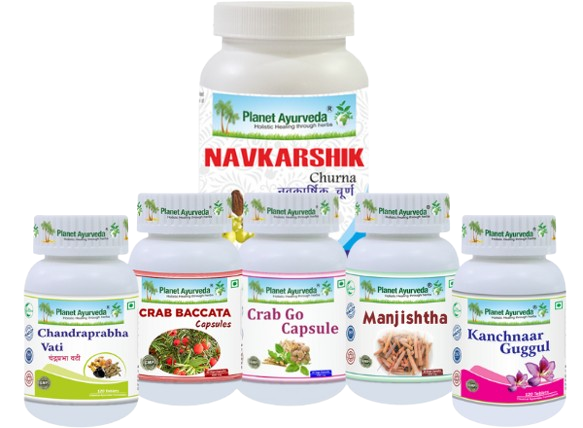
Planet Ayurveda is a well-known Ayurvedic healthcare organization dedicated to preserving and promoting the authenticity of classical Ayurveda in modern times. It focuses on formulating herbal medicines based on traditional Ayurvedic principles, using standardized extracts and time-tested formulations. Emphasis is placed on natural, chemical-free, and ethically sourced herbs to support holistic healing. By integrating classical knowledge with contemporary quality standards, Planet Ayurveda aims to provide effective, safe, and individualized herbal solutions for chronic, lifestyle-related, and complex health conditions, while encouraging a natural and balanced approach to long-term wellness. Planet Ayurveda is pleased to present its list of products that are effective in managing Ceruminoma.
Product List
- Kanchnaar Guggul
- Crab Baccata Capsules
- Crab Go Capsule
- Chandraprabha Vati
- Manjishtha Capsules
- Navkarshik Churna
Product Description
1. Kanchnaar Guggul
Kanchnaar Guggul is a classical ayurvedic formulation that supports the management of Ceruminoma (Karnarbuda) by addressing underlying dosha imbalances and promoting tissue health. It contains Kanchnar (Bauhinia variegata) and Guggul (Commiphora mukul), which are known for their anti-inflammatory, detoxifying, and tumor-shrinking properties, helping reduce swelling and abnormal tissue growth. The formulation also balances Kapha and Vata doshas, enhances metabolism (agni), and improves circulation, supporting the removal of toxins and promoting normal tissue repair. While it aids in systemic support and inflammation control, it is best used in Ceruminoma.
Dosage : Two tablets twice a day.
2. Crab Baccata Capsules
Crab Baccata Capsules are a product of Planet Ayurveda and helpful in the management of Ceruminoma as they work to regulate abnormal tissue growth and support tissue health. Prepared from Taxus baccata, these capsules are effective in managing abnormal, slow-growing masses by promoting Dhatu Samya (tissue balance) and clearing Srotorodha (channel obstructions). Their anti-inflammatory and cytotoxic properties help control abnormal cell proliferation, reduce local inflammation, and support healthy cellular metabolism. Crab Baccata Capsules serve as a supportive Ayurvedic therapy in Ceruminoma to help manage tumor progression and improve overall tissue function and comfort.
Dosage : One capsule twice a day.
3. Crab Go Capsule
Crab Go Capsules are a patent product of Planet Ayurveda and contain a blend of standardized Ayurvedic herbs such as Ashwagandha (Withania somnifera), Shatavari (Asparagus racemosus), Haridra (Curcuma longa), Giloy (Tinospora cordifolia), Tulsi (Ocimum sanctum), Shunthi (Zingiber officinale), and Gokshur (Tribulus terrestris) that provide anti-inflammatory, antioxidant, immunomodulatory, and tissue-regulatory effects. These actions help reduce inflammation, oxidative stress, and abnormal cell proliferation, support immune function, and maintain Dhatu Samya (tissue balance), which aids in controlling tumor progression and alleviating local irritation. By addressing inflammation, cellular imbalance, and oxidative damage, Crab Go Capsules serve as a support in the management of Ceruminoma.
Dosage : Two capsules twice a day.
4. Chandraprabha Vati
Chandraprabha Vati is a classical Ayurvedic herbomineral medicine. It contains ingredients such as Shilajit (Asphaltum), Haridra (Curcuma longa), Chavya (Piper chaba), Karpoor (Cinnamomum camphora), Vacha (Acorus calamus), Mustak (Cyperus rotundus), Vidanga (Embelia ribes), Pippali (Piper longum), Dalchini (Cinnamomum zeylanicum), Shunthi (Zingiber officinale), and others. These herbs possess anti-inflammatory, antioxidant, and circulation-supporting properties. Their combined actions help reduce inflammation, improve local microcirculation, and support detoxification, alleviating tissue irritation and swelling associated with Ceruminoma. Additionally, they promote Dhatu Samya (tissue balance), enhance metabolic and immune functions, and regulate cellular health, thereby supporting tissue homeostasis and helping control abnormal tissue growth. Chandraprabha Vati, thus, serves as an effective remedy in managing Ceruminoma and maintaining overall tissue wellness.
Dosage : Two tablets twice a day.
5. Manjishtha Capsules
Manjishtha Capsules are a product of Planet Ayurveda and support blood purification. These capsules contain standardized extract of Manjistha (Rubia cordifolia), a classical Ayurvedic herb known for its Rakta-shodhana (blood-cleansing), anti-inflammatory, antioxidant, and anti-proliferative properties. These actions help reduce chronic inflammation, improve microcirculation around the external auditory canal, and support detoxification processes that may accompany abnormal tissue growth. By promoting Dhatu Samya (tissue equilibrium), enhancing lymphatic drainage, and reducing oxidative stress, Manjistha Capsules support the body’s natural ability to regulate abnormal cell activity and maintain healthier tissue environments. Consequently, they help in Ceruminoma by mitigating irritation, supporting immune function, and promoting overall tissue health.
Dosage : One capsule twice a day.
6. Navkarshik Churna
Navkarshik Churna is a patent product of Planet Ayurveda and helpful in the management of Ceruminoma by supporting systemic detoxification and balancing doshas, particularly Pitta and Kapha, which are involved in chronic inflammatory and proliferative conditions. This formulation contains a blend of herbs such as Neem (Azadirachta indica), Vacha (Acorus calamus), Mustak (Cyperus rotundus), Haridra (Curcuma longa), and Triphala (Terminalia chebula, T. bellerica, Emblica officinalis), known for their Rakta-shodhana (blood-purifying), anti-inflammatory, antioxidant, and digestive regulatory properties. These actions help reduce toxin accumulation (ama), improve digestive and metabolic fire (agni), and enhance elimination of metabolic wastes, which supports clear circulation and healthy tissue metabolism. By addressing underlying inflammation and improving tissue detoxification. Navkarshik Churna serves as a supportive Ayurvedic remedy in the management of Ceruminoma, helping to maintain internal equilibrium and support overall healing processes.
Dosage : One tsp twice a day.
Conclusion
Ceruminoma represents a rare but clinically significant tumor of the external auditory canal that demands a high index of suspicion for timely diagnosis and appropriate management. Accurate histopathological classification remains central to determining prognosis and guiding treatment, as benign and malignant variants differ markedly in behavior and recurrence risk. While surgical excision forms the cornerstone of contemporary management, an integrative approach can enhance overall outcomes. Ayurveda offers a holistic framework by addressing dosha imbalance, abnormal tissue proliferation, and systemic inflammation through purification, pacifying therapies, and lifestyle modification. When used judiciously alongside modern interventions, Ayurvedic management may support tissue healing, reduce recurrence potential, and improve quality of life by restoring Dhatu Samya and maintaining long-term physiological balance. Planet Ayurveda’s above mentioned products are effective in the management of Ceruminoma.