


Chronobiotics & Ayurveda – Natural Sleep and Circadian Rhythm Balance
Abstract
Modern life has effectively “unplugged” us from the natural cycle of day and night. Between the relentless glow of blue screens and the demands of a global economy, our internal biological clocks are often left spinning in a state of permanent jet lag. This article explores the emerging field of chronobiotics—the molecular “reset buttons” designed to synchronize our bodies with our lifestyles. Rather than acting as simple hammers to force sleep or wakefulness, chronobiotics work as sophisticated conductors, realigning the suprachiasmatic nucleus to restore order to our metabolic and hormonal systems. We move beyond the chemistry of melatonin to examine how these substances mend the “circadian gap,” offering a bridge between our ancient biological heritage and the high-speed reality of the 21st century. Ultimately, we investigate whether mastering our internal timing is the missing key to peak performance, longevity, and psychological well-being. We will also see what ayurveda has to serve for this. Let’s discuss it in detail!
Understanding Biological Rhythms
Biological rhythms are the ancient, internal metronomes that govern the timing of nearly every physiological process in living organisms. At the heart of this system is the circadian rhythm, a roughly 24-hour cycle that dictates our sleep-wake patterns, hormone release, core body temperature, and metabolic rate. This is not merely a passive response to darkness; it is an active, genetically encoded mechanism driven by the Suprachiasmatic Nucleus (SCN), a tiny cluster of neurons in the hypothalamus that acts as the body’s master conductor.
These rhythms are synchronized by external cues known as zeitgebers (time-givers), with sunlight being the most potent. When light hits the retina, it signals the SCN to suppress melatonin and trigger cortisol, preparing the body for activity. However, our biology also maintains “peripheral clocks” in the liver, gut, and heart, ensuring that digestion and cellular repair occur at optimal windows.
In our modern era, this delicate symphony is often disrupted. The prevalence of “blue light” from screens and the irregularity of shift work create a profound circadian mismatch. When our internal timing drifts away from the environmental cycle, the result is more than just fatigue; it leads to “chronodisruption,” which is linked to metabolic syndrome, weakened immunity, and cognitive decline. Understanding these rhythms is the first step toward reclaiming our health by aligning our habits—light exposure, exercise, and nutrition—with our biological heritage.
What Are Chronobiotics?
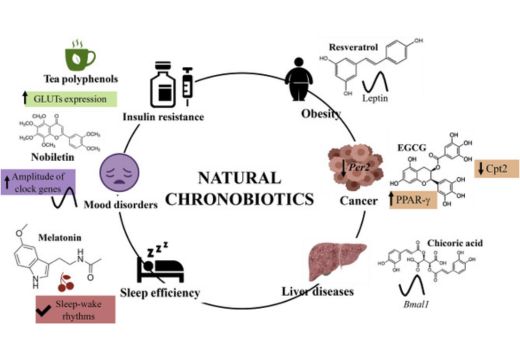
In the evolving landscape of pharmacology, chronobiotics represent a specialized class of therapeutic agents designed to synchronize, or “phase-shift,” the body’s internal biological clock. Unlike traditional hypnotics or sedatives, which primarily target the central nervous system to induce a state of unconsciousness, chronobiotics act directly on the circadian pacemaker. They function by mimicking or modulating natural “zeitgebers” (time-givers) to align our physiological processes with the external environment.
The primary mechanism involves the modulation of the suprachiasmatic nucleus. When a chronobiotic, such as exogenous melatonin or its receptor agonists, is administered at a specific time, it can induce a “phase advance” (shifting the clock earlier) or a “phase delay” (shifting it later). This precision allows for the treatment of Circadian Rhythm Sleep-Wake Disorders, jet lag, and the chronic “social jet lag” experienced by shift workers.
Beyond mere sleep regulation, the clinical utility of chronobiotics extends to metabolic and endocrine harmony. By restoring the rhythmic secretion of hormones like cortisol and insulin, these agents help mitigate the systemic inflammation and oxidative stress associated with “chronodisruption.” As we move toward a more “timely” approach to medicine, chronobiotics serve as the bridge between our ancient biological heritage and the demands of a high-speed, 24-hour society, offering a way to reclaim our natural rhythm in a digitally desynchronized world.
Key Chronobiotic Agents
1. Indoleamines (Natural & Bio-identical)
This category focuses on the primary hormonal signal of “biological night.”
- Melatonin (Exogenous): The most widely used chronobiotic. Its effectiveness is entirely dependent on the Phase Response Curve. If taken in the biological afternoon, it induces a phase advance (shifting the clock earlier). If taken in the biological morning, it can induce a phase delay (shifting the clock later). It acts as a systemic “zeitgeber,” synchronizing peripheral clocks in the liver, gut, and heart.
2. Synthetic Melatonin Receptor Agonists (MRAs)
These are engineered molecules designed for higher potency and specific receptor targeting ($MT_1$ and $MT_2$).
- Ramelteon: It has a significantly higher affinity for melatonin receptors than natural melatonin itself. It is primarily used to signal the onset of the sleep-wake cycle without the “hangover” effect of traditional sedatives.
- Tasimelteon: Specifically indicated for Non-24-Hour Sleep-Wake Disorder. It is highly effective for individuals (such as the totally blind) whose internal clocks “drift” because they lack light cues. It “anchors” the internal rhythm to a 24-hour day.
- Agomelatine: A unique “dual-action” agent. It acts as a chronobiotic and an antidepressant. By resynchronizing the circadian rhythm, it addresses the “broken clock” often seen in clinical depression.
3. “Clock Gene” Modulators (Small Molecules)
This is the cutting edge of chronopharmacology, targeting the genetic “pendulum” inside every cell.
- REV-ERB Agonists: These molecules target the REV-ERB proteins, which are critical components of the molecular clock. They can influence metabolic rate and fat burning by “tricking” the body into thinking it is in a different phase of the metabolic day.
- Casein Kinase 1 (CK1) Inhibitors: These enzymes regulate the stability of the Period (PER) proteins—the primary “gears” of our cellular clock. Inhibiting CK1 can physically slow down or speed up the speed at which our internal clock “ticks.”
4. Non-Pharmacological Chronobiotics
In chronobiology, an “agent” can also be a physical stimulus that triggers a chemical change.
- Short-Wavelength (Blue) Light: Acting through melanopsin receptors in the retina, timed light exposure is the most powerful “phase-shifter” available. It suppresses melatonin and signals the SCN to “reset” to the start of the biological day.
- Vitamin B12 (Methylcobalamin): Research suggests high doses can increase the sensitivity of the circadian clock to light, making it easier for “night owls” to respond to morning sunlight.
Indications
In clinical practice, chronobiotics are prescribed when there is a fundamental “timing mismatch” between a person’s internal clock and the external world. Unlike standard sedatives, they are used for recalibration, not just sleep induction.
- Circadian Rhythm Disorders: For “extreme night owls” (Delayed Sleep Phase) or “extreme early birds” (Advanced Sleep Phase) who cannot function in a standard society.
- Non-24-Hour Disorder: Primarily for totally blind patients whose internal clocks “drift” daily because they lack light cues.
- Shift Work Disorder: For professionals (nurses, pilots, factory workers) whose rotating schedules cause chronic metabolic and sleep disruption.
- Severe Jet Lag: To rapidly synchronize the body when crossing more than three time zones.
- Neuropsychiatric Support: As an adjunct treatment for Seasonal Affective Disorder or Major Depression, where stabilizing the “broken” sleep-wake cycle is critical for mood recovery.
Chronotherapy: The Clinical Power Of Timing
Chronotherapy is the strategic coordination of medical treatment with the body’s internal biological clock to maximize efficacy and minimize toxicity. It moves medicine away from a “one-size-fits-all” approach toward a personalized medicine model that respects the rhythmic nature of human physiology.
- Timing of Medication Administration: Most physiological functions—from gastric acid secretion to blood pressure—follow a 24-hour cycle. By timing drugs to reach peak concentration when symptoms are most acute (such as taking antihypertensives before the early morning blood pressure spike), clinicians can achieve better control with lower doses.
- Chemotherapy Timing: Cancer cells often have disrupted cycles, while healthy cells follow strict rhythms. Chronotherapy allows oncologists to administer toxic treatments during the “resting” phase of healthy tissue, significantly reducing side effects like nausea and bone marrow suppression while aggressively targeting the tumor.
- Hormonal Therapies: Since the endocrine system is inherently rhythmic, hormonal treatments for conditions like hypothyroidism or adrenal insufficiency are most effective when they mimic the body’s natural pulsatile release of hormones like cortisol or TSH.
This approach represents a frontier in personalized medicine, where a patient’s unique “chronotype” (their internal timing) dictates their specific treatment schedule, ensuring the right drug is delivered not just to the right person, but at the right time.
Ayurveda’s Insight!
In Ayurveda, the concept of chronobiotics is not a modern discovery but a foundational pillar of health known as Dinacharya (daily regimen) and Ritucharya (seasonal regimen). Ayurveda posits that the human micro-organism is an inseparable part of the macro-organism (the universe). Therefore, our internal rhythms must be perfectly synchronized with the solar and lunar cycles to maintain the balance of the three Doshas: Vata, Pitta, and Kapha.
The Dosha Clock
Ayurveda divides the 24-hour day into four-hour segments dominated by specific energies:
- Kapha Time (6 AM – 10 AM / 6 PM – 10 PM): A period of stability and heaviness. Ayurveda suggests waking before the end of the morning Kapha phase to avoid lethargy.
- Pitta Time (10 AM – 2 PM / 10 PM – 2 AM): The fire element peaks. This is when digestive fire (Agni) is strongest at noon, and cellular transformation occurs at night.
- Vata Time (2 AM – 6 AM / 2 PM – 6 PM): The time of movement and lightness. The early morning Vata window (Brahmamuhurta) is ideal for cognitive clarity.
Causes Of Circadian Disruption (Nidranasha)
कायस्य शिरसश्चैव विरेकश्छर्दनं भयम्| चिन्ता क्रोधस्तथा धूमो व्यायामो रक्तमोक्षणम्||५५||
उपवासोऽसुखा शय्या सत्त्वौदार्यं तमोजयः| निद्राप्रसङ्गमहितं वारयन्ति समुत्थितम्||५६||
एत एव च विज्ञेया निद्रानाशस्य हेतवः| कार्यं कालो विकारश्च प्रकृतिर्वायुरेव च||५७||
Charak Samhita Sutra Sthana 21/55-57
Classical texts identify that sleeplessness is often a result of Vata aggravation or a “crime against wisdom” (Prajnaparadha). Key causes of insomnia include:
- Physical & Mental Stress: Emotions such as fear, anxiety, and anger, alongside overwork or excessive physical exercise.
- Dietary & Clinical Factors: Fasting, smoking, or depletion following clinical procedures like bloodletting, emesis, or purgation.
- Environmental & Biological Factors: An uncomfortable bed, old age, or an inherent Vatika constitution.
Natural Ayurvedic Chronobiotics And Sleep-Promoting Measures
अभ्यङ्गोत्सादनं स्नानं ग्राम्यानूपौदका रसाः| शाल्यन्नं सदधि क्षीरं स्नेहो मद्यं मनःसुखम्||५२||
मनसोऽनुगुणा गन्धाः शब्दाः संवाहनानि च| चक्षुषोस्तर्पणं लेपः शिरसो वदनस्य च||५३||
स्वास्तीर्णं शयनं वेश्म सुखं कालस्तथोचितः| आनयन्त्यचिरान्निद्रां प्रनष्टा या निमित्ततः
Charak Samhita Sutra sthana 21/52-54
Rather than synthetic hormones, Ayurveda utilizes Medhya Rasayanas and specific lifestyle interventions to “re-anchor” the biological clock. To cure sleeplessness and restore rhythm, the following measures are recommended:
- External Therapies: Abhyanga (oil massage), unction, soothing baths, and the application of cooling ointments to the eyes, head, and face (Lepa).
- Sensory & Mental Soothing: Exposure to pleasant smells and sounds, gentle massages (Samvahana), and cultivating “mental pleasure” to settle the nervous system.
- Dietary Support: Consuming Shali rice with curd, milk, fats, or soups made from the meat of aquatic or marshy animals.
- Environmental Hygiene: Ensuring a comfortable bed (Sukha Shayya) and home, and most importantly, habituating oneself to a consistent sleep time.
By aligning our lifestyle with these natural transitions, Ayurveda seeks to prevent the root cause of modern “timing” diseases. This ancient perspective offers a holistic framework for chronotherapy, emphasizing that true health is achieved when our internal “biological song” harmonizes with the rhythms of nature.
Natural Ayurvedic Chronobiotics
1. Brahmi (Bacopa monnieri)
Brahmi is a medhya rasayana known for its neuroprotective and adaptogenic effects. It modulates neurotransmitters like serotonin and acetylcholine, supporting cognitive function and stress resilience. By calming the hypothalamic–pituitary–adrenal (HPA) axis and reducing cortisol fluctuations, Brahmi helps stabilize sleep–wake cycles. Its mild sedative action promotes synchronized circadian rhythms, making it a natural chronobiotic for improving sleep quality and mental clarity.
2. Ashwagandha (Withania somnifera)
Ashwagandha is a potent adaptogen that regulates the HPA axis and lowers elevated cortisol levels. By reducing stress-induced circadian disruption, it supports normalization of sleep–wake patterns. It enhances GABAergic activity and improves sleep onset and quality. Its chronobiotic role lies in restoring hormonal balance and aligning internal biological rhythms, especially in individuals with stress-related insomnia or irregular daily cycles.
3. Jatamansi (Nardostachys jatamansi)
Jatamansi exhibits neuroprotective, anxiolytic, and sedative properties through modulation of GABA and monoaminergic pathways. It helps regulate melatonin secretion and reduces neuronal excitability, promoting restful sleep. By stabilizing mental activity and calming the nervous system, Jatamansi supports circadian alignment. Its chronobiotic potential is reflected in its ability to induce timely sleep onset and maintain balanced sleep architecture.
4. Sarpagandha (Rauvolfia serpentina)
Sarpagandha contains alkaloids like reserpine that influence central monoamine levels, leading to sedative and antihypertensive effects. It reduces sympathetic overactivity and promotes mental calmness, aiding in sleep induction. By decreasing hyperarousal states and stabilizing neurochemical rhythms, it supports circadian synchronization. Its chronobiotic role is particularly useful in conditions of insomnia associated with stress or hypertension.
5. Tagar (Valeriana wallichii)
Tagar is a natural sedative herb that enhances GABAergic transmission, producing calming and sleep-inducing effects. It reduces sleep latency and improves sleep continuity without causing dependency. By promoting relaxation and aligning sleep timing, Tagar helps regulate circadian rhythms. Its chronobiotic action is evident in its ability to restore natural sleep patterns and support consistent biological timing.
Conclusion
At last we can say In the modern 24-hour society, chronobiotics and chronotherapy represent a critical shift toward “timing-based” precision medicine. By moving beyond simple sedation to the active recalibration of our biological clocks, these tools address the root cause of many metabolic and psychiatric misalignments. Whether through synthetic melatonin agonists or the ancient wisdom of Ayurvedic Dinacharya, the goal is systemic harmony. Integrating these rhythmic principles into clinical practice ensures that treatments are not only potent but perfectly synchronized with the body’s natural cycles, restoring the essential balance required for long-term vitality and resilience.