


Bharangi / Blue Glory / Clerodendrum Serratum – Medicinal Properties, Benefits & Dosage
Abstract
Clerodendrum serratum, commonly known as Bharangi or Blue Glory, is a medicinal plant extensively studied for its rich phytochemical profile and broad pharmacological activities. Classical Ayurvedic principles associate Bharangi with Deepana–Pachana (enhancing digestion and metabolism), Jwaraghna (antipyretic), and Shothahara (anti-inflammatory) actions, making it useful in conditions like Kasa (cough), Shwasa (asthma), Jwara (fever) and ama-related disorders. Contemporary research supports these traditional claims by identifying bioactive compounds such as quassinoids and alkaloids, which exhibit anti-inflammatory and immunomodulatory effects, thereby providing a scientific basis to its Ayurvedic applications.
Classical Reference Of Bharangi (Clerodendrum Serratum)
Bhavprakash Nighantu Haritkyadi Varga Page no 99
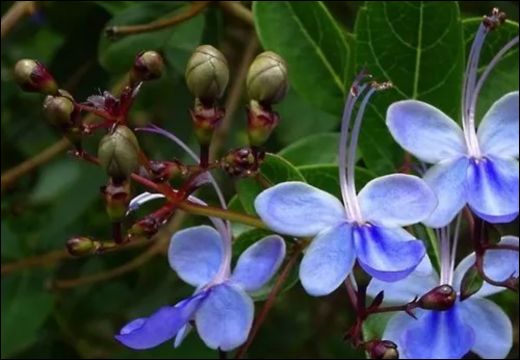
Scientific Classification Of Bharangi (Clerodendrum Serratum)
- Kingdom: Plantae
- Subkingdom: Tracheobionta (Vascular plants)
- Superdivision: Spermatophyta (Seed plants)
- Division: Magnoliophyta (Angiosperms)
- Class: Magnoliopsida (Dicotyledons)
- Order: Lamiales
- Family: Lamiaceae
- Genus: Clerodendrum
- Species: serratum
Synonyms Of Bharangi (Clerodendrum Serratum)
- Bhargi / Bharangi: The standard name.
- Bhrigubhava: Born from the lineage of sage Bhrigu.
- Padma: Flower-like or resembling a lotus in some aspect.
- Phanji / Hanjika: Specific regional or botanical identifiers.
- Brahmanayashtika / Brahmani: “The stick of Brahmins,” implying its sacred or medicinal utility.
- Angaravalli: Meaning “charcoal climber,” likely referring to the color of its stem or its effect on “internal fire.”
- Kharashaka: Having rough or coarse leaves.
- Gardabhashaka: This literally means Donkeys Vegetable implying that the plant grows in wild areas or is a plant that donkeys might graze upon
- Padma: This refers to the Lotus like appearance It is named so because its flowers are elegant and bear a resemblance to the shape of a lotus
- Brahmanayashtika: This name means The Brahmins Stick It describes the plants physical structure specifically its long slender and straight stems that look like a traditional staff
- Angaravalli: Meaning Fire coal Creeper this refers to the visual of the plant when it is in bloom The flowers can appear like glowing red embers or hot coals against the leaves
- Phanji: This term indicates a plant that is breaking or destroying ailments It highlights the herbs potency in clearing toxins from the body
- Brahmasuvarcala: This means The Divinely Radiant One It suggests that the plant possesses great medicinal luster and is highly revered for its healing vitality
Vernacular Names Of Bharangi (Clerodendrum Serratum)
- Sanskrit: Bharangi, Angaravalli, Padma, Kasaghni
- Hindi: Bharangi, Bharangi Patta
- English: Blue Glory, Glory Bower
- Marathi: Bharangi
- Gujarati: Bharangi
- Bengali: Bharangi
- Tamil: Siruthekku, Bharangi
- Telugu: Gantubharangi
- Kannada: Bharangi
- Malayalam: Cheruthekku
Habitat Of Bharangi (Clerodendrum Serratum)
Geographical Distribution
Clerodendrum serratum is naturally distributed in tropical and subtropical regions of South and Southeast Asia. Botanical and ethnomedicinal studies document its wide occurrence across India, along with parts of Sri Lanka and Southeast Asian countries. Within India, it is commonly recorded from central, eastern, and southern forest belts, as well as the lower Himalayan regions.
Climatic Conditions
Research-based floristic surveys describe Bharangi as a plant adapted to warm climates with seasonal rainfall. It grows well in areas experiencing moderate to high humidity, particularly regions influenced by monsoon patterns. The species shows good tolerance to seasonal temperature variations typical of tropical deciduous zones.
Forest Type And Natural Habitat
Ecological studies report that C. serratum occurs mainly in moist deciduous forests, dry deciduous forests, scrub jungles, and forest margins. It is often found as an understory shrub, growing in partially shaded to open locations, including forest clearings and edges.
Altitude Range
Based on botanical records, Bharangi is found from near sea level up to about 1400–1500 meters above mean sea level. Its presence across plains, foothills, and lower hill regions highlights its adaptability to varying altitudinal conditions.
Soil Preferences
Field observations and agro-technique studies indicate that the plant prefers well-drained soils, particularly loamy, lateritic, and red forest soils. Such soils support healthy root development and perennial growth, which is essential for its survival in forest ecosystems.
Ecological Status And Availability
Although Clerodendrum serratum is not considered critically endangered, research notes that localized population decline has occurred in some regions due to habitat disturbance and overharvesting for medicinal use. This has led to increased emphasis on its cultivation and conservation in medicinal plant programs.
Morphology Of Bharangi (Clerodendrum Serratum)
Habit
Clerodendrum serratum is a perennial, erect woody shrub, generally growing to a height of 1–3 meters. Botanical research describes the plant as bushy, with multiple branches arising from the base.
Stem
The stem is stout, woody, and much branched. Young branches are often quadrangular, becoming cylindrical as they mature. The surface is glabrous to slightly pubescent, as reported in floristic and pharmacognostic studies.
Leaves
Leaves are simple, opposite, and decussate, borne on short petioles. The lamina is elliptic to oblong-lanceolate, about 10–20 cm long, with a distinctly serrated margin. The apex is acute to acuminate and the base cuneate. The upper surface is glabrous, while the lower surface may show slight pubescence along the veins.
Inflorescence
The inflorescence is terminal or axillary and paniculate, bearing several flowers arranged loosely, a feature consistently mentioned in botanical descriptions.
Flowers
Flowers are large, showy, bluish-purple to violet, bisexual, and pentamerous. The calyx is tubular and persistent, and the corolla is tubular with five spreading lobes. Four long exerted stamens and a protruding style are characteristic morphological features.
Fruit
The fruit is a globose to ovoid drupe, turning dark brown or black upon maturation, and usually contains four pyrenes, each enclosing a seed.
Roots
Roots are thick, woody, and bitter in taste. Pharmacognostic research identifies the roots as the chief medicinally utilized part of Bharangi.
Classical Categorisation Of Bharangi (Clerodendrum Serratum)
- Bhavprakash Nighantu: Haritkyadi Varga
- Dhanwantari Nighantu: Guduchyadi Varga
- Raj Nighantu: Pippalyadi Varga
Ancient Verses For Bharangi (Clerodendrum Serratum)
Verse No. 1
भारङ्गी भृगुभवा पद्मा फञ्जी ब्राह्मणयष्टिका ।
ब्राह्मण्यङ्गारवल्ली च खरशाकश्च हञ्जिका ॥
भारङ्गी रूक्षा कटुस्तिक्ता रुच्योष्णा पाचनी लघुः ।
दीपनी तुवरा गुल्मरक्तनुन्नाशयेद् ध्रुवम् ॥
Bhavprakash Nighantu Haritkyadi Varga Verse No. 182-183
Verse Interpretation
Synonyms (Names Of Bharangi)
- Bhargi / Bharangi: The standard name.
- Bhrigubhava: Born from the lineage of sage Bhrigu.
- Padma: Flower-like or resembling a lotus in some aspect.
- Phanji / Hanjika: Specific regional or botanical identifiers.
- Brahmanayashtika / Brahmani: “The stick of Brahmins,” implying its sacred or medicinal utility.
- Angaravalli: Meaning “charcoal climber,” likely referring to the color of its stem or its effect on “internal fire.”
- Kharashaka: Having rough or coarse leaves.
Physical & Medicinal Properties (Guna)
- Ruksha (Dry)
- Katu (Pungent) & Tikta (Bitter)
- Ruchya (Improves taste and helps with anorexia)
- Ushna (Hot)
- Pachani & Deepani (Acts as a digestive stimulant, helping to cook toxins and ignite the digestive fire)
- Laghu (Light)
- Tuvara (Astringent)
Therapeutic Indications
- Gulma (Abdominal tumors or chronic gas distension)
- Raktadosha (Blood-related disorders or toxins)
- Shotha (Inflammation and swelling)
- Kasa & Kapha (Cough and excess mucus)
- Shwasa (Asthma or shortness of breath)
- Peenasa (Chronic rhinitis or sinus congestion)
- Jvara (Fever)
- Maruta (Disorders caused by an imbalance of Vata)
Verse No. 2
भाार्ङ्गी गर्दभशाकं च पद्मा ब्राह्मणयष्टिका।
अङ्गारवल्ली फञ्जी च सैव ब्रह्मसुवर्चला ॥
Dhanwanthari Nighantu Guduchyadi Varga Verse No. 67
Verse Interpretation
Synonyms Of Bharangi
- Gardabhashaka: This literally means Donkeys Vegetable implying that the plant grows in wild areas or is a plant that donkeys might graze upon
- Padma: This refers to the Lotus like appearance It is named so because its flowers are elegant and bear a resemblance to the shape of a lotus
- Brahmanayashtika: This name means The Brahmins Stick It describes the plants physical structure specifically its long slender and straight stems that look like a traditional staff
- Angaravalli: Meaning Fire coal Creeper this refers to the visual of the plant when it is in bloom The flowers can appear like glowing red embers or hot coals against the leaves
- Phanji: This term indicates a plant that is breaking or destroying ailments It highlights the herbs potency in clearing toxins from the body
- Brahmasuvarcala: This means The Divinely Radiant One It suggests that the plant possesses great medicinal luster and is highly revered for its healing vitality
Verse No. 3
शक्रमता च कासघ्नी भृङ्गजा भार्गवा मता।
भाार्ङ्गी स्यात् स्वरसे तिक्ता चोष्णा श्वासकफापहा ॥
गुल्मज्वरासृग्वातघ्नी यक्ष्माणं हन्ति पीनसम्।
Dhanwanthari Nighantu Guduchyadi Varga Verse No. 68
Verse Interpretation
Bharngi is bitter in taste and hot in potency. It cures cough, asthma, abdominal tumor, fever, blood diseases, phthisis (tuberculosis), and rhinitis. It also pacifies Vata.
Verse No. 4
भाार्ङ्गी गर्दभशाकश्च फञ्जी चाङ्गारवल्लरी।
वर्षा ब्राह्मणयष्टिश्च वर्वरी भृगुजा च सा ।।
पद्मा यष्टिश्च भारङ्गी वातारिः कासजित्परम्।
सुरूपा भ्रमरेष्टा च शक्रमाता च षोडश ।।
भाार्ङ्गी तु कटुतिक्तोष्णा कासश्वासविनाशनो।
शोफव्रणकृमिघ्नी च दाहज्वरनिवारिणी ।।
Raj Nighantu Pippalyadi Varga Verse No. 149-151
Verse Interpretation
- Bharangi: The primary name, often interpreted as “that which is glorious” or “shining,” referring to its appearance or its clarifying effects on the body.
- Gardabhishaka: This translates to “donkey’s vegetable.” It suggests the plant is a rugged, wild shrub that grows in areas where donkeys graze.
- Phanji: Refers to the plant’s ability to “break” or “destroy” diseases, particularly those involving heavy congestion.
- Angara-vallari: “Angara” means glowing embers or charcoal. This name describes the plant’s bright, fiery flowers or its heating medicinal properties.
- Varsha: Named for the “rainy season,” indicating that the plant reaches its peak growth or flowering stage during the monsoon.
- Brahmana-yasti: Translates to “Brahmin’s staff.” It describes the plant’s straight, upright stems and its status as a respected medicinal herb.
- Varvari: Refers to a “curly” or “rough” appearance, likely pointing to the serrated edges of the leaves (which is why its botanical name is serratum).
- Bhrangaja: Means “attracting bees.” It highlights that the flowers are a significant source of nectar for large black bees.
- Padma: Meaning “Lotus-like,” referring to the aesthetic beauty of the flower structure.
- Yasti: Simply means “stick” or “stalk,” describing the thin, woody branches of the shrub.
- Vatari: A combination of “Vata” (the air humor) and “Ari” (enemy). It signifies that the plant is a powerful remedy against Vata-related respiratory disorders.
Special Note
- There is some disagreement among scholars regarding Bharangi, and up to four different plant species are taken under this name.
- In Bengal, the bark of Picrasma quassioides (a representative of the medicine Quassia) is used as Bharangi.
- Shri Balwantsinghji, in his book ‘Vanoshadhi Darshika’, writes that the bark sold in the market as Bharangi does not appear to be Clerodendrum serratum.
- Dr. Desai also considers Clerodendrum serratum to be the true Bharangi, and it is likely that this is the bark [in question].
- Most scholars consider Clerodendrum serratum to be the authentic classical Bharangi. The other two, Premna herbacea and Clerodendrum siphonanthus, are also considered Bharangi by some.
Four Different Species
1. Clerodendrum Serratum
- Scientific Name: Clerodendrum serratum
- Family: Verbenaceae
- Common Names: Often called Bharangi in Hindi, Sanskrit, and Marathi.
- Details: Most scholars consider this the authentic “Shastriya” (scriptural) Bharangi. It is found in the Himalayas from Sutlej to Assam and in south India.
2. Picrasma Quassioides
- Scientific Name: Picrasma quassioides (also referred to as Quassia)
- Family: Simarubaceae
- Common Names: Known as Bharangi in Bengal; also called Kadu-Nimb or Quassia.
- Details: The bark of this plant is used as a substitute for Bharangi in Bengal. It is noted for its extremely bitter taste.
3. Premna Herbacea
- Scientific Name: Premna herbacea
- Family: Verbenaceae
- Common Names: Often called Bhui-Jamm in Bengali and Bharangi in some regions.
- Details: This is a small herb found in the Himalayan regions and South India. It is one of the four varieties sold in markets under the Bharangi name.
4. Clerodendrum Siphonanthus
- Scientific Name: Clerodendrum siphonanthus
- Family: Verbenaceae
- Common Names: Known as Chingari or Bamunhati
- Details: Similar to Clerodendrum serratum, it is found in the Himalayas and South India. While it belongs to the same genus as the primary Bharangi, it is considered a distinct variety in Bhavprakash Nighantu.
Ayurvedic Properties Of Bharangi (Clerodendrum Serratum)
- Rasa (Taste): Tikta (Bitter), Katu (Pungent)
- Guna (Properties): Laghu (Light), Ruksha (Dry)
- Veerya (Potency): Ushna (Hot)
- Vipaka (Post Digestion Effect): Katu (Pungent)
Action On Tridosha Of Bharangi (Clerodendrum Serratum)
Kapha – Vata Shamaka
Therapeutic Indications Of Bharangi (Clerodendrum Serratum)
- Asthma
- Chronic respiratory disorders
- Abdominal tumors
- Fever
- Gout
- Tuberculosis
- Rhinitis
- Indigestion
- Inflammatory conditions
- Abscess
- Infected wounds
- Worm infestation
- Burning sensation
Systemic Actions Of Bharangi (Clerodendrum Serratum)
- Action on the Respiratory System: Bharangi acts as an expectorant, mucolytic, and bronchodilator, making it highly effective in respiratory disorders such as asthma, chronic cough, bronchitis, and dyspnoea. It helps liquefy and expel accumulated Kapha from the lungs, thereby easing breathing and reducing airway congestion.
- Action on the Digestive System: As a Deepana and Pachana herb, Bharangi enhances digestive fire and aids in the digestion of Ama. It is beneficial in indigestion, bloating, flatulence, and abdominal discomfort, supporting proper digestion and metabolic balance.
- Action on the Musculoskeletal System: Bharangi exhibits anti-inflammatory and analgesic properties, making it useful in gout, arthritis, joint pain, and other inflammatory conditions. It helps pacify aggravated Vata and Rakta, thereby reducing pain, swelling, and stiffness.
- Action on the Immune System: The herb possesses antimicrobial and immunomodulatory actions, helping the body fight infections and improve overall immunity. It is traditionally used in worm infestation and recurrent infections.
- Antipyretic and Anti-Infective Action: Bharangi shows Jwarahara (antipyretic) activity and is useful in managing fever, especially those associated with respiratory infections and chronic conditions like tuberculosis.
- Action on Skin and Wound Healing: Externally and internally, Bharangi promotes wound healing and helps in resolving abscesses and infected wounds. Its antiseptic and anti-inflammatory properties aid in faster tissue repair and reduce pus formation.
Chemical Composition Of Bharangi (Clerodendrum Serratum)
1. β-Sitosterol
β-Sitosterol present in Bharangi contributes significantly to its anti-inflammatory and immunomodulatory effects. It helps reduce airway inflammation, supports immune balance, and is useful in respiratory conditions such as asthma and bronchitis as well as in inflammatory joint disorders.
2. Ursolic Acid
Ursolic acid is one of the key bioactive triterpenoids responsible for Bharangi’s anti-inflammatory, antimicrobial, and bronchodilatory actions. It helps relax bronchial muscles, suppresses inflammatory mediators, and supports the management of chronic respiratory and musculoskeletal inflammatory conditions.
3. Oleanolic Acid
Oleanolic acid supports Bharangi’s systemic anti-inflammatory and protective actions. It aids in reducing chronic inflammation and provides hepatoprotective support, which is important in long-standing inflammatory and infectious conditions where metabolic stress is involved.
4. Serratagenic Acid
Serratagenic acid contributes to the analgesic and anti-inflammatory properties of Bharangi. It helps relieve pain, swelling, and stiffness in disorders such as gout, arthritis, and other inflammatory conditions by reducing inflammatory pathways.
5. Luteolin
Luteolin plays an important role in Bharangi’s anti-allergic and anti-asthmatic activity. It helps inhibit histamine release, reduces allergic airway reactions, and provides antioxidant protection, making it beneficial in allergic respiratory disorders.
6. Apigenin
Apigenin supports the anti-inflammatory and antioxidant effects of Bharangi. It helps calm inflammatory responses in respiratory tissues, protects cells from oxidative stress, and contributes to overall tissue protection and recovery.
7. Scutellarein
Scutellarein enhances the antioxidant and anti-inflammatory profile of Bharangi. It helps neutralize free radicals, protects tissues from oxidative damage, and supports healing in chronic inflammatory and infectious conditions.
8. Caffeic Acid
Caffeic acid contributes to Bharangi’s antimicrobial and antioxidant actions. It supports immune defense by inhibiting microbial growth and reducing oxidative stress, particularly in infections associated with fever and respiratory disorders.
9. Ferulic Acid
Ferulic acid further strengthens Bharangi’s anti-inflammatory and antioxidant benefits. It helps reduce chronic inflammation, protects tissues from oxidative damage, and supports recovery in respiratory and inflammatory diseases.
Practical Uses / Health Benefits Of Bharangi (Clerodendrum Serratum)
- Bharangi is practically used in the management of respiratory disorders, especially asthma, chronic cough, bronchitis, and breathlessness. It helps loosen thick mucus, clears airway obstruction, and supports easier breathing, making it a common ingredient in anti-asthmatic and expectorant formulations.
- It is widely used to manage chronic inflammation and pain, particularly in conditions such as gout, arthritis, joint pain, and inflammatory swellings. Regular use helps reduce pain, stiffness, and swelling by pacifying aggravated Vata and Rakta and controlling inflammatory processes.
- Bharangi is beneficial in fever management, especially fevers associated with respiratory infections. Its antipyretic and antimicrobial properties help reduce body temperature and support recovery from infectious conditions.
- In digestive health, Bharangi is used to improve appetite and digestion. It helps relieve indigestion, bloating, flatulence, and abdominal discomfort by enhancing digestive fire and aiding in the digestion of Ama (toxins).
- The herb is also used in worm infestation due to its Krimighna (anthelmintic) action, helping eliminate intestinal parasites and supporting gut health.
- Externally and internally, Bharangi is applied in wound healing and abscess management. It helps reduce infection, promotes tissue repair, and aids in the resolution of pus and inflammation in infected wounds.
- Bharangi supports the body’s immune response and is used in recurrent infections and chronic respiratory conditions. Its antioxidant and immunomodulatory actions help strengthen natural defense mechanisms.
Part(s) Used Of Bharangi (Clerodendrum Serratum)
- Roots
- Leaves
Dosage Of Bharangi (Clerodendrum Serratum)
- Root powder (Churna): 3–6 g per day
- Decoction (Kwatha): 50–100 ml, once or twice daily
- Fermented preparation (Arishta): 10–20 ml, after meals
- Fine powder (in formulations): 2–3 g, twice daily
Home Remedies With Bharangi (Clerodendrum Serratum)
- For cold, cough, and breathing difficulty, Bharangi root powder is boiled in water to prepare a mild decoction. Taking this warm decoction helps loosen thick mucus, clear chest congestion, and provide relief in chronic cough and asthma-like conditions.
- In persistent cough and asthma, Bharangi powder is often combined with liquorice powder and taken with honey. This combination soothes the throat, reduces irritation, and supports easier respiration.
- For hoarseness of voice, especially caused by excessive talking, cold, or throat infection, Bharangi powder mixed with ginger juice and honey is traditionally consumed. This helps reduce throat inflammation and improves vocal clarity.
- In cases of skin infections such as erysipelas, boils, or localized inflammation, fresh Bharangi leaves are crushed to make a paste or juice and applied externally. This application helps reduce redness, swelling, and infection while supporting healing.
- For menstrual irregularities like amenorrhea, a decoction prepared from Bharangi root or bark, sometimes combined with black sesame seeds and jaggery, is traditionally taken under guidance to support menstrual flow.
Classical Products With Bharangi (Clerodendrum Serratum)
- Bharangi Guda
- Pushkaramoolasava
- Vasavaleha
- Ayaskriti
- Amritaprasha Ghrita
- Khadiradi Gutika
Planet Ayurveda’s Products With Bharangi (Clerodendrum Serratum)
- Praanrakshak Churna
- Kankasav
- Mahamanjishthadi Kwath
- Respi-Support
- Dashmularisht
- Abhyadi Guggul
- Kapha Balance
- Lodhrasav
- Maha Sudarshan Kwath
Research On Bharangi (Clerodendrum Serratum)
- Anti-Asthmatic and Respiratory Research: Experimental studies demonstrate that Bharangi root extracts reduce airway inflammation, mucus secretion, and allergic responses, validating its traditional use in asthma, chronic cough, and bronchitis.
- Anti-Inflammatory and Analgesic Activity: Animal studies have shown significant reduction in inflammation and swelling with Bharangi root extracts, supporting its use in gout, arthritis, and other inflammatory disorders.
- Phytochemical Identification Studies: Advanced analytical techniques have identified compounds like ursolic acid, oleanolic acid, squalene, and stigmasterol, which explain Bharangi’s anti-inflammatory, antioxidant, and bronchodilatory actions.
- Metabolic and Cardioprotective Research: Studies on Bharangi leaves indicate antidiabetic and cardioprotective effects, suggesting broader therapeutic potential beyond respiratory conditions.
Conclusion
Bharangi (Clerodendrum serratum) stands as a classical Ayurvedic herb with strong validation from modern scientific research. Its Deepana–Pachana (Carminative and digestive), Shothahara (anti-inflammatory), Jwaraghna (Antipyretic), and Kaphavata-shamaka properties make it especially valuable in respiratory, inflammatory, digestive, and infectious disorders. Classical texts consistently highlight its role in conditions like Kasa (cough), Shwasa (Asthma), Jwara (Fever), and Ama-related diseases (Autoimmune conditions), while contemporary studies confirm its anti-inflammatory, bronchodilatory, antimicrobial, and immunomodulatory actions through identified bioactive compounds. The detailed botanical, pharmacognostic, and phytochemical understanding of Bharangi bridges traditional wisdom with modern evidence. Considering its wide therapeutic spectrum and increasing demand, emphasis on correct botanical identification, sustainable cultivation, and rational clinical use is essential to preserve its medicinal integrity and long-term therapeutic relevance.