


Electrocochleography (ECoG) Test – Ear Health, Meniere’s Disease & Ayurvedic Insight
Abstract
Electrocochleography (ECoG) is an advanced diagnostic test used to evaluate inner ear and auditory nerve function by recording electrical potentials generated in response to sound stimulation. It is particularly helpful in identifying inner ear fluid abnormalities and auditory pathway disorders. The test measures cochlear and auditory nerve responses such as cochlear microphonics, summating potential, and action potential. Electrocochleography is widely used in diagnosing conditions like Ménière’s disease, Endolymphatic Hydrops, and unexplained hearing loss. This test provides valuable insight into cochlear function and helps guide treatment decisions. Electrocochleography is safe, minimally invasive, and offers reliable results for evaluating inner ear disorders.
Introduction
The cochlea is a marvel of biological engineering, converting acoustic vibrations into electrochemical signals. The cochlea, located within the inner ear, plays a critical role in converting sound vibrations into electrical signals that travel to the brain. However, when the delicate balance of fluid pressure, specifically the endolymph, is disrupted, hearing and balance can be severely compromised. While traditional hearing tests measure the output of the auditory system, Electrocochleography (ECoG) allows clinicians to measure the intracochlear activity itself. As a sensitive probe for inner ear fluid dynamics, ECoG has become an indispensable tool for clinicians managing patients with fluctuating hearing loss, episodic vertigo, and tinnitus. It is especially useful when patients experience fluctuating hearing loss, dizziness, or pressure sensation in the ears. The test is commonly recommended by audiologists and ENT specialists to identify inner ear disorders and determine the extent of cochlear dysfunction. Because of its precision, ECoG is widely considered an essential tool in diagnosing auditory and vestibular disorders.
Scientific Principle Behind The Test
ECoG relies on the recording of three distinct electrical potentials produced by the cochlea when stimulated by sound:
- Cochlear Microphonic (CM): An electrical signal produced by the outer hair cells that mirrors the waveform of the acoustic stimulus.
- Summating Potential (SP): A direct-current shift that arises primarily from the inner hair cells. It is highly sensitive to the mechanical state of the cochlear partition.
- Action Potential (AP): The synchronised discharge of the auditory nerve fibres in response to the stimulus.
The fundamental diagnostic premise of ECoG is the SP/AP ratio. In conditions of endolymphatic hydrops (excess fluid pressure in the inner ear), the magnitude of the Summating Potential increases relative to the Action Potential. An elevated SP/AP ratio is a hallmark indicator of inner ear fluid imbalance.
Key Components Of The Test
The ECoG recording system consists of several high-precision components:
- The Electrode:
1. Transtympanic
A needle electrode that passes through the eardrum to rest on the promontory of the cochlea (highest sensitivity).
2. Extratympanic (Tympanic)
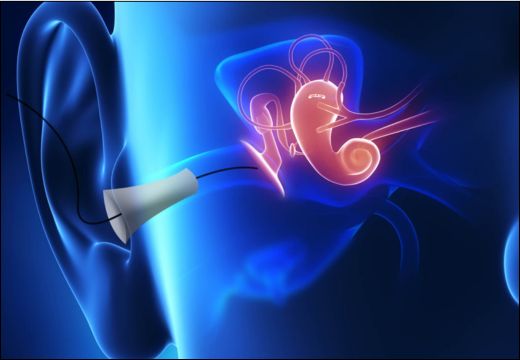
A gold-foil or silver-wick electrode placed against the eardrum (non-invasive, lower sensitivity).
- Reference and Ground Electrodes: Surface electrodes placed on the earlobe or mastoid to complete the electrical circuit.
- Acoustic Stimulator: Specialised earphones that deliver high-intensity “clicks” or “tone bursts” to the ear.
- Amplifier and Signal Averager: Devices that magnify the microscopic electrical potentials (often in the microvolt range) and filter out background neural noise to produce a clear, repeatable tracing.
What Is The Procedure?
The ECoG procedure can be performed using two different approaches:
- Transtympanic (Invasive): Usually performed by an otolaryngologist under local anaesthesia. A fine needle electrode is passed through the tympanic membrane to touch the bone near the cochlea. While this provides the clearest signal, it is more invasive and carries a slight risk of eardrum perforation or infection.
- Extratympanic (Non-Invasive): The most common approach in audiology clinics. The patient lies comfortably, and the skin is prepped. A small electrode (e.g., a “TIPtrode” or gold foil) is placed into the ear canal or against the eardrum. The patient listens to repeated auditory clicks while the computer averages the electrical response. This is painless and requires no recovery time.
Interpretation Of The Test
Clinicians focus primarily on the SP/AP Ratio.
- Normal: The ratio is typically below 0.35 to 0.40.
- Abnormal (Hydrops): A ratio greater than 0.40 or 0.45 is considered a positive finding for endolymphatic hydrops, indicating excess fluid pressure in the inner ear.
- Cochlear Microphonic (CM): The absence of the CM can indicate damage to the outer hair cells, a key feature in conditions like Auditory Neuropathy Spectrum Disorder (ANSD).
Health Issues Where Electrocochleography (ECoG) Is Advised
ECoG is specifically indicated for:
- Meniere’s Disease: To confirm the diagnosis of endolymphatic hydrops in patients presenting with vertigo, fluctuating hearing loss, and tinnitus.
- Perilymphatic Fistula: To assess if there is a leak in the inner ear fluid.
- Auditory Neuropathy: To distinguish between cochlear and neural hearing loss.
- Superior Canal Dehiscence: To aid in diagnosing a rare thinning of the bone covering the inner ear.
- Monitoring: To assess the effectiveness of medical or surgical treatments for inner ear disorders.
Factors Affecting The Results Of Electrocochleography (ECoG)
- Electrode Placement: The signal strength is highly dependent on how close the electrode is to the cochlea; even slight displacement can alter the SP/AP ratio.
- Middle Ear Fluid: The presence of fluid behind the eardrum (e.g., due to an ear infection) acts as a barrier, muffling the electrical signal.
- Bone Conduction: External skull vibrations can sometimes interfere with the recording.
- Patient Relaxation: Excessive jaw clenching or neck muscle tension creates electrical “noise” that can obscure the cochlear potentials.
Advantages Of The Test
- Objective Data: It bypasses the need for patient cooperation, providing a direct physiological measure of the cochlea.
- High Sensitivity For Hydrops: It is one of the few tests capable of detecting the internal fluid pressure associated with Meniere’s disease.
- Differentiation: It helps distinguish between primary cochlear issues and problems originating in the auditory nerve.
Ayurveda Insight
In Ayurveda, the ear is the seat of Akasha Mahabhuta (Ether Element) and is influenced by Prana Vayu (Vital Life Force).
- Endolymphatic Hydrops as Jala (Water)-Dosha: Excess fluid in the inner ear can be correlated with an imbalance in Kapha (water/earth) and Kleda (excessive moisture/fluid) within the Karna (ear).
- The “Hydrops” Mechanism: From an Ayurvedic lens, the buildup of pressure (Hydrops) indicates a stagnation of movement (Vata-related stagnation) or a poor regulation of fluids by Pachaka Pitta and Kledaka Kapha.
- Shrotas (Chennel) Cleansing: ECoG can be seen as an objective diagnostic tool to identify Srotorodha (channel obstruction) in the Shabda-Vaha Srotas (Auditory system).
- Holistic Management: Once the ECoG identifies the imbalance, Ayurveda suggests therapies like Nasya (nasal administration) and Karna Purana (oil pooling) to regulate the fluid elements in the ear, alongside Deepana-Pachana herbs to restore metabolic equilibrium.
Herbs Used For The Ear
1. Ashwagandha (Withania somnifera)
Ashwagandha is considered beneficial for ear health in Ayurveda due to its Vata-shamaka and Balya (strengthening) properties, which help manage ear pain (Karna Shoola), tinnitus (Karna Nada), and nerve-related hearing weakness. It nourishes auditory nerves and supports inner ear functioning. From a modern perspective, Withanolides present in Ashwagandha exhibit neuroprotective and anti-inflammatory actions that help reduce auditory nerve inflammation and oxidative stress in the inner ear. These compounds may also improve blood circulation to cochlear structures. Its adaptogenic properties further reduce stress-induced tinnitus and ear discomfort. Regular use helps maintain auditory nerve strength and hearing clarity.
2. Bibhitaki (Terminalia bellirica)
Bibhitaki is used in Ayurveda for ear disorders due to its Kapha-shamaka and Shothahara (anti-inflammatory) properties, which help in ear congestion, discharge, and infections. It is often recommended for reducing excessive ear wax and improving hearing clarity. Modern studies highlight Gallic acid, Ellagic acid, and Tannins as key chemical components responsible for antimicrobial and anti-inflammatory effects. These compounds help inhibit bacterial growth in ear infections and reduce swelling in ear tissues. Bibhitaki also supports detoxification and improves microcirculation in auditory pathways. This helps in managing chronic ear infections and mild hearing disturbances.
3. Haritaki (Terminalia chebula)
Haritaki is valued in Ayurveda for ear health due to its Tridosha-shamaka and Rasayana properties, helping in tinnitus, ear blockage, and ear infections. It improves nerve function and supports auditory clarity. Modern research attributes its benefits to Chebulinic acid, Chebulagic acid, and Tannins, which provide antioxidant and antimicrobial activity. These compounds help protect inner ear cells from oxidative damage and reduce infection risk. Haritaki also supports circulation to auditory structures and reduces inflammation. Its rejuvenating action strengthens auditory nerves and supports long-term ear health.
4. Amla (Emblica officinalis)
Amla supports ear health in Ayurveda due to its Rasayana, Pitta-shamaka, and Balya (strengthening) properties, helpful in tinnitus, hearing weakness, and ear inflammation. It nourishes sensory organs and improves auditory nerve function. From a modern viewpoint, Vitamin C, Emblicanin A & B, and Polyphenols play a key role in protecting inner ear hair cells from oxidative stress. These antioxidants help prevent hearing loss and reduce inflammation in ear tissues. Amla also improves microcirculation in the cochlea. Regular use supports hearing clarity and protects against age-related auditory decline.
5. Sariva (Hemidesmus indicus)
Sariva is used in Ayurveda for ear disorders due to its Rakta-shodhaka (Blood-purification) and Pitta-shamaka properties, which help in ear inflammation, burning sensation, and infections. It also supports detoxification and reduces ear discharge. Modern research identifies Hemidesmin, Saponins, and Flavonoids as active compounds with anti-inflammatory and antimicrobial effects. These compounds help reduce swelling and inhibit microbial growth in ear infections. Sariva also improves circulation and reduces oxidative stress in auditory tissues. This supports relief from ear irritation and promotes healthy auditory function.
Conclusion
Electrocochleography (ECoG) stands as a precise, objective window into the fluid-filled world of the inner ear. By quantifying the electrical potentials of the cochlea, it provides essential diagnostic clarity in conditions where other tests fall short, particularly regarding the fluid pressure imbalances seen in Meniere’s disease. ECoG bridges the gap between mechanical fluid dynamics and clinical otology.