


Exostoses – Causes, Symptoms, Treatment & Herbal Remedies
Abstract
Bone growth is a highly regulated biological process involving a balance between osteoblast-mediated bone formation and osteoclast-mediated bone resorption. Any disruption in this equilibrium may lead to abnormal bony projections or structural irregularities. Among such conditions, Exostoses are among the most common benign bone abnormalities and are characterized by localized projections of mature bone that extend from the cortical surface. This article provides a detailed and research-oriented overview of exostoses, including their classification, etiopathogenesis, clinical presentation, diagnostic approach, differential diagnosis, and current management strategies, with emphasis on evidence-based understanding and long-term prognosis.
Introduction
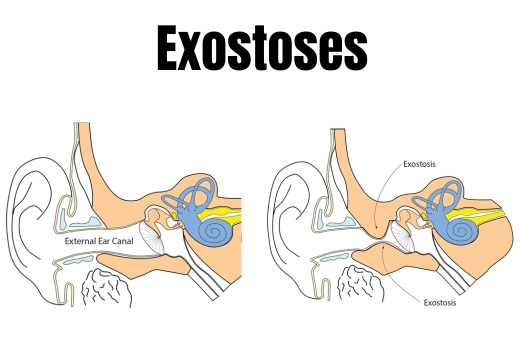
The term exostoses refers to a benign outgrowth of bone projecting outward from an existing bone surface. These lesions are composed of normal bone tissue and may be sessile (broad-based) or pedunculated (attached by a narrow stalk). They are typically slow-growing and non-aggressive, yet their clinical relevance lies in their potential to interfere with adjacent soft tissues, joints, nerves, or blood vessels. Exostoses are benign bony outgrowths that arise from the surface of bones and are commonly encountered in orthopedic and otolaryngological practice. These lesions represent a localized disturbance in bone growth and remodeling rather than a true neoplastic process. Although often asymptomatic, exostoses can produce pain, deformity, neurovascular compression, or functional impairment depending on their size and anatomical location. They may occur as isolated lesions or as part of inherited syndromes such as hereditary multiple exostoses.
Classification Of Exostoses
Exostoses can be broadly classified based on their number, anatomical location, and underlying cause.
1. Solitary Exostoses
Solitary exostoses occur as isolated lesions without an associated genetic disorder. These are more common and usually detected during childhood or adolescence when skeletal growth is active. They often cease growing once skeletal maturity is reached.
2. Multiple Exostoses
Multiple exostoses are characteristic of hereditary multiple exostoses (HME), an autosomal dominant condition marked by the development of numerous bony outgrowths throughout the skeleton. These patients often present with limb deformities, growth disturbances, and a higher risk of complications.
3. Site-Specific Exostoses
Certain exostoses are named according to their location, such as:
- External auditory canal exostoses (commonly seen in swimmers and surfers)
- Subungual exostoses affecting the distal phalanges
- Calcaneal exostoses involving the heel bone
Etiology And Risk Factors
The exact cause of solitary exostoses remains unclear, but several contributing factors have been proposed. These include developmental abnormalities of the growth plate, mechanical stress, and localized trauma. In children and adolescents, exostoses often arise near metaphyseal regions of long bones where active growth occurs.
Hereditary multiple exostoses are strongly associated with mutations in the EXT1 and EXT2 genes. These genes are involved in heparan sulfate synthesis, which plays a critical role in regulating chondrocyte proliferation and differentiation. Mutations disrupt normal signaling pathways, leading to abnormal cartilage growth and subsequent bone formation.
Environmental factors such as repeated cold-water exposure have been linked to external auditory exostoses, supporting the role of chronic irritation and adaptive bone formation.
Common Sites Of Occurrence
Exostoses most frequently involve bones formed by endochondral ossification. The common sites include:
- Distal femur
- Proximal tibia
- Proximal humerus
- Pelvis
- Scapula
External auditory exostoses arise in the bony portion of the ear canal, while subungual exostoses typically develop beneath the nail bed of toes, particularly the great toe.
Clinical Features
Many exostoses remain asymptomatic and are discovered incidentally during radiological evaluation for unrelated conditions. When symptoms occur, they depend on the size, location, and relationship of the lesion to surrounding structures.
Common clinical manifestations include:
- Localized pain or discomfort due to soft tissue irritation
- Visible or palpable bony swelling
- Restricted joint movement if the lesion interferes with articulation
- Neurovascular symptoms such as numbness, tingling, or vascular compromise
- Cosmetic deformity, especially in multiple exostoses
In hereditary multiple exostoses, patients may exhibit limb length discrepancies, angular deformities, and short stature due to growth plate involvement.
Diagnostic Evaluation
- Plain radiographs
- Computed tomography
- Magnetic resonance imaging
Complications
Although benign, exostoses can lead to various complications. Mechanical irritation may cause bursitis or tendon damage. Compression of adjacent nerves or blood vessels can result in neurological deficits or vascular insufficiency. Fracture of the stalk in pedunculated lesions may occur following trauma.
A rare but serious complication is malignant transformation, most commonly into chondrosarcoma. This risk is higher in hereditary multiple exostoses compared to solitary lesions.
Management
- Asymptomatic lesions generally require no treatment and can be monitored with periodic clinical and radiological follow-up.
- Surgical excision is indicated in cases of persistent pain, functional impairment, neurovascular compression, cosmetic concerns, or suspicion of malignant change.
- In hereditary multiple exostoses, management often involves a multidisciplinary approach addressing deformity correction, limb length discrepancies, and long-term surveillance.
Ayurvedic Correlation
In Ayurveda, exostoses can be correlated with disorders of Asthi Dhatu (bone tissue) resulting from deranged Vata Dosha, often associated with Kapha Dosha involvement. Classical Ayurvedic texts do not describe exostoses under a single identical term; however, based on clinical presentation and pathological behavior, they can be conceptually aligned with conditions such as Asthi Vriddhi (excessive bone growth) and Adhyasthi (supernumerary or abnormal bone formation), and in some cases Granthi or Arbuda when the growth is localized, firm, slow-growing, and non-inflammatory.
Asthi Dhatu is primarily governed by Vata Dosha. When Vata becomes vitiated due to factors such as chronic mechanical stress, trauma, improper nutrition, aging, or genetic predisposition, it disrupts normal bone remodeling. Simultaneously, aggravated Kapha Dosha contributes to localized overgrowth and structural solidity, leading to the formation of hard, immobile bony protrusions resembling exostoses. In hereditary multiple exostoses, a Beeja Dushti (genetic or congenital defect) concept can be applied, wherein abnormalities in the reproductive elements lead to systemic skeletal manifestations.
Samprapti (Pathogenesis)
The Ayurvedic pathogenesis of exostoses involves:
- Vata Prakopa in Asthivaha Srotas due to vata vitiating causes.
- Kapha Anubandha, leading to excessive and localized tissue accumulation
- Srotorodha (obstruction of channels) impairing normal bone metabolism because of kapha
- Dhatvagni Mandya, resulting in abnormal bone nourishment and growth
Ayurvedic Management
Ayurvedic management focuses on Dosha Shamana (correcting the dosha), Asthi Dhatu regulation (bone tissue metabolism), and prevention of progression, rather than mere symptomatic relief.
1. Dosha-Based Management
- Vata Shamana Since Vata is the primary Dosha involved, therapies that are unctuous, nourishing, and stabilizing are emphasized.
- Kapha Shamana Measures to prevent excessive tissue overgrowth and stagnation are simultaneously adopted.
2. Herbs
Classical herbs known for their action on Asthi Dhatu (bone tissue) and abnormal bone growth include:
- Hadjod (Cissus quadrangularis) – promotes balanced bone remodeling and supports skeletal integrity.
- Arjuna (Terminalia arjuna) – strengthens bone matrix and improves mineral assimilation.
- Shallaki (Boswellia serrata) – reduces associated pain, inflammation, and mechanical discomfort.
- Ashwagandha (Withania somnifera) – supports Dhatu (tissue) nourishment and counters Vata aggravation.
- Laksha (Laccifer lacca) – traditionally indicated in Asthi (bone) disorders and bone healing.
Herbo-mineral formulations containing Praval Pishti, Mukta Pishti, and Godanti Bhasma may be used judiciously under expert supervision to regulate calcium metabolism and strengthen bone tissue.
Panchakarma And External Therapies
Selected Panchakarma procedures are beneficial in chronic or symptomatic cases:
- Basti Chikitsa (medicated enemas) is considered the most effective therapy for Vata disorders affecting bones.
- Abhyanga (therapeutic oil massage) with Vata-pacifying oils helps reduce stiffness and discomfort.
- Swedana (sudation therapy) improves local circulation and reduces associated musculoskeletal rigidity.
In localized pain or irritation, Upanaha (poultices) and Lepa (herbal pastes) may provide supportive relief.
Diet And Lifestyle Recommendations
Dietary measures play a crucial role in preventing progression:
- Emphasis on Vata-pacifying foods such as warm, nourishing, and mildly unctuous meals
- Adequate intake of natural calcium sources like sesame seeds and leafy greens
- Avoidance of excessive dryness, cold exposure, and overexertion
Lifestyle practices such as gentle Yoga, Pranayama, and maintaining proper posture help support musculoskeletal balance and reduce mechanical stress on bones.
Herbal Remedies For Exostoses By Planet Ayurveda
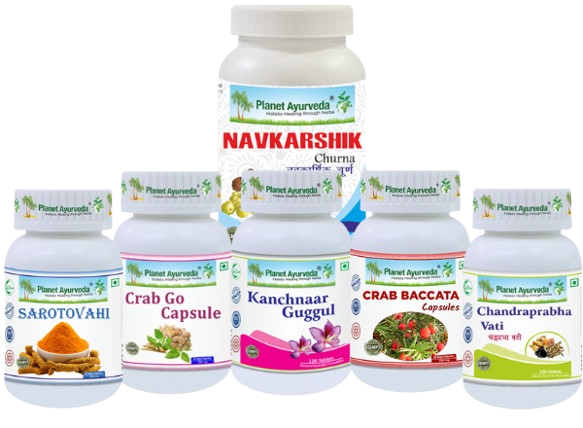
Planet Ayurveda is a renowned herbal and Ayurvedic wellness company dedicated to promoting natural health solutions through time-tested formulations. Committed to the principles of authentic Ayurveda, the organization offers a wide range of products designed to support overall well-being, target specific health conditions, and restore balance among the body’s Doshas. All formulations are prepared using pure, standardized herbs, minerals, and natural ingredients, ensuring safety, potency, and efficacy. With a focus on holistic health, Planet Ayurveda emphasizes preventive care, rejuvenation, and management of chronic disorders, providing accessible herbal remedies that integrate traditional wisdom with modern quality standards. Planet Ayurveda is pleased to present its list of products that are indeed helpful in the management of Exostoses.
Product List
- Kanchnaar Guggul
- Crab Baccata Capsules
- Crab Go Capsule
- Chandraprabha Vati
- Navkarshik Churna
- Sarotovahi Capsules
Product Description
1. Kanchnaar Guggul
Kanchnaar Guggul is a classical Ayurvedic formulation primarily composed of Kanchnaar (Bauhinia variegata) and Guggulu (Commiphora mukul). These herbs are renowned for their anti-inflammatory, antioxidant, and antiproliferative properties, making them useful in managing abnormal tissue growths. The resin of Commiphora mukul contains bioactive compounds such as guggulsterones, terpenoids, and phenolic constituents, which exert anti-inflammatory effects by inhibiting lipid peroxidation and cyclooxygenase activity, thereby reducing chronic inflammation and tissue irritation. These mechanisms are particularly beneficial in conditions involving localized tissue congestion or growth. Additionally, Kanchnaar Guggul demonstrates cytotoxic and antiproliferative effects by inhibiting cell division and proliferation, actions attributed to its flavonoids and phenolic compounds. This supports its traditional application in the management of tumors and nodular lesions. Overall, Kanchnaar Guggul is considered one of the most effective herbal remedies for managing Exostoses.
Dosage Two tablets twice a day.
2. Crab Baccata Capsules
Crab Baccata Capsules are a product of Planet Ayurveda and helpful in exostoses as it works to regulate abnormal tissue growth and reduce associated discomfort. Crab Baccata, prepared from Taxus baccata, is used for managing abnormal, slow-growing, non-inflammatory tissue proliferations and helps maintain Dhatu Samya (tissue balance). Its anti-inflammatory and tissue-regulatory properties help reduce local irritation, pain, and soft-tissue stress caused by bony outgrowths, while supporting balanced cellular metabolism. It serves as an effective medicine in the management of exostoses to help control progression and improve overall comfort.
Dosage One capsule twice a day.
3. Crab Go Capsule
Crab Go Capsules are a patent product of Planet Ayurveda. Crab Go Capsules contain a blend of standardized Ayurvedic herbs such as ashwagandha (Withania somnifera), shatavari (Asparagus racemosus), haridra (Curcuma longa), giloy (Tinospora cordifolia), tulsi (Ocimum tenuiflorum), shunthi (Zingiber officinale), and gokshur (Tribulus terrestris) that provide anti-inflammatory, antioxidant, cytoprotective, and immunomodulatory effects. These actions help reduce oxidative stress and inflammatory mediators that often accompany chronic growths and local tissue irritation, improve immune response, and support cellular regulation, which can aid in stabilizing the environment around bony projections and alleviate soft tissue symptoms associated with exostoses. By addressing inflammation, oxidative damage, and cellular imbalance that contribute to discomfort and aggravation around exostotic lesions, Crab Go Capsules serve as an effective remedy in the management of exostoses.
Dosage Two capsules twice a day.
4. Chandraprabha Vati
Chandraprabha Vati is a classical ayurvedic herbomineral medicine that has a number of health benefits. It contains ingredients such as shilajit (Asphaltum), karpoor (Cinnamomum camphora), vacha (Acorus calamus), mustak (Cyperus rotundus), haridra (Curcuma longa), chavya (Piper chaba), vidanga (Embelia ribes), pippali (Piper longum), dalchini (Cinnamomum zeylanicum), shunthi (Zingiber officinalis) and others. The herbs possess anti-inflammatory, antioxidant, and circulation supporting properties. These actions help reduce inflammation, improve local microcirculation, and support detoxification processes, which alleviate soft-tissue irritation and discomfort often seen around exostotic lesions. Additionally, many herbs in Chandraprabha Vati are known to support metabolic balance and immune regulation, helping the body maintain tissue homeostasis and potentially modulating the chronic mechanical stress response that contributes to symptom development in exostoses. The collective effects of its components also support muscular and joint comfort, which is beneficial given that exostoses may restrict movement or cause localized muscle tension. Chandraprabha Vati, thus, works to better the condition and helps patients suffering from exostoses.
Dosage Two tablets twice a day.
5. Navkarshik Churna
Navkarshik Churna is a patent product of Planet Ayurveda and contains a number of herbs like Amla (Emblica officinalis), Haritaki (Terminalia chebula), Bahera (Terminalia bellerica), Neem (Azadirachta indica), Manjistha (Rubia cordifolia), Giloy (Tinospora cordifolia), Katuki (Picrorhiza kurroa), Vacha (Acorus calamus), and Daruhaldi (Berberis aristata). These ingredients are known for their blood-purifying (Raktashodhaka), detoxifying, anti-inflammatory, immunomodulatory, and antioxidant effects, which help remove metabolic toxins (ama) and reduce systemic inflammation that often accompanies chronic bone-related conditions. Navkarshik Churna supports clearing of toxins from the blood and tissues, enhances metabolic balance (Agni) and immune regulation, and have scraping property that minimises bony outgrowths, thereby helping alleviate discomfort and soft-tissue irritation associated with exostoses. Therefore, Navkarshik Churna helps in exostoses and provides relief from the symptoms.
Dosage One tsp twice a day.
6. Sarotovahi Capsules
Sarotovahi Capsules are a product of Planet Ayurveda. The capsules contain herbs such as guggul (Commiphora wightii), shilajit (Asphaltum), haridra (Curcuma longa), vidanga (Embelia ribes), maricha (Piper nigrum), dalchini (Cinnamomum verum), and tulsi (Ocimum sanctum), which are well known for their srotoshodhana (channel-clearing), anti-inflammatory, antioxidant, and metabolic-regulating properties. These ingredients help remove accumulated ama (metabolic toxins), reduce Kapha-related stagnation, improve microcirculation in Asthivaha srotas (bone microchannels), and support a healthier tissue formation. By improving tissue nourishment, reducing inflammation, and relieving soft-tissue stress adjacent to exostoses, Sarotovahi Capsules act as an effective supportive therapy to control symptom progression and enhance overall comfort in this condition.
Dosage One capsule twice a day.
Conclusion
Exostoses represent a benign yet clinically significant disturbance of bone growth that arises from altered remodeling processes and may lead to discomfort, functional limitation, or complications if left unmonitored. A thorough understanding of their etiology, clinical behavior, and diagnostic features allows for timely intervention and appropriate management. While modern medicine emphasizes observation and surgical excision in symptomatic cases, Ayurveda offers a holistic perspective by addressing the underlying Vata–Kapha imbalance, Asthi Dhatu dysfunction, and metabolic disturbances involved in their pathogenesis. Integrative management combining careful surveillance, lifestyle modifications, Panchakarma therapies, and well-selected herbal formulations can help reduce symptoms, prevent progression, and improve quality of life. Planet Ayurveda’s products that are explained above are of great help in managing this condition. Such a comprehensive approach underscores the importance of individualized, long-term care in the effective management of Exostoses.