


Hemangiopericytoma (HPC) – Causes, Symptoms, Treatment & Herbal Remedies
Abstract
Tumors represent abnormal and uncontrolled growth of cells that arise due to genetic alterations, environmental influences, or disturbances in normal cellular regulation. They may be benign or malignant in nature and can originate from various tissues such as epithelial, connective, vascular, or neural structures. Tumor development involves complex interactions between cell proliferation, angiogenesis, and changes in the surrounding tissue environment, often leading to local tissue compression, functional impairment, or systemic effects. Among vascular-origin tumors, Hemangiopericytoma is a rare entity that arises from pericytes surrounding capillaries and small blood vessels, distinguished by its unique vascular pattern and variable clinical behavior. We shall discuss more about it in the text below and have a look at the ayurvedic part of the same.
Introduction
Hemangiopericytoma (HPC) is a rare and biologically distinct vascular tumor originally characterized in 1942 by Stout and Murray as a neoplasm arising from pericytes, specialized contractile cells that surround capillaries and small blood vessels. These cells, first described by Zimmerman, help regulate capillary blood flow and are embedded within the basement membrane of endothelial cells. Historically recognized as a unique entity among soft-tissue sarcomas, hemangiopericytoma is now mostly interpreted within the spectrum of solitary fibrous tumors (SFTs) based on updated World Health Organization (WHO) classifications. Despite this evolving terminology, the designation “hemangiopericytoma” remains widely used, especially when describing specific aggressive clinical behavior and vascular histology.
Pathophysiology And Histopathology
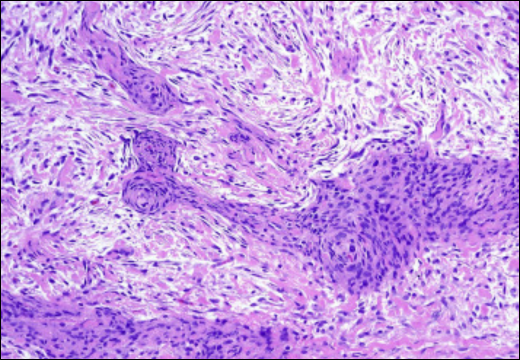
HPCs originate from mesenchymal pericytes, tumor cells that closely interact with endothelial cells of blood vessels. These tumors are typically composed of ovoid or spindle-shaped cells arranged around thin-walled, branching “staghorn” vessels, a hallmark histological pattern. They display variable cellularity, mitotic activity, and can include areas of hemorrhage or necrosis. Immunohistochemical markers (such as STAT6) and molecular features (e.g., NAB2-STAT6 gene fusion) help confirm diagnosis and differentiate from other vascular or spindle-cell neoplasms.
Under the modern WHO framework—particularly for central nervous system tumors—hemangiopericytomas are combined with solitary fibrous tumors into a single category (SFT/HPC), with assigned grades reflecting aggressiveness and prognosis.
Epidemiology
- Hemangiopericytoma is exceedingly rare, accounting for fewer than 5% of all soft-tissue sarcomas, and an incidence of about 0.06 per 100,000 individuals per year.
- Most cases occur in adults, commonly in the fourth to sixth decades of life, although cases in children and infants (infantile hemangiopericytoma) have been reported.
- These tumors can arise in virtually any body region due to the ubiquity of blood vessels, with frequent involvement of the lower extremities, pelvis, retroperitoneum, head and neck region, and meninges.
- Intracranial hemangiopericytomas account for less than 1% of primary central nervous system tumors.
Clinical Features
HPCs commonly present as a painless, gradually enlarging mass. Symptoms depend on anatomical sites:
- Pelvic or retroperitoneal tumors may cause compressive discomfort or urinary symptoms
- Cranial lesions can present with headache or focal neurological deficits
- Sinonasal tumors may cause nasal obstruction or epistaxis
- Some tumors secrete biologically active substances (e.g., IGF-II), leading to rare paraneoplastic effects such as hypoglycemia
Diagnosis
- Diagnosis of hemangiopericytoma requires histopathological examination of a biopsy specimen.
- Imaging modalities like CT and MRI are valuable for assessing tumor extent.
Treatment Strategies
The mainstay of treatment for hemangiopericytoma remains surgical resection with clear margins, which is associated with the greatest survival benefit in large retrospective series.
- Radiotherapy – Often used postoperatively, especially for high-grade lesions, tumors with close or positive margins, or intracranial cases. Its impact on overall survival is still debated, although some evidence suggests it improves local control.
- Chemotherapy – Systemic therapy may be considered for unresectable, metastatic, or recurrent disease. However, conventional cytotoxic chemotherapy has shown limited efficacy, and in some studies, its use was associated with poorer outcomes.
- Targeted Therapies – Emerging molecular insights (e.g., angiogenesis inhibitors) are being explored, and experimental targeted approaches may offer future treatment avenues as understanding of tumor biology expands.
For intracranial and skull base tumors, a multimodal approach combining surgery, radiotherapy, and occasionally systemic agents has been reported to achieve durable responses in selected patients.
Ayurvedic Approach And Management
Hemangiopericytoma, being a rare vascular and mesenchymal tumor, does not have a direct one-to-one equivalent in classical Ayurvedic texts. However, based on its vascular origin, abnormal tissue growth, and progressive nature, it can be conceptually understood under conditions Arbuda (tumorous growth) and Siraja Granthi (tumors arising from blood vessels). The involvement of Rakta Dhatu (blood tissue), Mamsa Dhatu (muscle/connective tissue), and Medo Dhatu (adipose tissue) is prominent in this condition.
Dosha Involvement
- Kapha Dosha – responsible for excessive growth, solidity, and mass formation
- Vata Dosha – governs abnormal cell division, spread, and recurrence
- Pitta Dosha – contributes through Rakta Dushti (vitiation of blood) and angiogenic tendencies
The disease starts with unwholesome dietary habits and beeja dushti (genetic or cellular-level abnormality) which are the predisposing factors that lead to ama formation (endotoxins build ups) and dushya dushti (tissue vitiation) which further causes srotorodha (channel obstruction) and which together result in uncontrolled tissue proliferation.
1. Rakta Shodhana (Blood Purification)
Since vascular tumors indicate Rakta Dushti (blood vitiation), purification and normalization of blood is essential. Herbs with Tikta (bitter) and Kashaya (astringent) rasa help regulate abnormal vascular activity.
2. Kapha-Mamsa Shamana (Reducing Excess Growth)
Formulations that are Lekhana (scraping) and Granthi-nashaka (anticystic) help inhibit abnormal tissue accumulation and fibrotic tendencies.
3. Agni Deepana And Ama Pachana
Poor digestive fire leads to Ama (endotoxins), which contributes to pathological growths. Strengthening Agni (digestion) improves tissue metabolism and cellular regulation.
4. Rasayana Therapy (Rejuvenation)
Rasayana drugs support tissue repair, immune surveillance, and resistance against recurrence, especially after surgery or radiotherapy.
5. Srotoshodhana (Microchannel Cleansing)
Clearing microcirculatory channels helps prevent abnormal angiogenesis and supports healthy blood flow.
Important Ayurvedic Herbs Used
- Manjistha (Rubia cordifolia) – Rakta shodhaka, anti-angiogenic, anti-inflammatory
- Haridra (Curcuma longa) – Kapha-Pitta shamak, anti-proliferative
- Guduchi (Tinospora cordifolia) – Immunomodulatory, Rasayana
- Ashwagandha (Withania somnifera) – Cellular stabilizer, anti-stress, tissue rejuvenator
- Neem (Azadirachta indica) – Blood purifier, anti-tumor support
- Kanchanar (Bauhinia variegata) – Classical Granthi-arbuda hara herb
Classical Ayurvedic Formulations
- Kanchanar Guggulu – Traditionally used for Granthi and Arbuda
- Arogya Vardhini Vati – Supports Rakta and Meda metabolism
- Manjisthadi Kwatha – Rakta shodhana and microcirculation support
- Guduchi Satva / Giloy Ghan Vati – Immunity and tissue defense
- Triphala – Detoxification and cellular cleansing
Dietary And Lifestyle Guidelines (Pathya-Apathya)
Pathya (Recommended)
- Light, easily digestible foods
- Bitter vegetables (neem leaves, karela)
- Whole grains, green leafy vegetables
- Adequate hydration and warm water
Apathya (To Avoid)
- Excessively oily, heavy, and processed foods
- Red meat and refined sugar
- Alcohol and smoking
- Sedentary lifestyle and chronic stress
Yoga And Mind-Body Support
Gentle practices such as Pranayama (Anulom-Vilom, Bhramari) and meditative techniques help regulate Vata dosha, improve oxygenation, and support emotional well-being during long-term disease management.
Herbal Remedies For Hemangiopericytoma By Planet Ayurveda
Planet Ayurveda is a leading Ayurvedic healthcare company committed to promoting holistic wellness through authentic herbal remedies. It specializes in producing high-quality, natural formulations based on classical Ayurvedic principles to address various health concerns. The company offers a wide range of products, including supplements, care packs, and specialized herbal formulations for conditions such as liver disorders, kidney problems, hair loss, diabetes, and digestive issues. With a strong focus on purity, efficacy, and safety, Planet Ayurveda sources herbs from trusted suppliers and maintains strict quality control. By integrating traditional Ayurvedic wisdom with modern manufacturing standards, Planet Ayurveda provides reliable natural solutions for overall health and well-being. Planet Ayurveda is more than happy to present its list of products for the management of Hemangiopericytoma.
Product List
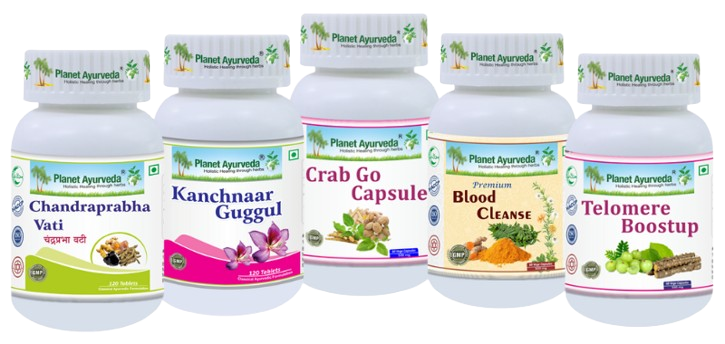
- Kanchnaar Guggul
- Premium Blood Cleanse Capsules
- Crab Go Capsule
- Chandraprabha Vati
- Telomere Boostup
Product Description
1. Kanchnaar Guggul
Kanchnaar Guggul is a classical ayurvedic medicine that addresses the core pathological factors involved in abnormal vascular and mesenchymal growth. Kanchnaar Guggul contains Kanchanar (Bauhinia variegata) and Guggul (Commiphora mukul), exhibits Granthi-arbuda-hara, Lekhana (scraping), and Kapha-Mamsa shamak properties, which help regulate excessive tissue growth and fibrotic tendencies. Its Rakta shodhana (blood cleansing) and lymphatic cleansing actions are particularly relevant in vascular tumors, as they support healthier microcirculation and help counter Rakta Dushti (blood vitiation). Additionally, the formulation enhances Agni (digestive and metabolic fire) and facilitates Ama pachana (endotoxins), thereby addressing deeper metabolic imbalances that contribute to uncontrolled cell proliferation. Kanchnaar Guggul is best for Hemangiopericytoma.
Dosage : Two tablets twice a day.
2. Premium Blood Cleanse Capsules
Premium Blood Cleanse Capsules are a product of Planet Ayurveda that support management of Hemangiopericytoma by enhancing systemic detoxification and addressing core imbalances associated with abnormal tissue growth. Premium Blood Cleanse Capsules contain herbs namely haridra (Curcuma longa) and neem (Azadirachta indica) known for their Rakta-shodhana (blood-cleansing) and Ama-pachana (digestive detoxification) properties, which help eliminate accumulated toxins from the bloodstream and improve microcirculation. By purifying Rakta Dhatu (blood tissue) and supporting the removal of metabolic waste, this formulation aids in reducing the internal environment that favors abnormal vascular cell growth and vascular congestion. Improved detoxification also supports better immune regulation and helps restore balance in Kapha and Pitta doshas, potentially mitigating factors that contribute to the growth and persistence of vascular tumors. Premium Blood Cleanse Capsules contribute to overall metabolic balance, enhanced tissue health, and support long-term management for hemangiopericytoma.
Dosage : One capsule twice a day.
3. Crab Go Capsule
Crab Go Capsules are Planet Ayurveda’s product to check uncontrolled growths. The capsules contains standardized extracts of herbs such as Ashwagandha (Withania somnifera), Shatavari (Asparagus racemosus), Haridra (Curcuma longa), and others, whose active constituents include withanolides, saponins, and curcuminoids that exhibit anti-inflammatory, antioxidant, and cytotoxic-modulating properties. These phytochemicals help reduce free radical production and oxidative stress. By modulating inflammatory pathways and supporting the body’s natural defense mechanisms, Crab Go Capsule helps in regulating abnormal cellular signaling, supporting immune surveillance, and mitigating chronic inflammation, which reduces the environment that favors uncontrolled growth. Additionally, herbs like Ashwagandha provide cellular stabilizing and adaptogenic effects, which, in Ayurvedic terms, help balance Vata and Kapha doshas and improve overall dhatu (tissue) metabolism. Therefore, the said product is beneficial in the management of Hemangiopericytoma.
Dosage : Two capsules twice a day.
4. Chandraprabha Vati
Chandraprabha Vati is a classical formulation rich in herbs such as Guggulu (Commiphora mukul), Shilajit (Asphaltum), Mustak (Cyperus rotundus), Amalaki (Emblica officinalis), Giloy (Tinospora cordifolia), Vidanga (Embelia ribes) etc works as a Rakta-shodhaka (blood purifier), Agni-deepaka (digestion enhancers), and Ama-pachaka (endotoxins digestion), thereby improving metabolic efficiency and reducing toxic buildup that contributes to cellular dysregulation. Its anti-inflammatory and srotoshodhana (channel clearing) actions support healthier circulation and lymphatic drainage, which are particularly relevant in vascular tumors. Additionally, by balancing Kapha and Vata doshas and supporting overall dhatu metabolism, Chandraprabha Vati helps create an internal environment less conducive to abnormal tissue growth and recurrence. Chandraprabha vati is indeed a good herbal support in the management of Hemangiocytoma.
Dosage : Two tablets twice a day.
5. Telomere Boostup
Telomere Boostup is a product of Planet Ayurveda that provides supportive benefits in the management of Hemangiopericytoma by targeting underlying cellular resilience and tissue homeostasis. The herbs namely Ashwagandha (Withania somnifera), Amla (Emblica officinale), Moringa (Moringa oleifera), Giloy (Tinospora cordifolia) etc strengthening cellular health, reducing systemic stress, and supporting genomic stability, factors that influence abnormal cell proliferation and recurrence. Telomere Boostup contains herbs and botanicals known for their antioxidant, adaptogenic, and anti-inflammatory properties, which help protect cells from oxidative damage, enhance DNA repair mechanisms, and support telomere integrity, the protective caps on chromosomes that play a role in cellular aging and replication stability. From an Ayurvedic perspective, this formulation helps balance Vata and Pitta doshas, reduce Ama (metabolic toxins) and Rakta Dushti (blood vitiation) and suppresses the manifestation of the disease. Therefore, Telomere Boostup is an excellent product in the management of Hemangiopericytoma.
Dosage : One capsule twice a day.
Conclusion
Hemangiopericytoma is a rare and complex vascular tumor that requires accurate diagnosis, long-term monitoring, and a comprehensive treatment strategy due to its aggressive nature and potential for recurrence. While surgical resection remains the cornerstone of modern medical management, supported by radiotherapy and emerging targeted therapies in selected cases, an integrative approach can play a valuable complementary role in improving overall outcomes and quality of life. Ayurvedic management focuses on Rakta shodhana, Agni deepana, Ama pachana, Kapha-Mamsa shamana, Rasayana therapy, and Srotoshodhana, thereby addressing the root imbalances rather than only the visible growth. Planet Ayurveda’s above-mentioned products really help reduce contributory factors, support recovery, minimize recurrence risk, and enhance overall well-being, offering a holistic and patient-centered approach to the long-term management of hemangiopericytoma.