


Mudgaparni / Phaseolus Tribolus – Ayurvedic Properties, Indications, Uses, Benefits & Dosage
Abstract
Mudgaparni (Phaseolus trilobus) is a well-known Ayurvedic herb valued for its nourishing, rejuvenating, and health-promoting properties. Traditionally, it is used to enhance vitality, digestion, immunity, and tissue nourishment, and is indicated in conditions such as weakness, digestive disorders, eye problems, fever, Vatarakta (gout), and minor wounds, etc. The plant contains proteins, flavonoids, saponins, and other bioactive compounds, which contribute to its antioxidant, hepatoprotective, and rejuvenating effects. While traditional and experimental studies support its benefits, human clinical evidence is limited. In the following sections, we will study Mudgaparni (Phaseolus trilobus) in detail, exploring its properties, uses, and therapeutic potential.
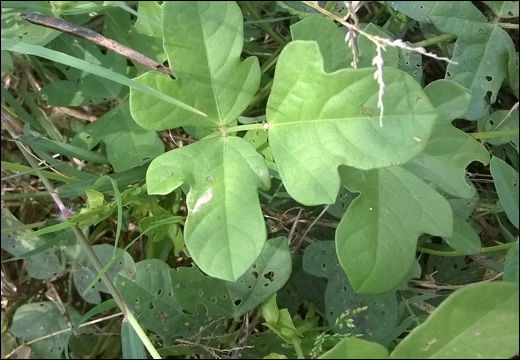
Classical Reference Of Mudgaparni (Phaseolus Tribolus)
Bhavprakash Nighantu Guduchyadi Varga Page no 284
Scientific Classification Of Mudgaparni (Phaseolus Tribolus)
- Kingdom: Plantae
- Subkingdom: Tracheobionta (vascular plants)
- Superdivision: Spermatophyta (seed plants)
- Division: Magnoliophyta (flowering plants)
- Class: Magnoliopsida (dicotyledons)
- Subclass: Rosidae
- Order: Fabales
- Family: Fabaceae (legume family)
- Genus: Phaseolus / Vigna
- Species: Tribolus
Synonyms Of Mudgaparni (Phaseolus Tribolus)
- Kshudrasaha: Refers to a plant that is "small but powerful" or capable of withstanding small stressors.
- Shimbi: Indicates that the plant belongs to the legume family and bears pods.
- Marjaragandhika: Describes a specific scent associated with the plant, literally meaning "having the smell of a cat".
- Vanaja: Means "forest-born" or wild-growing, indicating its natural habitat.
- Ringini: Refers to its growth habit, typically describing a plant that creeps or spreads along the ground.
- Hrasva: A descriptive term meaning short or small in stature.
- Mudgaparni: Its leaves resemble those of the Green Gram (Mudga).
- Kakaparni & Kakamudga: Reference to its wild nature (often associated with "crow").
- Suryaparni: Solar-related, referring to leaf movement or shape.
- Alpika: Small in stature.
- Saha: Meaning "enduring" or strong.
Vernacular Names Of Mudgaparni (Phaseolus Tribolus)
- Sanskrit: Mudgaparni
- Hindi: Chhoti Mudgi
- English: Creeping Bean, Small-seeded Bean
- Telugu: Chinna Mudgi
- Tamil: Chinna Moongai
- Kannada: Chikka Mudgi
- Marathi: Chhoti Mung
- Gujarati: Chhoti Mung
Habitat Of Mudgaparni (Phaseolus Tribolus)
- Geographical Distribution: Mudgaparni is a creeping, annual herb of the Fabaceae family, naturally found in tropical and subtropical regions. It is widely distributed in India, Sri Lanka, Southeast Asia, and parts of Africa. Within India, it commonly grows in Madhya Pradesh, Maharashtra, Gujarat, Andhra Pradesh, Tamil Nadu, and other warm regions.
- Preferred Environment: The plant thrives in open fields, wastelands, roadsides, grasslands, and uncultivated lands. It favors areas with direct sunlight or partial shade and can tolerate moderate drought conditions, making it highly adaptable.
- Soil and Climate Requirements: Mudgaparni prefers sandy, loamy, and well-drained soils. It can survive in poor or moderately fertile soils and areas with moderate rainfall. The plant grows best in sunny, warm climates but can adapt to semi-shaded environments as well.
- Ecological Adaptability: Being a hardy herb, Mudgaparni adapts easily to different soil types and climatic conditions. Its resilience allows it to grow in marginal lands, making it easily accessible for Ayurvedic and traditional medicinal use.
Morphology Of Mudgaparni (Phaseolus Tribolus)
Habit and Growth
- Mudgaparni is an annual, creeping, trailing herb.
- It grows close to the ground and can spread extensively over soil, making it a ground-covering plant.
- Stems are slender, green, and branching, often rooting at nodes that touch the soil.
Leaves
- Leaves are trifoliate (three leaflets per leaf), with each leaflet being ovate to oblong.
- Leaflets are small, smooth, and light green, with a slightly hairy surface.
- Leaves are arranged alternately along the stem.
Flowers
- Flowers are small, purplish or violet, and occur solitarily or in axillary clusters.
- They have the typical papilionaceous (pea-like) structure common to the Fabaceae family.
- Flowering usually occurs during the rainy and post-monsoon season.
Fruits / Pods
- The fruit is a small, cylindrical pod containing tiny seeds.
- Pods are slightly curved, green when immature, turning brown on ripening.
- Each pod contains 2–6 seeds, which are small, oval, and brownish.
Seeds
- Seeds are tiny, hard, and kidney-shaped, with a smooth surface.
- They are edible and used in traditional medicine.
Roots
Roots are fibrous, shallow, and spreading, helping the plant anchor to soil and absorb nutrients efficiently.
Classical Categorisation Of Mudgaparni (Phaseolus Tribolus)
- Dhanwanthari Nighantu: Guduchyadi Varga
- Bhavprakash Nighantu: Guduchyadi Varga
Ancient Verses For Mudgaparni (Phaseolus Tribolus)
Verse No. 1
मुद्गपर्णी क्षुद्रसहा शिम्बी मार्जारगन्धिका ।
वनजा रिङ्गणी ह्रस्वा शूर्पपर्ण्युभे स्मृते ॥ Dhanwanthari Nighantu / Guduchyadi Varga / Verse no. 134
Verse Interpretation:-
The verse identifies several names for the herb Mudgaparni (Vigna trilobata).
- Kshudrasaha: Refers to a plant that is "small but powerful" or capable of withstanding small stressors.
- Shimbi: Indicates that the plant belongs to the legume family and bears pods.
- Marjaragandhika: Describes a specific scent associated with the plant, literally meaning "having the smell of a cat".
- Vanaja: Means "forest-born" or wild-growing, indicating its natural habitat.
- Ringini: Refers to its growth habit, typically describing a plant that creeps or spreads along the ground.
- Hrasva: A descriptive term meaning short or small in stature.
Also this herb and Mashparni (Teramnus labialis) collectively known as Shurpaparni.
Verse No. 2
मुद्रपर्णी हिमा स्वादुर्वातरक्तविनाशिनी।
पित्तदाहज्वरान् हन्ति कृमिघ्नी कफशुक्रकृत्॥ Dhanwanthari Nighantu / Guduchyadi Varga / Verse no. 135
Verse Interpretation:-
- Hima: Cold in potency (Virya).
- Svadu: Sweet in taste (Rasa).
- Vatarakta-vinashini: Destroys or cures Vatarakta (Gout or blood-related disorders).
- Pitta-daha-jvaran hanti: Removes Pitta, burning sensations, and fever.
- Krimighni: Anthelmintic (kills or eliminates worms).
- Kapha-shukrakrit: Increases Kapha and Shukra (semen or reproductive health).
Verse No. 3
मुद्गपर्णी काकपर्णी सूर्यपर्णीत्यल्पिका सहा ॥
काकमुद्गा च सा प्रोक्ता तथा मार्जारगन्धिका ।
मुद्गपर्णी हिमा रूक्षा तिक्ता स्वादुश्च शुक्रला ॥
चक्षुष्या क्षतशोषघ्नी ग्राहिणी ज्वरदाहनुत् ।
दोषत्रयहरी लघ्वी ग्रहण्यर्शोऽतिसारजित् ॥ Bhavprakash Nighantu / Guduchyadi Varga / Verse no. 52-54
Verse Interpretation:-
Various names by which this plant is known:
- Mudgaparni: Its leaves resemble those of the Green Gram (Mudga).
- Kakaparni & Kakamudga: Reference to its wild nature (often associated with "crow").
- Suryaparni: Solar-related, referring to leaf movement or shape.
- Alpika: Small in stature.
- Saha: Meaning "enduring" or strong.
- Marjargandhika: Having a smell similar to that of a cat.
Properties of Plant
- Hima (Cold): It has a cooling effect on the body (Virya).
- Ruksha (Dry): It possesses drying qualities.
- Tikta (Bitter): One of its primary tastes.
- Svadu (Sweet): It also has a sweet post-digestive effect.
- Shukrala: It increases or improves the quality of semen/reproductive health.
Therapeutic Benefits (Karma)
- Chakshushya: Improves eyesight and is beneficial for eye health.
- Kshata-shosha-ghni: Heals internal injuries/wounds (Kshata) and treats wasting or emaciation (Shosha).
- Grahini: Improves absorption in the gut; helpful in binding stool.
- Jvara-daha-nut: Relieves fever (Jvara) and burning sensations (Daha).
- Doshatrayahari: It balances all three humors—Vata, Pitta, and Kapha.
- Laghvi: It is light and easy to digest.
- Grahani-Arsha-Atisara-jit: It conquers (cures) Malabsorption syndrome (Grahani), Piles (Arsha), and Diarrhea (Atisara).
Ayurvedic Properties Of Mudgaparni (Phaseolus Tribolus)
- Taste (Rasa): Sweet (Madhur)
- Properties (Guna): Ruksha (Laghu), Dry (Ruksha)
- Potency (Veerya): Cold (Sheeta)
- Post Digestion Effect (Vipaka): Sweet (Madhur)
Action On Tridosha Of Mudgaparni (Phaseolus Tribolus)
Tridosha Shamaka (Pacifies Vata, Pitta and Kapha Dosha).
Therapeutic Indications Of Mudgaparni (Phaseolus Tribolus)
- Kshata (Injury and Bleeding)
- Shosha (Emaciation)
- Grahani (IBS and Sprue)
- Arsha (Hemorrhoids)
- Atisara (Diarrhea and Dysentery)
- Vatarakta (Gout)
- Daha (Burning Sensations)
- Jwara (Fever)
- Krumi (Worm Infestation)
- Kshaya (Tissue Depletion and Tuberculosis)
- Menorrhagia (Heavy Menstrual Bleeding)
- Epistaxis (Nasal Bleeding)
Systemic Actions Of Mudgaparni (Phaseolus Tribolus)
- Digestive System: Improves digestion, regulates bowel movements, and helps in diarrhea and IBS.
- Reproductive System: Enhances sperm quality and reproductive vitality; nourishes Shukra (reproductive tissue).
- Circulatory & Blood System: Supports tissue nourishment, wound healing, and controls bleeding.
- Musculoskeletal System: Reduces inflammation, swelling, and joint discomfort; useful in Vatarakta (gout).
- Immune System & Vitality: Boosts overall strength, immunity, and energy.
- Hepatic & Antioxidant Action: Protects liver function and reduces oxidative stress.
Chemical Composition Of Mudgaparni (Phaseolus Tribolus)
- Proteins & Amino Acids: High protein content in seeds contributes to nourishment and tissue building (Dhatu-pushti).
- Flavonoids: Compounds such as quercetin, kaempferol, and other flavonoids provide antioxidant, anti-inflammatory, and hepatoprotective effects.
- Saponins: Responsible for immune modulation, lipid-lowering, and adaptogenic activity.
- Phenolic Compounds: Exhibit free radical scavenging, hepatoprotective, and anti-inflammatory properties.
- Carbohydrates & Fibers: Support digestion and Grahi (absorption) activity in diarrhea and IBS.
- Vitamins & Minerals: Trace amounts of iron, calcium, and vitamins contribute to general health and vitality.
- Other Phytochemicals: Small amounts of alkaloids and tannins add antimicrobial and wound-healing properties.
Practical Uses / Health Benefits Of Mudgaparni (Phaseolus Tribolus)
- Helps regulate bowel movements, improves appetite, and relieves diarrhea, IBS, and digestive discomfort.
- Traditionally used as a rejuvenating herb to combat fatigue, weakness, and emaciation.
- Improves sperm quality, fertility, and reproductive tissue nourishment.
- Reduces swelling, joint pain, and Vatarakta (gout).
- Promotes healing of cuts, wounds, and bleeding disorders.
- Helps protect the liver and neutralize free radicals, reducing oxidative stress.
- Supports vision and eye health, helping prevent eye-related disorders.
- Traditionally used for mild fever, worm infestations, and infections.
Parts Used Of Mudgaparni (Phaseolus Tribolus)
Whole Plant
Dosage Of Mudgaparni (Phaseolus Tribolus)
- Powder (Churna): 3–6 g, taken with water or honey daily.
- Decoction (Kwath / Kashaya): 50–100 ml, twice daily.
- Paste (Lepa) for external use: Apply directly on wounds or affected areas to promote healing and stop bleeding.
Home Remedies With Mudgaparni (Phaseolus Tribolus)
- For Digestion: Boil 3–5 g of Mudgaparni powder in water. Drink twice a day to help digestion, diarrhea, and stomach burning.
- For Strength and Energy: Mix 3 g of Mudgaparni powder with honey or warm milk. Take once daily to increase vitality and stamina.
- For Reproductive Health: Mix powdered seeds or pods with milk or ghee. Helps improve sperm quality and fertility.
- For Wounds: Grind fresh leaves or roots into a paste and apply on cuts or wounds to stop bleeding and promote healing.
- For Swelling and Pain: Make a paste of leaves with turmeric and apply on swollen joints or inflamed areas.
Research On Mudgaparni (Phaseolus Tribolus)
- Hepatoprotective and Antioxidant Activity: Studies on methanol and aqueous extracts of Mudgaparni have shown liver-protecting effects in experimental models. The extracts helped normalize liver enzyme levels and increased antioxidant markers, reducing oxidative stress and supporting overall liver health.
- Phytochemical Insights: Research indicates that Mudgaparni contains flavonoids, alkaloids, glycosides, saponins, and phenolic compounds, which are responsible for its antioxidant, anti-inflammatory, and antidiabetic effects.
- Anti-inflammatory and Antibacterial Effects: Seed extracts demonstrated anti-inflammatory and antibacterial properties, confirming its traditional use in wound healing and infection prevention.
- Nutritional and Bioactive Profile: The seeds are rich in proteins, phenolics, and tannins, contributing to their rejuvenating, antioxidant, and health-promoting activities.
Classical Products With Mudgaparni (Phaseolus Tribolus)
- Dhanwantharishtam
- Vidaryadi Kashayam
- Bala Taila
Planet Ayurveda’s Products With Mudgaparni (Phaseolus Tribolus)
Conclusion
Mudgaparni (Phaseolus trilobus) is an important Ayurvedic herb renowned for its nourishing, rejuvenating, and Tridosha-balancing properties. Classical texts describe it as a cooling, light, and tissue-supporting drug beneficial in conditions like Grahani, Atisara, Vatarakta, Shosha, and bleeding disorders. Its actions on digestion, reproductive health, immunity, and tissue nourishment make it a valuable component of many traditional formulations. Modern research further supports its antioxidant, hepatoprotective, anti-inflammatory, and antimicrobial activities, validating its traditional uses. Though clinical evidence is still limited, the combined strength of classical references and experimental studies highlights Mudgaparni as a versatile therapeutic herb. Its wide availability, safety, and multifaceted benefits justify its continued relevance in Ayurvedic practice and herbal medicine.