

Olea europaea Linn./ Olive/ Olive Oil/ Jaitun – Medicinal Properties, Benefits & Dosage
Abstract
Olea europaea L. (Olive tree, family Oleaceae) has been traditionally used in herbal medicine to prevent and manage various health conditions, particularly in Mediterranean regions. It has been cultivated since ancient times by Egyptians, Greeks, Romans, and other Mediterranean civilisations. The olive tree is valued both for its edible fruits and the oil extracted from them. It is native to coastal areas of the eastern Mediterranean basin, southeastern Europe, northern Iran, western Asia, and northern Africa. Olives hold cultural and religious significance, being mentioned in the Bible and praised in the Holy Quran. Due to their naturally bitter taste, olives are primarily consumed as olive oil or table olives. Olive oil represents a major economic aspect of olive production, with nearly 90% of harvested olives processed for oil.
Scientific Classification Of Olea Europaea Linn./ Olive/ Olive Oil/ Jaitun
- Kingdom: Plantae
- Division: Magnoliophyta (Angiosperms)
- Class: Magnoliopsida (Dicotyledons)
- Order: Lamiales
- Family: Oleaceae
- Genus: Olea L.
- Species: Olea europaea L.
Synonym Of Olea Europaea Linn./ Olive/ Olive Oil/ Jaitun
- Jaitun
Vernacular Names Of Olea Europaea Linn./ Olive/ Olive Oil/ Jaitun
- English: Olive
- Arabic: Zaitoon, Zeituni, Zaytun
- Indian Subcontinent: Jaitun (Hindi), Jaitun ka Tel (Oil), Jitphalam (Sanskrit)
- Spanish: Olivo (tree), Aceituna (fruit), Acebuche (wild olive)
- French: Olivier (tree), Olive (fruit)
- Italian: Olivo, Oliva
- German: Olivenbaum, Olbaum
- South Africa (Wild Olive): Motholoari (Sotho), Olienhout (Afrikaans), Umquma (Xhosa/Zulu)
- Other Regions: Maslin (Bulgaria), Alyvos (Lithuania), Oliivi (Finland), Eylbert (Israel)
Habitat Of Olea Europaea Linn./ Olive/ Olive Oil/ Jaitun
Olea europaea L. is native to Africa, the Middle East, and south-central China, thriving mainly in subtropical regions as a shrub or tree. It serves multiple purposes, including food, fuel, medicinal uses, animal feed, and environmental applications. Naturally, it is distributed across countries such as Afghanistan, Albania, Algeria, Angola, China, Cyprus, Ethiopia, Greece, Iran, Italy, Kenya, Nepal, Oman, Pakistan, Saudi Arabia, Spain, Turkey, Uganda, Yemen, Zimbabwe, and many others. Additionally, it has been introduced to regions like Argentina, Bermuda, China (southeast), Egypt, France, Hawaii, India, Iraq, Korea, Lebanon-Syria, Mexico, New Zealand, Taiwan, and several islands, where it has adapted well to local conditions.
Morphology Of Olea Europaea Linn./ Olive/ Olive Oil/ Jaitun
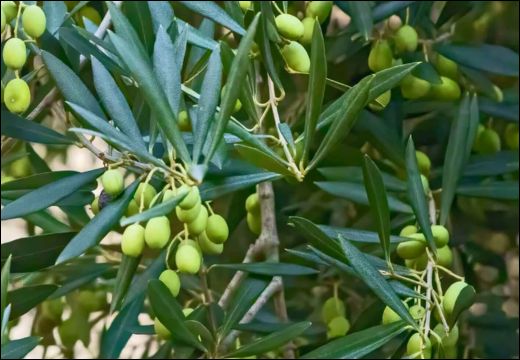
Olea europaea Linn. (Olive) is an evergreen, slow-growing tree or shrub, typically 8–15 m tall, with a gnarled, twisted trunk and greyish-brown bark. It’s simple, opposite leaves are narrow oblong to lanceolate, 4–10 cm long and 1–3 cm wide, leathery in texture, glossy dark green above, and silvery-white or brownish beneath, often remaining on the tree for 2–3 years. The small, white, hermaphrodite flowers (2–4 mm) appear in axillary racemes, featuring a four-toothed calyx and four-petaled corolla. The plant produces ellipsoidal drupes (1–2.5 cm) with a thin skin, fleshy pulp, and hard stony endocarp, ripening from green to blackish-violet. Olive trees possess a shallow, spreading root system that efficiently absorbs water, supporting their growth in subtropical and Mediterranean climates.
Categories Of Olive Oil
- Extra-virgin olive oil
- Virgin olive oil
- Virgin lampante olive oil
- Refined olive oil
- Olive oil composed of refined and virgin olive oils
- Olive pomace oil
- Crude olive-pomace oil
- Refined olive-pomace oil
Therapeutic Indications Of Olea Europaea Linn./ Olive/ Olive Oil/ Jaitun
- Cancers – may help in prevention and management
- Cardiovascular disorders – support heart health
- Digestive issues – aids digestion and gut function
- Liver problems – hepatoprotective effects
- Respiratory issues – useful in asthma management
- Neurological conditions – support brain and nerve health
- Headaches and migraines – analgesic effects
- Rheumatoid arthritis – anti-inflammatory and analgesic
- Infertility – potential reproductive benefits
- Wound healing – promotes tissue repair
- Renal disorders – nephroprotective activity
- Antibacterial and antifungal – fights infection
- Immunomodulatory – enhances immune response
- Antioxidant – reduces oxidative stress
- Antiviral – effective against various viruses
- Hypoglycemic – lowers blood glucose levels, useful in diabetes
- Potential in COVID-19 – improves immune function and viral clearance
Systemic Actions Of Olea Europaea Linn./ Olive/ Olive Oil/ Jaitun
Internal Uses
- Digestive System – It helps in improving gut health, and it aids digestion.
- Circulatory System – It supports heart health.
- Respiratory System – It is helpful in the management of Asthma.
- Excretory System – It contains nephroprotective activity and helps in the management of Diabetes.
Chemical Composition Of Olea Europaea Linn./ Olive/ Olive Oil/ Jaitun
Phenolic Compounds & Secoiridoids
- Oleuropein (highest in leaves, up to 24.54%)
- Hydroxytyrosol
- Tyrosol
- Verbascoside
- Luteolin-7-O-glucoside
- Apigenin-7-O-glucoside
Lipids (Olive Fruit & Oil)
- Oleic acid (C18:1, main monounsaturated fatty acid, 6.07–19.34% in oil)
- Palmitic acid
- Linoleic acid
- Arachidonic acid
- Triglycerides (~98% of EVOO, 80% MUFAs)
Volatile Compounds (Leaves)
- α-Pinene (52.7%)
- β-Pinene (2.46%)
- (E)-2-Hexenol
- (Z)-3-Hexanol
Triterpenes And Sterols
- Various bioactive triterpenic acids
- Plant sterols
Other Compounds
- Benzoic acid derivatives
- Sugars
Minerals
- Calcium (Ca)
- Potassium (K)
- Phosphorus (P)
- Magnesium (Mg)
- Iron (Fe)
Nutritional Features Of Extra Virgin Olive Oil (EVOO)
- Rich in monounsaturated Fatty Acids (MUFAs), mainly oleic acid
- Unsaponifiable fraction (1–2%) contains phenolic and triterpenic compounds
- Antioxidant and anti-inflammatory properties contribute to the prevention of diabetes, heart disease, cancer, and neurodegenerative disorders
Quality Indicators For EVOO
- Free fatty acidity ≤ 0.8%
- Mechanical extraction only
- Fruity flavour, no sensory defects
- Low peroxide value and UV spectrophotometric values (K270 < 0.22, ∆K ≤ 0.01)
Actions And Properties Of Various Chemical Constituents Of Olea Europaea Linn./ Olive/ Olive Oil/ Jaitun
Anticancer Activity
Olea europaea Linn. (olive tree), particularly its leaves, is rich in bioactive compounds such as oleuropein, hydroxytyrosol, oleanolic acid, and flavonoids (luteolin, rutin), which collectively contribute to its anticancer potential. Oleuropein, the principal phenolic, induces apoptosis in various cancer cells by activating caspases, upregulating pro-apoptotic genes (Bax, p53), and downregulating anti-apoptotic genes (Bcl-2), while also inhibiting tumour invasion and metastasis through suppression of MMP-2 and MMP-9 and disruption of epithelial-mesenchymal transition. Hydroxytyrosol, a major metabolite of oleuropein, acts as a potent antioxidant in normal cells and a pro-oxidant in cancer cells, generating reactive oxygen species that trigger cell death, while also blocking key survival pathways like PI3K/AKT and MAPK and inducing G2/M cell cycle arrest. Oleanolic acid, a pentacyclic triterpenoid, inhibits proliferation and promotes apoptosis in hepatoma and colorectal cancer cells. Flavonoids such as luteolin enhance antioxidant capacity and further suppress tumour growth. Overall, olive leaf compounds work synergistically to induce apoptosis, inhibit proliferation, prevent angiogenesis, and suppress metastasis, showing selective toxicity toward cancer cells while sparing normal tissues.
Anti-Diabetic Activity
Olea europaea Linn. (olive), particularly its leaves and olive oil, exerts significant antidiabetic effects due to its rich phenolic and triterpenoid composition, with oleuropein as the primary bioactive compound. Oleuropein improves insulin sensitivity by promoting GLUT4 translocation to muscle cell membranes and activating the AMPK (Adenosine Monophosphate-activated Protein Kinase) pathway, enhancing glucose uptake and tolerance. It also protects pancreatic β-cells, increasing insulin secretion and repairing islet morphology, while inhibiting amylin deposition that contributes to type 2 diabetes. Hydroxytyrosol and flavonoids like rutin and luteolin-7-O-glucoside provide antioxidant protection, reducing oxidative stress in the liver, kidneys, and pancreatic cells, and further inhibit carbohydrate-digesting enzymes (α-amylase and α-glucosidase), lowering postprandial blood glucose. Additionally, triterpenic acids such as oleanolic acid and maslinic acid support anti-inflammatory and antioxidant actions, helping manage diabetes-related complications. Overall, olive leaf compounds control blood sugar, enhance insulin action, protect organs, and repair pancreatic function, offering a multi-targeted approach in diabetes management.
Hepatoprotective Activity
Olea europaea Linn. (olive tree), particularly its leaves and fruit, contains potent phytochemicals that support liver health and help manage conditions such as NAFLD, NASH, and toxin-induced liver damage. Oleuropein, the main phenolic compound, reduces oxidative stress and inflammation, preserves liver tissue architecture, inhibits hepatic stellate cell activation, and decreases fat accumulation by suppressing lipogenesis. Its metabolite, hydroxytyrosol, acts as a strong antioxidant, lowers liver enzymes (ALT, AST), improves mitochondrial function, activates lipophagy, and suppresses inflammatory cytokines. Maslinic acid, along with minor secoiridoids like oleocanthal and oleacein, further contributes to anti-inflammatory and anti-fibrotic effects, preventing collagen deposition and fibrosis. Additionally, oleic acid improves insulin sensitivity, reducing hepatic fat accumulation. Together, these compounds protect the liver through antioxidant activity, inflammation reduction, fat clearance, and fibrosis inhibition, offering a multi-targeted approach for liver disease management.
Practical Uses / Health Benefits Of Olea Europaea Linn./ Olive/ Olive Oil/ Jaitun
Skin Care
- Dry Skin & Moisturiser: Apply virgin olive oil at night to control dryness and improve complexion.
- Exfoliator/Scrub: Mix 3 tbsp olive oil with 2 tbsp lemon juice and ½ cup sugar or coffee grounds for a natural body scrub.
- Makeup Remover: Apply a few drops of olive oil to a cotton ball to remove makeup.
- Baby Massage: Use olive oil to massage babies for soft skin and to prevent diaper rash.
- Healing Wounds: Apply olive seed oil or crushed fruit to accelerate wound healing.
- Sunburn/Rashes: Apply olive oil to soothe skin inflammation.
Hair Care
- Hair Loss & Dandruff: Massage warm olive oil into the scalp to prevent hair loss and reduce dandruff.
- Hair Mask for Shine: Mix 2 tbsp olive oil with 1 tbsp fenugreek powder, apply to scalp, leave 30 minutes, then rinse.
- Deep Conditioner: Mix 2–3 tsp olive oil with 1/3 cup conditioner, apply, leave 5–7 minutes, then rinse.
Digestive & Internal Health
- Constipation: Consume 1–2 tsp olive oil on an empty stomach, followed by lukewarm water.
- Liver Detox: Take 1 tsp extra virgin olive oil in the morning (optionally with lemon juice) to stimulate bile.
- Gallstones: Mix olive oil with lemon juice to support gallbladder health.
Pain Relief & Joint Health
- Arthritis & Muscular Pain: Massage warm olive oil on joints or muscles to relieve pain.
- Earaches: Use 1–2 drops of slightly warm olive oil in the ear (avoid if eardrum is ruptured).
Respiratory & Other Remedies
- Cough & Cold: Rub olive oil on the chest to ease congestion.
- Mouth Ulcers: Gargle with a decoction of boiled olive fruits or leaves.
- Blood Sugar & Hypertension: Regular dietary consumption of olive oil helps control blood sugar and blood pressure.
Parts Used Of Olea Europaea Linn./ Olive/ Olive Oil/ Jaitun
- Fruit
- Leaves
- Oil
Planet Ayurveda Products With Olea Europaea Linn./ Olive/ Olive Oil/ Jaitun
- Sandalwood and Olive Natural Face and Body Butter
- Orange-Lemon Grass Premium Handmade Bathing Bar
Conclusion
Olea europaea L. (olive tree) is a highly valuable plant with widespread nutritional, medicinal, and economic significance. It is rich in bioactive compounds such as oleuropein, hydroxytyrosol, flavonoids, triterpenes, and monounsaturated fatty acids, and it exhibits potent antioxidant, anti-inflammatory, antimicrobial, anticancer, antidiabetic, hepatoprotective, and cardioprotective properties. Both its leaves and fruits, particularly the oil, are widely used in traditional and modern medicine for managing various health conditions, while also serving as an important dietary and cosmetic resource. Its cultural, religious, and economic importance, coupled with its versatile therapeutic potential, makes Olea europaea a key plant in human health and well-being.
Frequently Asked Questions (FAQ’s)
Q1 What Are The Benefits Of Olea Europaea?
Olea europaea provides antioxidant, anti-inflammatory, cardioprotective, antidiabetic, hepatoprotective, and anticancer benefits, and supports overall health.
Q2 What Are The Medicinal Uses Of Olea Europaea?
It is used to manage diabetes, liver disorders, cardiovascular diseases, infections, cancer, joint pain, and digestive problems.
Q3 What Is The Colour Of Olives?
Olives are green when unripe and turn dark purple to black when fully ripe.