

Ougeinia dalbergioides Benth./ Ougeinia oojeinensis (Roxb.) Hochr./ Tinisha – Medicinal Properties, Benefits & Dosage
Abstract
Ougeinia oojeinensis (Family: Fabaceae), commonly known as Tinisha, is a medicinal plant mainly found in the subtropical regions of India. All parts of the plant are rich in secondary metabolites that contribute to its notable therapeutic value. The key bioactive constituents include genistein, ougenin, dalbergioidin, kaempferol, lupeol, ferreirin, neophellamuretin, orobol, wedelolactone, homoferririn, isoflavanones, and betulin, which highlight its pharmaceutical importance. The plant has undergone taxonomic changes over time, being first named Dalbergia oojeinensis Roxb. in 1832, later revised to Ougeinia dalbergioides Benth in 1876, and finally accepted as Ougeinia oojeinensis (Roxb.) Hochr. in 1909. Due to its rich phytochemical profile and medicinal applications, it remains an important subject in traditional as well as modern herbal research.
Classical References Of Ougeinia Dalbergioides Benth./ Ougeinia Oojeinensis (Roxb.) Hochr./ Tinisha
- Bhavprakash Nighantu Vatadi varga
- Raj Nighantu Prabhadradi varga
Scientific Classification Of Ougeinia Dalbergioides Benth./ Ougeinia Oojeinensis (Roxb.) Hochr./ Tinisha
- Kingdom: Plantae
- Subkingdom: Phanerogamia
- Division: Angiospermia
- Class: Dicotyledons
- Subclass: Calyciflorae
- Order: Fabales
- Family: Fabaceae
- Genus: Ougeinia Benth.
- Species: Ougeinia oojeinensis
- Synonym: Ougeinia dalbergioides Benth.
Synonym Of Ougeinia Dalbergioides Benth./ Ougeinia Oojeinensis (Roxb.) Hochr./ Tinisha
- Syandana – That which flows or exudes; refers to a tree producing resin or fluid.
- Sarvasara – “Essence of all”; indicates a tree valued for its strong and useful core wood.
- Ashmagarbha – “Stone-like inside” suggests very hard and dense wood.
- Shukra Samvarana – That which preserves or protects vitality/essence (traditionally linked with strength-giving properties).
- Nemi – Rim of a wheel; implies wood suitable for making wheel rims.
- Rathi / Ratha – Connected with chariots; wood used in chariot construction.
- Rathadru – “Tree of chariots”; specifically used for making chariots.
- Rathavruksha – Chariot tree; strong timber suitable for wheels and vehicles
- Shakata – Cart or wagon; indicates wood used in making carts.
- Bhasmagarbha – Producing ash or having an ash-coloured core wood.
- Meshi – Strong or ram-like; denotes toughness and durability.
- Jaladhara – Holder of moisture; may refer to a water-retaining or cooling nature.
- Vanyataru – Forest tree, naturally found growing in wild forest areas.
Vernacular Names Of Ougeinia Dalbergioides Benth./ Ougeinia Oojeinensis (Roxb.) Hochr./ Tinisha
- Hindi Names: Sadana, Sandan, Tinsa, Tinnas, Panjan, Sandana
- Sanskrit Names: Tinisah, Syandanah, Ashmagarbhaka, Akshaka, Rathvruksha (Chariot tree)
- Malayalam Names: Malavenna, Thodukara
- Telugu Names: Nemmi Chettu, Tella-Modgu, Tellamotuku, Chikkudu
- Kannada Names: Kurimutala, Kalbenga, Badanegi
- Tamil Names: Narivengai, Kallu, Mokke
- Bengali Names: Tinis, Sandan, Bandhan
- Marathi Names: Tunuz, Timasha, Sandan
- Gujarati Name: Tanacha
- Other/Tribal Names: Panjan, Sar, Tinas
Habitat Of Ougeinia Dalbergioides Benth./ Ougeinia Oojeinensis (Roxb.) Hochr./ Tinisha
Ougeinia oojeinensis is widely distributed across the outer Himalayan and sub-Himalayan regions, ranging from Jammu to Bhutan at elevations up to about 1500 m. It also extends throughout northern and central India and into much of the Deccan Peninsula. Commonly known as Sandan or Tinsa, this tree often grows abundantly in mixed deciduous forests, sometimes forming nearly pure stands. It is generally absent in high-rainfall areas but adapts well to diverse soil types, including poor soils, although it usually remains moderate in size. The species shows its best growth and reaches larger dimensions mainly in lowland areas with fertile alluvial soils.
Morphology Of Ougeinia Dalbergioides Benth./ Ougeinia Oojeinensis (Roxb.) Hochr./ Tinisha
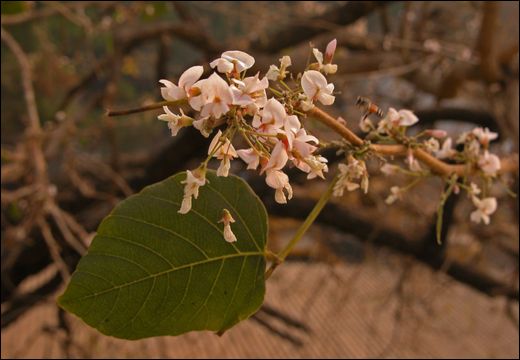
Ougeinia oojeinensis is a medium-sized semi-deciduous tree usually growing about 7–14 m tall with a trunk diameter of nearly 40–50 cm. The stem is often slightly crooked, though straight individuals may occur, and the bark is moderately hard, exfoliating in thin, irregular scales with colour varying from pinkish-brown to bluish-grey. Leaves are pinnately trifoliate, smooth above and softly pubescent beneath, with obovate leaflets having entire margins and noticeable size variation. Flowering generally occurs from February to May, producing light pink to white flowers in dense fascicled racemes on mostly leafless older branches. The calyx is campanulate and two-lipped, while the corolla is clawed with diadelphous stamens (9+1). Fruits are linear, flat pods about 5–10 cm long that ripen in May–June, usually containing 2–5 smooth brown reniform seeds. Seed production is irregular and not heavy every year.
Special Note
Based on the Sanskrit synonyms of Tinisha, it is undoubtedly identified as the tree Ougeinia dalbergioides. However, due to confusion, it is sometimes incorrectly referred to as Lagerstroemia flos-reginae, which is also called Arjuna in certain contexts.
Classical Categorisation Of Ougeinia Dalbergioides Benth./ Ougeinia Oojeinensis (Roxb.) Hochr./ Tinisha
- According to Sushrut Samhita: Salasaradi Gana
- According to Vagbhata: Asanadi gana
- According to Bhavprakash Nighantu: Vatadi varga
- According to Raj Nighantu: Prabhadradi varga
Ancient Verse Of Ougeinia Dalbergioides Benth./ Ougeinia Oojeinensis (Roxb.) Hochr./ Tinisha
तिनिशः स्यन्दनो नेमी रथद्रवुञ्जुलस्तथा ।
तिनिशः श्लेष्मपित्तास्त्रमेदः कुष्ठप्रमेहजित् ।।
तुवरः श्वित्रदाहघ्नो व्रणपाण्डुकृमिप्रणुत् ॥
(Bhavprakash Nighantu Vatadi varga 76)
According to the above shloka, the plant Tirichch is known by several Sanskrit synonyms, including Tinish, Syandana, Nemi, Rathadu, and Vadjula. Traditionally, it is described as having a Kashaya (astringent) taste and is considered beneficial in alleviating disorders related to Kapha and Pitta doshas. It has been used in managing blood disorders, obesity, skin diseases, including leprosy and leucoderma, diabetes (Prameha), burning sensations, wounds, anaemia, and intestinal worm infestations due to its therapeutic properties.
तिनिशस्तु कषायोष्णः कफरक्तातिसारजित् ।
ग्राहको दाहजननो वातामयहरः परः ।।
(Raj Nighantu Prabhadradi varga 115)
According to the above shloka, Tinisha is known for its astringent and heating properties and is traditionally used to help manage kapha disorders and dysentery, especially when associated with bleeding. It has constipating effects and may cause a burning sensation. Additionally, it is regarded as beneficial in alleviating vata-related disorders.
Ayurvedic Properties Of Ougeinia Dalbergioides Benth./ Ougeinia Oojeinensis (Roxb.) Hochr./ Tinisha
- Taste (Rasa)- Astringent (Kashaya)
- Potency (Veerya )- Hot Potency (Usna)
- Effect on tridosha– Balance Pitta and Kapha dosha
Therapeutic Indications Of Ougeinia Dalbergioides Benth./ Ougeinia Oojeinensis (Roxb.) Hochr./ Tinisha
- Useful in dysentery, especially with bleeding
- Supports the management of blood disorders and anaemia
- Beneficial in skin diseases, including leucoderma and leprosy
- Helps with obesity
- Aids wound healing and reduces burning sensation
- Effective against intestinal worms
- Astringent action
- Anti-inflammatory effect
- Hypoglycemic (helps control blood sugar)
- Hypolipidemic (supports lipid balance)
- Antispasmodic activity
- Febrifuge (helps reduce fever)
- Styptic (helps stop bleeding)
- Promotes sweating
- Beneficial for ulcers
Systemic Actions Of Ougeinia Dalbergioides Benth./ Ougeinia Oojeinensis (Roxb.) Hochr./ Tinisha
External Uses
- Possesses wound-healing and anti-inflammatory properties; its paste is traditionally applied to wounds to support faster healing.
Internal Uses
- Digestive System – Absorbent in nature; useful in managing dysentery and diarrhoea.
- Circulatory System – Helpful in bleeding disorders.
- Excretory System – Helps reduce urine output; stem decoction is traditionally used in diabetes.
- Tvak (Skin) – Beneficial in various skin disorders.
- Satmikarana – Acts as a rejuvenative and is helpful in general debility.
Chemical Composition Of Ougeinia Dalbergioides Benth./ Ougeinia Oojeinensis (Roxb.) Hochr./ Tinisha
- Rich in isoflavonoids and triterpenoids with significant medicinal value.
- Heartwood contains dalbergioidin, homoferreirin, and ougenin as major isoflavanones.
- Bark is rich in lupeol, hydroxylupeol, betulin, and about 7% tannins.
- Leaves contain flavonoids such as quercetin, kaempferol, and leucopelargonidin.
- Other identified compounds include genistein, ferreirin, neophellamuretin, orobol, and wedelolactone.
- Also contains β-sitosterol along with proteins and other phytochemicals.
- These constituents contribute to anti-inflammatory, antioxidant, and antidiabetic activities.
Actions And Properties Of Various Chemical Constituents Of Ougeinia Dalbergioides Benth./ Ougeinia Oojeinensis (Roxb.) Hochr./ Tinisha
For Obesity
The chemical composition of Ougeinia dalbergioides (syn. Ougeinia oojeinensis or Tinsa) includes several bioactive compounds such as flavonoids, isoflavonoids, triterpenoids, tannins, and plant sterols that contribute to obesity management. Important constituents like ougenin, dalbergioidin, genistein, ferreirin, quercetin, and kaempferol exhibit antioxidant and anti-inflammatory activities that help regulate metabolism and reduce fat accumulation. Triterpenoids such as lupeol and betulin, along with β-sitosterol, support lipid regulation by lowering cholesterol absorption and improving lipid metabolism. These compounds collectively show hypolipidemic and hypoglycemic effects by reducing triglycerides, LDL cholesterol, and overall body weight. Additionally, flavonoids may inhibit adipogenesis, thereby preventing new fat cell formation. Through these combined actions, the plant helps maintain metabolic balance and supports healthy weight management.
Anti-Diabetic Activity
The antidiabetic activity of Ougeinia dalbergioides (syn. Ougeinia oojeinensis or Tinsa) is mainly attributed to its rich content of isoflavonoids, flavonoids, triterpenoids, and tannins. Compounds such as ougenin, dalbergioidin, homoferreirin, genistein, lupeol, betulin, quercetin, and kaempferol exhibit antioxidant and anti-inflammatory effects that support glucose metabolism. These phytochemicals may enhance insulin secretion from the pancreas or improve insulin availability, thereby helping reduce elevated blood glucose levels. The plant also shows antihyperlipidemic action by lowering total cholesterol, triglycerides, and LDL while improving HDL levels. Additionally, strong antioxidant activity helps reduce oxidative stress, which plays a major role in diabetic complications. Through these combined mechanisms, the plant supports better glycemic control and overall metabolic balance.
For Skin Problems
The skin-protective properties of Ougeinia dalbergioides (syn. Ougeinia oojeinensis or Sandan/Tinsa) are mainly due to its rich content of isoflavones, triterpenoids, tannins, and plant sterols. Compounds such as dalbergin, ougenin, dalbergioidin, lupeol, betulin, and β-sitosterol exhibit strong anti-inflammatory, antioxidant, and wound-healing activities. These phytochemicals help reduce inflammation, soothe irritation, and support faster tissue repair in skin conditions like eczema, psoriasis, and non-healing wounds. Tannins provide astringent and styptic effects that aid wound contraction and prevent infection. Antioxidant flavonoids protect skin cells from oxidative damage, while triterpenoids promote epithelialization and skin regeneration. Together, these actions help maintain skin health and support recovery from various dermatological disorders.
Hepatoprotective Activity
The hepatoprotective and antioxidant effects of Ougeinia dalbergioides (syn. Ougeinia oojeinensis or Sandan/Tinsa) are mainly attributed to its rich content of phenolics, flavonoids, tannins, phytosterols, and triterpenoids. Important compounds such as ougenin, dalbergioidin, homoferreirin, lupeol, betulin, kaempferol, genistein, and ferreirin contribute to protecting liver cells from damage. These phytochemicals act as antioxidants by scavenging free radicals and reducing oxidative stress, which is a major cause of liver injury. They also help stabilise liver cell membranes and promote regeneration of hepatocytes. Additionally, the extracts may help normalise elevated liver enzymes such as ALP, SGOT, and SGPT associated with liver damage. Through these combined mechanisms, the plant supports liver health and helps protect against toxin-induced hepatic disorders.
Practical Uses / Health Benefits Of Ougeinia Dalbergioides Benth./ Ougeinia Oojeinensis (Roxb.) Hochr./ Tinisha
- Bark paste is applied externally for wounds, swollen joints, vitiligo, scabies, and other skin disorders.
- Decoction of bark or heartwood (often with other herbs and honey) is traditionally used for diarrhoea and bleeding piles.
- Heartwood decoction is taken for fever, burning sensations, and to strengthen nerves as a rejuvenative.
- Heartwood decoction is also used traditionally for managing diabetes.
- Bark decoction is given for fever and when the urine appears unusually dark.
- Gum is administered in diarrhoea and dysentery due to its astringent nature.
- Root juice mixed with black pepper is traditionally taken for eye discomfort.
- Sap preparations are used traditionally in dysentery.
- Fruit is applied locally for mouth ulcers.
- Leaves and bark are traditionally considered mild laxatives, while the root is regarded as febrifuge and absorbent.
Parts Used Of Ougeinia Dalbergioides Benth./ Ougeinia Oojeinensis (Roxb.) Hochr./ Tinisha
- Bark
- Leaves
- Fruits
- Gum
Dosage Of Ougeinia Dalbergioides Benth./ Ougeinia Oojeinensis (Roxb.) Hochr./ Tinisha
- Decoction- 40-50 ml
Conclusion
Ougeinia dalbergioides is a valuable medicinal tree widely used in traditional systems of medicine for its diverse therapeutic properties. It possesses astringent, anti-inflammatory, antioxidant, hypoglycemic, and wound-healing activities, making it useful in managing conditions such as diabetes, skin disorders, diarrhoea, fever, and inflammatory conditions. The presence of flavonoids, tannins, triterpenoids, and other bioactive compounds contributes to its pharmacological effects. Various parts of the plant have been traditionally utilised for both internal and external applications. Overall, it is considered an important medicinal herb with wide traditional therapeutic significance.
Frequently Asked Questions (FAQ’s)
1. What Is The Common Name Of Ougeinia Dalbergioides?
The common names are Tinsa and Sandan, commonly used in different parts of India.
2. What Are The Medicinal Uses Of Ougeinia Dalbergioides?
It is traditionally used for diabetes, skin disorders, wound healing, diarrhoea, fever, and inflammatory conditions.
3. What Are The Uses Of Ougeinia Dalbergioides?
Apart from medicinal uses, its durable wood is used for furniture, agricultural implements, and historically for chariot wheels.
4. What Is The Family Name Of Ougeinia Dalbergioides?
It belongs to the Fabaceae (Leguminosae) family.
5. What Is The Marathi Name Of Ougeinia Dalbergioides?
The Marathi names include Sandan and Timasha.
6. What Is The Synonym Of Ougeinia Dalbergioides?
A commonly accepted synonym is Ougeinia oojeinensis.