


Khajur / Date / Phoenix Sylvestris – Medicinal Properties, Benefits & Dosage
Abstract
Khajur or Pinda Khajuri, commonly known as Date in (Phoenix sylvestris), is a well-known fruit described in Ayurveda for its Brimhana (nourishing) and Balya (strength-promoting) properties. It is especially beneficial in conditions of Dhatukshaya (Tissue Depletion), Daurbalya (general weakness), and Vata-Pitta imbalance. Date helps in nourishing all bodily tissues thereby supporting vitality, reproductive health, and tissue strength. It is traditionally used to improve digestion, enhance energy levels, relieve fatigue, and support cardiac function. Due to its nutritive and rejuvenating nature, Khajur is also considered useful as a Rasayana (Rejuvenative), promoting overall health, longevity, and strength when used appropriately in the diet.
Classical Reference Of Khajur (Phoenix Sylvestris)
Bhavprakash Nighantu Amradi Phal Varga 575
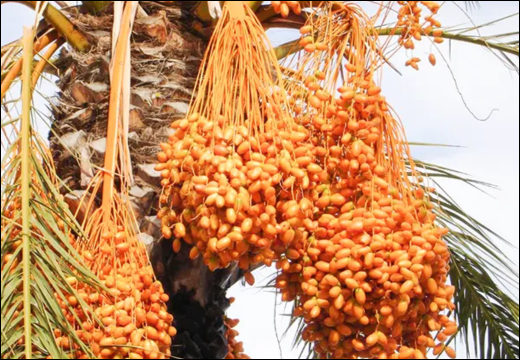
Scientific Classification Of Khajur (Phoenix Sylvestris)
- Kingdom: Plantae
- Subkingdom: Tracheobionta (Vascular plants)
- Superdivision: Spermatophyta (Seed plants)
- Division: Magnoliophyta (Angiosperms)
- Class: Liliopsida (Monocotyledons)
- Order: Arecales
- Family: Arecaceae (Palm family)
- Genus: Phoenix
- Species: Phoenix sylvestris
Synonyms Of Khajur (Phoenix Sylvestris)
- Dipya: Stimulates digestion or refers to the bright, glowing appearance of the ripe fruit.
- Pinda-kharjuri: Named for the dense, sticky, and fleshy pulp that forms a mass or ball.
- Sthala-pinda: Indicates a land-based variety that produces a solid, pulpy fruit.
- Madhusrava: Describes the fruit as oozing honey because of its sweet, syrupy juice.
- Phala-pushpa: Refers to the prominent and closely linked nature of its flowers and fruits.
- Svadu-pinda: Literally means sweet pulp, highlighting its delicious and sugary taste.
- Haya-bhakshya: Means horse food, as dates were traditionally used to give horses energy and strength.
- Svarabhidha: A technical term meaning known by these names in classical scriptures.
- Kharskanda: Having a rough or sharp-textured trunk.
- Kasaya: Referring to an astringent quality.
- Madhuragraja: Primarily sweet in taste.
- Dupradharsha / Duraroha: Difficult to attack or very difficult to climb due to its structure.
- Nisreni: Having a ladder-like appearance on the trunk.
- Svadumastaka: Having a sweet top or “head” (referring to the edible soft part at the top of the palm).
Vernacular Names Of Khajur (Phoenix Sylvestris)
- Sanskrit: Khajura, Kharjura
- Hindi: Khajur
- English: Wild Date Palm, Sugar Date Palm
- Urdu: Khajoor
- Punjabi: Khajoor
- Gujarati: Khajur
- Marathi: Khajur, Shindi
- Bengali: Khejur
- Tamil: Eecham, Icham
- Kannada: Eechalu
Habitat Of Khajur (Phoenix Sylvestris)
Geographical Distribution
- Phoenix sylvestris is native to tropical and subtropical South Asia.
- It is widely distributed in India, and also found in Bangladesh, Sri Lanka, Nepal, Pakistan, and Myanmar.
Natural Occurrence
- Commonly grows in plains, rural areas, village outskirts, and uncultivated lands.
- Frequently seen along riverbanks, canals, roadsides, wastelands, and agricultural field margins.
Climatic Requirements
- Thrives in hot and dry climates.
- Well adapted to semi arid regions with high temperature conditions.
- Shows good tolerance to drought and seasonal water scarcity.
Soil Preference
- Grows best in well drained sandy and loamy soils.
- Can also survive in clayey, lateritic, and moderately saline soils.
Light And Growth Conditions
- Prefers open areas with full sunlight.
- Does not tolerate heavy shade and grows vigorously in exposed locations.
Ecological Adaptability
- A hardy and resilient palm, capable of growing naturally without intensive cultivation.
- Plays an important role in rural ecosystems and traditional agroforestry systems.
Morphology Of Khajur (Phoenix Sylvestris)
Habit
- A tall, perennial, dioecious palm tree.
- Usually attains a height of 10–15 meters, sometimes taller under favorable conditions.
Stem (Trunk)
- Erect, stout, unbranched trunk.
- Covered with persistent leaf base scars and fibrous remains of old leaf sheaths.
- Trunk surface appears rough and dark brown to grey in color.
Leaves
- Large, pinnate leaves arranged in a terminal crown.
- Leaves measure about 3–5 meters in length.
- Leaflets are narrow, linear-lanceolate, stiff, and sharply pointed.
- Lower leaflets are often modified into spines.
Inflorescence
- Axillary, branched spadix, enclosed in a woody spathe.
- Male and female flowers are borne on separate plants (dioecious nature).
Flowers
- Small, sessile, and yellowish in color.
- Male flowers have well-developed stamens, while female flowers possess a superior ovary.
Fruit
- A drupe, ovoid to oblong in shape.
- Turn yellowish to reddish-brown on ripening.
- The fruit pulp is sweet, fibrous, and edible.
Seed
Single, hard, elongated seed with a characteristic longitudinal groove.
Classical Categorisation Of Khajur (Phoenix Sylvestris)
Bhavprakash Nighantu: Amradi Phala Varga
Raj Nighantu: Amradi Phala Varga
Dhanwanthari Nighantu: Amradi Varga
Ancient Verses For Khajur (Phoenix Sylvestris)
Verse No. 1
भूमिखर्जूरीका स्वाद्धी दुरारोहा मृदुच्छदा ।
तथा स्कन्धफला काककर्कटी स्वादुमस्तका ॥
पिण्डखर्जूरीका त्वन्या सा देशे पश्चिमे भवेत् ।
खर्जूरी गोस्तनाकारा परद्वीपादिहागता ॥
जायते पश्चिमे देशे सा छोहारेति कीर्त्यते ।
खर्जूरीतत्रितयं शीतं मधुरं रसपाकयोः ॥
स्निग्धं रुचिकरं हृद्यं क्षतक्षयहरं गुरु ।
तर्पणं रक्तपित्तघ्नं पुष्टिविष्टम्भशुक्रदम् ॥
कोष्ठमारुतहृद् बल्यं वान्तिवातकफापहम् ।
ज्वरातिसारक्षुत्तृष्णाकासश्वासनिवारकम् ॥
मदमूर्च्छामारुत्पित्तमद्योद्भूतगदान्तकृत् ।
महतीभ्यां गुणैरल्पा स्वल्पखर्जूरीका स्मृता ॥
Bhavprakash Nighantu Amradi Phala Varga Verse No. 115–120
1. Verse Interpretation
The verse identifies three primary varieties of dates:
- Bhoomi Khajurika (Small/Wild Date): Known by the synonyms Svadvi (Sweet), Duraroha (Difficult to climb), Mriduchhada (Soft-leaved), Skandhaphala (Fruit-bearing trunk), Kakakarkati, and Svadumastaka (Sweet-topped).
- Pind-Khajur (Common Date): Known as Pindakhajurika, typically sourced from western regions like Kabul.
- Chhuhara (Dry Date): Known as Gostanakara (Resembling a cow’s udder), these are imported varieties from western islands.
All three varieties share these core attributes:
- Madhur (Sweet in taste and post-digestion)
- Sheetlam (Cooling potency/Cold)
- Snigdha (Unctuous/Moisturizing)
- Guru (Heavy and grounding)
- Ruchikaram (Improves appetite and taste)
- Hridyam (Beneficial for heart health)
Dates are highly effective in treating the following conditions:
- Raktapitta (Bleeding disorders)
- Kshata-Kshaya (Physical weakness and tissue depletion)
- Balvardhak (Increases overall physical strength)
- Shukradam (Improves reproductive health/semen quality)
- Vanti-Vata-Kapha-apaham (Relieves vomiting and balances Vata and Kapha doshas)
- Jvar-Atisara (Fever and diarrhea)
- Kshud-Trishna (Excessive hunger and thirst)
- Kaas-Shwas (Cough and respiratory issues)
- Mad-Murchha (Alcoholic intoxication and fainting spells)
Verse No. 2
दीप्या च पिण्डखर्जूरी स्थलपिण्डा मधुस्रवा ।
फलपुष्पा स्वादुपिण्डा हयभक्ष्या स्वराभिधा ॥
Raj Nighantu Amradi Phala Varga Verse No. 60
2. Verse Interpretation
Synonyms of Pinda Khajuri or Khajur
- Dipya: Refers to stimulation of digestive fire or the bright appearance of ripe fruits.
- Pinda-kharjuri: Indicates the dense, fleshy, pulp-like mass of dates.
- Sthala-pinda: Signifies a terrestrial variety forming a solid pulpy mass.
- Madhusrava: Describes the fruit as exuding honey-like sweetness.
- Phala-pushpa: Indicates close association of flowers and fruits.
- Svadu-pinda: Highlights the sweet, delicious pulp.
- Haya-bhakshya: Indicates use as an energy-giving food for horses.
- Svarabhidha: Confirms classical scriptural nomenclature.
Verse No. 3
खर्जूरी तु खरस्कन्धा कषाया मधुराग्रजा ।
दुःप्रधर्षा दुरारोहा निःश्रेणी स्वादुमस्तका ॥
Dhanwanthari Nighantu Amradi Varga Verse No. 46
3. Verse Interpretation
Synonyms of Khajuri or Khajurika
- Kharskanda: Having a rough or sharp-textured trunk.
- Kasaya: Astringent in nature.
- Madhuragraja: Predominantly sweet in taste.
- Dupradharsha / Duraroha: Difficult to attack or climb.
- Nisreni: Ladder-like appearance on the trunk.
- Svadumastaka: Having a sweet edible top.
Verse No. 4
क्षतक्षयापहं हृद्यं शीतलं तर्पणं गुरु ।
रसे पाके च मधुरं खर्जूरं रक्तपित्तजित् ॥
Dhanwanthari Nighantu Amradi Varga Verse No. 47
4. Verse Interpretation
Actions And Therapeutic Uses
- Beneficial for the heart, cooling, heavy, and nourishing.
- Sweet in taste and post-digestion effect.
- Helpful in phthisis (wasting disorders), bleeding disorders, and general debility.
Special Note
Date is a tall, hardy tree (reaching 30–40 ft) that thrives in various climates. It is highly valued not just for its sweet fruit, but for its sap, wood, and medicinal properties.
1. Varieties To Know
- Pinda Kharjūra (Phoenix dactylifera): Often imported, this is the common date palm known for its high-quality fruit.
- Wild Date Palm (Phoenix sylvestris): Native to India, it is famous for its sap (Neera).
- Chuhara: This refers to the dried fruit of the date palm, which is highly nutritious.
- Dwarf Varieties: Some types, like the Thainkal of Kumaun, are smaller, “hilly” versions of the plant.
2. Uses Of The Tree Sap
The tree produces a sweet juice or sap called Neera, collected by making a cut near the top of the tree.
- Fresh: It is a sweet, nutritious drink rich in vitamins B and C.
- Boiled: When boiled, it creates a healthy sugar substitute called Guda (Jaggery).
- Fermented: If left for a few hours, it ferments into an alcoholic drink called Toddy (Tadi).
3. Medicinal & Health Benefits
- Energy Booster: The fruits are nourishing and restorative, packed with natural sugars.
- Digestive Aid: Acts as a mild laxative and helps control diarrhea (using the gum of the tree).
- Respiratory Help: Used traditionally for fevers, coughs, and respiratory issues.
- Oral Care: The hollowed-out root is used as a traditional remedy for toothaches.
4. Practical Everyday Uses
The tree is a zero-waste plant:
- Leaves: Used to make mats, fans, bags, and thatched roofs.
- Trunk: The wood is used for construction, and the hollowed pith can be used as water pipes.
- Seeds: Used as a pot-herb or processed for their oil.
Ayurvedic Properties Of Khajur (Phoenix Sylvestris)
- Rasa (Taste): Madhura (Sweet)
- Guna (Qualities): Snigdha (Unctuous), Guru (Heavy)
- Virya (Potency): Sheeta (Cold)
- Vipaka (Post-digestive Effect): Madhura (Sweet)
Action On Tridosha Of Khajur (Phoenix Sylvestris)
Khajur pacifies Vata and Pitta Dosha due to its Madhura Rasa (sweet taste), Snigdha (unctuous) and Guru (heavy) Guna (qualities), and Sheeta Virya (cool potency). These qualities help reduce Rukshata (dryness), Ushnata (heat), and Dhatukshaya (tissue depletion), thereby promoting Poshana (nourishment) and Sheetalata (cooling effect). Excess intake may aggravate Kapha Dosha due to its Guru and Snigdha nature.
Therapeutic Indications Of Khajur (Phoenix Sylvestris)
- Raktapitta (Bleeding disorders)
- Kshata-Kshaya (Physical weakness and tissue depletion)
- Balvardhak (Increases overall physical strength)
- Shukradam (Improves reproductive health/semen quality)
- Vanti-Vata-Kapha-apaham (Relieves vomiting and balances Vata and Kapha doshas)
- Jvar-Atisara (Fever and diarrhea)
- Kshud-Trishna (Excessive hunger and thirst)
- Kaas-Shwas (Cough and respiratory issues)
- Mad-Murchha (Alcoholic intoxication and fainting spells)
Systemic Actions Of Khajur (Phoenix Sylvestris)
- Digestive System: Nourishing and strengthening; supports recovery in weakness and debility.
- Circulatory System: Cardiotonic; supports heart strength and circulation.
- Musculoskeletal System: Tissue-nourishing; improves muscle strength and recovery.
- Nervous System: Strengthening and Vata-pacifying; reduces exhaustion and nervous fatigue.
- Reproductive System: Enhances nourishment of reproductive tissues and vitality.
- Thermoregulatory Action: Cooling; reduces excess heat and Pitta-related conditions.
- Overall Systemic Effect: Rejuvenative and strength-promoting; supports stamina and well-being.
Chemical Composition Of Khajur (Phoenix Sylvestris)
Khajur (Phoenix sylvestris) contains a variety of bioactive compounds that contribute to its therapeutic effects:
- Carbohydrates: Glucose, fructose, sucrose – provide quick energy and nourishment.
- Proteins And Amino Acids: Support tissue nourishment.
- Vitamins: B-complex, Vitamin A, Vitamin K – support metabolism, vision, and blood health.
- Minerals: Potassium, calcium, magnesium, phosphorus, iron, zinc – aid cardiac and bone health.
- Dietary Fiber: Promotes digestion and gut health.
- Phenolic Compounds & Flavonoids: Antioxidant and anti-inflammatory actions.
- Saponins & Glycosides: Support rejuvenative and immunomodulatory effects.
- Fats And Oils (Small Amounts): Enhance Snigdha (unctuous) nourishing properties.
Practical Uses / Health Benefits Of Khajur (Phoenix Sylvestris)
- Naturally rich in sugars like glucose, fructose, and sucrose, Khajur provides quick and sustained energy, reducing fatigue.
- Acts as a Brimhana (nourishing) and Balya (strength-promoting) agent, helping in general weakness and tissue depletion.
- Contains dietary fiber that improves digestion, relieves constipation, and supports gut health.
- Supports Shukra Dhatu (reproductive tissue), enhancing vitality and stamina.
- Hridya (cardiotonic) properties help maintain heart strength and support circulation.
- Sheeta Virya (cooling potency) helps reduce heat, Pitta imbalance, and inflammation.
- Promotes overall stamina, longevity, and immunity.
- Nourishes muscles, bones, and other tissues, aiding recovery in emaciation or chronic weakness.
- Contains phenolic compounds and flavonoids that protect against oxidative stress.
Part(s) Used Of Khajur (Phoenix Sylvestris)
- Fruit
- Sap
Dosage Of Khajur (Phoenix Sylvestris)
- Fresh Fruit (Khajur / Dates): 3–6 pieces per day, or as per individual digestive capacity.
- Dry Fruit: 5–10 grams per day, can be soaked in water or milk for better digestibility.
- Fruit Paste / Churna: 3–5 grams per day, usually administered with milk or honey.
- Seed Powder: 1–2 grams per day, mixed with honey or ghee.
Home Remedies With Khajur (Phoenix Sylvestris)
- For Energy & Weakness: To boost energy and overcome fatigue, soak 5–6 Khajur in water overnight and consume them in the morning on an empty stomach. This simple remedy helps restore vitality, strengthens the body, improves stamina, and provides a natural energy boost to start the day fresh.
- For Constipation: For natural relief from constipation, chop 4–5 Khajur and mix them with a teaspoon of ghee. Eat this mixture daily before bed. The combination works as a mild laxative, supporting smooth bowel movements and easing digestive discomfort.
- For Cough & Respiratory Health: To soothe cough and respiratory issues, boil 3–4 Khajur in milk and drink it warm, or simply chew 2–3 Khajur daily. This remedy helps reduce throat irritation, clears phlegm, and supports overall respiratory health naturally.
- For Digestive Health: Grind the seeds of Khajur into a fine powder and mix it with honey to improve digestion. Take one teaspoon of this mixture before meals to enhance appetite, reduce acidity, and promote healthy digestion.
- For Anemia & Blood Health: To support hemoglobin production and improve overall vitality, blend 4–5 Khajur with almonds, a pinch of saffron, and milk. Drink this nutrient-rich mixture daily to provide essential iron and other nutrients that help combat anemia and boost energy levels.
- For Reproductive Health & Sexual Vitality: For enhancing sexual health and vitality, soak 5 Khajur along with 2–3 soaked almonds overnight. Grind them into a paste and consume with milk. This remedy helps improve sperm quality, libido, and overall reproductive health naturally.
Classical Products With Khajur (Phoenix Sylvestris)
- Eladi Gutika
- Shiva Gutika
- Shatavari Modak
Research On Khajur (Phoenix Sylvestris)
Phoenix sylvestris, commonly known as Khajur or Wild Date Palm, is a palm species native to India and widely recognized for its nutritional and medicinal properties. The fruit, seeds, leaves, and sap contain bioactive compounds such as phenolics, flavonoids, tannins, vitamins (like vitamin C), minerals, and natural sugars, which contribute to its therapeutic benefits.
- Antioxidant And Anti-Inflammatory Properties: Extracts from Khajur fruit have demonstrated strong antioxidant activity in laboratory studies. These compounds help neutralize free radicals and reduce oxidative stress, which may protect cells from damage and inflammation. The presence of flavonoids and phenols is believed to play a key role in these effects.
- Nutritional Value: The sap and fruit of Khajur are nutrient-rich, containing carbohydrates, proteins, fibers, vitamins, and minerals. The sap is especially valued for its energy-boosting properties and is traditionally consumed as a natural tonic. Regular consumption of the fruit can provide nourishment, support general health, and serve as a natural energy source.
- Liver-Protective Effects: Animal studies suggest that Khajur leaf extracts may help protect the liver from toxic damage. Research indicates that these extracts reduce markers of liver injury and preserve liver structure, likely due to their antioxidant and anti-inflammatory components.
- Antimicrobial And Anticancer Potential: Some studies indicate that Khajur extracts can inhibit the growth of harmful microbes, suggesting a natural antimicrobial effect. Additionally, early laboratory research shows potential cytotoxic effects against certain cancer cells, highlighting its possible role in cancer-related studies, although more research is required.
- Traditional Uses Supported By Research: Traditionally, Khajur has been used for digestive problems, respiratory issues, general weakness, and to boost immunity and vitality. Modern studies support many of these uses, particularly its role in improving digestion, acting as a mild laxative, and providing antioxidant and restorative benefits.
- Allergic Reactions: Pollen from Khajur has been identified as a potential allergen. Individuals sensitive to pollen may experience allergic reactions, so caution is advised for those prone to allergies.
Conclusion
Khajur (Phoenix sylvestris), commonly known as Wild Date Palm, is a highly valued fruit in Ayurveda for its nourishing (Brimhana) and strength-promoting (Balya) properties. Rich in natural sugars, vitamins, minerals, and bioactive compounds such as flavonoids and phenolics, it provides quick energy, supports tissue nourishment, and enhances overall vitality. Scientific studies validate its antioxidant, anti-inflammatory, hepatoprotective, and antimicrobial activities, aligning with traditional uses in managing weakness, fatigue, digestive issues, and reproductive health. Regular consumption of Khajur helps improve stamina, cardiac strength, and immunity while promoting longevity. However, its pollen may trigger allergies in sensitive individuals. Overall, Khajur is a potent Rasayana that supports physical, metabolic, and reproductive health when used appropriately.