


Phosphorylated Tau (p-tau217/p-tau181) Test for Alzheimer’s Early Detection | Procedure, Results & Ayurvedic Support
Abstract
For a long time, the only way to “see” Alzheimer’s was through expensive brain scans or painful spinal taps. It was like trying to solve a mystery without being allowed to look at the evidence. That has finally changed. We are entering a new era of “blood-first” diagnostics. Instead of these intense procedures, doctors can now use a simple blood draw to find two specific proteins: p-tau217 and p-tau181. These proteins act like early warning signals. By catching the disease this early through a routine lab visit, we shift from just watching the brain fail to actually stepping in to protect it. It’s a simple shift in technology that offers a massive leap in hope for patients and their families. Let’s study these tests in detail!
Introduction
In the geography of modern medicine, Alzheimer’s disease has long been a “silent continent”—vast, expanding, yet largely unmapped. Despite the global prevalence of dementia exceeding 55 million people, we face a staggering diagnostic chasm: less than 25% of those living with the condition ever receive a formal diagnosis.This gap is not merely a clinical failure but a crisis of equity. While older Black Americans are twice as likely and Hispanics 1.5 times as likely to develop Alzheimer’s compared to older Whites, they are significantly less likely to receive a timely or accurate diagnosis.The emergence of p-tau217 and p-tau181 blood-based biomarkers represents a democratic revolution in neurology.
What Is This Phosphorylated Tau (P-Tau217/P-Tau181) Test?
The biological revolution of Alzheimer’s diagnostics lies in the detection of phosphorylated tau (p-tau), specifically the p-tau217 and p-tau181 isoforms, which serve as molecular “smoke detectors” for the brain. In a healthy state, tau proteins act as essential stabilizers for neuronal microtubules—the internal “railroads” that transport nutrients. However, in Alzheimer’s, enzymes abnormally attach phosphate molecules to these proteins, causing them to become “sticky,” detach from the tracks, and collapse into toxic neurofibrillary tangles. These phosphorylated fragments eventually leak into the bloodstream in miniscule amounts, where they can now be detected with near-surgical precision. While p-tau181 is a reliable marker for confirming active neurodegeneration once symptoms appear, p-tau217 has emerged as the clinical “gold standard” due to its extraordinary 95% accuracy.
Procedure Of Phosphorylated Tau (P-Tau217/P-Tau181) Test
The procedure for a p-tau217 or p-tau181 test is as simple as a standard cholesterol check. Here is the streamlined process:
1. Clinical Consultation
Meet with a physician or neurologist to discuss cognitive concerns. Since these are specialized labs, a doctor’s order is required.
2. Blood Draw
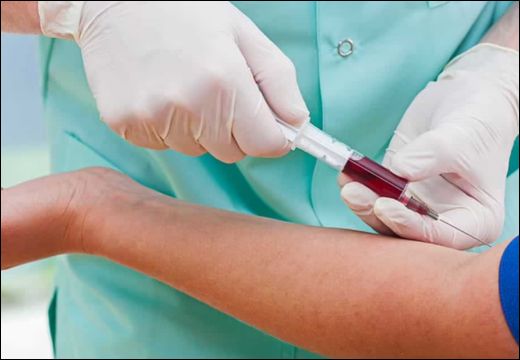
Visit a clinic or local lab. A phlebotomist draws a small vial of blood from your arm. No fasting or special preparation is typically needed.
3. Laboratory Analysis
The sample is sent to a specialized facility where high-sensitivity technology detects the minute protein fragments.
4. Results & Review
Results are usually available within 3 to 7 days. Your doctor will review the levels to determine if they indicate a low, intermediate, or high probability of Alzheimer’s pathology.
Indications
1. Evaluation Of Mild Cognitive Impairment (MCI)
When patients present with subtle memory loss or executive dysfunction, especially if there is suspicion of progression toward Alzheimer’s disease.
2. Early Diagnosis Of Alzheimer’s Disease
To detect Alzheimer’s pathology in early or preclinical stages, even before significant neurodegeneration is visible on imaging.
3. Differentiation From Other Dementias
Helps distinguish Alzheimer’s disease from Frontotemporal dementia, Lewy body dementia, Vascular dementia, p-tau217 particularly shows higher specificity for Alzheimer’s pathology.
4. Monitoring Disease Progression
Useful in tracking biochemical progression in diagnosed cases.
5. Screening High-Risk Individuals
Individuals with strong family history or genetic predisposition.
Results
When you receive the results of a p-tau217 or p-tau181 test, the report will not just give a raw number; it will typically categorize your risk level into one of three “zones.” Because different labs use different technology, the specific numbers (units) can vary. However, the interpretation usually follows this universal framework:
1. The Three-Zone Interpretation
| Result Category | What it Means |
|---|---|
| Negative (Low Probability) | Unlikely to have Alzheimer’s pathology. Symptoms are likely caused by something else (e.g., sleep issues, medications, or other dementias). |
| Intermediate (The “Gray Zone”) | The result is inconclusive. Alzheimer’s-type changes may be starting, or the test is picking up “background noise.” |
| Positive (High Probability) | Highly likely that Alzheimer’s-related plaques and tangles are active in the brain. |
2. Understanding The “Gray Zone”
About 15–20% of patients fall into the Intermediate Zone. This doesn’t mean the test failed; it means your protein levels are at a “tipping point” where blood alone cannot provide 100% certainty. In these cases, the blood test acts as a triage tool, identifying exactly who needs the more expensive brain imaging.
3. Key Metrics To Look For
On your lab report, you may see these terms:
- Aβ42/40 Ratio: Often paired with p-tau. A lower ratio combined with higher p-tau is the strongest signal for Alzheimer’s.
- APS2 (Amyloid Probability Score): Used by some labs (like C2N) on a scale of 0–100. A score above 50–70 generally indicates high probability.
- pg/mL (Picograms per milliliter): This is the concentration of the protein. For example, some p-tau217 tests consider anything above 0.18–0.48 pg/mL (depending on the lab) to be positive.
A Note On Accuracy
- p-tau217 results are roughly 90–95% accurate compared to PET scans.
- p-tau181 is slightly less specific (approx. 85%) but remains an excellent tool for confirming active neurodegeneration.
Ayurveda’s View On Phosphorylated Tau (P-Tau217/P-Tau181) Test
From an Ayurvedic perspective, elevated phosphorylated tau (p-tau217/p-tau181), which in modern science is associated with neurodegeneration seen in Alzheimer’s disease, can be correlated with Majja Dhatu Kshaya and aggravated Vata Dosha, particularly Prana and Vyana Vata. Ayurveda considers the nervous system to be governed by Vata, and when Vata becomes vitiated due to aging, stress, improper diet, or dhatu depletion, it leads to cognitive decline, memory disturbances (Smriti Bhramsha), and degeneration of neural tissues. Additionally, accumulation of Ama (metabolic toxins) and obstruction of subtle channels (Srotorodha) may be interpreted as impaired cellular clearance, paralleling abnormal protein aggregation. Thus, such conditions are viewed as Vata-dominant degenerative disorders requiring Majja-nourishing, Vata-pacifying, and Rasayana-based therapeutic approaches. To restrict the formation of p-tau and amyloid proteins, Ayurveda focuses on herbs that act as Medhya Rasayanas (nervine tonics). These herbs aim to clear Ama (cellular toxins) and protect the Majja Dhatu (nervous system).
1. Brahmi (Bacopa monnieri)
Known as the premier “Herb of Grace,” Brahmi is a cooling Rasayana that balances all three Doshas. It enhances Dhi (acquisition), Dhriti (retention), and Smriti (recall). By clearing the “dampness” of Ama from the brain’s channels, it ensures the smooth flow of Prana (vital energy). It contains bioactive bacosides. Research suggests these compounds facilitate the repair of damaged neurons by enhancing kinase activity and neuronal synthesis. Most importantly, bacosides inhibit the aggregation of tau proteins and protect the brain from oxidative stress that triggers phosphorylation.
2. Mandukaparni (Centella asiatica/Gotu Kola)
Unlike Brahmi, Mandukaparni is used in its fresh juice form for maximum potency. It is a specific rejuvenative for the Majja Dhatu. It improves microcirculation in the brain, ensuring that “Ojas” (vitality) reaches the deepest tissues to prevent the “drying” (Vata) that leads to memory loss. It contains asiaticosides and madecassosides. These triterpenoids have been shown to reduce Amyloid-beta induced neurotoxicity. By modulating the signaling pathways of brain cells, it prevents the mitochondrial “energy failure” that typically precedes the clumping of toxic proteins.
3. Shankhapushpi (Convolvulus pluricaulis)
This is considered the most potent Medhya Rasayana for mental clarity and “Medha” (intellect). It is “Sheeta” (cooling) and specifically stabilizes the Prana Vayu and Sadhaka Pitta. It acts as a “psychotropic” herb that settles the mind, preventing the “agitation” that accelerates brain aging. It works primarily by increasing the levels of Brain-Derived Neurotrophic Factor (BDNF). BDNF acts like “brain fertilizer,” helping to maintain the stability of microtubules. When microtubules are stable, tau proteins remain attached to them and do not break off to form the toxic p-tau tangles detected in blood tests.
4. Yashtimadhu (Glycyrrhiza glabra/Licorice)
This sweet, cooling root is a powerful Rasayana that nourishes the Sukra and Majja tissues. In the context of the mind, it is used to “unblock” the channels of cognition and provide a soothing coating to the nervous system, protecting it from the “corrosive” effects of chronic stress. It contains liquiritigenin and glycyrrhizin. Modern studies demonstrate that these compounds possess potent anti-inflammatory effects that inhibit microglial activation (the brain’s immune response). By quieting this “brain fire,” the herb prevents the inflammatory cascade that causes tau proteins to become hyper-phosphorylated.
5. Ashwagandha (Withania somnifera)
A potent Balya (strength-giver) and Rasayana (rejuvenative). It specifically targets the Vata imbalance that causes brain tissue to “wither” or dry out with age. By strengthening the “Ojas” (vital essence), it builds a biological buffer against decay. Its primary compounds, withanolides, have been shown to upregulate the “Low-Density Lipoprotein Receptor-Related Protein” (LRP). This protein acts like a vacuum cleaner, shuttling amyloid-beta out of the brain and into the blood for clearance by the liver. It also lowers cortisol, which is a known catalyst for tau clumping.
6. Tagar (Valeriana wallichii)
Tagar is a potent Vata-Hara (Vata-destroyer) and Nidrajanana (sleep-inducing) herb. It clears Rajo-Guna (restlessness) from the mind and removes “Avarana” (blockages) in the nervous pathways, allowing for deep, restorative rest. It contains valerenic acid, which interacts with GABA receptors. Scientific research shows that deep sleep is when the brain’s Glymphatic System becomes highly active, “washing out” amyloid-beta and p-tau proteins. By improving sleep architecture, Tagar facilitates the natural nightly drainage of these toxic proteins.
Conclusion
At last, it can be said that the convergence of ancient Ayurvedic wisdom and modern molecular diagnostics marks a new era in Alzheimer’s care. While p-tau217 and p-tau181 blood tests provide the “liquid biopsy” needed for objective, early-stage detection, the Medhya Rasayana herbs offer a systemic approach to brain resilience. By utilizing herbs like Brahmi and Shankhapushpi to stabilize neural microtubules and Tagar to optimize glymphatic clearance, we can move beyond passive observation of cognitive decline. Ultimately, bridging the global detection gap with scalable blood tests allows for earlier intervention, where the “cleansing” and “nourishing” principles of Ayurveda can most effectively protect the brain’s vital essence.