


Tankari / Physalis Minima – Medicinal Properties, Benefits & Dosage
Abstract
Tankari (Physalis minima), commonly known as a wild medicinal herb, is an important plant used in Ayurveda and folk medicine for its Mutrala (diuretic), Shothahara (anti-inflammatory), Jwaraghna (antipyretic), and Yakrit-uttejaka (liver-supportive) properties. It is traditionally employed in disorders such as Mutrakrichha (dysuria), Ashmari (urinary calculi), Jwara (fever), Kushtha (skin disorders), Prameha (urinary and metabolic disorders), and inflammatory conditions. The plant is valued for its cooling nature, detoxifying action, and ability to balance Pitta and Kapha dosha.
Classical Reference Of Tankari (Physalis Minima)
Bhavaprakasha Nighantu Guduchyadi Varga Page No. 345
Scientific Classification Of Tankari (Physalis Minima)
- Kingdom: Plantae
- Division: Angiosperms
- Class: Dicotyledonae
- Order: Solanales
- Family: Solanaceae
- Genus: Physalis
- Species: minima
Synonyms Of Tankari (Physalis Minima)
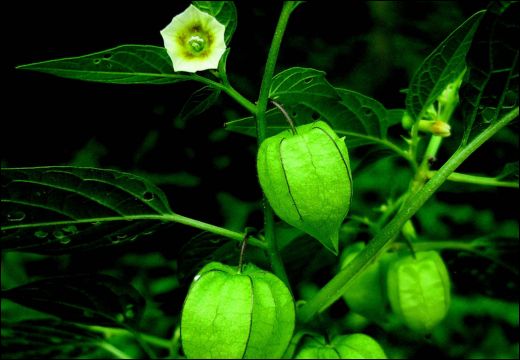
- Tankari: This is the primary name, derived from the “tankar” or popping sound produced when the inflated, papery bladder (calyx) surrounding the fruit is squeezed and burst.
- Lakshmipriya: This name literally means “beloved of Lakshmi”. In botanical nomenclature, it often signifies a plant that is aesthetically pleasing, auspicious, or highly valuable for its medicinal wealth.
- Chirpota: Similar to Tankari, this name refers to the physical nature of the fruit husk. It describes the “bursting” or “crackling” quality of the protective covering.
Vernacular Names Of Tankari (Physalis Minima)
- Sanskrit: Tankari, Lakshmipriya, Chirpota
- Hindi: Tulsipati
- Bengali: Bantepari
- Marathi: Thanmodi, Chirboti, Chirbutle
- Gujarati: Popati, Parpoti
- Punjabi: Hubbakkanaj
- Karnada: Bondula
- Tamil: Sisayakkali
- Telugu: Kupante
Habitat Of Tankari (Physalis Minima)
Natural Distribution
Tankari (Physalis minima Linn.) is widely distributed in tropical and subtropical regions. It grows naturally in many parts of India and other warm regions of Asia.
Growing Regions
The plant is commonly seen in wastelands, roadsides, agricultural fields, open grasslands, and at the margins of forests. It frequently grows in uncultivated and disturbed areas.
Soil And Climate Preference
Tankari prefers well-drained soil and warm climatic conditions. It grows best in regions receiving moderate rainfall and adequate sunlight.
Seasonal Availability
The plant commonly appears during the rainy season and continues to grow through the post-monsoon period, completing its life cycle within one year.
Morphology Of Tankari (Physalis Minima)
- Habit: Tankari is a small, annual, erect or spreading herb. In the provided text, it is specifically described as growing 15 to 45 cm (approx. 6 to 18 inches) in height.
- Stem: The stem is soft, green, and branched. It is covered with fine hairs (pubescent).
- Leaves: The leaves are simple, alternate, and ovate (egg-shaped). They measure approximately 2.5 to 6.3 cm in length. The margins are slightly toothed or wavy with a pointed tip.
- Flowers: The flowers are solitary, axillary (emerging from the leaf joints), and yellow in color. They are small, with the corolla measuring about 0.5 cm in length, often bearing dark purple or brown markings at the base.
- Fruits: The fruit is a small, round berry, roughly 1.3 cm in diameter. It is completely enclosed within an inflated, papery, balloon-like calyx that is about 2.5 cm long, which is a hallmark of the Physalis genus.
- Seeds: Inside the berry are numerous small, smooth, and yellowish seeds.
- Roots: The roots are slender, fibrous, and shallow, allowing the plant to anchor lightly in the soil.
Classical Categorisation Of Tankari (Physalis Minima)
- Bhavprakash Nighantu: Guduchyadi Varga
Ancient Verses For Tankari (Physalis Minima)
Verse No. 1
टङ्कारी वातजित्तिक्ता श्लेष्मघनी दीपनी लघुः ।
शोथोदरव्यथाहन्त्री हिता पीठविसर्पिणाम् ॥
Bhavprakash Nighantu Guduchyadi Varga Verse no. 134
Verse Interpretation
Medicinal properties and benefits of the plant:
- Vatajit: It conquers or balances the Vata dosha.
- Tikta: It has a bitter taste.
- Shleshmaghni: It destroys or reduces excess Kapha Dosha.
- Deepani: It acts as a digestive stimulant or appetizer.
- Laghu: It is light in nature (easy to digest).
- Shothodar-vyathahantri: It alleviates pain associated with swelling (shotha) and abdominal diseases (udara).
- Hita Peethavisarpinam: It is beneficial for those suffering from Peetha Visarpa (a type of skin condition/erysipelas).
Special Note On Tankari (Physalis Minima)
- Absence in Ancient Texts: The name Tankari is not found in other Nighantus (traditional Ayurvedic lexicons).
- Linguistic Variations: Laghu Agnimantha (Clerodendrum phlomidis) is sometimes called ‘Tekari’, which seems to be a corrupted form of the word ‘Tarkari’. Its description is documented in the Guna-Vachana under the heading of Sheetalchini.
- Modern Botanical Identification: Modern botanists identify Tankari as Physalis minima, which is the specific plant being described in this section.
- Relationship to Foreign Species: This plant is considered a representative of ‘Kakanaj’ (Physalis alkekenji Linn.), a species related to the Makoy (Nightshade) family that originates from outside India.
- Historical References: Dr. Desai likely mentioned this plant under the name P. indica. It is worth noting that this plant is not included in the Brihatrayi (the three great foundational treatises of Ayurveda: Charaka Samhita, Sushruta Samhita, and Ashtanga Hridayam).
- Connection to Chirpotika: The text suggests this could be the same as the plant Sharngeshta, which the commentator Dalhana referred to as Chirpotika.
- Dalhana’s Description: According to Dalhana in the Sushruta Samhita (Sutra Sthana 38.6), the plant is described as: “Gauravartulavagunthitaphala chirpotika iti prasiddha.” This translates to: “The plant known for its white, round fruits that are covered or enveloped in a husk is famously known as Chirpotika.”
Ayurvedic Properties Of Tankari (Physalis Minima)
- Taste (Rasa): Bitter (Tikta), Astringent (Kashaya)
- Properties (Guna): Light (Laghu), Dry (Ruksha)
- Potency (Virya): Cold (Sheeta)
- Post Digestion Effect (Vipaka): Pungent (Katu)
Action On Tridosha Of Tankari (Physalis Minima)
This herb pacifies Vata and Kapha Dosha, balances pitta dosha.
Therapeutic Indications Of Tankari (Physalis Minima)
- Mutrakrichha (painful urination)
- Ashmari (urinary calculi)
- Jwara (fever)
- Prameha (urinary and metabolic disorders)
- Kushtha (skin disorders)
- Shotha (inflammation)
- Yakrit Vikara (liver disorders)
Systemic Actions Of Tankari (Physalis Minima)
Mutravaha Srotas (Urinary System)
Tankari acts as a natural Mutrala (diuretic) herb, helping to increase urine output and cleanse the urinary tract. This action supports the elimination of toxins, reduces burning micturition, and is beneficial in conditions like Mutrakrichha (dysuria) and Ashmari (urinary calculi).
Raktavaha Srotas (Circulatory / Blood System)
Tankari possesses Raktashodhaka (blood-purifying) properties, which help in removing impurities from the blood. Due to this action, it is traditionally used in skin disorders, inflammatory conditions, and diseases associated with vitiated Pitta and Rakta.
Annavaha Srotas (Digestive System)
By virtue of its Tikta rasa and Laghu guna, Tankari supports digestion and helps in improving Agni (digestive fire). It aids in reducing Ama (metabolic toxins), thereby supporting proper digestion and absorption of nutrients.
Yakrit (Liver)
Tankari exhibits Yakrit-uttejaka and Yakrit-rakshaka (hepatoprotective) actions, helping in detoxification and supporting healthy liver function. This makes it useful in liver-related disorders and metabolic imbalances associated with impaired liver activity.
Chemical Composition Of Tankari (Physalis Minima)
1. Physalins (Steroidal Lactones)
- Physalin B
- Physalin H
- Isophysalin B
- Epoxyphysalin B
Anti-inflammatory, anticancer, immunosuppressive, antimalarial, and hepatoprotective activities.
2. Withanolides / Withaphysalins
- Withaphysalin A
- Withaphysalin Q
- Other ergostane-type withanolides
Immunomodulatory, anticancer, anti-arthritic, antioxidant, and adaptogenic effects; structurally similar to Ashwagandha withanolides.
3. Phenolic Compounds
- Gallic acid
- Vanillic acid
- Catechin
- Ellagic acid
Strong antioxidant, hepatoprotective, anti-ulcer, and antimicrobial actions.
4. Flavonoids
- Trimethoxy flavones
- Other polyphenolic flavonoids
Anti-inflammatory, antioxidant, cardioprotective, and anticancer properties.
5. Phytol
Antioxidant, anti-inflammatory, antimicrobial, and cytoprotective effects; precursor of vitamin E and vitamin K.
6. Essential Fatty Acids
- Linoleic acid
- α-Linolenic acid
Anti-inflammatory, hepatoprotective, and membrane-stabilizing effects; supportive role in chronic inflammatory conditions.
7. Alkaloids (Trace)
Contribute to antimicrobial and analgesic activities, though present in minor quantities.
Practical Uses / Health Benefits Of Tankari (Physalis Minima)
- Used traditionally to reduce inflammation and swelling due to the presence of withanolides and physalins, which show anti-inflammatory activity.
- Employed in folk and experimental medicine for anticancer support, as extracts have shown cytotoxic activity against certain cancer cell lines.
- Leaf and fruit extracts are used for managing bacterial infections because of their broad-spectrum antimicrobial properties.
- Taken as a digestive aid to relieve stomach discomfort, indigestion, and gastric complaints; acts as a mild stomach and aperient.
- Used as a mild laxative and diuretic to support bowel regularity and urinary flow.
- Consumed traditionally as a general tonic to improve strength, vitality, and overall body resistance.
- Decoction of aerial parts is used in fever and common cold in traditional practices.
- Leaf juice mixed with oil is used externally for earache in folk medicine.
- Applied in traditional remedies for gastric ulcers and stomach irritation due to its protective effect on gastric mucosa.
- Used for antioxidant support, helping to neutralize free radicals and protect tissues from oxidative stress.
- Traditionally applied in conditions like asthma, cough, and other respiratory complaints.
- Used in ethnomedicine for diabetes support, dysuria (painful urination), diarrhoea, and swellings.
- Root, fruit, or whole plant is used in local practices for insect bites, snake bites, and toothache as supportive remedies.
Part(s) Used Of Tankari (Physalis Minima)
- Whole plant (Panchanga)
- Leaves
- Fruits (in limited traditional use)
Dosage Of Tankari (Physalis Minima)
- Churna: 1–3 g
- Kwatha: 20–40 ml
- Swarasa: 10–20 ml
Home Remedies With Tankari (Physalis Minima)
1. For Gonorrhea (Sojak)
Eating the fruits of the plant is recommended as a treatment.
2. For Breast Laxity (Stanshashithilta)
Take the Panchang (all five parts of the plant: root, stem, leaf, flower, and fruit) and grind them together with rice water (the water used to wash rice). Apply this mixture externally as a paste (Lep).
3. For Constipation (Malavasthambh)
Preparing and consuming a fruit jam or confection (Paak) made from this plant is considered very beneficial for clearing the bowels.
4. For Asthma (Tamakshwas)
Mix the root of the plant with purified borax (Tankan Bhasma) and honey. Taking this mixture helps reduce breathlessness and assists in clearing out phlegm (mucus).
5. Digestive Issues
Use the plant juice for flatulence. Use the roots to improve appetite, digestion, and treat gastric diseases.
6. Fever
Use the leaves as a remedy.
7. Cough & Throat
Use the leaf sap orally for tonsillitis, sore throat, and bad breath.
8. General Health
The leaf sap is also used orally for jaundice, angina pectoris, tachycardia (fast heart rate), and stomachache. It also acts as an anthelmintic (expels worms).
9. Strength
The fruits are used for their strength-promoting qualities, and as a diuretic and purgative.
10. Earache
Use tankari leaf juice mixed with mustard oil and water as ear drops.
11. Eye Diseases
Apply a mixture of winter melon seed juice and tankari leaf juice locally.
12. Skin Infections
Apply a leaf paste for measles, yaws, and guinea worm sores.
13. Snake Bite
Apply crushed leaves directly over the bite.
14. Firmness
For flaccid breasts, a paste of the whole plant (including roots) mixed with rice-washed water is applied externally.
Research On Tankari (Physalis Minima)
1. Anti-inflammatory Withanolides Study
Isolation of novel withanolides from Physalis minima showing anti-inflammatory activity by inhibiting nitric oxide (NO) production in immune cells.
2. Mechanism-based Anti-inflammatory Research
Withanolides from Physalis minima significantly inhibited pro-inflammatory markers and molecular inflammatory pathways in lab studies.
3. Bioactive Compound And Antioxidant Evaluation
Phytochemical profiling of Physalis minima extracts showed strong antioxidant and acetylcholinesterase inhibitory activity, useful for oxidative stress and neuroprotective research.
4. Anthelmintic Potential In Cattle Parasites
Ethanolic extracts of Physalis minima leaves and stems exhibited dose-dependent anthelmintic activity against flatworm parasites, indicating potential broad spectrum bioactivity.
5. Antibacterial Activity Evaluation
Studies show Physalis minima fruit extracts possess significant antibacterial effects against Gram-positive and Gram-negative bacteria, supporting traditional uses in infection control.
Conclusion
Tankari (Physalis minima) is a valuable yet underexplored medicinal herb with significant therapeutic relevance in Ayurveda and traditional medicine. Its Mutrala, Shothahara, Jwaraghna, and Yakrit-uttejaka properties make it especially useful in urinary disorders, inflammatory conditions, fever, skin diseases, and liver-related ailments. Classical references from Bhavaprakasha Nighantu support its role in balancing Vata and Kapha dosha while maintaining Pitta equilibrium. Modern phytochemical studies revealing physalins, withanolides, flavonoids, and phenolic compounds further validate its anti-inflammatory, hepatoprotective, antioxidant, and immunomodulatory potential. Despite limited mention in major Samhitas, Tankari bridges classical wisdom and modern research, highlighting its importance as a promising herbal drug for integrative and evidence-based Ayurvedic practice.