


Plumbago zeylanica / Chitrak / Leadwort – Medicinal Properties, Benefits & Dosage
Abstract
Chitrak, botanically known as Plumbago zeylanica, is a highly potent medicinal herb widely described in Ayurveda for its powerful digestive and metabolic enhancing properties. It is renowned for its Deepana (appetizer), Pachana (digestive), Shothahara (anti-inflammatory), and Amapachaka (removal of toxins) actions. Chitrak plays a crucial role in managing digestive disorders, metabolic imbalances, and inflammatory conditions. Due to its Ushna (hot) potency, it is particularly effective in balancing Kapha and Vata doshas while stimulating Agni (digestive fire). Various parts of the plant, especially the root, are used therapeutically. Its strong pharmacological properties make it an important herb in classical Ayurvedic formulations and modern herbal medicine.
Classical Reference Of Chitrak (Plumbago zeylanica)
Bhavprakash Nighantu Haritkyadi Varga Page No. 22
Scientific Classification Of Chitrak (Plumbago zeylanica)
- Kingdom: Plantae
- Division: Angiosperms
- Class: Eudicots
- Order: Caryophyllales
- Family: Plumbaginaceae
- Genus: Plumbago
- Species: zeylanica
Synonyms Of Chitrak (Plumbago zeylanica)
- Chitrak: Derived from “Chitra” (spotted/variegated), referring to the distinct appearance of the plant or its ability to treat “spotted” skin conditions.
- Analanama: “Anala” means Fire. This implies that all synonyms for fire (like Agni, Pavaka, Vahni) can be used for this herb because it is extremely hot in nature and stimulates the digestive fire.
- Pathi: Suggests its role in clearing the “paths” or channels of the body (Srotas).
- Ushna: This name directly translates to “Hot,” highlighting its primary thermal quality.
- Dahana: Burning; refers to its fire-like potency.
- Vyala: Sharp or fierce.
- Pathina: A name suggesting its ability to penetrate deep tissues.
- Daruna: Harsh or intense; referring to its strong medicinal effect.
- Agnika: Relating to Agni (fire).
- Jyotishka: Luminous or fire-like.
- Vallari: Suggests its growth habit (creeping or spreading like a vine).
- Vahni: Another direct synonym for Fire.
- Pali / Pathi: Names indicating its role in clearing bodily channels.
- Katu: Pungent; referring to its sharp taste.
- Shikhi: Having a “flame” or “crest”; also a synonym for fire.
- Krishnaruna: Refers to the dark or reddish-brown color (likely of the root bark or the flowers of specific varieties).
- Anala: Fire.
- Dvipi: Like a leopard (Chitra/Cheeta); referring to the spots or its fierce nature.
- Chitrabhanu: Literally “variegated light,” a common poetic name for fire.
- Pavaka: The Purifier; another name for fire.
- Agni: Fire that increases digestive power
- Sardula: Tiger representing its powerful medicinal action
- Citrapali: Having colorful or patterned rows
- Sikhi: Bright like a peacock or a flame
- Krsanu: Fire that consumes waste in the body
- Dahanah: The burner that destroys toxins
- Palaka: The protector of bodily health
- Sabala: Brindled or streaked with colors
- Dvipi: Leopard referring to spots and strength
- Chitranga: Having a body with colorful parts
- Surah: The hero that conquers illness
Vernacular Names Of Chitrak (Plumbago zeylanica)
- Sanskrit: Chitraka
- Hindi: Chitrak
- Punjabi: Chitrak
- Bengali: Chita
- Gujarati: Chitro
- Marathi: Chitrak
- Tamil: Kodiveli
- Telugu: Chitramoolam
- English: Leadwort
- Latin Name: Plumbago zeylanica
Habitat & Distribution Of Chitrak (Plumbago zeylanica)
- Native Origin: Plumbago zeylanica is widely recognized in scientific literature as a plant originating from the tropical and subtropical regions of South and Southeast Asia, particularly the Indian subcontinent. It naturally grows as a wild shrub in warm climates and is commonly associated with open and semi-natural ecosystems.
- Global Distribution: Botanical and ecological studies describe Plumbago zeylanica as a pantropical species, indicating its presence across multiple continents within tropical and subtropical zones. It is found throughout Asia and Africa, and has also been reported in parts of Central and South America. Its wide distribution is largely due to its medicinal relevance and adaptability, which has led to both natural spread and intentional cultivation.
- Distribution in India: Within India, Chitrak is extensively distributed across diverse geographical regions. Field surveys and floristic records show its presence in plains, dry lands, and forest fringes. It is particularly common in areas with open vegetation and disturbed soils, where it grows either naturally or as a cultivated medicinal plant.
- Climatic Requirements: The plant thrives best in warm environmental conditions and demonstrates good tolerance to high temperatures, which supports its growth and metabolic activity. Moderate rainfall is considered favorable for its development, although the plant is capable of surviving in regions with irregular or low precipitation due to its drought-tolerant nature.
- Soil: Plumbago zeylanica prefers well-drained soils such as sandy or loamy types. However, studies indicate that it can also grow in relatively poor or less fertile soils, provided there is no water stagnation.
- Ecological Adaptability: Research observations highlight that Chitrak possesses strong ecological adaptability. It is capable of growing in a variety of environmental conditions, including dry and marginal lands. The plant can establish itself in disturbed habitats, such as roadsides and wastelands, and shows resilience under limited nutrient availability. Its hardy nature and ability to tolerate environmental stress contribute significantly to its widespread occurrence.
Morphology Of Chitrak (Plumbago zeylanica)
- Plant (Habit): Plumbago zeylanica is a perennial, semi-woody shrub that typically grows up to 1–1.5 meters in height. The plant exhibits a branched and spreading growth pattern, often forming a bushy appearance. The stems are slender, somewhat striated, and may show a slightly woody texture at the base as the plant matures. Young stems are usually green and flexible, while older stems become harder and more rigid.
- Roots: The root system is well-developed and consists of long, cylindrical roots that are externally light brown to reddish-brown. The roots are the most pharmacologically active part of the plant. They possess a pungent odor and acrid taste, and their surface may appear slightly rough. Internally, the root contains bioactive compounds responsible for its strong medicinal action.
- Leaves: Leaves are simple, alternate, and vary from ovate to oblong in shape. They are generally smooth, thin, and slightly fleshy, with a glabrous (hairless) surface. The leaf margins are entire, and the apex is usually pointed or slightly rounded. Leaves are either sessile or have very short petioles, and their green coloration indicates active photosynthetic function. In some cases, the leaf base may partially clasp the stem.
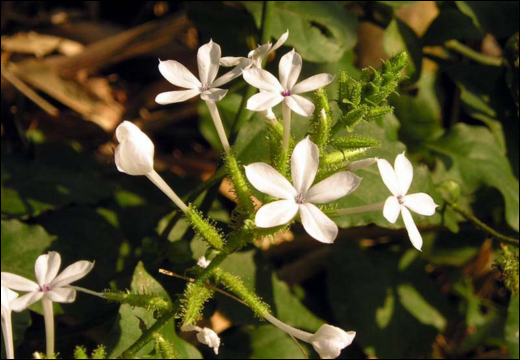
- Flowers: The flowers are small, white, and borne in terminal or axillary spike-like inflorescences. Each flower is tubular with five petals, giving it a delicate appearance. The calyx is sticky and glandular, often helping in seed dispersal by attaching to animals or surfaces. Flowering generally occurs in warm seasons, supporting reproductive activity under favorable conditions.
- Fruits: The fruit is a small, elongated capsule that develops after fertilization. It is typically enclosed within the persistent calyx. Each fruit contains a single seed and matures gradually as the plant completes its reproductive cycle.
- Seeds: Seeds are small, narrow, and adapted for dispersal through environmental factors such as wind or external attachment via the sticky calyx. Their structure supports effective propagation in natural habitats.
Classical Categorisation Of Chitrak (Plumbago zeylanica)
- Bhavprakash Nighantu: Haritakyadi Varga
- Raj Nighantu: Pippalyadi Varga
- Dhanwanthari Nighantu: Shatpushpadi Varga
Ancient Verses For Chitrak (Plumbago zeylanica)
Verse No. 1
चित्रकोऽनलनामा च पाठी व्यालस्तथोषतः ।
चित्रकः कटुकः पाके वह्निकृत्पाचनो लघुः ॥
रूक्षोष्णो ग्रहणीकुष्ठशोथार्शः कृमिकासनुत् ।
वातश्लेष्महरो ग्राही वातघ्नः श्लेष्मपित्तहृत् ॥
Bhavprakash Nighantu Haritakyadi Varga Verse no. 70-71
Verse Interpretation
Synonyms Of Chitrak
- Chitrak: Derived from “Chitra” (spotted/variegated), referring to the distinct appearance of the plant or its ability to treat “spotted” skin conditions.
- Analanama: “Anala” means Fire. This implies that all synonyms for fire (like Agni, Pavaka, Vahni) can be used for this herb because it is extremely hot in nature and stimulates the digestive fire.
- Pathi: Suggests its role in clearing the “paths” or channels of the body (Srotas).
- Vyal: Literally meaning “wild” or “serpent,” hinting at its potent, sharp, and sometimes toxic nature if not used correctly.
- Ushna: This name directly translates to “Hot,” highlighting its primary thermal quality.
Properties Of Chitrak
- It possesses pungent taste after digestion, enhances digestive fire (Agni), aids digestion, is light (easily digestible), dry in nature, and has hot potency.
- And it is beneficial in destroying disorders such as Grahani (malabsorption syndrome), Gulma (abdominal lumps), Shotha (inflammation), Arsha (piles), Krimi (worms), and Kasa (cough).
- It also alleviates Vata and Kapha, acts as a Grahi (absorbent), and helps in pacifying Vata, Kapha, and Pitta.
Verse No. 2
चित्रको दहनो व्यालः पाठीनो दारुणोऽग्निकः ।
ज्योतिष्को वल्लरी वह्निः पाली पाठी कटुः शिखी ॥
कृष्णअरुणोऽनलो द्वीपी चित्रभानुश्च पावकः ।
Dhanwanthari Nighantu Shatpushpadi Varga Verse No. 70
Verse Interpretation
Synonyms Of Chitrak
- Dahana: Burning; refers to its fire-like potency.
- Vyala: Sharp or fierce.
- Pathina: A name suggesting its ability to penetrate deep tissues.
- Daruna: Harsh or intense; referring to its strong medicinal effect.
- Agnika: Relating to Agni (fire).
- Jyotishka: Luminous or fire-like.
- Vallari: Suggests its growth habit (creeping or spreading like a vine).
- Vahni: Another direct synonym for Fire.
- Pali / Pathi: Names indicating its role in clearing bodily channels.
- Katu: Pungent; referring to its sharp taste.
- Shikhi: Having a “flame” or “crest”; also a synonym for fire.
- Krishnaruna: Refers to the dark or reddish-brown color (likely of the root bark or the flowers of specific varieties).
- Anala: Fire.
- Dvipi: Like a leopard (Chitra/Cheeta); referring to the spots or its fierce nature.
- Chitrabhanu: Literally “variegated light,” a common poetic name for fire.
- Pavaka: The Purifier; another name for fire.
Verse No. 3
चित्रकोऽग्निसमः पाके कटुकः कफशोफजित् ।
वातोदरार्शोग्रहणीक्षयपाण्डुविनाशनः ॥
Dhanwanthari Nighantu Shatpushpadi Varga Verse No. 70
Verse Interpretation
Actions and Therapeutic Uses of Chitrak: This herb possesses sharp and heating qualities and has a pungent effect after digestion. It helps balance Kapha and Vata doshas and is beneficial in managing swelling, disorders of the abdomen, piles, poor nutrient absorption, wasting conditions such as phthisis, and anemia.
Verse No. 4
चित्रकोऽग्निश्च शार्दूलश्चित्रपाली कटुः शिखी ।
कृशानु र्दहनो व्यालो ज्योतिष्कः पालकस्तथा ॥
अनलो दारुणो वह्निः पावकः शबलस्तथा ।
पाठी द्वीपी च चित्राङ्गो ज्ञेयः शूरश्च विंशतिः ॥
चित्रकोऽग्निसमः पाके कटुः शोफकफापहः । वातोदरार्शोग्रहणी-कृमिकण्डूतिनाशनः ॥
Raj Nighantu Pippalyadi Varga Verse No. 43-45
Verse Interpretation
Synonyms Of Chitrak
- Citraka: The spotted or variegated plant
- Agni: Fire that increases digestive power
- Sardula: Tiger representing its powerful medicinal action
- Citrapali: Having colorful or patterned rows
- Katu: Sharp or pungent biting taste
- Sikhi: Bright like a peacock or a flame
- Krsanu: Fire that consumes waste in the body
- Dahanah: The burner that destroys toxins
- Vyala: Fierce predator indicating high potency
- Jyotiska: Luminous and bright like a star
- Palaka: The protector of bodily health
- Anala: The heat element required for metabolism
- Daruna: Harsh or intense impact on disease
- Vanhi: Energy carrier that stimulates the gut
- Pavaka: The purifier that cleanses the system
- Sabala: Brindled or streaked with colors
- Pathi: Sharp edged or piercing quality
- Dvipi: Leopard referring to spots and strength
- Citranga: Having a body with colorful parts
- Surah: The hero that conquers illness
Properties Of Chitrak
Chitrak has a hot potency like fire and its post digestion effect is pungent. It helps in managing Kaphaj Disorders and oedema. It manages Vataj conditions, piles, abdominal diseases, worms, chronic colitis and itching.
Ayurvedic Properties Of Chitrak (Plumbago zeylanica)
- Rasa (Taste): Katu (Pungent)
- Guna (Quality): Teekshna (Peirching)
- Virya (Potency): Ushna (Hot)
- Vipaka (Post-Digestive Effect): Katu (Pungent)
Action On Tridosha Of Chitrak (Plumbago zeylanica)
This herb pacifies Vata and Kapha Dosha and increases Pitta Dosha.
Varieties Of Chitrak (Plumbago zeylanica)
Traditionally, Chitraka is classified into four types based on the color of its flowers:
- White Variety (Shweta): This is the most common medicinal variety (Plumbago zeylanica). It is widely used in standard Ayurvedic powders and tablets for digestion.
- Red Variety (Raktha): Known botanically as Plumbago indica, this type is considered more potent and “hotter” in its medicinal action than the white one.
- Yellow Variety (Peeta): This variety (Plumbago auriculta) is mentioned in ancient lexicons (Nighantus) but is extremely rare and seldom used in modern clinical practice.
- Black Variety (Asita): Also mentioned in classical texts, this variety (Plumbago capensis) is considered the rarest and is almost never found in commercial medicinal use today.
- Potency Comparison: Among all types, the Red variety is considered the most intense and is often preferred for strong therapeutic “scraping” or chemical processing.
- Active Constituent: The strength of these varieties is largely due to the chemical Plumbagin, which is found in higher concentrations in the roots of the red and white types.
Therapeutic Indications Of Chitrak (Plumbago zeylanica)
- Piles (Hemorrhoids)
- Indigestion
- Anemia
- Abdominal Diseases
- Swelling (Edema)
- Chronic Colitis
- Intestinal Worms
- Obesity
- Cough and Cold
Systemic Actions Of Chitrak (Plumbago zeylanica)
- Digestive System: This is the primary site of action. It acts as a powerful Deepana (appetizer) and Pachana (digestant). It stimulates gastric secretions, improves the liver’s metabolic function, and corrects malabsorption issues in the intestines.
- Respiratory System: It acts as a Kapha-hara agent. Its hot potency helps liquefy and expel thick, sticky mucus from the bronchial tubes, making it effective for chronic cough and congestion.
- Circulatory System: It acts as a blood purifier and stimulant. It helps in “scraping” (Lekhana) excess fat and cholesterol from the blood vessels, effectively improving circulation and heart health.
- Integumentary System (Skin): When taken internally, it helps resolve chronic skin conditions by purifying the blood. Externally, it acts as a rubefacient, increasing blood flow to the skin surface, though it must be used with extreme caution to avoid blisters.
- Reproductive System: It has a strong stimulatory effect on the uterus. It is traditionally used to treat amenorrhea (absence of periods) by promoting menstrual flow, but this makes it strictly contraindicated during pregnancy.
- Excretory System: It helps in reducing inflammation and swelling (Shopha) in the body by improving the metabolism of fluids and clearing blockages in the sweat glands and urinary tract.
- Nervous System: By balancing the Vata dosha, it helps relieve neurological pains, though its primary action remains on the metabolic heat of the body rather than direct sedation.
Chemical Composition Of Chitrak (Plumbago zeylanica)
1. Plumbagin (Naphthoquinone)
This is the primary marker compound. Research confirms it is a potent anti-cancer agent that induces apoptosis in tumors, a powerful antimicrobial, and a digestive stimulant that increases the secretion of gastric enzymes.
2. Zeylanone And Iso-Zeylanone
These are specialized binaphthoquinones. Scientific studies validate their “scraping” (Lekhana) effect, which helps in reducing obesity and clearing arterial plaque by inhibiting fatty acid synthesis.
3. Droserone
A secondary naphthoquinone. Research trials show it possesses significant anti-inflammatory properties, making it effective for treating joint pain and internal swelling (Edema).
4. Chitranone And Maritinone
These are specialized quinone derivatives. Research has found that they help regulate metabolic rates and assist in treating chronic malabsorption issues.
5. Vanillic And Plumbagic Acids
These phenolic and organic acids are identified by research as potent antioxidants that provide hepatoprotective (liver-protecting) benefits and aid in treating anemia.
6. Beta-Sitosterol And Stigmasterol
These plant-based sterols are confirmed by studies to help lower LDL cholesterol and balance hormones, supporting the herb’s use in metabolic disorders.
7. Quercetin And Kaempferol (Flavonoids)
Research identifies these as providing anti-allergic and bronchodilatory effects, explaining why Chitraka is effective for asthma and chronic cough.
8. Lupeol (Triterpenoid)
Modern research highlights its wound-healing and anti-tumor potential, which supports the herb’s traditional use in managing chronic skin conditions.
9. Fixed And Volatile Oils
These constituents provide the “sharpness” required for the herb to penetrate deep into the tissues to clear long-standing toxins and improve systemic blood circulation.
Practical Uses / Health Benefits Of Chitrak (Plumbago zeylanica)
- It is one of the most powerful herbs for kindling the digestive fire. It is practically used to treat loss of appetite, slow metabolism, and chronic indigestion by stimulating the secretion of hydrochloric acid and pancreatic enzymes.
- In clinical practice, it is a gold standard for treating non-bleeding piles. It helps by shrinking the hemorrhoidal mass and improving the digestive strength that often causes the condition.
- Due to its scraping (Lekhana) property, it is used to break down excess fat (medas) and clear cholesterol from the blood vessels. Research confirms its ability to lower LDL cholesterol and triglycerides significantly.
- While it is hot, when processed correctly in formulations like Chitrakadi Vati, it improves liver function and helps the body better absorb iron and nutrients to treat anemia.
- It is used to treat stubborn skin conditions like leucoderma, ringworm, and chronic itching. It also acts as a potent deworming agent, clearing intestinal parasites and harmful bacteria.
- Its anti-inflammatory properties make it effective for reducing the swelling (Shopha) associated with rheumatoid arthritis and other inflammatory joint disorders.
- It helps in liquefying and expelling thick, stagnant mucus. It is practically used in chronic bronchitis and asthma to clear the airways and improve breathing.
Home Remedies With Chitrak (Plumbago zeylanica)
Haemorrhoids (Piles)
- External Application: Take purified Chitrak roots and rub them with cow’s ghee to make a fine paste. Apply this paste over external pile masses. Regular application helps soften or shrink the pile mass.
- Internal Remedy (Buttermilk):
- Traditional Method: Smear Chitrak paste on the inner surface of a mud pot. Keep buttermilk in this pot overnight and consume the buttermilk the next day.
- Simple Method: Add 2–3 pinches of coarse Chitrak powder to 100 ml of buttermilk. Let it sit for 2–3 hours, then filter and drink. This helps improve digestion and reduce the size of the pile mass.
Vitiligo (Leucoderma)
- Medicated Ghee: Cook 100g of Chitrak root skin with 800ml of milk. Filter the milk and turn it into curd. Churn the curd to obtain butter, and then heat the butter to get ghee. Applying this ghee to vitiligo patches for 8–10 days may turn the lesions reddish-brown, aiding the repigmentation process.
- With Cow Urine: For the treatment of leucoderma, Chitrak is often administered along with cow urine (as per traditional Ayurvedic texts).
Warts
- Root Paste: Apply a fine paste of purified Chitrak roots directly over the warts regularly. It is often recommended to take oral blood purifiers alongside this treatment for better results.
Necrosing (Non-Healing) Wounds
- Washing Solution: Prepare a decoction of Neem. Add 2–3 pinches of Chitrak powder to the decoction and let it sit for a while. Filter the liquid and use it to wash necrosed or deep wounds. This helps “purify” the wound and speed up healing.
Rejuvenation And Anti-Aging
- General Health: For anti-aging benefits, the herb is administered with milk, ghee, and honey (or ghee alone) for one month.
- Longevity: Some texts suggest consuming Chitrak root powder with ghee and sesame oil for a year to promote long life and strength.
Part(s) Used Of Chitrak (Plumbago zeylanica)
- Root Bark
- Root
- Leaves
- Seeds
Dosage Of Chitrak (Plumbago zeylanica)
250 mg to 500 mg, taken twice a day. (Maximum limit is 1 to 2 grams per day).
Classical Products With Chitrak (Plumbago zeylanica)
- Chitrakadi Vati
- Chitrak Haritaki Awleha
- Yograj Guggul
- Arogyavardhini Vati
- Punarnava Mandur
- Mustakarisht
- Agnitundi vati
- Tapyadi Loha
- Kustha Rakshas Tel
- Chavyakarisht
- Punarnavarisht
- Kankayan Vati
- Chitrakmool Powder
- Rohitakarisht
- Kumaryasav
- Amavatari Ras
- Medohar Vidangadi Loha
- Ajmodadi Churna
- Lodhrasav
- Navayas Loha
- Vyoshadi Vati
- Saptavinshati Guggul
- Punarnavadi Guggul
- Kalmegh Navayas Loha
- Sarvjwarhar Loha
- Lohasav
- Ashwagandharisht
- Pippalyasav
- Maha Sudarshan Kwath
- Dashmularisht
Planet Ayurveda Products With Chitrak (Plumbago zeylanica)
- Panchkola capsules
- Chitrakadi vati
- Chitrak haritaki
- Punarnava mandur
- Yograj guggul
- Arogyavardhini vati
- Mustakarisht
- Agnitundi vati
- Tapyadi loha
- Kustha rakshas tel
- Chavyakarisht
- Punarnavarisht
- Kankayan vati
- Chitrakmool powder
- Rohitkarisht
- Kumaryasav
- Amavatari ras
- Medohar vidangadi loha
- Ajmodadi churna
- Lodhrasav
- Navayas loha
- Vyoshadi vati
- Saptavinshati guggul
- Punarnavadi guggul
- Kalmegh navayas loha
- Sarvjwarhar loha
- Ashwagandharisht
- Pippalyasav
- Maha sudarshan kwath
- Dashmularisht
Research On Chitrak (Plumbago zeylanica)
- Antioxidant Activity: Studies have shown that Plumbago zeylanica exhibits strong antioxidant properties. Extracts of the plant, particularly from the roots, help in scavenging free radicals and reducing oxidative stress. These effects are mainly due to the presence of compounds such as plumbagin and other phenolic constituents, which protect cells from damage.
- Anti-Inflammatory And Analgesic Effects: Research indicates that Chitrak has the ability to reduce inflammation and associated pain. Its active components are believed to interfere with inflammatory pathways, thereby helping in conditions involving swelling and discomfort, such as joint disorders.
- Antimicrobial Activity: Laboratory studies have demonstrated that Plumbago zeylanica possesses significant antibacterial and antifungal activity. Root extracts, especially those containing plumbagin, have shown inhibitory effects against various pathogenic microorganisms, supporting its traditional use in infections.
- Antidiabetic Activity: Experimental findings suggest that Chitrak may play a role in regulating blood sugar levels. It has been observed to improve glucose metabolism and enhance insulin-related activity in biological systems, making it potentially useful in managing diabetes.
- Anticancer Potential: Research on plant-derived compounds has revealed that plumbagin exhibits cytotoxic effects on abnormal cells. It has shown the ability to inhibit the growth of certain cancer cells and promote programmed cell death, indicating possible therapeutic potential in oncology research.
- Hepatoprotective Activity: Studies suggest that Plumbago zeylanica may help protect the liver from damage caused by toxins and oxidative stress. It supports liver function by maintaining enzyme balance and reducing cellular injury.
- Gastroprotective And Antiulcer Effects: Scientific investigations indicate that Chitrak has protective effects on the gastrointestinal lining. It may help reduce ulcer formation and support healthy digestion, aligning with its traditional use as a digestive stimulant.
- Immunomodulatory Effects: Research also points toward its role in supporting immune function. Certain compounds in the plant may help regulate immune responses and protect cells from harmful influences.
Contraindications And Safety Guidelines For Chitrak (Plumbago zeylanica)
- Pregnancy And Breastfeeding: It is strictly unsafe to consume during pregnancy as it is an abortifacient and can cause uterine contractions.
- Menstrual Health: It should be avoided by those with a tendency for heavy menstrual bleeding, as it may cause or worsen heavy periods.
- Gastrointestinal Sensitivity: It is contraindicated for individuals with sensitive stomachs, gastritis, or stomach ulcers, as it can worsen inflammation and cause an excessive burning sensation.
- Pitta Body Type: People with a dominant Pitta Prakriti (constitution) should avoid it or use it only under expert supervision with cooling agents like curds instead of buttermilk.
- Bleeding Disorders: It is generally not effective for, and may worsen, bleeding hemorrhoids due to its intense heat.
- Seasonal Caution: It is best to avoid using this herb or its remedies during the hot summer months.
- Dosage Risks: In higher doses, it can cause severe internal burning, aggravate gastritis, and may even lead to neuropathy.
- Expert Consultation: It should only be used after consulting a qualified Ayurvedic doctor, especially when substituting ingredients like curds for buttermilk in traditional remedies.
Conclusion
Chitrak (Plumbago zeylanica) stands as a cornerstone of Ayurvedic medicine, fundamentally valued for its fire-like potency that revitalizes the digestive and metabolic systems. Its primary active constituent, Plumbagin, provides the pharmacological basis for its diverse therapeutic actions, including potent anti-inflammatory, antimicrobial, and lipid-lowering effects. By stimulating Agni and clearing systemic toxins (Ama), it effectively manages complex conditions like hemorrhoids, obesity, and chronic malabsorption. Modern research confirms its significant anticancer and hepatoprotective potential, bridging the gap between ancient wisdom and contemporary science. However, due to its intense Ushna (hot) nature and potential toxicity, the mandatory Shodhana (purification) process and precise dosage remain critical for safety. Ultimately, Chitrak is a powerful hero herb that, when used judiciously, offers profound benefits for systemic detoxification and longevity.