


Aaruk (Prunus persica) – Medicinal Properties, Benefits & Dosage
Abstract
Aaruk (Prunus persica), commonly known as Peach, is a valuable medicinal plant described in Ayurvedic literature for its nourishing, cleansing, and soothing properties. Different parts of the plant, including the fruits, seeds, leaves, and flowers, are traditionally used for therapeutic purposes. In Ayurveda, Aaruk is known for its mild laxative, blood-purifying, and cooling actions, making it beneficial in conditions such as constipation, urinary discomfort, skin disorders, inflammation, and Pitta-related imbalances. The seeds are especially valued for their anthelmintic, digestive, and anti-inflammatory effects, while the fruit supports digestion, hydration, and overall nourishment. Rich in bioactive compounds such as flavonoids, phenolic acids, fatty oils, and cyanogenic glycosides (in controlled medicinal use), Aaruk exhibits antioxidant, antimicrobial, and anti-inflammatory activities. This abstract highlights the Ayurvedic significance, traditional applications, and therapeutic relevance of Aaruk as an important plant used in classical and contemporary herbal practices.
Classical Reference Of Aaruk (Prunus persica)
Bhavprakash Nighantu Parishisht Varga Page No. 792
Scientific Classification Of Aaruk (Prunus persica)
- Kingdom: Plantae
- Subkingdom: Tracheobionta (Vascular plants)
- Superdivision: Spermatophyta (Seed plants)
- Division: Magnoliophyta (Angiosperms)
- Class: Magnoliopsida (Dicotyledons)
- Order: Rosales
- Family: Rosaceae
- Genus: Prunus
- Species: persica
Synonyms Of Aaruk (Prunus persica)
- Veer: The name Veer means strong or powerful. It indicates the strengthening and energizing nature of Aaruk, showing its ability to support vitality and overall health.
- Veersen: Veersen refers to the seed of Aaruk. This name highlights the medicinal importance of the seed, which is mainly used for its strong therapeutic action.
- Veeraaruk: Veeraaruk means the potent form of Aaruk. It emphasizes the powerful medicinal effect of the plant, especially when the seed is used for treatment.
Vernacular Names Of Aaruk (Prunus persica)
- Sanskrit: Aaruk
- Hindi: Aadoo / Aaru
- English: Peach
- Urdu: Aadoo
- Punjabi: Aadoo
- Bengali: Aaru
- Gujarati: Aadoo
- Marathi: Peru / Aadoo
- Kannada: Pichu Hannu
- Telugu: Jeedi Pandu
- Tamil: Persikai
Habitat Of Aaruk (Prunus persica)
- Origin & Distribution: Aaruk originates from temperate regions of Asia, especially China, and is now widely cultivated in many parts of the world. In India, it is mainly grown in the Himalayan regions such as Jammu & Kashmir, Himachal Pradesh, and Uttarakhand.
- Climate Requirement: The plant prefers a temperate to sub-temperate climate. It needs cold winters to complete its chilling requirement for proper flowering and fruiting, followed by mild to warm summers for fruit development.
- Soil Preference: Aaruk grows best in fertile, well-drained loamy or sandy-loam soils. Deep, aerated soils rich in organic matter support healthy root growth, while water-logged or heavy clay soils are unsuitable.
- Rainfall & Moisture: Moderate rainfall is ideal for its growth. Excessive moisture and high humidity can promote fungal diseases, whereas prolonged dryness may affect fruit quality and yield.
- Topography & Sunlight: The plant thrives well on gentle slopes and hilly terrains that provide good sunlight exposure and natural drainage, which are essential for healthy growth.
- Growth Environment: Aaruk is mainly a cultivated plant and is commonly found in orchards, agricultural lands, and home gardens rather than growing wild in forests.
Morphology Of Aaruk (Prunus persica)
- Habit & Stem: Aaruk is a deciduous tree, usually growing 4–10 meters in height. The stem is erect, woody, and covered with smooth to slightly rough bark that may peel with age. Branches are spreading, giving the tree a rounded canopy.
- Leaves: Leaves are simple, alternate, and lanceolate to ovate in shape with finely serrated margins. They are 7–15 cm long and 2–5 cm wide, with a pointed tip and a slightly hairy surface when young. The petiole is short, usually 1–2 cm long.
- Flowers: The flowers are solitary or in small clusters at the tips of branches. They are actinomorphic (radially symmetrical), usually pink to light red, with five petals. Flowering occurs in early spring before leaf emergence. The flowers are hermaphroditic and insect-pollinated.
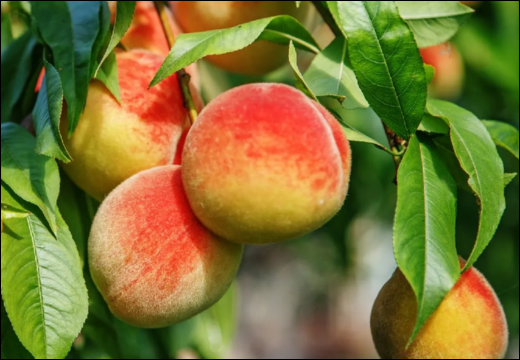
- Fruit: The fruit is a drupe, commonly called a peach, globose or slightly oval in shape. It has a smooth to slightly fuzzy skin, which may vary in color from yellow to red or pink. The pulp is juicy, sweet to slightly sour, and edible. Each fruit contains a hard, woody stone (seed) inside.
- Seed (Stone/Kernel): The seed is oval, brown, and hard. The inner kernel (seed) is medicinally valuable in Ayurveda and contains bioactive compounds used in traditional formulations.
- Root System: Aaruk has a deep taproot system with lateral roots spreading widely to anchor the tree and absorb water and nutrients efficiently from the soil.
- Overall Appearance: Aaruk is a medium-sized, deciduous, fruit-bearing tree with spreading branches, lance-shaped leaves, fragrant pink flowers, and juicy edible fruits containing a hard stone. The tree is cultivated primarily in orchards and hilly regions for its edible and medicinal value.
Classical Categorisation Of Aaruk (Prunus persica)
- Dhanwanthari Nighantu: Amradivarga
- Bhavprakash Nighantu: Parishisht Varga
- Raj Nighantu: Amradi Varga or Phala Varga
Ancient Verses For Aaruk (Prunus persica)
Verse No. 1
आरुकं वीरसेनं तु वीरं वीरारुकं तथा।
विद्याज्जातिविशेषेण तच्चतुर्विधमारुकम्॥
आरुकाणि तु हृद्यानि मेहाशौनाशानानि च।
Dhanwantari Nighantu Amraadi Varga Verse no. 32
Aaruka, Veer, Veersen, Veeraaruk (are its names). The Aaruka fruits are good for the heart, and they destroy (cure) polyuria (urinary disorders) and hemorrhoids (piles).
Verse No. 2
आरुकं वीरसेनञ्च वीरं वीरारुकं तथा ।
तत्र विद्याच्चतुर्जाति: पत्रपुष्पादिभेदतः ॥
आरुकाणि च सर्वाणि मधुराणि हिमानी च ।
अर्श:प्रमेहगुल्मास्त्र-दोषविध्वंसनानि च ॥
Raj Nighantu Amraadi Varga Verse no. 98-99
Interpretation Of Verse
Synonyms: Aaruka, Veer, Veersen and Veeraaruk are the different names (synonyms) for this fruit.
Varieties: It should be known that there are four distinct varieties of this plant.
Identification: These varieties are distinguished from one another based on the differences in their leaves (patra) and flowers (pushpa).
Nature: Sweet (Madhura) in taste and possessing a cooling (Himani/Shita) potency (Veerya).
They are effective in destroying or alleviating the following conditions:
- Arsha: Piles or hemorrhoids.
- Prameha: Urinary disorders, including diabetes.
- Gulma: Abdominal lumps
- Rakta-dosha: Disorders related to blood impurity or bleeding.
Varieties Of Aaruk (Prunus persica)
Dhanwanthari Nighantu and Raj Nighantu mentioned for varieties of Aaruk according to Yadava Ji:
- Prunus Persica – Aaruk
- Prunus domestica or Prunus communis – Aalu bukhara
- Prunus cerasus – Elavaluka
- Prunus aloocha – Aloocha
Ayurvedic Properties Of Aaruk (Prunus persica)
- Taste (Rasa): Sweet (Madhur)
- Properties (Guna): Light (Laghu), Unctuous (Snigdha)
- Potency (Veerya): Cold (Sheeta)
- Post Digestion Effect (Vipaka): Sweet (Madhur)
Action On Tridosha Of Aaruk (Prunus persica)
It helps in pacifying Vata and Pitta Dosha.
Therapeutic Indications Of Aaruk (Prunus persica)
- Hridya (Good for Heart)
- Trishna (Excessive Thirst)
- Daha (burning sensation)
- Prameha (Urinary disorders and diabetes)
- Krimi (Worm infestation)
- Arsha (piles)
- Gulma (Abdominal lumps)
- Vibandha (Constipation)
Systemic Actions Of Aaruk (Prunus persica)
1. Digestive System
- Mild laxative effect; improves bowel movements.
- Supports gut health and nutrient absorption.
- Prebiotic effects modulate gut microbiota.
2. Cardiovascular System
- Protects heart and blood vessels.
- Reduces ROS and calcium mobilization in vascular smooth muscle cells.
- May help in hypertension and atherosclerosis prevention.
3. Metabolic System
- Reduces blood glucose, triglycerides, and cholesterol.
- Improves insulin resistance.
- Supports liver function and reduces hepatic steatosis.
4. Anti-Inflammatory / Immune System
- Reduces pro-inflammatory cytokines (TNF-α, IL-1β).
- Decreases oxidative stress in tissues.
5. Nervous System
- Mild sedative effects; reduces stress and anxiety.
- Supports mental well-being through Vata-pacifying actions (traditional).
6. Integumentary System (Skin & Hair)
- Protects skin cells from oxidative stress.
- Antioxidant-rich extracts help in wound healing and skin health.
Chemical Composition Of Aaruk (Prunus persica)
Peach kernels and fruit pulp are rich in several important bioactive compounds:
- Amygdalin: A cyanogenic glycoside mainly found in the seeds. At low, standardized doses, it may help modulate cytokine release and support mild anti-inflammatory effects. However, higher doses require careful detoxification.
- Flavonoids (e.g., catechins, quercetin): Present in the skin and pulp, these compounds act as antioxidants, neutralizing free radicals that cause oxidative stress.
- Phenolic acids (chlorogenic and neochlorogenic acids): Found in the fruit pulp, these compounds provide hepatoprotective benefits, possibly by enhancing glutathione peroxidase activity in the liver, as shown in rodent studies.
- Vitamin C & Carotenoids: Promote skin health by aiding collagen synthesis and protecting cells from UV-induced damage.
- Fatty acids (linoleic and oleic acids): Present in minor amounts in kernel oil, they help retain moisture and soften the skin when used in topical applications.
Practical Uses / Health Benefits Of Aaruk (Prunus persica)
- Acts as a mild laxative, relieving constipation.
- Supports proper digestion and nutrient absorption.
- Helps maintain healthy blood sugar and lipid levels.
- Promotes collagen synthesis and skin repair.
- Kernel oil retains moisture, softens skin, and supports hair health.
- Antioxidants protect the heart and blood vessels from oxidative stress.
- May improve circulation and overall heart function.
- Helps reduce stress and calms the mind.
- Supports female reproductive health and regulates menstrual cycles (traditional use).
- Protects cells from free radical damage and supports overall immunity.
Part(s) Used Of Aaruk (Prunus persica)
- Fruit pulp
- Seeds / Kernels
- Kernel oil
Dosage Of Aaruk (Prunus persica)
- Dried Seed Powder: 1–3 g once or twice daily
- Fruit Pulp Decoction: 1 cup twice daily, made by simmering 50–100 g pulp in water for 15 minutes
Home Remedies With Aaruk (Prunus persica)
- Seed Powder: 1–2 g of roasted/detoxified seed powder with warm water or honey helps relieve constipation and supports digestion.
- Fruit Pulp: Fresh or dried pulp can be made into a decoction or smoothie to cool the body and aid digestion.
- Kernel Oil: Apply 5–10 ml on dry or irritated skin to moisturize and soothe inflammation; can mix with coconut oil.
- Peach Paste: Mash fresh fruit and apply topically for minor skin rashes or irritation.
- Hair Care: Mix kernel oil with a few drops of coconut oil and massage on the scalp to improve hair strength and shine.
- Diabetes: Take a small amount of peach fruit pulp once daily to support blood sugar balance.
- Piles: Eat cooked peach fruit daily to soften stools and relieve constipation.
Research On Aaruk (Prunus persica)
- Antioxidant Activity: Research shows that peach fruit peel and pulp are rich in phenolic compounds, flavonoids, and carotenoids, which exhibit strong free-radical scavenging activity and help reduce oxidative stress.
- Metabolic & Antidiabetic Effects: Experimental studies on peach leaf and seed extracts demonstrate improvement in blood glucose levels, insulin sensitivity, triglycerides, and cholesterol, indicating supportive effects in metabolic disorders and diabetes (animal models).
- Anti-inflammatory Properties: In vitro studies report that peach pulp and peel extracts reduce inflammatory markers and inhibit oxidative damage, supporting their traditional use in inflammatory conditions.
- Hepatoprotective Action: Phenolic acids present in peach fruit have shown protective effects on liver tissue by enhancing antioxidant enzyme activity and reducing oxidative stress in experimental studies.
- Anti-obesity & Enzyme Inhibition: Research on peach kernels indicates the ability to inhibit enzymes associated with hyperglycemia and obesity, suggesting potential benefits in weight and metabolic regulation.
- Cellular Protection & Anti-glycation: Studies reveal that peach extracts help protect kidney and liver cells from glycation and oxidative damage, contributing to overall cellular health.
- Functional Food Potential: Nutritional profiling confirms peaches as a rich source of bioactive compounds, supporting their role as a functional food with long-term health benefits.
Conclusion
Aaruk (Prunus persica), commonly known as Peach, is a valuable medicinal and nutritional plant widely appreciated in Ayurveda for its cooling, nourishing, and cleansing properties. Classical texts describe its usefulness in digestive disorders, constipation, piles, urinary ailments, burning sensations, and Pitta-related conditions. Different parts of the plant, fruit pulp, seeds, and kernel oil, offer distinct therapeutic benefits, including laxative, anti-inflammatory, antioxidant, and blood-purifying actions. Modern research supports many of these traditional claims by demonstrating its antioxidant, hepatoprotective, antidiabetic, and metabolic-regulating effects. Rich in bioactive compounds such as flavonoids, phenolic acids, and fatty oils, Aaruk also promotes skin, heart, and overall metabolic health. Thus, Aaruk serves as an important bridge between classical Ayurvedic wisdom and contemporary scientific understanding.