


Pterospermum acerifolium / Muchkunda / Dinner Plate Tree – Medicinal Properties, Benefits & Dosage
Abstract
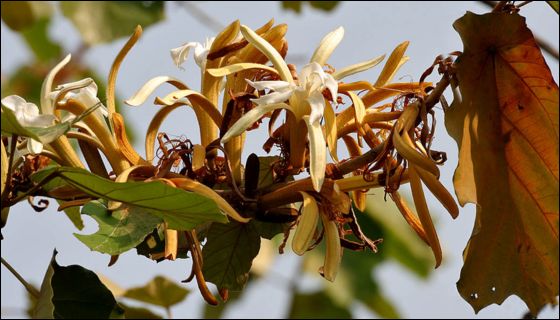
Muchkunda, botanically known as Pterospermum acerifolium, is a magnificent medicinal tree highly regarded in Ayurveda for its versatile therapeutic properties. It is famously recognized for its large, fragrant, white flowers and broad, maple-like leaves (hence acerifolium). In Ayurvedic practice, it is primarily valued as Raktaprasadana (blood purifier), Vedanasthapana (analgesic), and Vranaropana (wound healer). The flowers are particularly effective in managing bleeding disorders, inflammation, and respiratory issues, while the bark and leaves serve as potent remedies for skin diseases and smallpox. Its cooling nature makes it a specific choice for Pitta-related imbalances.
Classical Reference Of Muchkunda (Pterospermum acerifolium)
Bhavprakash Nighantu Pushpa Varga Page no. 491
Scientific Classification Of Muchkunda (Pterospermum acerifolium)
- Kingdom: Plantae
- Division: Angiosperms
- Class: Eudicots
- Order: Malvales
- Family: Malvaceae (formerly Sterculiaceae)
- Genus: Pterospermum
- Species: acerifolium
Synonyms Of Muchkunda (Pterospermum acerifolium)
- Muchukund: The common name of the tree named after a famous king in ancient history
- Kshatradru: The warrior tree or protector tree because of its large shield like leaves
- Chitrak: The beautiful or spotted one referring to its attractive and unique flowers
- Prativishanuk: The anti poison or antidote because it helps neutralize toxins in the body
- Mucakunda: The primary botanical name.
- Bahupatra: Having many leaves.
- Sudala: Having beautiful or well-formed petals.
- Harivallabha: Beloved of the Divine (often associated with Lord Vishnu or Shiva).
- Supuspa: Having beautiful flowers.
- Arghyarha: Worthy of being used in sacred offerings.
- Laksmanaka: Possessing auspicious marks or characteristics.
- Raktaprasava: Producing reddish or bright-colored blossoms.
Vernacular Names Of Muchkunda (Pterospermum acerifolium)
- Sanskrit: Muchukunda, Kanakapaarijata
- Hindi: Kanak Champa, Kaniar
- Bengali: Kanak Champa
- Marathi: Kanak Champa
- Tamil: Vennangu, Matsakanda
- Telugu: Matsakanda
- English: Dinner Plate Tree, Bayur Tree, Maple-leaved Bayur Tree
Habitat & Distribution Of Muchkunda (Pterospermum acerifolium)
- Native Origin: Muchkunda is naturally found in the foothill regions of the Himalayas and adjoining parts of South and Southeast Asia. Its native range extends across northern and northeastern parts of India and continues into neighboring countries such as Myanmar and other Southeast Asian regions. In its natural habitat, the tree commonly grows in moist forest areas where sufficient humidity and warmth are available.
- Global Distribution: Although originally native to specific Asian regions, Muchkunda is now widely cultivated in many tropical and sub-tropical countries. It is frequently grown in nations such as Thailand, Bangladesh, Pakistan, and Nepal, mainly as an ornamental and shade-providing tree. Due to its attractive flowers and medicinal importance, it has gained popularity in gardens, parks, and public landscapes.
- Distribution in India: Within India, Muchkunda is commonly found in the sub-Himalayan belt and is widely distributed in eastern and northeastern states, including West Bengal and Assam. It is also seen in several parts of Central India, particularly in regions that provide suitable moisture and favorable environmental conditions.
- Climatic Requirements: This tree grows best in warm, sub-tropical climates with moderate to adequate rainfall. It thrives in areas with good sunlight and well-drained soil. Because of its impressive height, which may reach up to 30 meters, and its dense canopy that provides abundant shade, Muchkunda is often planted along roadsides, in gardens, and in open landscapes where large trees can grow freely.
Morphology Of Muchkunda (Pterospermum acerifolium)
- Tree (Habit): Muchkunda is a tall, fast-growing deciduous tree that can attain a height of approximately 20–30 meters under favorable conditions. The tree develops a straight trunk with a broad, spreading crown that produces dense shade. The bark is generally greyish-brown in color and appears rough or slightly fissured as the tree matures.
- Leaves: The leaves of Muchkunda are large, simple, and broadly ovate to palm-shaped, resembling the leaves of a maple tree. They are arranged alternately on the branches and may measure 15–35 cm or more in length. The upper surface of the leaves is smooth and green, while the lower surface is covered with fine, soft hairs, giving it a slightly velvety texture. The leaf margins are usually entire or slightly lobed.
- Flowers: The flowers are one of the most striking features of this tree. They are large, showy, and usually white or cream-colored, often emitting a pleasant fragrance, especially during evening hours. The flowers typically bloom singly or in small clusters and have long, narrow petals that give them a distinctive appearance. Flowering generally occurs during the warm months.
- Fruits: The fruit is a woody capsule that is elongated or oval in shape. When mature, the capsule splits open to release seeds. The outer surface of the fruit is firm and somewhat rough, protecting the seeds inside.
- Seeds: The seeds are flat and provided with thin, papery wings that help in their dispersal by wind. These winged seeds allow the plant to spread naturally over surrounding areas.
Classical Categorisation Of Muchkunda (Pterospermum acerifolium)
- Bhavprakash Nighantu: Pushpa Varga
- Raj Nighantu: Karveeradi Varga
Ancient Verses For Muchkunda (Pterospermum acerifolium)
Verse No. 1
मुचुकुन्दः क्षत्रवृक्षश्चित्रकः प्रतिविष्णुकः । मुचुकुन्दः शिरःपीडापित्तास्त्रविषनाशनः ॥
Bhavprakash Nighantu Pushpa Varga Verse No. 55
Verse Interpretation
Synonyms Of Muchukund
- Muchukund: The common name of the tree named after a famous king in ancient history
- Kshatradru: The warrior tree or protector tree because of its large shield like leaves
- Chitrak: The beautiful or spotted one referring to its attractive and unique flowers
- Prativishanuk: The anti poison or antidote because it helps neutralize toxins in the body
Benefits of Muchukund: Muchukund is beneficial in headache, disorders related to Pitta, blood disorders, and acts as an antidote to poison.
Verse No. 2
मुचकुन्दो बहुपत्रः सुदलो हरवल्लभः सुपुष्पश्च ।
अर्घ्यार्हो लक्ष्मणको रक्तप्रसवश्च वसुनामा ॥
मुचकुन्दः कटुस्तिक्तः कफकासविनाशनश्च कण्ठदोषहरः ।
त्वग्दोषशोफशमनो व्रणपामाविनाशनश्चैव ॥
Raj Nighantu Karveeradi Varga Verse No. 103-104
Verse Interpretation
Synonyms Of Muchukund
- Mucakunda: The primary botanical name.
- Bahupatra: Having many leaves.
- Sudala: Having beautiful or well-formed petals.
- Harivallabha: Beloved of the Divine (often associated with Lord Vishnu or Shiva).
- Supuspa: Having beautiful flowers.
- Arghyarha: Worthy of being used in sacred offerings.
- Laksmanaka: Possessing auspicious marks or characteristics.
- Raktaprasava: Producing reddish or bright-colored blossoms.
Properties of Muchukunda: Muchukunda possesses a pungent and bitter taste. It helps reduce Kapha and relieves cough, while also supporting the management of throat and skin disorders as well as swelling (oedema). Additionally, it promotes healing of wounds and helps in conditions like eczema.
Special Note On Muchkunda (Pterospermum acerifolium)
Based On Classical Texts And Scholarly Debates In Raj Nighantu, The Botanical Identification Of Muchukunda Has Been A Subject Of Significant Discussion Among Ayurvedic Experts. Below Is A Summary Of The Academic Consensus Regarding Pterospermum acerifolium.
- Scholarly Consensus on P. acerifolium: The identification of Muchukunda as Pterospermum acerifolium is widely accepted by leading authorities in Dravyaguna (Ayurvedic Pharmacology), including P.V. Sharma, R.S. Singh and Chunekar. This specific identification is supported by references in the Bhavprakash Nighantu (Pushpa Varga, Shloka 55), where the species is described in connection to its common names.
- Alternative Identifications & Synonyms: While Pterospermum acerifolium is the primary candidate, other scholars have historically proposed different species. Kirtiakar, Nadkarni, and Uniyal: Suggested Pterospermum suberifolium. However, this was specifically objected to by Chunekar, who favored Pterospermum acerifolium.
- Bapalal: Initially identified it as Pterospermum glabrescens (now known as Pterospermum diversifolium Blume), though he also cited references supporting Pterospermum suberifolium.
- U.P.I. (Universal Pharmacopoeia of India): Mentions Karnikara or Kanak Champa as Pterospermum acerifolium, while identifying Muchukunda separately as Pterospermum canescens Roxb. (synonym Pterospermum suberifolium Lam.).
Ayurvedic Properties Of Muchkunda (Pterospermum acerifolium)
- Rasa (Taste): Kashaya (Astringent), Katu (Pungent), Tikta (Bitter)
- Veerya (Potency): Ushna (Hot potency)
- Guna (Qualities): Laghu (Light to digest), Rooksha (Dryness)
- Vipaka (Post Digestion Effect): Katu (Pungent)
Action On Tridosha Of Muchkunda (Pterospermum acerifolium)
Helps maintain balance among all three Doshas, with a particular effect on Kapha and Pitta.
Therapeutic Indications Of Muchkunda (Pterospermum acerifolium)
- Headaches
- Insomnia
- Asthma and Bronchitis
- Cough
- Bleeding Piles
- Heavy Periods
- Wounds and Ulcers
- Smallpox and Measles
- Skin Infections
- Muscle and Joint Pain
- Burning Sensation
Systemic Actions Of Muchkunda (Pterospermum acerifolium)
- Nervous System (Majjavaha Srotas): Muchukunda acts as a potent Vedanasthapana (pain-reliever) and mild sedative, making it highly effective for neurological disturbances. It specifically targets the head and sense organs, where a paste of its flowers is used to alleviate chronic migraines, tension headaches, and hemicrania by cooling the “Sadhaka Pitta.” Furthermore, its natural aromatic compounds have a calming effect on the brain, helping to reduce mental exhaustion, anxiety, and irritability, which in turn helps in inducing sound sleep for those suffering from insomnia.
- Respiratory System (Pranavaha Srotas): In the respiratory tract, Muchukunda functions as an anti-inflammatory and soothing agent that helps manage conditions like chronic cough, bronchitis, and asthma. It works by pacifying aggravated Kapha and Pitta, which helps to liquefy thick mucus and facilitate its easy expulsion from the lungs. By reducing the hypersensitivity of the bronchial tree and soothing the mucosal lining, it provides significant relief from the breathlessness and chest congestion often associated with respiratory allergies.
- Digestive System (Annavaha Srotas): The herb exhibits strong Grahi (absorbent) and Stambhana (astringent) actions on the gastrointestinal tract due to its high tannin content. This makes it a reliable remedy for treating diarrhea and dysentery, as it helps to “bind” the stool and regulate bowel movements. Additionally, its cooling nature makes it an effective natural antacid that neutralizes excess gastric secretions, providing relief from hyperacidity, heart-burn, and the burning sensations associated with peptic ulcers.
- Circulatory & Heme System (Raktavaha Srotas): Muchukunda is a powerful Raktastambhana (hemostatic) herb, meaning it has the systemic ability to constrict small blood vessels and stop bleeding. It is traditionally indicated for various bleeding disorders (Raktapitta), including epistaxis (nosebleeds), bleeding piles, and internal hemorrhages. Beyond stopping blood loss, it acts as a blood purifier that helps clear circulating toxins, which often helps in reducing systemic inflammation and heat throughout the body.
- Reproductive System (Artavaha Srotas): In the female reproductive system, Muchukunda is valued for its ability to regulate the menstrual cycle and act as a uterine tonic. Its astringent properties are particularly useful in managing Asrigdara (menorrhagia or heavy menstrual bleeding), where it helps to balance the hormones and reduce excessive blood flow. By cooling the pelvic region and reducing inflammatory markers, it also helps in alleviating the spasmodic pain and discomfort that many women experience during their periods.
- Integumentary System (Skin & Wound Healing): Systemically, Muchukunda supports skin health through its Vranaropana (wound-healing) and anti-pruritic actions. It accelerates the regeneration of skin tissues and the closure of chronic ulcers by stimulating healthy cell proliferation and preventing secondary infections. Because it purifies the blood and pacifies Pitta, it is also highly effective at reducing the redness, itching, and burning sensations associated with inflammatory skin conditions like eczema, dermatitis, and herpes.
Chemical Composition Of Muchkunda (Pterospermum acerifolium)
- Quercetin: Powerful anti-inflammatory; specifically reduces the brain-vessel swelling that causes migraines and chronic headaches.
- Kaempferol: Natural analgesic (painkiller); blocks pain signals to provide relief from joint pain and muscle aches.
- Tannins: Potent hemostatic (blood-stopper); constricts blood vessels to stop bleeding piles, nosebleeds, and heavy periods.
- Lupeol: High-speed vulnerability (wound-healer); triggers rapid cell repair to heal burns, skin ulcers, and eczema.
- Essential Oils: Natural sedative; calms the central nervous system to treat insomnia and high-stress anxiety.
- Beta-sitosterol: Natural anti-swelling agent; reduces inflammation in the respiratory tract (asthma) and the prostate.
- Luteolin: Strong anti-allergy compound; stabilizes the immune response to manage allergic coughs and skin rashes.
- Friedelin: Effective febrifuge; acts on the body’s temperature regulation center to reduce high fever.
Practical Uses / Health Benefits Of Muchkunda (Pterospermum acerifolium)
- Management of Chronic Migraines: Muchukunda is widely utilized for its Vedanasthapana (pain-relieving) properties to alleviate persistent headaches, hemicrania, and tension-based head pain.
- Support for Sleep Disorders: It is used as a natural sedative to manage insomnia and restlessness, helping to calm the nervous system and induce sound sleep.
- Control of Bleeding Disorders: Due to its powerful Stambhana (astringent) action, it is used to stop internal and external bleeding in conditions like bleeding piles, epistaxis (nosebleeds), and menorrhagia (heavy periods).
- Acceleration of Wound Healing: It is used to promote the rapid repair of skin tissues in chronic ulcers, burns, and non-healing sores by stimulating healthy cell regeneration.
- Respiratory System Relief: Muchukunda is used to soothe the respiratory tract, helping to clear excess mucus in chronic cough, bronchitis, and asthma.
- Treatment of Skin Inflammations: It is utilized to provide a cooling effect on the skin, reducing the redness and burning sensations associated with eczema, dermatitis, and herpes.
- Digestive Tract Stability: The herb is used to regulate bowel movements and “bind” the stool, making it effective for managing diarrhea and dysentery.
- Neutralization of Hyperacidity: It is used as a natural antacid to relieve the burning sensation in the chest and throat caused by GERD and excess stomach acid.
- Reduction of Joint Inflammation: It is used to manage the pain and swelling associated with osteoarthritis and gouty arthritis by reducing local heat and inflammation.
- Management of Viral Eruptions: Historically, it has been used to soothe the skin and reduce the high fever and burning rashes associated with smallpox and measles.
Home Remedies With Muchkunda (Pterospermum acerifolium)
- For Migraines and Chronic Headaches: To relieve migraines and persistent headaches, take fresh Muchukunda flowers and crush them with a small amount of water to create a thick, consistent paste. Apply this paste directly to your forehead and temples, leaving it on for 15–20 minutes to allow the natural cooling properties to penetrate the skin. This simple application works by reducing local inflammation and constricting dilated blood vessels, which effectively stops the throbbing pain associated with severe head disturbances.
- For Insomnia and Better Sleep: To manage sleeplessness and mental stress, place two or three fresh, fragrant Muchukunda flowers near your pillow or on your bedside table before going to sleep. By simply breathing in the natural, sweet aroma of the flowers throughout the night, you allow the volatile essential oils to act as a gentle sedative on the central nervous system. This practice works by calming a racing mind and cooling the “Sadhaka Pitta,” making it much easier to fall into a deep, restful sleep.
- For Bleeding Piles and Nosebleeds: To control internal or external bleeding, grind dried Muchukunda flowers into a fine powder and store it in an airtight container. Take about half a teaspoon (3g) of this powder and mix it with a spoonful of honey or a glass of cool water, consuming it twice daily after meals. The high tannin content in the flowers acts as a natural “binder” or hemostatic agent, which helps to constrict blood vessels and effectively stop bleeding from the digestive tract or nasal passages.
- For Healing Wounds and Skin Ulcers: To treat slow-healing wounds, burns, or skin ulcers, prepare a medicinal wash by boiling a piece of Muchukunda tree bark in water for about 10 minutes until the liquid becomes dark and concentrated. Once the liquid has cooled to a lukewarm temperature, use it to gently wash the affected area or apply it as a wet compress twice a day. This remedy works because the bark contains powerful antiseptics and skin-repairing compounds that prevent infection and trigger the rapid growth of healthy new skin cells.
- For Heavy Menstrual Bleeding: To regulate an excessively heavy or painful menstrual cycle, extract the fresh juice from Muchukunda flowers by crushing them thoroughly and straining the liquid. Mix 10–15 ml of this fresh juice with a small amount of rock sugar or honey and consume it twice a day during your period. This works by utilizing the herb’s cooling and astringent properties to balance the hormones and reduce the volume of blood flow, providing comfort and stability to the uterine lining.
- For Joint Swelling and Inflammation: To reduce pain and swelling in joints affected by arthritis or injury, take the large, broad Muchukunda leaves, apply a light coating of sesame or castor oil on the surface, and warm them slightly over a pan. Wrap these warm leaves directly around the painful joint, such as the knee or ankle, and secure them with a soft cloth or bandage for a few hours. This application works by drawing out excess heat and reducing inflammation in the tissues, which significantly relieves stiffness and localized pain.
Part(S) Used Of Muchkunda (Pterospermum acerifolium)
- Flowers
- Barks
- Leaves
Dosage Of Muchkunda (Pterospermum acerifolium)
In Ayurvedic practice, the powder (Churna) of the flowers or bark is typically used in doses of 3–6 grams per day, usually divided into two doses.
Research On Muchkunda (Pterospermum acerifolium)
- Anti-Inflammatory & Analgesic Activity: Research published in various ethno-pharmacological journals confirms that the methanolic extracts of Muchukunda flowers possess significant anti-inflammatory properties. In animal models, these extracts were found to inhibit the synthesis of prostaglandins (chemicals in the body that signal pain). This scientifically supports its traditional use as a primary remedy for migraines, chronic headaches, and arthritis.
- Wound Healing & Antimicrobial Potential: Studies on the bark and leaves have demonstrated remarkable “vulnerary” (wound-healing) activity. Research shows that the high tannin and saponin content promotes collagen synthesis and increases the rate of skin cell contraction. Additionally, extracts have shown antimicrobial activity against common pathogens like Staphylococcus aureus, making it effective in treating infected ulcers and burns.
- Anti-Ulcer & Gastroprotective Effects: Scientific investigation into the flowers has revealed that they help in the secretion of gastric mucus, which forms a protective barrier in the stomach. Research suggests that Muchukunda can significantly reduce the “ulcer index” in the stomach, validating its use in treating peptic ulcers, gastritis, and hyperacidity.
- Hepatoprotective (Liver-Protecting) Action: Recent studies indicate that Muchukunda leaf extracts may protect the liver against chemical-induced toxicity. The antioxidants in the plant help neutralize free radicals, thereby reducing oxidative stress on liver cells. This research points toward its potential as a supportive treatment for liver disorders and systemic detoxification.
- Anti-Diabetic Activity: Pharmacological screenings of the bark and flowers have shown the ability to inhibit $\alpha$-amylase, an enzyme responsible for breaking down carbohydrates into glucose. By slowing this process, Muchukunda helps in maintaining steady blood sugar levels, providing a scientific basis for its traditional use in managing metabolic imbalances.
- Antioxidant & Cytotoxic Research: The presence of flavonoids like Quercetin makes Muchukunda a potent antioxidant. Some preliminary in vitro studies have also explored its cytotoxic (anti-cancer) potential, particularly against specific cancer cell lines, though more clinical human trials are needed in this area.
Conclusion
Muchukunda (Pterospermum acerifolium), popularly known as the Dinner Plate Tree, is a versatile Ayurvedic powerhouse celebrated for its cooling and analgesic properties. Primarily used to balance Pitta and Kapha doshas, it serves as an essential remedy for chronic migraines, where a flower paste effectively constricts blood vessels to alleviate throbbing pain. Beyond neurology, its high tannin content provides potent hemostatic actions, successfully managing bleeding piles and heavy menstrual cycles. Its bark and leaves are equally vital, acting as natural antiseptics that accelerate wound healing and treat inflammatory skin conditions like eczema. Modern research validates these traditional uses, confirming the tree’s significant anti-inflammatory, antimicrobial, and gastroprotective benefits. Ultimately, Muchukunda remains a cornerstone of botanical medicine for systemic cooling and pain management.