


Herbal Remedies For Sweet Syndrome: Causes, Symptoms, Ayurvedic Management & More
Abstract
Inflammatory disorders represent a biological “civil war” where the body’s ancient defense mechanisms designed to heal unintentionally ignite destruction within healthy tissues. Whether through the lens of modern Cytokine Storms or the Ayurvedic concept of Vitiated Pitta, these conditions manifest as a systemic overflow of heat and energy. At the cellular level, inflammation is a “Neutrophil Flood.” In disorders like Sweet’s Syndrome, the immune system’s first responders lose their restraint, infiltrating the skin to create painful, juicy plaques. This mirrors the Ayurvedic Visphota, where an internal fire (Agni) boils the blood (Rakta), seeking an exit through the cutaneous surface. In this write up, Let’s learn about this article in detail.
Introduction
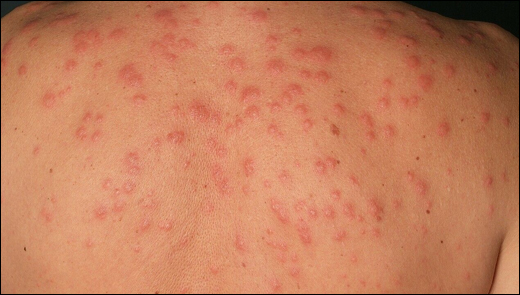
Sweet syndrome, or acute febrile neutrophilic dermatosis, is a rare inflammatory disorder characterized by the sudden onset of painful, reddish-purple skin lesions and fever. First described in 1964, it is driven by an abnormal accumulation of white blood cells (neutrophils) in the skin. While the appearance of these tender plaques can be startling, the condition is non-contagious and generally non-malignant. It often serves as a “reactive” sign to internal triggers like a recent flu, a new medication, or an underlying health issue acting as a visible marker for what is happening inside the body.
Causes
While the exact mechanism remains a bit of a medical mystery, Sweet syndrome is widely understood as a hypersensitivity reaction essentially your immune system overreacting to a specific trigger. This causes an explosion of white blood cells (neutrophils) that flood the skin and, sometimes, other organs. The causes are typically grouped into three categories:
1. Classical (Idiopathic)
This is the most common form, accounting for about 80% to 90% of cases. It is often triggered by the body’s response to an internal change or infection:
- Infections: Most commonly upper respiratory tract infections (like strep throat) or gastrointestinal infections (like Salmonella or Yersinia).
- Inflammatory Diseases: Conditions like Crohn’s disease, Ulcerative colitis, or rheumatoid arthritis.
- Pregnancy: About 2% of cases are linked to hormonal changes during pregnancy, typically resolving after delivery.
- Vaccinations: In very rare instances, it has been reported following certain adult vaccinations.
2. Drug-Induced
In these cases, the syndrome is a direct reaction to a medication. It usually appears within a few days to weeks of starting the drug.
- G-CSF (Granulocyte Colony-Stimulating Factor): The most common culprit. This drug is used to boost white blood cell counts in cancer patients, and its primary job is to create the very cells (neutrophils) that cause Sweet syndrome.
- Antibiotics: Such as Bactrim (trimethoprim-sulfamethoxazole) or minocycline.
- NSAIDs: Common pain relievers like Ibuprofen or Celebrex.
- Retinoids: Used in some skin and cancer treatments.
3. Malignancy-Associated
For about 21% of patients, Sweet syndrome acts as a “paraneoplastic syndrome”—a skin signal of an underlying cancer.
- Blood Cancers: The vast majority (85%) of these cases are linked to blood-related cancers, particularly Acute Myeloid Leukemia (AML) or Myelodysplastic Syndrome (MDS).
- Solid Tumors: Less commonly, it can be associated with cancers of the breast, colon, or genitourinary tract.
- A Warning Sign: The skin rash can appear before, during, or after the cancer diagnosis, often acting as the first sign that a cancer has returned.
Epidemiology And Prevalence
Sweet syndrome is considered a rare disease, and because many cases go misdiagnosed (often mistaken for skin infections like cellulitis), its exact global prevalence is difficult to pin down. However, clinical data provides a clear picture of who is most affected:
- Incidence: Estimates suggest an annual incidence of roughly 3 cases per 1,000,000 people.
- Gender Predisposition: In the "Classical" form, there is a strong female predominance, with a ratio of approximately 4:1 (women to men). However, when the syndrome is associated with underlying malignancy, it affects men and women equally.
- Age of Onset: It most commonly appears in adults between the ages of 30 and 60. While rare, it can occur in infants and the elderly.
- Racial and Geographic Distribution: The condition is observed worldwide and does not appear to have a specific racial or ethnic predilection.
- Recurrence: About 30% of patients who experience a "Classical" episode will have the condition return at some point in the future.
Associated Risks
Data shows that in approximately 21% of cases, Sweet syndrome is associated with an underlying malignancy—most commonly Acute Myeloid Leukemia (AML). In these instances, the skin rash often acts as the "harbinger" or first visible sign of the internal disease.
Why does it happen?
Research suggests that a "cycle" forms in the skin where skin cells and immune cells trigger each other. A specific protein called SAA1 acts like a signal that tells neutrophils to stay alive and keep fighting, even though there is no actual infection to fight. This creates a loop of inflammation that leads to the painful plaques.
Symptoms
Sweet syndrome symptoms typically appear with startling speed often within just a few hours or days. While the skin lesions are the most visible sign, the condition is a systemic inflammatory disorder, meaning it affects the entire body.
1. The Skin (Cutaneous Symptoms)
The rash is unique because it often looks "juicy" or blistered, even though the lesions are actually solid.
- Appearance: Small, reddish-purple bumps (papules) that quickly grow into painful, swollen clusters or flat-topped plaques.
- "Pseudovesicles": The plaques often have a clear, translucent appearance at the edges, making them look like blisters (though they usually aren’t).
- Distribution: Most common on the arms, face, neck, and back. They are usually asymmetrical (appearing on one side more than the other).
- Pathergy: This is a unique symptom where a new lesion appears at the site of a minor skin injury, like a needle prick or a scratch.
- Atypical Forms: In cases linked to blood cancer, the lesions may actually blister or turn into open ulcers (bullous Sweet syndrome).
2. Physical Feeling (Constitutional Symptoms)
Because this is an "acute febrile" condition, you usually feel quite ill:
- Fever: A sudden, high temperature (often over 38°C/ 100.4°F) is one of the most common signs.
- Extreme Fatigue: A deep sense of exhaustion and general malaise.
- Aches and Pains: Significant joint pain (arthralgia) and muscle aches are reported in up to 60% of cases.
- Headaches: Intense, persistent headaches often accompany the fever.
3. Extracutaneous Symptoms (Beyond the Skin)
In rare cases, the "neutrophil flood" can affect other organs. This is known as Extracutaneous Sweet Syndrome:
- Eyes: Red, sore, or inflamed eyes (conjunctivitis or episcleritis).
- Mouth: Painful mouth ulcers or sores, especially common in cases linked to leukemia.
- Internal Organs: Very rarely, the inflammation can spread to the lungs (causing a cough or shortness of breath), liver, kidneys, or the nervous system (known as Neuro-Sweet disease).
Diagnosis
Main Clinical features:
- Sudden onset of painful, tender erythematous plaques/nodules
- Skin biopsy showing dense neutrophilic dermal infiltrate without vasculitis
Supporting Features (Any 2)
- Fever
- Neutrophilia, ↑ESR/CRP
- Associated infection, malignancy, drug, or pregnancy
- Rapid response to corticosteroids
Modern Treatment
Modern treatment of Sweet syndrome primarily involves systemic corticosteroids, which are the first-line therapy and usually produce rapid improvement. In mild or localized cases, topical or intralesional corticosteroids may be sufficient. For patients who cannot tolerate steroids or require long-term control, colchicine, potassium iodide, or dapsone are commonly used as steroid-sparing agents. Refractory or recurrent cases may require cyclosporine, methotrexate, NSAIDs, or biologic agents in selected situations. Identifying and treating the underlying trigger is an essential part of management.
Ayurvedic Overview
In Ayurveda, Sweet’s Syndrome (Acute Febrile Neutrophilic Dermatosis) is not mentioned by its modern name, but its clinical presentation i.e sudden painful red bumps, high fever, and inflammation aligns closely with a category of diseases called Visphota.
“कट्वम्ल-तीक्ष्णोष्ण-विदाहि-रूक्ष-क्षारैरजीर्णाध्यशनातपैश्च ।
तथर्तुदोषेण विपर्ययेण कुप्यन्ति दोषा: पवनादयस्तु ॥
त्वचमाश्रित्य ते रक्तमांसास्थीनि प्रदूष्य च ।
घोरान् कुर्वन्ति विस्फोटान् सर्वान् ज्वरपुर:सरान् ॥” Madhav Nidan 53/ 1-2
The above shloka states that Excessive consumption of foods that are pungent, sour, very sharp, hot, burning, dry, and alkaline in nature, along with eating during indigestion, overeating, exposure to strong sunlight, and improper dietary habits, leads to the aggravation of the doṣas—Vāta, Pitta, and Kapha. Additionally, improper conduct opposite to seasonal requirements further vitiates these doṣas.
Once aggravated, these doṣas localize in the skin and vitiate the blood, muscles, and even deeper tissues such as bones. As a result, they produce severe, rapidly spreading blister-like eruptions known as visphoṭa, which are invariably preceded by fever.
ज्वरदाहरुजाश्रावपाकतृष्णाभिरन्वितम् ।
पीतलोहितवर्णं च पित्तविस्फोटलक्षणम् ॥२॥
In this verse it is explained that Pitta-dominant visphoṭa presents with fever, burning sensation, pain, discharge, suppuration, excessive thirst, and yellowish or reddish discoloration of the lesions.
Ayurvedic Management
In Ayurveda, the treatment of Sweet’s Syndrome is aggressive and focuses on "cooling" the blood and purging the body of excessive Pitta and toxins (Ama). The treatment must include the following:-
1. Shodhana (Detoxification Procedures)
The goal is to remove the "fire" (Pitta) from the deep tissues before it causes more skin damage.
- Virechana (Therapeutic Purgation) is the primary treatment for Pitta-related skin disorders. It involves the use of herbs like Trivrit, Katuki, or Manibhadra Gulam to flush out the liver and blood.
- If the lesions are very swollen or have fluid (Kapha involvement) therapeutic vomiting (vaman) may be used in some cases to clear the upper system.
- In severe, localized cases where the nodules are extremely painful and red, traditional practitioners might use Leech Therapy (Jalaukavachara) to remove vitiated blood from the site.
2. Shamana (Internal Medications)
The Oral medications that can be given are as follows:-
Kashayams (Decoctions):
- Patolamooladi Kashayam: Excellent for skin diseases with blisters and fever.
- Guduchyadi Kashayam: Uses Guduchi (Giloy), which is the most famous Ayurvedic immunomodulator and antipyretic.
- Amrutotharam Kashayam: Specifically for fever and inflammatory conditions
- Kaishore Guggulu: Specifically used for "Vatarakta" and inflammatory skin conditions; it helps heal the skin and reduces joint pain (often seen in Sweet’s Syndrome).
- Mahatiktaka Ghrita: Often used after the acute phase to heal the skin from the inside and prevent recurrence.
3. External Applications (Lepa)
To manage the “Daha” (burning sensation) and “Ruja” (pain):
- Satadhauta Ghrit known for its incredible cooling properties.
- Chandanadi Lepam is applied to the lesions to soothe inflammation.
- The lesions may be washed with a decoction of Triphala or Nimba (Neem) to prevent secondary infection
4. Diet and Lifestyle (Pathya)
Ayurveda places heavy emphasis on avoiding "fuel" for the fire:
- Strictly Avoid: Spicy food, fermented foods (curd, vinegar, alcohol), salty foods, and sour fruits.
- Strictly Avoid: Excessive sun exposure and anger (both increase Pitta).
- Must include : Mung dal soup, bitter gourd, pomegranate, coconut water and coriander water.
Herbal Remedies For Sweet Syndrome By Planet Ayurveda
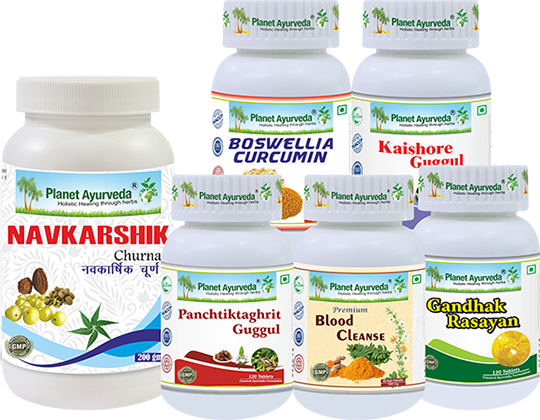
Planet Ayurveda is a globally trusted Ayurvedic healthcare brand dedicated to restoring health through pure, authentic, and research-based herbal formulations. Rooted in classical Ayurvedic wisdom, the company offers GMP-certified, chemical-free products prepared under expert guidance. Planet Ayurveda focuses on addressing diseases at their root by balancing doshas naturally, promoting holistic healing, long-term wellness, and harmony between body, mind, and nature. For managing sweet’s syndrome< Planet Ayurveda has the following formulations:-
- Kaishore Guggul
- Boswellia Curcumin
- Premium Blood Cleanse Capsules
- Gandhak Rasayan
- Navkarshik Churna
- Panchtiktaghrit Guggul
Product Description
1. Kaishore Guggul
Kaishore Guggul is a classical Ayurvedic tablet formulation traditionally used for disorders arising from Pitta Rakta imbalance. It contains potent herbs such as Guduchi (Tinospora cordifolia), Triphala (Three myrobaans) and purified Guggul (Commiphora mukul). This formulation supports detoxification of blood, reduces inflammatory heat, and helps pacify aggravated Pitta. Kaishore Guggul aids in calming acute inflammation, managing fever, and supporting skin healing by addressing the underlying Rakta dushti and systemic inflammatory response.
Dosage – 2 tablets twice daily with plain water after meals.
2. Boswellia Curcumin
Boswellia Curcumin is a Capsule formulation designed to support the body’s natural anti-inflammatory response. It contains standardized extracts of Shallaki (Boswellia serrata) and Haridra (Curcuma longa) both known for their potent anti-inflammatory and antioxidant properties. This combination helps to modulate inflammatory pathways and supports joint, skin, and tissue health. Boswellia Curcumin assists in reducing inflammatory flare-ups, relieving pain and swelling thus helpful in managing Sweet’s syndrome.
Dosage – 1 capsule twice daily with plain water after meals.
3. Premium Blood Cleanse Capsules
This Ayurvedic capsules formulation is prepared using standardised extract of herbs such as Neem (Azadirachta indica) and Haridra (Curcuma longa). This combination helps reduce internal heat, supports detoxification of Rakta Dhatu (Blood tissue), and calms inflammatory responses. These capsules assist in managing febrile skin eruptions, supporting immune balance, and promoting natural healing.
Dosage – 1 capsule twice daily with plain water after meals.
4. Gandhak Rasayan
Gandhak Rasayan is a classical Ayurvedic formulation available in tablet form used for chronic skin and blood-related disorders. It is prepared using purified Gandhak (Sulphur). It supports Rakta shodhana (Blood purification), helps pacify aggravated Pitta, and promotes healthy skin regeneration. It assists in controlling recurrent skin eruptions, reducing inflammation, and supporting tissue healing by improving metabolic balance and strengthening the body’s natural defense mechanisms.
Dosage – 2 tablets twice daily with plain Water after meals.
5. Navkarshik Churna
Navkarshik churna is prepared using a blend of herbs such as triphala (Three myrobalans), vacha (Acorus calamus) and Manjishtha (Rubia cordifolia). These herbs act together to help remove internal toxins, regulate inflammatory responses, and support immune function, making it beneficial for inflammatory skin and joint concerns and overall systemic cleansing. This formulation is traditionally known to detoxify the blood, balance Pitta, and support metabolic health.
Dosage – 1 tsp twice daily with plain water after meals.
6. Panchtiktaghrit Guggul
This classical Ayurvedic tablet formulation are prepared using blends of bitter and cleansing herbs such as Neem (Azadirachta indica), Giloy (Tinospora cordifolia), Vasa (Adhatoda vasica), Patola (Trichosanthes dioica), Kantkari (Solanum xanthocarpum), along with Guggul resin (Commiphora mukul). This formulation’s bitter and cooling herbs help pacify aggravated Pitta and reduce internal inflammation, while guggul supports detoxification and enhanced microcirculation.
Dosage – 2 tablets twice daily with plain water after meals.
Conclusion
Sweet syndrome is more than a sudden skin eruption—it is the skin’s urgent message of an underlying systemic inflammation. With its rapid onset, fever, and painful lesions, the condition demands early recognition and decisive management. When identified in time, Sweet syndrome responds remarkably well to treatment, often restoring comfort and normalcy within days. Equally important is addressing the hidden trigger behind the flare, ensuring lasting relief and preventing recurrence. Understanding Sweet syndrome as a whole-body response rather than a local skin disease allows for precise, effective care and better patient outcomes.