


Vernonia Amygdalina Delile./ Bitter Leaf/ African Bitter Leaf – Medicinal Properties, Benefits & Dosage
Abstract
Vernonia amygdalina, commonly known as bitter leaf, is a perennial shrub belonging to the family Asteraceae and is widely distributed across tropical regions of sub-Saharan Africa. It is one of the most commonly used medicinal plants within the genus Vernonia and holds significant importance in traditional African medicine as well as in culinary practices, particularly in Nigerian and Cameroonian cuisines. The plant is characterised by its distinctly bitter taste, which is attributed to the presence of bioactive compounds such as sesquiterpene lactones, including vernodalin, along with flavonoids and other phytochemicals. These constituents contribute to its diverse therapeutic properties, including anti-diabetic, antimicrobial, and antioxidant activities. Due to its nutritional and medicinal value, Vernonia amygdalina continues to be widely utilised for promoting health and managing various ailments.
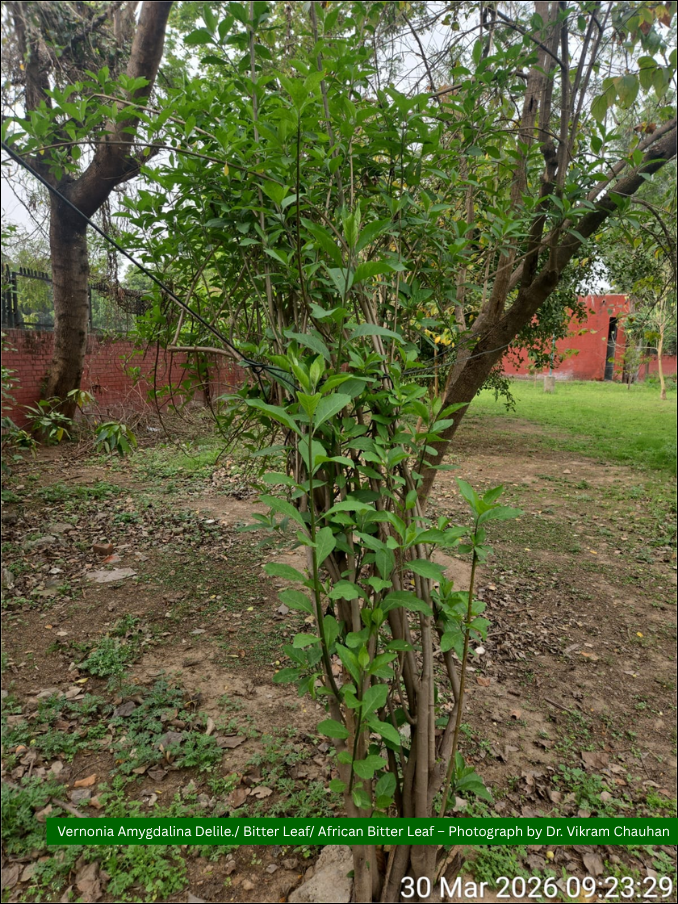
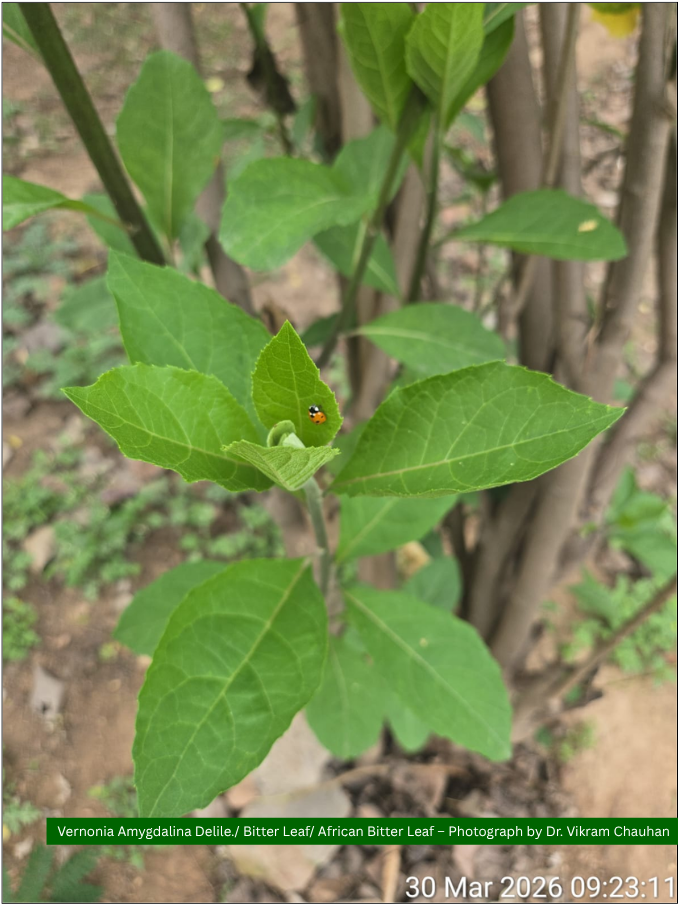
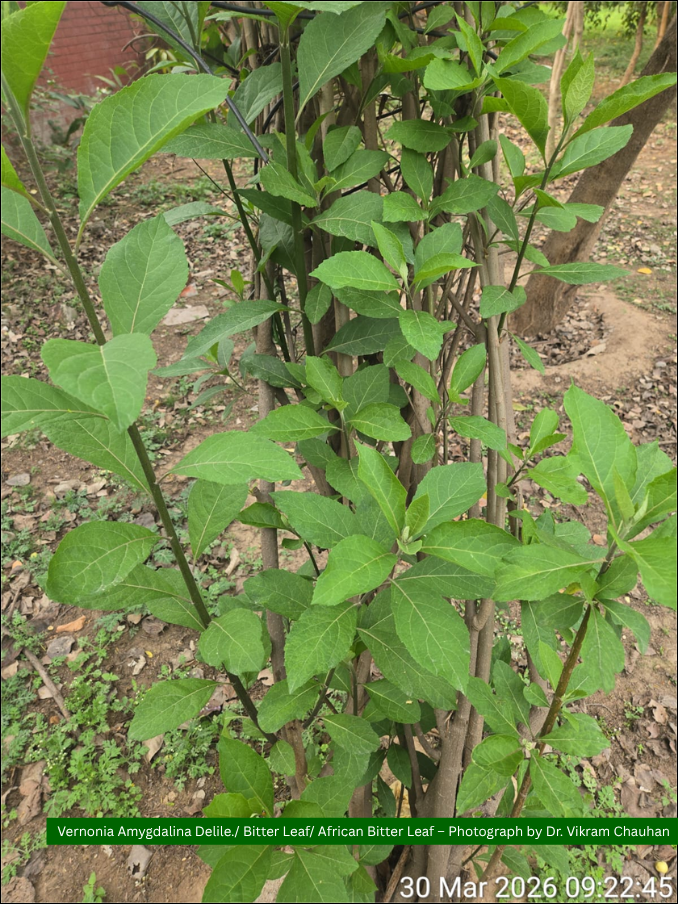
Scientific Classification Of Vernonia Amygdalina Delile./ Bitter Leaf/ African Bitter Leaf
- Kingdom: Plantae
- Phylum: Spermatophyta
- Subphylum: Angiospermae
- Class: Dicotyledoneae
- Order: Asterales
- Family: Asteraceae
- Genus: Vernonia
- Species: amygdalina
Vernacular Names Of Vernonia Amygdalina Delile./ Bitter Leaf/ African Bitter Leaf
- English Names: Bitter leaf, African bitter leaf, Toothbrush tree, Congo Bololo, Bitter-tea vernonia
- Nigeria: Ewuro (Yoruba), Onugbu (Igbo), Oriwo (Edo), Etidot (Efik/Ibibio), Ityuna (Tiv), Chusar doki (Hausa), Fatefata (Hausa)
- Ghana: Awonwono
- Cameroon: Ndoleh, Ying
- Uganda: Omubirizi, Mululuza
- Rwanda: Umubilizi
- Tanzania: Omubilizi
- Ethiopia: Ebichaa
- Guinea: Bantara bururé, Dakuna, Kossa fina
- Sierra Leone: Nje nyani, An-gbẻnthσ
- Togo: Aluma, Gbondutsi
- India: Katu
Habitat Of Vernonia Amygdalina Delile./ Bitter Leaf/ African Bitter Leaf
Vernonia amygdalina is native to tropical regions of Africa and typically grows in humid habitats such as riverbanks, lake margins, forest edges, woodlands, and grasslands. It prefers full sunlight and humus-rich moist soils, though it adapts well to various soil conditions and is often seen in disturbed locations like abandoned farmlands and secondary vegetation. The plant occurs from lowland areas up to about 2,800 meters, with favorable growth commonly observed between 1,400 and 2,100 meters. It is widely distributed from Guinea through Cameroon across East Africa and extending south to Mozambique, and is frequently cultivated in Nigeria as a food and medicinal plant belonging to the family Asteraceae.
Morphology Of Vernonia Amygdalina Delile./ Bitter Leaf/ African Bitter Leaf
Vernonia amygdalina is a soft-wooded perennial shrub or small tree, usually growing 1-6 m in height and occasionally reaching up to 10 m, characterised by brittle branches and grey-brown rough bark. The plant bears elliptic to oblong-lanceolate leaves, typically 10–20 cm long, dark green on the upper surface and lighter beneath, with a distinctly bitter taste and short petiole. The flowers appear as small, creamy-white to white-purplish thistle-like heads arranged in dense, terminal clusters, often fragrant and about 10 mm long. It possesses a well-developed, branched root system that supports growth in diverse habitats, while microscopic features include the presence of trichomes and distinct epidermal cells with variable stomatal size between bitter and less-bitter varieties.
Ayurvedic Properties Of Vernonia Amygdalina Delile./ Bitter Leaf/ African Bitter Leaf
- Taste (Rasa)- Bitter (Tikta), Pungent (Katu)
Therapeutic Indications Of Vernonia Amygdalina Delile./ Bitter Leaf/ African Bitter Leaf
- Anti-diabetic – Helps improve insulin sensitivity and regulate blood sugar
- Anti-cancer – Shows potential against prostate and breast cancers
- Antimicrobial – Helps fight bacterial and microbial infections
- Anti-inflammatory – Reduces inflammation and related discomfort
- Antipyretic – Traditionally used in managing fever
- Anti-urolithic – Helps in gall bladder and urinary stone management
- Antihypertensive – Supports healthy blood pressure levels
- Wound healing – Promotes faster healing of wounds
- Blood purifier – Useful in blood-related disorders
- Anthelmintic – Helps eliminate intestinal worms
- Immunomodulatory – Supports immune system function
Systemic Actions Of Vernonia Amygdalina Delile./ Bitter Leaf/ African Bitter Leaf
External Use
- Its paste is effective in the management of wounds. Its juice is beneficial for eczema, skin rashes and ringworms.
Internal Uses
- Digestive System –Its juice is effective for the management of piles and it also shows hepatoprotective properties.
- Tapakrama – Useful in fever due to its antipyretic properties.
Chemical Composition Of Vernonia Amygdalina Delile./ Bitter Leaf/ African Bitter Leaf
- Polyphenols — Present in high amounts with strong antioxidant activity
- Flavonoids — Luteolin, luteolin-7-O-β-glucoside, apigenin, quercetin, catechin
- Alkaloids — Contribute to anti-diabetic and antimicrobial properties
- Saponins — Help in hypoglycemic effect and improved insulin secretion
- Sesquiterpene lactones — Vernodalin, vernolide, vernomygdin, hydroxyvernolide
- Vernoniosides — Vernoniosides D, E, A1, A2, A3, A4, B1, B2, B3
- Steroids and Terpenoids — Including lupeol and β-sitosterol
- Phenolic compounds — Chlorogenic acid, rutin with antioxidant effects
- Tannins — Support antimicrobial and anti-inflammatory actions
- Coumarins and Xanthones — Provide additional therapeutic activity
- Anthraquinones and Lignans — Contribute to medicinal properties
- Carotenoids and Isoflavones — Support antioxidant and protective effects
- Edotides — Bioactive peptides with immunomodulatory potential
Nutritional Components
- Proteins — High protein content in leaves
- Vitamins — Vitamins A, C, E, B1, B2, B6, niacin, folic acid
- Minerals — Calcium, magnesium, potassium, iron, zinc, selenium, copper
- Fiber and Carbohydrates — Support digestive and metabolic health
Actions And Properties Of Various Chemical Constituents Of Vernonia Amygdalina Delile./ Bitter Leaf/ African Bitter Leaf
1. Antidiabetic Activity
The antidiabetic activity of Vernonia amygdalina is attributed to its rich content of bioactive compounds such as sesquiterpene lactones, steroid glycosides (vernoniosides), flavonoids, and phenolic acids. These constituents help lower blood glucose levels by improving insulin sensitivity and enhancing glucose uptake in body tissues. Compounds like vernodalin, vernolide, and 11β,13-dihydrovernolide exhibit strong hypoglycemic effects, while vernoniosides act by inhibiting α-glucosidase enzymes that reduce carbohydrate breakdown and prevent sudden sugar spikes. Flavonoids such as luteolin protect pancreatic beta cells from oxidative damage and support insulin secretion. Phenolic compounds including chlorogenic acid further help by inhibiting α-amylase and reducing postprandial glucose levels. Additionally, these phytochemicals activate metabolic pathways like AMPK and suppress gluconeogenesis in the liver, resulting in improved glycemic control and reduced risk of diabetic complications.
2. Antipyretic Activity
The antipyretic activity of Vernonia amygdalina is mainly attributed to its bioactive compounds such as sesquiterpene lactones, flavonoids, and steroid glycosides. Compounds like vernodalin, vernolepin, vernomydin, and vernodalol help reduce fever by controlling inflammation and combating infections, including malaria-related fever. Flavonoids such as luteolin and its derivatives provide strong antioxidant and anti-inflammatory effects that help lower body temperature. Vernoniosides and saponins further assist in reducing inflammatory responses and microbial activity. These phytochemicals work by inhibiting pro-inflammatory cytokines like interleukin-6 and IL-8, reducing leukocyte migration, and preventing lipid peroxidation. Additionally, antioxidant compounds help neutralise free radicals, thereby reducing inflammation and promoting recovery from fever.
3. Anti-cancer Activity
The anticancer potential of Vernonia amygdalina is mainly attributed to its rich content of sesquiterpene lactones, flavonoids, steroid glycosides, and other bioactive compounds. Sesquiterpene lactones such as vernodalin, vernolide, and epivernodalol exhibit strong cytotoxic effects by damaging cancer cells and inhibiting DNA synthesis. Flavonoids like luteolin, apigenin, and cynaroside provide antioxidant activity and help induce apoptosis in tumor cells. Vernoniosides and saponins contribute by reducing inflammation and strengthening immune responses against abnormal cell growth. Compounds such as chlorogenic acid and edotides further enhance cancer cell death by generating oxidative stress and inhibiting tumor proliferation. These phytochemicals work through multiple mechanisms including apoptosis induction, cell cycle arrest, and inhibition of survival pathways like PI3K/Akt and ERK, thereby slowing cancer progression.
4. Hepatoprotective Activity
The hepatoprotective activity of Vernonia amygdalina is attributed to its rich phytochemical content including flavonoids, sesquiterpene lactones, saponins, and steroid glycosides. Flavonoids such as luteolin and its derivatives act as strong antioxidants that protect liver cells by reducing lipid peroxidation and neutralizing free radicals. Sesquiterpene lactones like vernodalin, vernolide, and epivernodalol help reduce liver inflammation by inhibiting pro-inflammatory cytokines and preventing hepatotoxic damage. Saponins and vernoniosides further support liver function by modulating immune responses and reducing oxidative stress. These compounds also help lower elevated liver enzymes such as ALT, AST, and ALP, indicating improved liver health. Additionally, the combined phytochemicals enhance antioxidant enzymes like glutathione, catalase, and superoxide dismutase, promoting regeneration and protection of liver tissues.
Practical Uses / Health Benefits Of Vernonia Amygdalina Delile./ Bitter Leaf/ African Bitter Leaf
- Fresh leaf paste is applied to cuts and wounds to promote faster healing and prevent infection.
- Leaf juice is traditionally used in African countries for piles, jaundice, skin diseases, pneumonia, diabetes, tuberculosis, and hepatitis B & C.
- It is also used to improve milk production and quality in nursing mothers.
- Regular intake of fresh leaf juice helps detoxify the body, improve metabolism, and support weight management.
- Squeezed leaf juice is applied externally for skin conditions such as rashes, eczema, ringworm, and other superficial infections.
- Boiled roots and stems are consumed as a traditional remedy for intestinal worms.
- Leaves contain polyunsaturated fatty acids that support cardiovascular health and overall wellness.
- In countries like Malawi and Uganda, it is traditionally used after childbirth to help expel placenta, support uterine contraction, enhance lactation, and control postpartum bleeding.
- Young leaves and tender shoots are widely consumed as leafy vegetables in many African regions.
- Stems are used as chewing sticks for maintaining oral hygiene and managing dental problems.
- Even healthy individuals consume leaf juice to maintain fitness, improve vitality, and reduce stress.
- Paste prepared from 5–6 mature leaves of Vernonia amygdalina, taken twice daily before breakfast and dinner, is traditionally used for managing gall bladder stones and urinary stones.
Parts Used Of Vernonia Amygdalina Delile./ Bitter Leaf/ African Bitter Leaf
- Leaves
- Root
- Stem
Conclusion
Vernonia amygdalina is a highly valued medicinal plant widely used in traditional healthcare systems, particularly across tropical Africa. It is rich in bioactive compounds such as flavonoids, sesquiterpene lactones, saponins, and phenolic compounds that contribute to its diverse therapeutic properties. The plant exhibits antidiabetic, anticancer, hepatoprotective, antimicrobial, anti-inflammatory, and antioxidant activities. In addition to its medicinal value, it is also consumed as a nutritious leafy vegetable and used in various traditional remedies for managing fever, infections, digestive disorders, and metabolic conditions. Due to its broad pharmacological potential and nutritional benefits, Vernonia amygdalina continues to gain importance in modern research and herbal medicine.
Frequently Asked Questions (FAQ’s)
1. What Are The Benefits Of Vernonia Amygdalina?
It offers antidiabetic, anticancer, hepatoprotective, antimicrobial, anti-inflammatory, and antioxidant benefits and supports digestive and immune health.
2. What Is The Common Name Of Vernonia Amygdalina?
The common name is Bitter leaf; it is also known as African bitter leaf.
3. What Are The Uses Of Vernonia Amygdalina?
It is used for managing fever, diabetes, liver disorders, infections, hypertension, skin diseases, and as a nutritious leafy vegetable.
4. What Is The Common Name Of Vernonia Amygdalina?
Commonly known as Bitter leaf, it is also called Bitter-tea vernonia and Toothbrush tree.
5. What Are The Side Effects Of Vernonia Amygdalina?
Excess consumption may cause stomach upset, nausea, or low blood sugar in sensitive individuals.
Was this Page Helpful?