


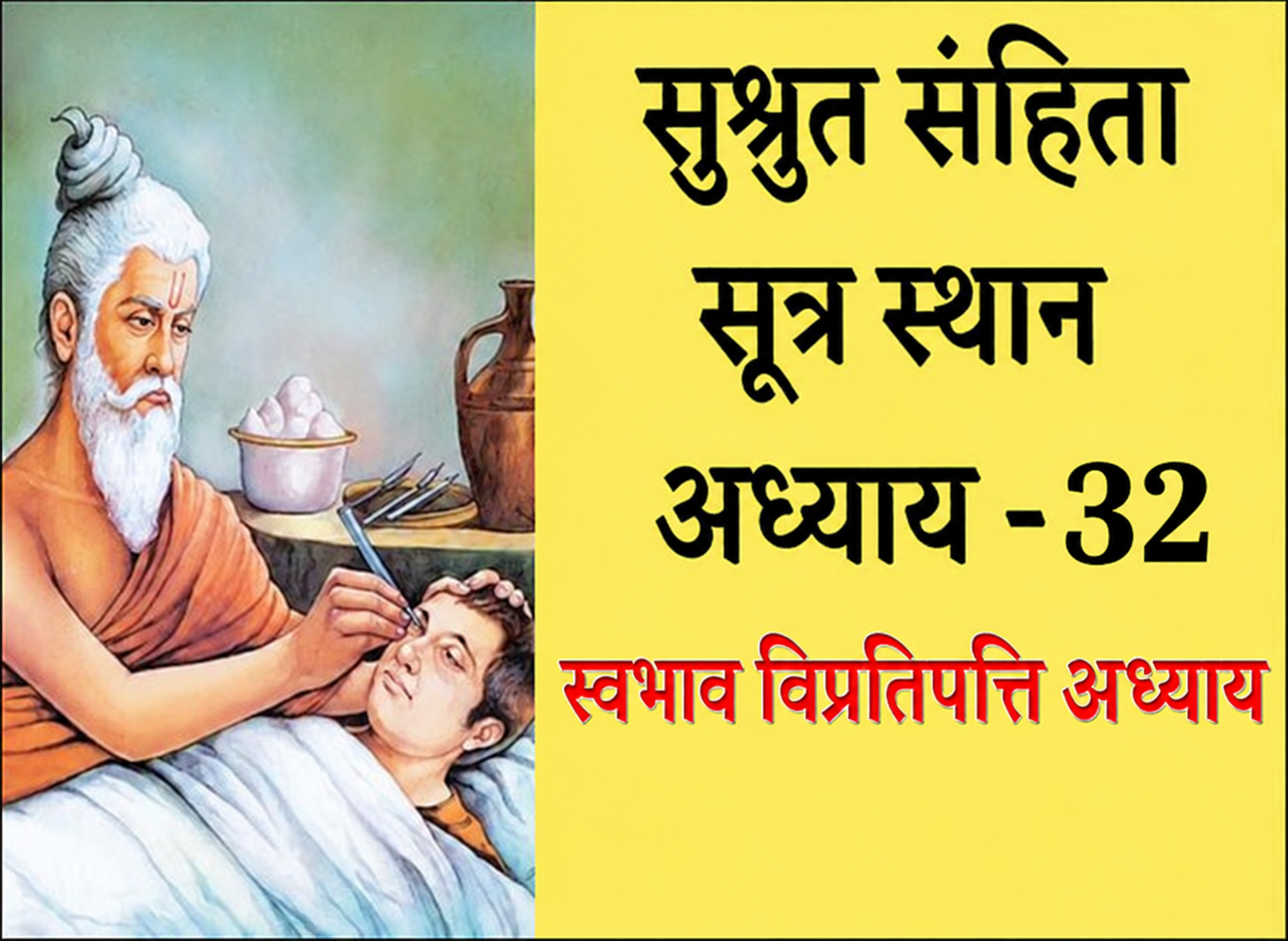
Svabhava Vipratipatti Adhyaya (Fatal Changes In Normal Bodily Features) – 32th Chapter of Sushruta Samhita
Introduction To Svabhava Vipratipatti Adhyaya
अथातः स्वभावविप्रतिपत्तिमध्यायं व्याख्यास्यामः ||१||
यथोवाच भगवान् धन्वन्तरिः ||२||
We shall now explain the chapter entitled Svabhava Vipratipatti Adhyaya, which describes fatal signs arising from abnormal changes in the body’s natural characteristics, as taught by the revered Lord Dhanvantari.
Abnormal Changes In Natural Bodily Features As Fatal Signs
स्वभावसिद्धानां शरीरैकदेशानामन्यभावित्वं मरणाय |
तद्यथा- शुक्लानां कृष्णत्वं, कृष्णानां शुक्लता, रक्तानामन्यवर्णत्वं, स्थिराणां मृदुत्वं, मृदूनां स्थिरता, चलानामचलत्वं, अचलानां चलता, पृथूनां सङ्क्षिप्तत्वं, सङ्क्षिप्तानां पृथुता, दीर्घाणां ह्रस्वत्वं, ह्रस्वानां दीर्घता, अपतनधर्मिणां पतनधर्मित्वं, पतनधर्मिणामपतनधर्मित्वमकस्मात्, शैत्यौष्ण्यस्नैग्ध्यरौक्ष्यप्रस्तम्भवैवर्ण्यावसादनं चाङ्गानाम् ||३||
According to Sushruta, any sudden and unusual change in the body’s naturally occurring characteristics may indicate a fatal condition. These changes include white parts turning into black, black parts becoming white, and red parts developing an unusual colour. Firm body parts becoming soft or soft parts becoming firm, moving parts losing movement or immobile parts becoming mobile, broad parts becoming narrow or narrow parts becoming broad, and long parts becoming short or short parts becoming long are considered alarming signs. Similarly, parts that normally remain in place may begin to fall, while those that usually fall may unexpectedly stop doing so. Sudden changes in temperature, such as unusual coldness or heat, along with excessive oiliness, dryness, stiffness, discolouration, and loss of strength or vitality in the body parts, are described as serious prognostic indicators associated with impending death.
Additional Fatal Signs And Unfavourable Prognostic Indicators In Ayurveda
Abnormal Position, Shape, And Weight Of Body Parts
स्वेभ्यः स्थानेभ्यः शरीरैकदेशानामवस्त्रस्तोत्क्षिप्तभ्रान्तावक्षिप्तपतितविमुक्तनिर्गतान्तर्गतगुरुलघुत्वानि, प्रवालवर्णव्यङ्गप्रादुर्भावो वाऽप्यकस्मात्,
The verse describes body parts that suddenly deviate from their normal positions or appear displaced, elevated, twisted round , depressed, fallen, loosened, protruding, or retracted. Unexpected heaviness or lightness of body parts is also included. The sudden appearance of coral-like reddish colouring or unusual pigmented marks is described as another unfavourable sign.
Abnormal Veins, Skin Lesions, Sweating, And Tears
सिराणां च दर्शनं ललाटे, नासावंशे वा पिडकोत्पत्तिः, ललाटे वा प्रभातकाले स्वेदः, नेत्ररोगाद्विना वाऽश्रुप्रवृत्तिः,
The verse describes newly visible veins on the forehead, the sudden development of pimples on the ridge of the nose, sweating on the forehead in the early morning without an apparent cause, and the flow of tears without any ocular complaints as abnormal manifestations associated with an unfavourable prognosis.
Unusual Dust And Birds Settling On The Head
गोमयचूर्णप्रकाशस्य वा रजसो दर्शनमुत्तमाङ्गे निलयनं वा कपोतकङ्ककाकप्रभृतीनां,
The verse mentions the appearance or settling of dust resembling powdered cow dung over the face . It also describes pigeons, vultures, crows, and similar birds settling on the head. These observations belong to the traditional prognostic descriptions of Ayurveda and should be understood within their historical context.
Abnormal Urine, Stool, And Pain In The Chest
मूत्रपुरीषवृद्धिरभुञ्जानानां, तत्प्रणाशो वा भुञ्जानानां, स्तनमूलहृदयोरःसु च शूलोत्पत्तयः,
An unusual increase in urine and faeces in a person who is not eating, or an unexpected reduction in their output despite continued food intake, is described as an unfavourable sign. The verse also mentions pain and aching around the breasts, heart region, and chest. These findings are presented as disturbances in normal bodily functioning.
Swelling, Wasting, And Changes In Voice
मध्ये शूनत्वमन्तेषु परिम्लायित्वं विपर्ययो वा, तथाऽर्धाङ्गे श्वयथुः शोषोऽङ्गपक्षयोर्वा, नष्टहीनविकलविकृतस्वरता वा,
The text describes unusual hollowing or loss of fullness in the central parts of the body, wasting of the extremities, or vice versa . Swelling affecting one half of the body and wasting of one side or particular body regions are also mentioned. Loss of voice, reduced vocal strength, defective speech, or an altered and distorted voice are considered unfavourable signs.
Abnormal Discolouration Of Teeth, Mouth, Nails, And Body
विवर्णपुष्पप्रादुर्भावो वा दन्तमुखनखशरीरेषु,
The appearance of unusual flower-like coloured markings or abnormal discolouration on the teeth, mouth, nails, or other parts of the body is described as an adverse prognostic feature. The verse emphasises changes from the person’s normal bodily appearance.
Abnormal Bodily Secretions And Visual Disturbances
यस्य वाऽप्सु कफपुरीषरेतांसि निमज्जन्ति, यस्य वा दृष्टिमण्डले भिन्नविकृतानि रूपाण्यालोक्यन्ते, स्नेहाभ्यक्तकेशाङ्ग इव यो भाति,
The verse refers to Kapha (phlegm), stool, and semen does not float in water, an observation used in the text as a prognostic sign. It also describes a person who perceives broken, distorted, or unusual forms within the visual field. A person whose hair and body appear as though they have been smeared with oil is also mentioned.
Severe Weakness, Loss Of Appetite, And Digestive Disturbances
यश्च दुर्बलो भक्तद्वेषातिसाराभ्यां पीड्यते, कासमानश्च तृष्णाभिभूतः, क्षीणश्छर्दिभक्तद्वेषयुक्तः सफेनपूयरुधिरोद्वामी हतस्वरः शूलाभिपन्नश्च मनुष्यः,
A person suffering from profound weakness, aversion to food, and diarrhoea is described as having an unfavourable prognosis. Persistent coughing accompanied by intense thirst, progressive wasting, vomiting, and loss of appetite are also included. The verse further describes frothy vomiting with pus and blood, loss of voice, and severe pain as grave manifestations.
Swelling Of The Face And Limbs With Fever And Cough
शूनकरचरणवदनः क्षीणोऽन्नद्वेषी स्रस्तपिण्डिकांसपाणिपादो ज्वरकासाभिभूतः,
The verse describes a severely debilitated person with swelling of the face, extremities resembling the swollen appearance of a dog’s corresponding body parts. Such a person may also experience loss of appetite, looseness or wasting of the calves, shoulders, hands, and feet, along with fever and cough. The combination is presented as a serious prognostic indication.
Vomiting Undigested Food And Respiratory Distress
यस्तु पूर्वाह्णे भुक्तमपराह्णे छर्दयत्यविदग्धमतिसार्यते वा स श्वासान्म्रियते,
A person who vomits in the afternoon food consumed in the morning while it remains undigested, or who develops diarrhoea under similar circumstances, is described as being at risk of death associated with breathing difficulty or respiratory distress. The passage highlights the seriousness of severe digestive dysfunction accompanied by respiratory symptoms.
Collapse And Abnormal Genital Or Neck Findings
बस्तवद्विलपन् यश्च भूमौ पतति स्रस्तमुष्कः, स्तब्धमेढ्रो भग्नग्रीवः प्रनष्टमेहनश्च मनुष्यः,
The text describes a person who falls to the ground while making sounds like a goat, and exhibits such symptoms as a rupture of the testes , numbness of penis . Other grave findings include a fractured or severely abnormal neck, and loss of normal penile function. These manifestations are presented as serious signs within the text’s traditional prognostic framework.
Abnormal Body Moisture And Unusual Repetitive Behaviour
प्राग्विशुष्यमाणाहृदय आर्द्रशरीरः, यश्च लोष्टं लोष्टेनाभिहन्ति काष्ठं काष्ठेन, तृणानि वा छिनत्ति, अधरोष्ठं दशति, उत्तरोष्ठं वा लेढि, आलुञ्चति वा कर्णौ केशांश्च;
The verse describes a person whose heart region appears to dry out before the rest of the body, even while the body remains slimy moist. It also mentions unusual repetitive or disturbed behaviours, such as striking one clod of earth against another, hitting pieces of wood together, tearing grass, biting the lower lip, licking the upper lip, and pulling the ears or hair. These behaviours are presented as unfavourable signs in the traditional assessment of prognosis.
Aversion Towards Teachers, Physicians, And Respected Individuals
देवद्विजगुरुसुहृद्वैद्यांश्च द्वेष्टि,
The text describes the development of aversion or hostility towards deities, Brahmins, teachers, friends, and physicians and relations . Within the traditional Ayurvedic framework, a marked and unusual change in a person’s behaviour or attitude towards familiar and respected individuals was considered a concerning prognostic sign.
Unfavourable Astrological Configurations
यस्य वक्रानुवक्रगा ग्रहा गर्हितस्थानगताः पीडयन्ति, जन्मर्क्षं वा, यस्योल्काशनिभ्यामभिहन्यते होरा वा,
The text describes unfavourable planetary configurations, including planets occupying inauspicious positions and adverse influences affecting the person’s birth constellation or astrological hour. These observations reflect the astrological elements incorporated into the prognostic traditions of the text.
Inauspicious Signs Involving The Home And Personal Belongings
गृहदारशयनासनयानवाहनमणिरत्नोपकरणगर्हितलक्षणनिमित्तप्रादुर्भावो वेति ॥४॥
The verse concludes by mentioning the appearance of unusual or inauspicious signs associated with the person’s home, spouse, bed, seat, conveyance ,riding animals , precious stones, jewels, and other personal belongings. These signs are presented as part of the traditional prognostic framework used in the chapter.
Prognostic Signs Of Declining Vitality And The Physician’s Clinical Judgment
चिकित्स्यमानः सम्यक् च विकारो योऽभिवर्धते | प्रक्षीणबलमांसस्य लक्षणं तद्गतायुषः ||५||
When a disease continues to worsen despite appropriate treatment, particularly in a patient who are emasciated have significantly declined, it is described as a serious prognostic sign. Sushruta highlights that progressive deterioration despite treatment, combined with severe physical depletion, may indicate a life-threatening condition.
निवर्तते महाव्याधिः सहसा यस्य देहिनः | न चाहारफलं यस्य दृश्यते स विनश्यति ||६||
If a severe disease suddenly appears to subside, but the patient shows no improvement in nourishment or body strength from food, this unexpected change is considered an unfavourable sign. The verse emphasises that the apparent disappearance of severe symptoms does not necessarily indicate recovery, especially when the body fails to regain vitality or benefit from nourishment.
एतान्यरिष्टरूपाणि सम्यग् बुध्येत यो भिषक् | साध्यासाध्यपरीक्षायां स राज्ञः सम्मतो भवेत् ||७||
A physician who accurately recognises and interprets these Arishta Lakshanas (signs traditionally associated with impending death or an unfavourable prognosis) becomes skilled in assessing whether a disease is treatable or difficult to treat. According to Sushruta, such diagnostic judgment earns the physician respect and recognition because it reflects wisdom, clinical observation, and the ability to evaluate the likely outcome of an illness.
Conclusion Of Svabhava Vipratipatti Adhyaya
इति सुश्रुतसंहितायां सूत्रस्थाने स्वभावविप्रतिपत्तिर्नाम द्वात्रिंशोऽध्यायः ||३२||
Thus concludes the 32 chapter of the Sushruta Samhita, Sutrasthana, entitled Svabhava Vipratipatti Adhyaya, which discusses fatal signs associated with abnormal changes in the body’s natural characteristics.




