
Herbal Remedies for Behcet’s Disease – Symptoms, Causes, Diagnosis & Treatment
Abstract
Behçets disease affects daily life by causing repeated mouth ulcers, genital sores, joint pain, fatigue, and episodes of inflammation throughout the body. This condition occurs when the immune system becomes overactive and starts triggering inflammation without a clear cause. Patients often struggle with sudden flare-ups that disturb eating, walking, work, and emotional well-being. Conventional treatments usually focus on controlling symptoms, but Ayurveda takes a different approach. It works to cool excess body heat, remove toxins, and restore immune balance through natural herbs, diet, and lifestyle changes. By addressing the root imbalance rather than only the symptoms, Ayurveda helps people manage Behçet’s disease more comfortably and supports long-term quality of life.
Introduction
Behçet’s disease affects daily life by causing repeated mouth ulcers, genital sores, joint pain, fatigue, and episodes of inflammation throughout the body. This condition occurs when the immune system becomes overactive and starts triggering inflammation without a clear cause. Patients often struggle with sudden flare-ups that disturb eating, walking, work, and emotional well-being. Conventional treatments usually focus on controlling symptoms, but Ayurveda takes a different approach. It works to cool excess body heat, remove toxins, and restore immune balance through natural herbs, diet, and lifestyle changes. By addressing the root imbalance rather than only the symptoms, Ayurveda helps people manage Behçet’s disease more comfortably and supports long-term quality of life.
Causes
While the exact cause of Behçet’s Disease (BD) remains idiopathic (unknown), current scientific consensus points to a multifactorial origin. The primary suspected causes and mechanisms include:
Causes and Risk Factors of Behçet’s Disease
1. Genetic Susceptibility
Genetics play a critical role, particularly in populations along the “Silk Road” (from East Asia to the Mediterranean).
- HLA-B*51 Allele: This is the strongest known genetic risk factor. Carrying this gene increases the risk of developing Behçet’s Disease by nearly six-fold, though many people with the gene never develop the disease.
- Non-HLA Genes: Variants in genes related to immune regulation, such as ERAP1, IL10, and IL23R, have also been linked to increased susceptibility.
2. Environmental Triggers
Infection is the leading hypothesized trigger for the initial immune flare-up.
- Microbial Agents: Exposure to bacteria, especially Streptococcus sanguinis, or viruses such as Herpes Simplex Virus may activate the immune system.
- Molecular Mimicry: Some scientists believe that parts of these bacteria or viruses look similar to human proteins. The immune system, while trying to fight the infection, accidentally begins attacking the body’s own tissues.
3. Immunological Dysfunction
The disease is characterized by an overactive immune system that targets the blood vessels (vasculitis).
- Neutrophil Hyperreactivity: Neutrophils (white blood cells) in Behçet’s Disease patients are abnormally “aggressive,” migrating into tissues and causing inflammation and damage even without a clear infection.
- Cytokine Imbalance: High levels of pro-inflammatory cytokines, such as TNF-α, IL-6, and IL-17, drive the systemic inflammation seen in flare-ups.
4. Microbiome Alterations
Recent research suggests that imbalances in the oral or gut microbiota (dysbiosis) might contribute to the chronic inflammatory state, potentially by failing to regulate the body’s immune responses correctly.
How the Progression Occurs?
Infection starts when a person breathes in the fungal spores or “dessicated” (dried-up) yeast cells from the air. This happens most often when contaminated soil or bird droppings are disturbed (e.g., during construction, cleaning, or gardening). Once inhaled, the fungus settles in the lungs. In healthy people, the immune system usually walls it off or clears it. In vulnerable individuals, it can spread through the bloodstream to other organs, most commonly the brain, where it causes cryptococcal meningitis.
Symptoms
Behçet’s disease is highly unpredictable, with symptoms that typically cycle through periods of flare-ups (active disease) and remission (quiet periods). Because it is a form of vasculitis (blood vessel inflammation), it can theoretically affect any organ in the body. The symptoms are generally categorized into “major” (most common) and “minor” (less common but potentially severe) manifestations.
Major Clinical Signs
- Oral Ulcers: The most common hallmark, appearing in nearly 95% of patients. These are painful, recurrent sores (aphthous ulcers) that look like “canker sores” and usually heal within 1–2 weeks without scarring.
- Genital Ulcers: Found in about 75% of patients. These are similar to oral sores but are often deeper and can leave permanent scars. They typically appear on the scrotum in men and the vulva in women.
- Skin Lesions: These vary widely and may include:
- Erythema nodosum: Painful, red, tender nodules, usually on the shins.
- Acne-like sores: Pustules that can appear anywhere on the body.
- Pathergy: A unique skin sensitivity where a minor trauma (like a needle prick) causes a large red bump or pustule to form within 24–48 hours.
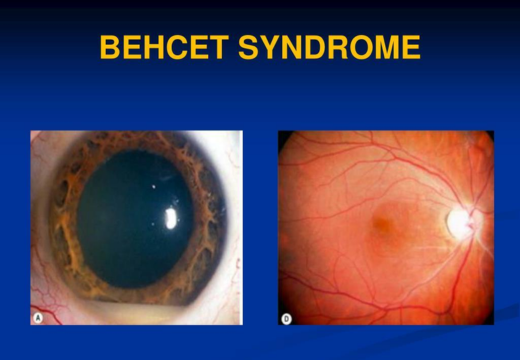
- Eye Inflammation (Uveitis): A serious symptom that can cause redness, pain, blurred vision, and light sensitivity. If left untreated, chronic inflammation can lead to permanent vision loss or blindness.
- Joints: About 50% of patients experience arthritis-like symptoms, particularly pain and swelling in the knees, ankles, wrists, and elbows.
- Vascular System: Inflammation in the veins and arteries can lead to blood clots (like Deep Vein Thrombosis) or, more rarely, aneurysms (weakened, bulging vessel walls).
- Digestive Tract: Can cause abdominal pain, diarrhea, and ulcers in the intestinal lining (similar to Crohn’s disease), which may lead to bleeding.
- Neurological (Neuro-Behçet’s): Inflammation of the brain or spinal cord can cause severe headaches, fever, poor balance, confusion, or even stroke-like symptoms.
- The International Criteria for Behçet’s Disease (ICBD) Point System: The ICBD uses a weighted point system. A score of 4 or more points is generally required for a diagnosis.
- Ocular Lesions (Uveitis or retinal vasculitis): 2 points
- Genital Aphthosis (Recurrent ulcers): 2 points
- Oral Aphthosis (Recurrent ulcers): 2 points
- Skin Lesions (Erythema nodosum or acne-like sores): 1 point
- Vascular Manifestations (Thrombosis or aneurysms): 1 point
- Neurological Manifestations: 1 point
- Positive Pathergy Test (Optional): 1 point
- Pathergy Test: A skin prick with a sterile needle; a bump or pustule after 48 hours is a positive sign of hyper-inflammation.
- Genetic Testing: Checking for the HLA-B*51 gene, which is common in many patients.
- Bloodwork: Tests like CRP and ESR are used to measure active systemic inflammation.
- Imaging: MRIs or CT scans may be used to detect vessel or brain involvement.
- TNF-Inhibitors (Adalimumab, Infliximab): The powerhouse for severe cases (eye, brain, or intestinal involvement).
- Apremilast (Otezla): An oral pill specifically for chronic, painful oral ulcers.
- IL-1 & IL-17 Blockers: Used for treatment-resistant cases.
- Colchicine: First-line for skin, joint, and oral symptoms.
- Azathioprine: Used long-term to keep the disease in remission and avoid steroid use.
- Corticosteroids: Used in high doses only during active “flares” to stop inflammation fast.
- Topicals: Steroid gels or mouthwashes for localized sores.
- Ama (Toxins): Poor digestion leads to the formation of Ama, which enters the bloodstream.
- Raktadushti (Blood Impurity): These toxins “heat” the blood. This “vitiated” blood circulates and settles in weak areas—mucous membranes (mouth/genitals), joints, and eyes—causing the hallmark ulcers and inflammation.
- Srotorodha (Channel Blockage): The inflamed blood vessels block the flow of nutrients and energy, leading to the chronic, systemic nature of Behçet’s.
- Virechana (Therapeutic Purgation): This is the most critical therapy for Behçet’s. It specifically targets and removes excess Pitta (heat) from the liver and blood, which helps reduce the frequency of systemic flares.
- Raktamokshana (Bloodletting): In chronic cases with severe skin or joint involvement, leeches (Jalaukavacharana) may be used to remove localized toxic blood and reduce inflammation instantly.
- Tikta-Ksheer Basti: Enemas using milk medicated with bitter (Tikta) herbs are used to heal the gut lining and stabilize the immune system.
- Shamana (palliative) approach to Behçet’s Disease focuses on cooling the “heated” blood and recalibrating the overactive immune system through specific herbal synergies.
- Guduchi (Tinospora cordifolia), revered as “Amrita” for its unique ability to act as an immunomodulator, potentially correcting the underlying autoimmune triggers. To address the vasculitis and systemic inflammation,
- Manjistha (Rubia cordifolia) is utilized as a premier blood purifier to break down metabolic toxins (Ama) and clear the circulatory channels. For localized relief of painful oral and genital ulcers,
- Yashtimadhu (Licorice) is applied topically or taken internally to soothe and regenerate mucosal linings, while
- Neem provides essential antimicrobial and anti-inflammatory support for skin lesions. Finally,
- Sariva (Hemidesmus indicus) acts as a systemic coolant, targeting the “burning” sensations and cleansing the lymphatic system to prevent further flare-ups.
- Avoid: “Vidahi” (burning) foods—spices, chilies, vinegar, fermented foods (yogurt/alcohol), and excessively salty or sour items.
- Favor: Cooling, bitter, and sweet tastes. Pomegranate, ghee, coconut water, and bitter gourd are highly recommended to “cool” the blood.
- Stress Management: Since stress often triggers flares, “Satvajaya Chikitsa” (Ayurvedic psychotherapy) involving Pranayama (Nadi Shodhana) is used to stabilize the nervous system.
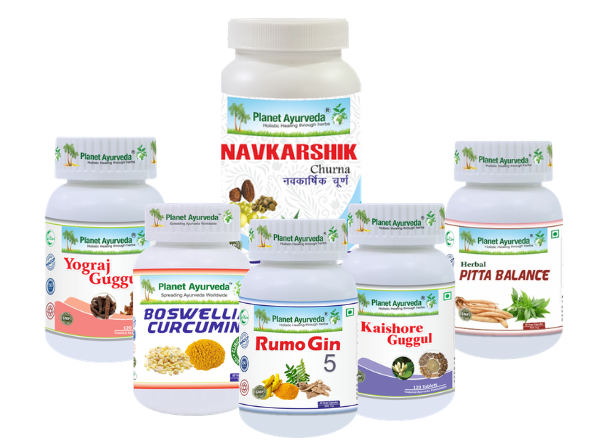
- Boswellia curcumin
- Yograj guggul
- Navkarshik Churna
- Rumogin 5
- Kaishore Guggul
- Pitta Balance
Systemic (Organ-Specific) Symptoms
Diagnosis
Modern Treatment
Modern treatment is organ-specific and focuses on biological therapies to target the immune system precisely.
The “Modern” Gold Standard: Biologics
Traditional Systemic Medicines
Acute Care
Ayurvedic Overview
In Ayurveda, Behçet’s Disease (BD) is viewed as a complex Tridoshic disorder (involving Vata, Pitta, and Kapha) with a heavy predominance of Pitta and Rakta (blood) vitiation. It is most closely correlated with Vatarakta (Gouty arthritis/Vasculitis) and Raktapitta (Hemorrhagic/Inflammatory blood disorders). The Ayurvedic perspective focuses on “cooling” the blood, modulating the immune system, and removing metabolic toxins (Ama).
Pathogenesis (Samprapti)
Ayurveda suggests that the disease begins in the digestive tract.
Treatment Strategies
Ayurvedic management is divided into Shodhana (Purification) and Shamana (Pacification).
Shodhana (Detoxification/Panchakarma)
Together, these herbs work to restore the balance of Pitta and Rakta, addressing the disease from its roots rather than just masking the symptoms.
Diet and Lifestyle (Ahara & Vihara)
Clinical Case Experiences Of Behçet’s Disease Managed With Planet Ayurveda
The video testimonials focus on real patient experiences with Behçet’s disease — a rare autoimmune and inflammatory condition that affects blood vessels, leading to painful mouth and genital ulcers, joint pain, fatigue, and other systemic symptoms. In these testimonials, patients and family members describe their journey before and after seeking Ayurvedic care.
One case highlights Brandy, a 20-year-old from California who was diagnosed with Behçet’s disease and struggled with recurrent mouth ulcers, joint stiffness, fatigue, and severe tiredness. Conventional recommendations included lifelong steroids and immunosuppressants, which alarmed her family due to potential side effects. After contacting the Ayurvedic team led by Dr. Vikram Chauhan and following a prescribed regimen of herbal medicines, diet changes, and lifestyle guidance, Brandy reportedly saw dramatic improvement in her symptoms within a week and continued to improve over three months. Her mother shared a testimonial emphasizing hope, perseverance, and the benefits they felt from Ayurvedic intervention. Another patient story describes how a combination of Ayurvedic diet and treatment over approximately 45 days helped substantially reduce symptoms associated with Behçet’s, including inflammation and discomfort, enabling better daily functioning and relief from pain and ulcers.These testimonials emphasize that individualized herbal formulations, dietary modifications, and traditional Ayurvedic principles such as balancing doshas and reducing inflammation were key elements of the care plan. They reflect personal experiences with symptom reduction and improved quality of life through Ayurveda’s holistic approach
Herbal Remedies For Bechet’s Disease By Planet Ayurveda
Planet Ayurveda is a trusted Ayurvedic healthcare brand dedicated to promoting natural healing through authentic, time-tested herbal wisdom. It is rooted in classical Ayurvedic texts and guided by experienced physicians, Planet Ayurveda offers 100% vegetarian, chemical-free, and preservative-free herbal formulations prepared using standardized processes. Each product is carefully designed to support holistic well-being by addressing the root cause of imbalance rather than just suppressing symptoms. With a strong emphasis on quality, purity, and sustainability, Planet Ayurveda integrates traditional Ayurvedic principles with modern research. Its mission is to provide safe, effective, and natural solutions for long-term health and wellness worldwide. For managing Bechet’s disease we have the following formulations:-
Product Description
1. Boswellia Curcumin
Boswellia Curcumin is a herbal capsule formulation by Planet Ayurveda that combines Shallaki (Boswellia serrata) extract and Haridra (Curcuma longa) standardized extract. This formulation actively reduces inflammation, supports immune balance, and protects tissues from oxidative stress. In the management of Behçet’s disease, Boswellia Curcumin helps control inflammatory flare-ups, calms blood vessel inflammation, and supports the healing of recurrent oral and genital ulcers. It works by pacifying aggravated Pitta and Vata Dosha, improving joint comfort, and enhancing overall vitality.
Dosage: 1 capsule twice daily with plain water after meals.
2. Yograj Guggul
Yograj Guggul is a classical Ayurvedic tablet formulation by Planet Ayurveda that combines purified Guggul (Commiphora mukul) with supportive herbs such as Triphala, Trikatu, Chitrak, Musta, Vidanga, and Ajwain. This formulation actively detoxifies the body by eliminating Ama, improves circulation, and reduces inflammation. In managing Behçet’s disease, Yograj Guggul helps relieve joint pain, stiffness, and swelling while supporting balanced immune activity. It pacifies aggravated Vata and Kapha Dosha, improves mobility, eases discomfort, and supports long-term systemic balance through natural Ayurvedic action.
Dosage: 2 tablets twice daily with plain water after meals.
3. Navkarshik Churna
Navkarshik Churna is a classical Ayurvedic powdered formulation by Planet Ayurveda that contains a synergistic blend of nine herbs, including Manjistha (Rubia cordifolia), Neem (Azadirachta indica), Haridra (Curcuma longa), and Daruharidra (Berberis aristata). This formulation provides active phytochemicals and alkaloids such as berberine, curcumin, azadirachtin, nimbin, and anthraquinones. These bioactive compounds actively purify the blood, regulate immune responses, and reduce inflammation. In Behçet’s disease, Navkarshik Churna helps heal recurrent ulcers, calms aggravated Pitta Dosha, and supports systemic detoxification and tissue repair naturally.
Dosage: 1 teaspoon twice daily with plain water after meals.
4. Rumogin-5 Capsule
Rumogin-5 Capsule is a herbal formulation by Planet Ayurveda containing herbs such as Shallaki (Boswellia serrata), Guggul (Commiphora mukul), and Nirgundi (Vitex negundo). This formulation actively reduces inflammation, relieves pain, and supports healthy joint and muscle function. In managing Behçet’s disease, Rumogin-5 helps control inflammatory flare-ups, eases joint pain and stiffness, and supports immune balance. It pacifies aggravated Vata and Pitta Dosha, improves mobility, and promotes overall comfort through its natural anti-inflammatory action.
Dosage: 1 capsule twice daily with plain water after meals.
5. Kaishore Guggul
Kaishore Guggul is a classical Ayurvedic tablet formulation by Planet Ayurveda that combines purified Guggul (Commiphora mukul) with Guduchi (Tinospora cordifolia) and Triphala, including Haritaki (Terminalia chebula), Bibhitaki (Terminalia bellirica), and Amalaki (Emblica officinalis). This formulation actively detoxifies the body, purifies the blood, and regulates inflammatory pathways. In Behçet’s disease, it helps reduce recurrent inflammation, supports ulcer healing, and balances Pitta and Vata Dosha, promoting long-term systemic stability naturally.
Dosage: 2 tablets twice daily with plain water after meals.
6. Pitta Balance
Pitta Balance by Planet Ayurveda is a natural Ayurvedic capsule formulation designed to balance aggravated Pitta Dosha, which plays a key role in Behçet’s disease. It contains cooling and detoxifying ingredients such as Jaharmohra Pishti, Kaharawa Pishti, Akik Pishti, Mukta Pishti, and Giloy Satva (Tinospora cordifolia). This formulation helps reduce inflammation, soothe recurrent oral and genital ulcers, calm internal heat, and support metabolic and immune balance. By pacifying excessive Pitta, it promotes tissue healing, eases discomfort, and supports overall systemic stability naturally.
Dosage: 1 capsule twice daily with plain water after meals.
Conclusion
Behçet’s disease is a chronic, multi-system inflammatory disorder characterized by recurrent oral and genital ulcers, joint pain, fatigue, and vascular complications. Conventional management often focuses on symptom suppression with steroids or immunosuppressants, which can have significant side effects. Ayurveda offers a holistic approach by addressing the root cause of dosha imbalance, particularly Pitta and Vata aggravation, through herbal formulations, detoxification, diet, and lifestyle modifications. Planet Ayurveda’s targeted herbal products, including Boswellia Curcumin, Yograj Guggul, Navkarshik Churna, Rumogin-5, Kaishore Guggul, and Pitta Balance capsules, support inflammation control, immune modulation, and systemic balance, providing natural, safe, and long-term relief.