


Herbal Remedies for Cryptococcosis – Symptoms, Causes, Diagnosis & Treatment
Abstract
In Ayurveda, health and disease are understood through a holistic balance of body, mind, and external influences. Agantuja Vyadhi refers to diseases caused by external factors such as microorganisms, toxins, trauma, or environmental exposure that disturb the body’s internal equilibrium. These conditions initially originate outside the body but later involve the Doshas once established. Cryptococcal infection can be correlated with Agantuja Vyadhi as it arises from an external fungal pathogen entering through inhalation. After entry, it weakens Ojas, aggravates Kapha and Vata, and spreads systemically, manifesting as respiratory and neurological symptoms, aligning well with Ayurvedic principles of externally acquired diseases. So in this write up we will discuss Cryptococcal infection in detail.
Introduction
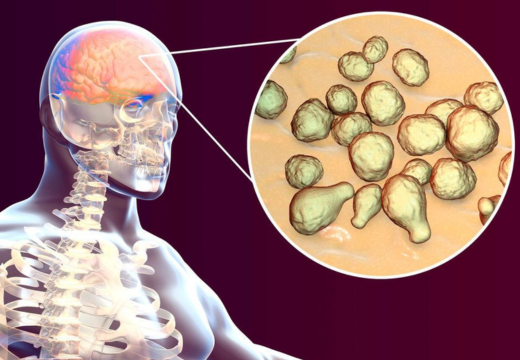
Cryptococcosis is a life-threatening fungal infection caused primarily by Cryptococcus neoformans and Cryptococcus gattii, affecting individuals with weakened immunity. The pathogen enters the body through inhalation, initially targeting the lungs and potentially spreading to the central nervous system, where it can cause fatal meningitis. Often presenting with subtle or nonspecific symptoms, cryptococcosis poses significant diagnostic challenges. Despite advances in antifungal therapy, delayed diagnosis and drug resistance continue to impact outcomes. By synthesizing clinical diagnostics with emerging therapeutic strategies, we highlight the urgent need for novel interventions to combat this resilient environmental opportunist.
Causes
The Primary Infectious Agent are Cryptococcus neoformanswhich is the most common cause worldwide and it primarily infects people with weakened immune systems such as those with HIV/AIDS, organ transplants, or those on long-term steroids. It can also be caused by Cryptococcus gattiiwhich is a less common and traditionally found in tropical or subtropical regions and frequently infects healthy and immunocompetent people.
How The Progression Occurs?
Infection starts when a person breathes in the fungal spores or “dessicated” (dried-up) yeast cells from the air. This happens most often when contaminated soil or bird droppings are disturbed (e.g., during construction, cleaning, or gardening). Once inhaled, the fungus settles in the lungs. In healthy people, the immune system usually walls it off or clears it. In vulnerable individuals, it can spread through the bloodstream to other organs, most commonly the brain, where it causes cryptococcal meningitis.
Symptoms
Symptoms of cryptococcosis depend heavily on which part of the body the fungus has settled in. Because the infection is usually acquired by inhaling spores, it typically starts in the lungs and then spreads to the brain and spinal cord.
Lung Infection (Pulmonary Cryptococcosis)
In many healthy people, lung infections may have no symptoms at all. However, when symptoms do occur, they resemble pneumonia:
- Dry Cough or with Expectoration
- Shortness of Breath
- Sharp Chest Pain worsens when breathing deeply
- Fatigue
- Night Sweats
Brain and Central Nervous System (Cryptococcal Meningitis)
This is the most dangerous and common clinical form of the disease. Symptoms often develop gradually over several days or even weeks.
- Severe Headache
- Fever
- Neck Stiffness
- Sensitivity To Light
- Confusion
- Irritability
- Memory Loss
- Hallucinations
- Nausea and Vomiting
- Blurred or double vision
Skin and Other Areas (Disseminated Disease)
If the fungus enters the bloodstream, it can affect almost any organ, most notably the skin.
- Skin lesions that look like small bumps (papules), blisters, or open sores/ulcers. In people with HIV, they often look like “umbilicated” bumps (small bumps with a central dent).
- Bone Pain
Diagnosis
- Cryptococcal Antigen (CrAg) Test- This is the most common and accurate way to diagnose the infection. The fungus produces a sugar-like coating (capsule) that sheds proteins (antigens) into the body.
- Lumbar Puncture (Spinal Tap)
- Pressure Check: They often measure the “opening pressure.” In cryptococcal meningitis, the pressure inside the skull is often very high.
- India Ink Stain: A traditional method where the fluid is mixed with black ink. Under a microscope, the fungus appears as a clear “halo” against the dark background because the ink cannot penetrate its thick capsule.
- India Ink Stain: A traditional method where the fluid is mixed with black ink. Under a microscope, the fungus appears as a clear “halo” against the dark background because the ink cannot penetrate its thick capsule.
- Imaging Studies- Imaging helps determine the extent of the infection, especially in the lungs or brain.
- Chest X-ray or CT Scan is Used to look for “nodules” (small lumps), pneumonia, or masses in the lungs.
- Brain MRI or CT Scan is Used to check for swelling or cryptococcomas (fungal masses that look like tumors) in the brain.
Modern Treatment
Treatment for cryptococcosis follows a three-phase antifungal regimen lasting 6 to 12 months:
- Induction (2 weeks): Intense treatment to kill the fungus quickly, typically using Amphotericin B (IV) combined with Flucytosine (pills).
- Consolidation (8 weeks): A step-down phase using high-dose oral Fluconazole to stabilize recovery.
- Maintenance (6–12 months): A lower daily dose of Fluconazole to prevent relapse.
For meningitis cases, repeated lumbar punctures are often necessary to drain excess spinal fluid and relieve brain pressure. If the patient has HIV, starting HIV medications is usually delayed by 2 to 4 weeks to avoid dangerous inflammation.
Ayurvedic Overview
In Ayurveda, infectious diseases caused by external microorganisms are broadly classified under Agantuja Vyadhi—diseases originating from external factors such as krimi (microbes), bhuta, or visha. Cryptococcosis, a fungal infection caused by Cryptococcus neoformans, closely aligns with this concept. Although ancient texts did not describe fungi in modern terms, they clearly recognized invisible pathogenic entities (Sukshma Krimi) that invade the body when Vyadhikshamatva (immunity) is compromised.
Ayurvedic Pathophysiology (Samprapti)
Nidana (Causative Factors)
- Ojakshaya (depletion of Ojas) due to chronic illness, stress, malnutrition
- Mandagni (weak digestive fire) leading to Ama formation
- Long-standing Kapha–Vata imbalance
- Immunosuppressive states (Ayurvedically described as Bala-hani)
These conditions create a favorable internal environment (Kleda-pradhana deha) for opportunistic pathogens.
Dosha–Dushya Involvement
- Kapha Dosha: Promotes fungal growth due to its snigdha (moist) and sthira (static) qualities
- Vata Dosha: Facilitates systemic spread, especially to the CNS
- Pitta Dosha (secondary): Involved during inflammatory and febrile stages
Dushyas Involved:
- Rasa Dhatu – initial dissemination
- Rakta Dhatu – systemic infection
- Majja Dhatu – involvement in cryptococcal meningitis
From an Ayurvedic perspective, the treatment of Cryptococcosis focuses on restoring the internal balance of the body rather than merely eliminating the pathogen. As an Agantuja Vyadhi (externally acquired disease) occurring on a Nija (internally predisposed) background, management emphasizes correction of Agni (digestive–metabolic fire), removal of Ama (metabolic toxins), pacification of Kapha and Vata Dosha (regulatory principles), and protection of Ojas (vital immune essence). Strengthening Vyadhikshamatva (disease resistance), clearing Srotas (body channels), and supporting Dhatu—especially Majja Dhatu (bone marrow and nervous tissue) form the core therapeutic goals.
Herbal Antifungal Agents – A Scientific Perspective
Allium Sativum (Garlic)
Garlic exhibits strong antifungal activity due to compounds like ajoene, which effectively inhibit fungi such as Candida albicans and Aspergillus niger at low concentrations. Studies confirm garlic’s efficacy in relieving itching, burning, and fungal growth in topical fungal infections.
Zingiber Officinale (Ginger)
Ginger contains caprylic acid, a potent antifungal compound that disrupts fungal cell membranes. Experimental studies demonstrate its effectiveness against various fungal infections, supporting its traditional topical use for controlling fungal growth and reducing associated inflammation.
Glycyrrhiza Glabra (Licorice)
Licorice contains multiple bioactive antifungal compounds, making it one of the most potent antifungal herbs. Traditional use and studies support its effectiveness against dermatophytic infections like ringworm, acting through inhibition of fungal growth and modulation of inflammation.
Mentha Piperita (Peppermint)
Peppermint essential oil exhibits antifungal activity due to compounds such as menthol, menthone, and cineole. Agar dilution studies confirm its inhibitory effects against pathogenic fungi, highlighting its role in disrupting fungal cell membranes and metabolic activity.
Piper Betel (Betel Leaf)
Betel leaf extract demonstrates more than 50% inhibition of several fungal pathogens. Ethanolic extracts show strong antifungal potential, suggesting its usefulness as a natural alternative antifungal agent through growth suppression and membrane disruption.
Solanum Xanthocarpum (Kantakari)
Methanolic extracts of Solanum xanthocarpum show potent antifungal activity using multiple testing methods. The herb inhibits spore germination and fungal growth, supporting its traditional use as a pest-repellent and antifungal medicinal plant.
Herbal Remedies For Cryptococcosis By Planet Ayurveda
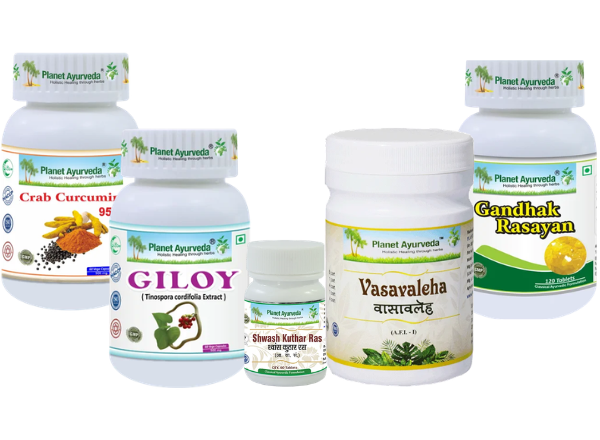
Planet Ayurveda delivers safe, effective, and authentic Ayurvedic formulations by strictly following classical Ayurvedic principles. The brand formulates each product using time-tested references, pure herbs, and a deep understanding of Dosha balance, Agni, and Ojas. Planet Ayurveda avoids chemicals, preservatives, additives, and synthetic fillers, ensuring natural and side-effect-free support for the body’s healing mechanisms. The team sources herbs ethically, maintains strict quality standards, and follows traditional manufacturing practices to preserve potency and purity. For Cryptoccosis we have lots of products out of which some are listed below:-
- Crab Curcumin 95%
- Vasavleha
- Shwas Kuthar Ras
- Cap Giloy
- Gandhak Rasayan
Product Description
1. Crab Curcumin 95%
Planet Ayurveda formulates Crab Curcumin 95% Capsules using a highly standardized extract of Curcuma longa, delivering 95% curcuminoids. Curcumin actively exhibits antifungal, anti-inflammatory, and immunomodulatory actions. It supports the host immune response, helps reduce excessive inflammation in pulmonary and CNS involvement, strengthens antioxidant defenses, promotes systemic balance, preserves Ojas, and supports safer, more effective recovery.
Dosage: 1 capsule twice daily with plain water after meals.
2. Vasavaleha
Planet Ayurveda’s Vasavaleha is prepared by following authentic classical Ayurvedic principles using Vasa (Adhatoda vasica) and supportive herbs. It actively supports respiratory health through its expectorant, bronchodilatory, anti-inflammatory, and antimicrobial actions. Vasa contains vasicine and vasicinone, which help loosen mucus, improve airway clearance, and reduce inflammatory damage in lung tissues. In Cryptococcosis with pulmonary involvement, Vasavaleha supports Pranavaha Srotas (respiratory channels), reduces Kapha accumulation, and eases breathing discomfort.
Dosage: 1 teaspoon twice daily with plain water after meals.
3. Shwas Kuthar Ras
Shwas Kuthar Ras is a classical Ayurvedic preparation made using Maricha (Piper nigrum), Shuddha Tankan (Purified Borax), Shuddha Parad (Purified Mercury), and other herbal-mineral ingredients. This formulation actively pacifies Kapha and Vata Dosha, supports Pranavaha Srotas (respiratory channels), and improves breathing efficiency. Its ingredients help reduce excessive mucus, improve airway patency, and support metabolic activity at the tissue level.
Dosage: 1 tablet twice daily with plain water after meals.
4. Giloy Capsules
Planet Ayurveda’s Giloy Capsules are prepared using a pure extract of Tinospora cordifolia (Giloy). Giloy supports host defense mechanisms, reduces inflammatory burden, and protects tissues affected by opportunistic infections. It also helps improve digestion and metabolism, preventing Ama accumulation that favors infections. Giloy actively enhances Vyadhikshamatva (disease resistance), balances Tridosha, and supports systemic detoxification.
Dosage: 1 capsule twice daily with plain water after meals.
5. Gandhak Rasayan
Gandhak Rasayan is prepared using purified Gandhak (Sulphur). In Cryptococcosis, it helps reduce microbial load, supports immune balance, and improves skin, blood, and overall systemic resistance. According to Ayurveda, it pacifies Kapha and Pitta Dosha, enhances Agni (metabolic fire), and strengthens Ojas (vital immunity). This formulation actively exhibits antifungal, antimicrobial, immunomodulatory, and rejuvenating actions.
Dosage: 2 tablets twice daily with plain water after meals.
Conclusion
Cryptococcosis is a serious opportunistic fungal infection that primarily affects individuals with compromised immunity and often involves the lungs and central nervous system. Its effective management requires not only antifungal therapy but also restoration of host defense and tissue balance. From an integrative perspective, Ayurveda understands Cryptococcosis as an Agantuja Vyadhi developing on a background of Ojakshaya, Agni dysfunction, and Kapha–Vata imbalance. Strengthening immunity, correcting metabolism, reducing inflammatory damage, and supporting affected organs are essential for long-term recovery. A holistic host-centered approach used alongside modern medical care helps to reduce complications, prevent recurrence and promote sustainable healing.