


Bixa orellana / Sindoor / Annatto – Classification, Ayurvedic Properties & Dosage
Abstract
Bixa orellana, popularly known as Sindoori, is a fascinating tropical plant recognised for its vibrant red-orange seeds and valuable natural pigment. Beyond its traditional use as a colouring agent, the plant holds considerable importance due to its diverse phytochemical composition and medicinal potential. Its seeds and leaves contain bioactive compounds that have attracted interest for their possible antioxidant, antimicrobial, and anti-inflammatory properties. The plant offers an interesting connection between traditional knowledge and modern scientific research, making it a valuable subject for exploring natural resources in healthcare and industrial applications.
Reference: Bhavaprakash Nighantu, Pushpa Varga, Shloka No. 59
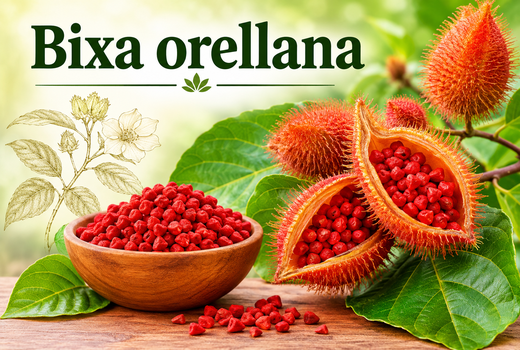
Sindoori – Bixa Orellana
Bixa orellana is recognised by its attractive flowers and reddish-orange seeds, which contain a natural pigment called bixin. Traditionally, different parts of this species have been used for medicinal , cosmetics and colouring purposes.
Synonyms
- Sinduri (सिन्दूरी): Associated with the vermilion-red colour.
- Raktabeeja (रक्तबीजा): Having reddish seeds.
- Rakta Pushpa (रक्तपुष्पा): Having reddish flowers.
- Sukumala (सुकॊमला): Very delicate or soft.
Vernacular Names
- English: Annatto, Lipstick tree, Achiote
- Hindi: Sindoori, Latkan
- Sanskrit: Sinduri
- Bengali: Latkan
- Marathi: Shendri
Description Of Plant
- Bixa orellana is an evergreen shrub or small tree belonging to the family Bixaceae.
- Habit: Bixa orellana is a small, evergreen or semi-evergreen shrub or small tree, generally growing about 2–10 metres in height. It has a much-branched stem and spreading crown.
- Root: The plant possesses a well-developed taproot system with lateral branches.
- Stem: The stem is erect, woody, cylindrical and branched. Young branches are greenish, while mature branches become brown.
- Leaves: Leaves are simple, alternate, petiolate, broad, ovate to cordate (heart-shaped), with an acuminate apex and entire margins. The leaves are green, smooth and possess prominent reticulate venation.
- Inflorescence: Flowers are borne in terminal panicles or clusters.
- Flowers: Flowers are bisexual, complete, actinomorphic and usually pinkish-white to pale purple. They have five sepals, five petals, numerous stamens and a superior ovary.
- Fruit: The fruit is a characteristic ovoid or globose, two-valved capsule covered with soft bristles or spines. It becomes reddish-brown at maturity.
- Seeds: Seeds are numerous, small, angular or pyramidal, reddish-orange in colour and covered with a bright red-orange pigment called annatto.
Habitat
Bixa orellana is native to tropical America and is widely cultivated in tropical and subtropical regions of the world, including India. It grows well in warm, humid climates with moderate rainfall and bright sunlight. The plant is commonly found in gardens, plantations, roadsides and open fields. It prefers well-drained, fertile soils but can tolerate different soil conditions. It grows best in areas with good sunlight and protection from severe frost.
Scientific Classification
- Kingdom: Plantae
- Division: Angiosperms
- Family: Bixaceae
- Genus: Bixa
- Species: Bixa orellana L.
Pharmacological Properties
- Rasa (Taste): Tikta (Bitter), Kashaya(Astringent)
- Guna(Qualities): Laghu(Light) , Rukasha(Dry) ,Tikshna(Sharp)
- Virya(Potency): Sheeta (cooling)
- Vipaka(Post Digestive effect): Katu(Pungent)
- Karma(Actions): Grahi (Absorbent), Kaphavatahara (Helps pacify Kapha and Vata doshas), Rakta-Shodhaka (blood purifying), Jwaraghna (antipyretic), Krimighna (anthelmintic), Daha-Prashamana (relieving burning sensations).
Bioactive Constituents
- Bixin (C₂₅H₃₀O₄ ): A carotenoid pigment present in the seed coat, responsible for its characteristic orange-red colour.
- Norbixin: A derivative of bixin that acts as a natural colouring compound.
- Beta-carotene: A carotenoid known for its antioxidant activity and role as a vitamin A precursor.
- Lutein and Zeaxanthin: Pigments that help protect cells from oxidative damage.
- Geranylgeraniol: A diterpenoid compound found mainly in the seeds.
- Tocopherols and Tocotrienols: Vitamin E-related compounds that provide antioxidant protection.
- Flavonoids: Polyphenolic substances associated with antioxidant and anti-inflammatory activities.
- Tannins: Plant compounds known for their astringent properties.
- Saponins: Naturally occurring compounds with various biological activities.
- Terpenoids: Secondary metabolites that contribute to the plant’s pharmacological potential.
- Ellagic Acid: A phenolic compound recognised for its antioxidant properties.
Pharmacological Activities
- Antioxidant activity: Helps neutralise free radicals and reduce oxidative stress.
- Antimicrobial activity: Shows potential inhibitory effects against certain bacteria and fungi.
- Anti-inflammatory activity: May help reduce inflammatory responses.
- Wound-healing activity: Traditionally used in wound care, with potential to support tissue repair.
- Antidiabetic activity: Some experimental studies suggest a possible role in blood glucose regulation.
- Hepatoprotective activity: Certain extracts have shown protective effects against liver damage in experimental studies.
- Analgesic activity: Has demonstrated potential pain-relieving effects in preclinical investigations.
- Antipyretic activity: Certain plant extracts have shown fever-reducing potential in experimental models.
- Antiparasitic activity: Some extracts have demonstrated activity against selected parasites.
- Cytotoxic activity: Certain isolated compounds have shown effects against cancer cells in laboratory studies.
Clinical Uses
- Vishahara: Traditionally used in the management of toxic conditions.
- Trishnahara: Helps relieve excessive thirst.
- Chardinigrahana: Traditionally associated with controlling vomiting.
- Pittashamaka: Helps balance aggravated Pitta dosha.
- Atisara (Diarrhoea): Its traditionally described Grahi property is associated with reducing excessive bowel movements.
- Jwara (Fever): Some traditional medicinal accounts describe its use in fever-related conditions.
Systemic Actions
- Digestive system: Traditionally used for digestive complaints; tannins may contribute to its astringent properties.
- Integumentary system (Skin): Traditionally used for skin-related conditions and external wound applications.
- Hepatic system (Liver): Shows potential hepatoprotective effects in experimental studies.
- Immune system: Its antioxidant and anti-inflammatory constituents may influence immune responses.
- Cardiovascular system: Antioxidant compounds may contribute to protection against oxidative stress affecting cardiovascular tissues.
- Endocrine system: Preliminary studies indicate possible effects on glucose metabolism.
Sanskrit Shloka
“ सिन्दूरी रक्तबीजा च रक्तपुष्पा सुकोमला ।
सिन्दूरी विषपित्तास्रतृष्णावान्तिहरी हिमा ॥५९॥” (Bhavaprakash Nighantu, Pushpa Varga, Shloka No. 59)
According to Bhavaprakash Nighantu, Sinduri is traditionally described as a plant with cooling properties that may help pacify Pitta and alleviate excessive thirst and vomiting. It is also mentioned for its traditional use in toxic conditions and Rakta-related disorders.
Part Used
Whole plant
Dosage
Bark powder 3-6 g
Home Remedies
- Traditionally, seeds are crushed with a small quantity of water to form a paste : Used as a natural colouring preparation and in some skin-care practices.
- Leaves are washed thoroughly and crushed into a smooth paste: Used for external application to minor skin complaints.
- Leaves are traditionally boiled in water, and the liquid is allowed to cool before straining : Used in fever-related problems.
- Seeds are soaked in water for a period and the coloured liquid is separated : Mainly used as a natural colouring preparation.
Safety Precautions
- Allergic reactions: Individuals with sensitive skin should be cautious, as plant extracts may cause irritation or allergic responses.
- Skin application: Avoid applying homemade seed or leaf preparations to open wounds or damaged skin.
- Internal consumption: Avoid consuming unstandardised extracts or plant preparations without professional medical advice.
- Pregnancy and lactation: Medicinal use should be avoided unless recommended by a qualified healthcare professional.
Recent Research
- Antioxidant and Neuropharmacological Research (2024): Sarkar et al. investigated the leaf extracts of Bixa orellana using experimental and computational approaches. The study explored antioxidant, cytotoxic and neuropharmacological properties, indicating the presence of compounds with potential biological activity
- Antimicrobial and Pharmaceutical Applications (2026): A recent integrative review evaluated scientific studies and patents related to annatto-derived compounds. It reported antimicrobial activity against several microbial strains and discussed the development of polymeric films and nanofibres for potential wound-care applications.
Conclusion
Bixa orellana (Sindoori) stands as a prime example of synergy between classical herbal lore and modern evidence-based pharmacology. From its Ayurvedic classification as a Pitta-Kapha Shamaka and Rakta-Prasadana drug to its modern identification as an abundant source of bixin, norbixin, and rare  -tocotrienols, Sindoori offers rich therapeutic potential. Its diverse phytochemical composition, particularly carotenoid pigments such as bixin and norbixin, contributes to its biological and industrial importance. Traditional applications, along with emerging scientific findings, highlight its antioxidant, antimicrobial and anti-inflammatory potential. Its natural colouring properties further enhance its relevance in food, cosmetic and pharmaceutical industries.




