


Chakotra / Madhukarkati / Shaddock / Citruc Decumana – Indications, Properties & Uses
Abstract
Chakotra, botanically known as Citrus decumana (syn. Citrus maxima), commonly referred to as Shaddock or Pomelo, is a large citrus fruit valued for its nutritional and medicinal significance. It belongs to the Rutaceae family and is widely cultivated in tropical and subtropical regions. In traditional medicine and Ayurveda, Chakotra is appreciated for its digestive, rejuvenating, and health-promoting properties. The fruit is rich in essential nutrients, including vitamin C, dietary fiber, flavonoids, antioxidants, and bioactive compounds that contribute to its therapeutic importance. Ayurvedically, it is considered beneficial for improving digestion, balancing metabolism, supporting immunity, and maintaining overall wellness. Various parts of the plant, including the fruit pulp, peel, and seeds, have been utilized for their medicinal relevance. Modern scientific research has also explored its antioxidant, antimicrobial, anti-inflammatory, cardioprotective, and metabolic supportive effects. Due to its rich phytochemical composition and therapeutic potential, Chakotra continues to gain recognition as a valuable medicinal fruit in both traditional and contemporary healthcare systems.
Scientific Classification Of Chakotra (Citrus Decumana)
Bhavprakash Nighantu Amradi Phala Varga Page No. 571.
Vernacular Names Of Chakotra (Citrus Decumana)
- Sanskrit: Madhukarkati, Bijapura, Mahamatulunga, Madhuphala
- Hindi: Chakotra, Chakotara
- English: Shaddock, Pomelo, Pummelo
- Punjabi: Chakotra
- Gujarati: Chakotaru
- Marathi: Papnas, Chakotra
- Bengali: Batabi Lebu
- Tamil: Pambalimasu
- Telugu: Pampra Panasa, Boppayi Nimmakaya
- Kannada: Chakota Hannu
- Malayalam: Pampalimasu
- Urdu: Chakotra
- Arabic: Jambura
Synonyms Of Chakotra (Citrus Decumana)
- Madhu Bijapura: A fruit having sweet seeds or a fruit characterized by sweet-tasting seeds.
- Madhuparni: A plant with leaves that are sweet and cooling in nature.
- Madhukarkati: A fruit resembling cucumber in shape, but sweet in taste.
- Madhuvallari: A sweet climber or vine-like plant producing sweet fruit.
- Madhuraphala: A fruit that has a naturally sweet taste.
- Mahaphala: A large-sized fruit.
- Vardhamana: A fruit that grows progressively larger or has an expanding nature.
- Madhura: The sweet variety, this name highlights its gentle flavor profile, setting it apart from standard citrus varieties that possess a sharp, intensely sour or acidic taste.
Habitat & Distribution Of Chakotra (Citrus Decumana)
- Native Origin And Natural Habitat: Chakotra (Citrus decumana), commonly known as Shaddock or Pomelo, is believed to have originated in Southeast Asia, particularly in regions of Malaysia, Indonesia, and Southern China. It thrives naturally in warm, humid, tropical, and subtropical climatic conditions where adequate sunlight and moderate rainfall are available.
- Climatic Requirements: The plant grows best in tropical and subtropical environments with temperatures ranging between 25°C to 35°C. It prefers frost-free regions, as extreme cold can adversely affect flowering, fruit development, and overall growth. Warm temperatures with moderate humidity favor better fruit quality.
- Soil Preference: Chakotra grows well in fertile, well-drained loamy or sandy loam soils rich in organic matter. Slightly acidic to neutral soil pH is considered ideal for healthy plant growth. Waterlogged or excessively saline soils may negatively impact root development and fruit production.
- Distribution in India: In India, Chakotra is cultivated and distributed in several states, including Punjab, Uttar Pradesh, Bihar, West Bengal, Assam, Maharashtra, Karnataka, Kerala, Tamil Nadu, and Andhra Pradesh. It is commonly grown in home gardens, orchards, and agricultural farms due to its nutritional and medicinal importance.
- Global Distribution: Outside India, Citrus decumana is widely cultivated in countries such as China, Thailand, Vietnam, Malaysia, Indonesia, Sri Lanka, Bangladesh, the Philippines, and Taiwan. It is also grown in tropical parts of the United States, the Caribbean region, and certain Mediterranean climates.
- Cultivation in Domestic and Commercial Settings: Chakotra is commonly cultivated both commercially and domestically for its large edible fruits. Due to its nutritional value and increasing demand in health-conscious diets, its cultivation has expanded across many citrus-growing regions worldwide.
Morphology / Physical Appearance Of Chakotra (Citrus Decumana)
- Growth Habit: Chakotra (Citrus decumana syn. Citrus maxima) is a perennial, evergreen citrus tree belonging to the Rutaceae family. According to botanical and horticultural studies, the tree generally grows to a height of about 5–15 meters with a broad, rounded canopy and dense branching pattern.
- Trunk and Bark Characteristics: The trunk is stout, woody, and extensively branched. Mature bark appears greyish-brown and slightly rough with irregular fissures, while younger twigs are smooth, green, and often bear short, axillary spines, which are common characteristics observed in citrus species.
- Leaf Morphology: Leaves are simple, alternate, broad, and aromatic, measuring approximately 10–20 cm in length. They are ovate to elliptic with a glossy dark green upper surface and lighter underside. A distinctive botanical feature of Chakotra is its prominently winged petiole, which helps differentiate it from several other citrus species. Oil glands are present on the leaf surface, responsible for its characteristic citrus aroma.
- Floral Characteristics: Flowers are bisexual, fragrant, white to creamy white, and appear singly or in clusters in the leaf axils. Floral studies describe them as relatively large with 4–5 thick petals and numerous stamens. The blooming period generally occurs seasonally depending on climatic conditions and cultivation practices.
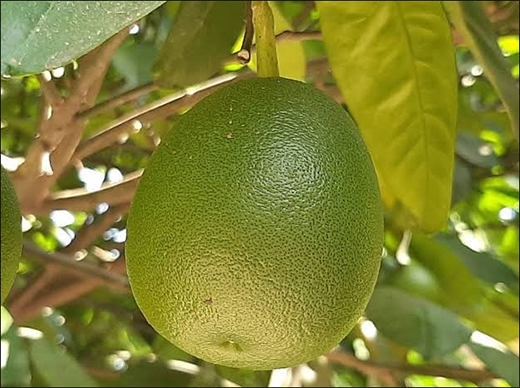
- Fruit Morphology: The fruit is considered one of the largest among citrus fruits and may range from spherical to pear-shaped. It commonly measures 10–30 cm in diameter and possesses a thick, spongy rind (pericarp), which varies from greenish-yellow to pale yellow at maturity. The inner flesh is segmented and may be white, pale yellow, pink, or reddish depending on cultivar variations. The pulp texture is firm and less juicy than oranges, with a sweet, mildly acidic, or slightly bitter taste.
- Seed Characteristics: Seeds are generally large, compressed, pale yellow to whitish, and enclosed within the pulp segments. Scientific observations indicate that seed number varies according to cultivar, with some improved varieties containing very few or no seeds.
- Root System: Chakotra possesses a strong taproot system accompanied by extensive lateral roots. This well-developed root network enhances nutrient uptake, drought tolerance, and anchorage in different soil conditions.
Classical Categorisation Of Chakotra (Citrus Decumana)
- Bhavprakash Nighantu: Amradi Phala Varga
- Dhanwanthari Nighantu: Amradi Varga
- Raj Nighantu: Amradi Varga
Ancient Verses For Chakotra (Citrus Decumana)
Verse No. 1
बीजपूरोऽपरः प्रोक्तो मधुरो मधुकर्कटी ॥
मधुकर्कटिका स्वाद्धी रोचनी शीतला गुरुः ।
रक्तपित्तक्षयश्वासकासहिक्काभ्रमापहा ॥ Bhavprakash Nighantu Amradi Phala Varga Verse No. 132-133
Verse Interpretation
Synonyms of Chakotra
- Madhura: The sweet variety, this name highlights its gentle flavor profile, setting it apart from standard citrus varieties that possess a sharp, intensely sour or acidic taste.
- Madhukarkatika: A direct linguistic variant of its main name, this term literally signifies a sweet, melon-sized or cucumber-like citrus fruit, which directly references the fruit’s notably large dimensions and substantial weight.
Properties of Chakotra: This fruit is sweet, appetizing, deeply cooling, and heavy to digest. Medically, it serves as a natural remedy to calm respiratory distress (cough, asthma, hiccups), stop abnormal bleeding, soothe dizziness, and rebuild strength in weakened bodies.
Verse No. 2
बीजपूरोऽपरः प्रोक्तो मधुरो मधुकर्कटी ।
मधुवल्ली च विज्ञेया वर्धमाना महाफला ॥ Dhanwanthari Nighantu Amradi Varga Verse No. 25
Verse Interpretation
Synonyms of Chakotra
- Madhukarkati: Primary name of the fruit, indicating its sweet taste and large, cooling nature similar to a melon.
- Madhura Bijapura: Refers to the sweet variety of citrus, distinguishing it from the typically sour citron.
- Madhuvalli: Highlights the fruit’s sweet, juicy nature and spreading growth habit.
- Vardhamana: Indicates its large size and nourishing properties that support body strength and growth.
- Mahaphala: Describes it as a large fruit, reflecting its status as one of the biggest citrus fruits.
Verse No. 3
मधुकर्कटिका स्वादुः शीता पित्तास्रदिजद्गुरुः ।
एषा त्रिदोषजिद् वृष्या रुचिकृच्चैव दुर्जरा ॥ Dhanwanthari Nighantu Amradi Varga Verse No. 26
Verse Interpretation
Properties of Chakotra: It possesses a sweet taste and cooling nature. It may help control bleeding disorders and support hemostatic functions. It is considered beneficial in balancing the three doshas Vata, Pitta, and Kapha. Additionally, it is regarded as supportive for reproductive health, particularly semen nourishment, and may help stimulate appetite. However, due to its heavy nature, it can be comparatively difficult to digest.
Verse No. 4
मधुवीजपुरो मधुपर्णी मधुकर्कटी मधुवल्लरी ।
मधुकर्कटी मधुरफला महाफला वर्धमाना च ॥
मधुकर्कटी मधुरा शिशिरा दाहनाशिनी ।
त्रिदोषशमनी रुच्या वृष्या च गुरुदुर्जरा ॥ Raj Nighantu Amradi Varga Verse No. 154-155
Verse Interpretation
Synonyms of Chakotra
- Madhu Bijapura: A fruit having sweet seeds or a fruit characterized by sweet-tasting seeds.
- Madhuparni: A plant with leaves that are sweet and cooling in nature.
- Madhukarkati: A fruit resembling cucumber in shape, but sweet in taste.
- Madhuvallari: A sweet climber or vine-like plant producing sweet fruit.
- Madhuraphala: A fruit that has a naturally sweet taste.
- Mahaphala: A large-sized fruit.
- Vardhamana: A fruit that grows progressively larger or has an expanding nature.
Properties of Chakotra: It is cooling and sweet in nature. It reduces burning sensation and tridosha vitiation.
Ayurvedic Properties Of Chakotra (Citrus Decumana)
- Rasa (Taste): Madhura (Sweet)
- Guna (Qualities): Guru (Heavy), Rochani (Improves taste), Durjara (Difficult to digest)
- Veerya (Potency): Sheeta / Shitala (Cold)
- Vipaka (Post-digestive Effect): Madhura (Sweet)
Action On Tridosha Of Chakotra (Citrus Decumana)
- Vata Dosha: Helps in balancing aggravated Vata due to its Madhura (sweet taste) and nourishing properties, though excessive intake may aggravate Vata in sensitive individuals because of its heavy-to-digest nature.
- Pitta Dosha: Beneficial in pacifying aggravated Pitta owing to its Sheeta (cold potency) and Daha Shamani (burning sensation relieving) properties, helping to reduce internal heat and burning sensations.
- Kapha Dosha: May mildly increase Kapha if consumed in excess due to its Madhura Rasa (sweet taste) and Guru (heavy) nature; however, moderate intake is generally well tolerated.
Chemical Composition Of Chakotra (Citrus Decumana)
- Vitamin C (Ascorbic Acid): Vitamin C is one of the major bioactive constituents of Chakotra and contributes significantly to its antioxidant and immune-supportive properties. It helps protect cells from oxidative stress and supports collagen synthesis and tissue repair.
- Dietary Fiber (Pectin): Chakotra contains appreciable amounts of soluble dietary fiber, especially pectin, which supports digestive health, bowel regularity, and healthy lipid metabolism.
- Flavonoids: Flavonoids such as naringin, hesperidin, neohesperidin, and rutin are medicinally important phytoconstituents found in Chakotra. These compounds are associated with antioxidant, anti-inflammatory, cardioprotective, and metabolic supportive activities.
- Limonoids: Limonoids are naturally occurring bioactive compounds present in citrus fruits and contribute to antioxidant and protective health effects. They are also studied for their role in supporting cellular health.
- Essential Oils: The peel of Chakotra contains volatile oils rich in compounds such as limonene, linalool, citronellal, and terpenes, which provide characteristic aroma and possess antimicrobial and antioxidant properties.
- Organic Acids: Organic acids including citric acid and malic acid contribute to the fruit’s taste and support digestive and metabolic functions.
- Minerals: Chakotra contains important minerals such as potassium, calcium, phosphorus, magnesium, and iron, which help support electrolyte balance, bone health, and physiological functioning.
- Carotenoids: Certain varieties, especially pink and red-fleshed cultivars, contain carotenoids such as beta-carotene and lycopene, which contribute antioxidant and cellular protective actions.
- Sugars and Carbohydrates: Natural sugars including glucose, fructose, and sucrose are present and provide energy while contributing to the fruit’s sweet taste.
- Phenolic Compounds: Phenolic constituents contribute to antioxidant potential and help neutralize free radicals, supporting overall wellness and cellular protection.
Systemic Actions Of Chakotra (Citrus Decumana)
- Digestive System: Supports digestion, improves appetite (Rochani), promotes digestive comfort, and helps maintain bowel regularity due to its fiber content.
- Metabolic System: Assists in maintaining healthy metabolism and supports proper nutrient assimilation and energy balance.
- Immune System: Helps support immune function due to the presence of vitamin C, antioxidants, and bioactive flavonoids.
- Cardiovascular System: Supports heart health and healthy circulation, while potassium and antioxidant compounds may help maintain cardiovascular wellness.
- Respiratory System: May provide soothing support in mild respiratory discomfort and helps maintain respiratory wellness.
- Urinary System: Supports healthy fluid balance and may assist in maintaining urinary tract wellness.
- Hepatic System (Liver): Helps support liver function and contributes to natural detoxification processes.
- Skin System: Supports skin health through antioxidant activity and vitamin C, helping maintain healthy skin appearance.
- Nervous System: Helps support overall vitality and physiological balance through nutritional and antioxidant support.
- Reproductive System: Considered mildly Vrushya (aphrodisiac) in traditional medicine and may support reproductive wellness.
- Thermoregulatory Action: Due to its Sheeta Virya (cold potency) and Daha Shamani property, it helps reduce internal heat and burning sensations.
Therapeutic Indications Of Chakotra (Citrus Decumana)
- Bleeding Disorders
- Emaciation
- Tuberculosis
- Hiccups
- Giddiness
- Epilepsy
- Parkinson’s Disease
- Aphrodisiac
- Low Appetite
- Cough
- Burning Sensation
Practical Uses / Health Benefits Of Chakotra (Citrus Decumana)
- Chakotra helps improve digestive function by stimulating appetite and promoting better digestion. Its fiber content supports bowel regularity and may help relieve constipation, bloating, and indigestion.
- Due to its high fiber and low-calorie content, Chakotra may help control hunger and support healthy weight management. It promotes satiety and may assist in reducing excess body fat when combined with a healthy lifestyle.
- Chakotra may be beneficial in maintaining healthy blood glucose levels. Certain plant compounds found in citrus fruits are studied for their potential role in improving metabolic health.
- Being rich in vitamin C, Chakotra helps strengthen the immune system, supports white blood cell function, and helps the body fight common infections.
- The fruit contains antioxidants and potassium that may support healthy circulation, blood pressure balance, and overall cardiovascular wellness.
- Traditionally, Chakotra has been used to help soothe cough, throat irritation, and mild respiratory congestion.
- Chakotra contains bioactive compounds such as flavonoids and vitamin C that help fight free radicals and reduce oxidative stress, thereby supporting overall cellular health.
- Its antioxidant properties may help protect liver tissues from oxidative damage and support healthy liver functioning.
- Vitamin C present in Chakotra supports collagen production, helps maintain skin elasticity, and contributes to healthy, glowing skin.
- Chakotra provides hydration and essential nutrients that may help improve energy levels and reduce tiredness.
- Regular consumption of Chakotra may help support healthy metabolism and contribute to overall well-being.
Home Remedies With Chakotra (Citrus Decumana)
- For Indigestion and Bloating: Fresh Chakotra juice mixed with a pinch of black salt and roasted cumin powder may help improve digestion, reduce bloating, and stimulate appetite.
- For Immunity Boosting: Consuming fresh Chakotra segments or juice regularly may help strengthen immunity due to its rich vitamin C content and antioxidant properties.
- For Weight Management: A glass of fresh Chakotra juice without added sugar may be consumed in the morning as part of a balanced diet to support satiety and healthy metabolism.
- For Constipation: Eating fresh Chakotra pulp can help promote bowel regularity because of its dietary fiber content, which supports smooth digestion.
- For Cough and Sore Throat: Warm Chakotra juice mixed with a small amount of honey may help soothe throat irritation and mild cough.
- For Fatigue and Dehydration: Fresh Chakotra juice with water and a pinch of rock salt may help restore hydration and reduce tiredness, especially during hot weather.
- For Healthy Skin: Regular intake of Chakotra may support skin health by promoting collagen production and reducing oxidative damage due to its vitamin C content.
- For Heart Health: Including fresh Chakotra in the daily diet may help support healthy cholesterol balance and cardiovascular wellness due to its antioxidant compounds.
- For Mild Fever and Excessive Thirst: Fresh diluted Chakotra juice may help refresh the body, maintain hydration, and reduce thirst during mild fever or weakness.
- For General Wellness: Regular consumption of fresh Chakotra fruit may help maintain overall health, improve vitality, and support metabolic balance.
Parts Used Of Chakotra (Citrus Decumana)
- Fruit pulp: Commonly consumed for nutritional and therapeutic purposes
- Fruit peel (Rind/Pericarp): Used in traditional medicine for digestive and aromatic properties
- Leaves: Utilized in traditional remedies for various medicinal purposes
- Seeds: Sometimes used in herbal preparations
- Fruit juice: Widely used for digestive, nutritive, and refreshing benefits
- Flowers: Occasionally used in traditional medicinal preparations
- Essential oil from peel: Used for aromatic and therapeutic applications
Dosage Of Chakotra (Citrus Decumana)
- Fresh fruit pulp: 100–250 g per day or as required
- Fresh juice: 50–100 ml once or twice daily, preferably diluted with water
- Peel powder (Churna): 2–5 g per day with lukewarm water or honey
- Decoction of peel/leaves: 20–50 ml once or twice daily
- Seed powder (if used therapeutically): 1–3 g per day under expert supervision
Research On Chakotra (Citrus Decumana)
- Antioxidant Activity: A research study published in the Journal of Chemical and Pharmaceutical Research reported that Citrus decumana peel and pulp extracts possess significant antioxidant activity due to the presence of flavonoids, phenols, and vitamin C. The study suggested its potential role in reducing oxidative stress.
- Antidiabetic Activity: An experimental study published in the International Journal of Pharmacy and Pharmaceutical Sciences demonstrated that Citrus decumana fruit extract showed significant blood glucose-lowering activity in diabetic animal models, suggesting potential antidiabetic benefits.
- Hypolipidemic Activity: Research evaluating Citrus decumana indicated beneficial effects on lipid metabolism, showing reductions in serum cholesterol and triglyceride levels, thereby supporting its possible cardioprotective role.
- Hepatoprotective Activity: A pharmacological study found that Citrus decumana extracts exhibited liver-protective effects against chemically induced liver damage, likely due to its antioxidant phytoconstituents.
- Antimicrobial Activity: Studies on peel extracts of Citrus decumana reported inhibitory activity against certain bacterial strains, suggesting antimicrobial potential that may help support immune defense.
- Anti-Inflammatory Activity: Research findings suggested that flavonoids and bioactive compounds present in Citrus decumana may contribute to anti-inflammatory effects by reducing inflammatory mediators.
- Nutritional and Immune-Supportive Potential: Nutritional research highlighted that the high vitamin C and antioxidant content of Citrus decumana may strengthen immune response, improve tissue repair, and support overall health.
Conclusion
Research on Citrus decumana (Chakotra) has demonstrated several medicinal properties due to its rich content of flavonoids, vitamin C, phenolic compounds, and antioxidants. Studies have reported significant antioxidant activity, helping reduce oxidative stress and cellular damage. Experimental research suggests antidiabetic potential, showing beneficial effects in maintaining healthy blood glucose levels. Studies have also highlighted hypolipidemic effects, indicating its role in reducing cholesterol and triglyceride levels, thereby supporting heart health. Research on peel and fruit extracts has shown anti-inflammatory and antimicrobial activities, suggesting protective effects against infections and inflammation. Additionally, hepatoprotective studies indicate that Chakotra may help protect liver tissues from oxidative damage. Its nutritional richness also supports immunity, metabolism, and overall wellness.