


Cicer arietinum / Chickpea / Chanaka – Classification, Ayurvedic Properties & Dosage
Abstract
Cicer arietinum , commonly known as chickpea or chana, is an important leguminous plant valued for its nutritional properties and traditional medicinal applications. In Ayurveda, chickpea is recognized as a dietary ingredient that contributes to nourishment and supports overall health when consumed according to an individual’s constitution and digestive capacity. It is a rich source of plant-based protein, dietary fibre, complex carbohydrates, vitamins, minerals and various bioactive compounds, including polyphenols and flavonoids. Traditionally, chickpea has been incorporated into the diet to support strength, satiety and digestive health. Modern research further highlights its potential role in improving dietary quality, supporting blood glucose regulation, and contributing to cardiovascular health as part of a balanced diet. This review aims to explore the botanical characteristics, nutritional composition, Ayurvedic relevance, phytochemical profile, and reported pharmacological properties of Cicer arietinum, emphasizing its significance as both a nutritious food and a potential subject of herbal medicine research.
Classical Reference – Charaka Samhita , Sutra Sthana, Chapter 27, Annapanavidhi Adhyaya and Bhavaprakasha Nighantu, Dhanya Varga.
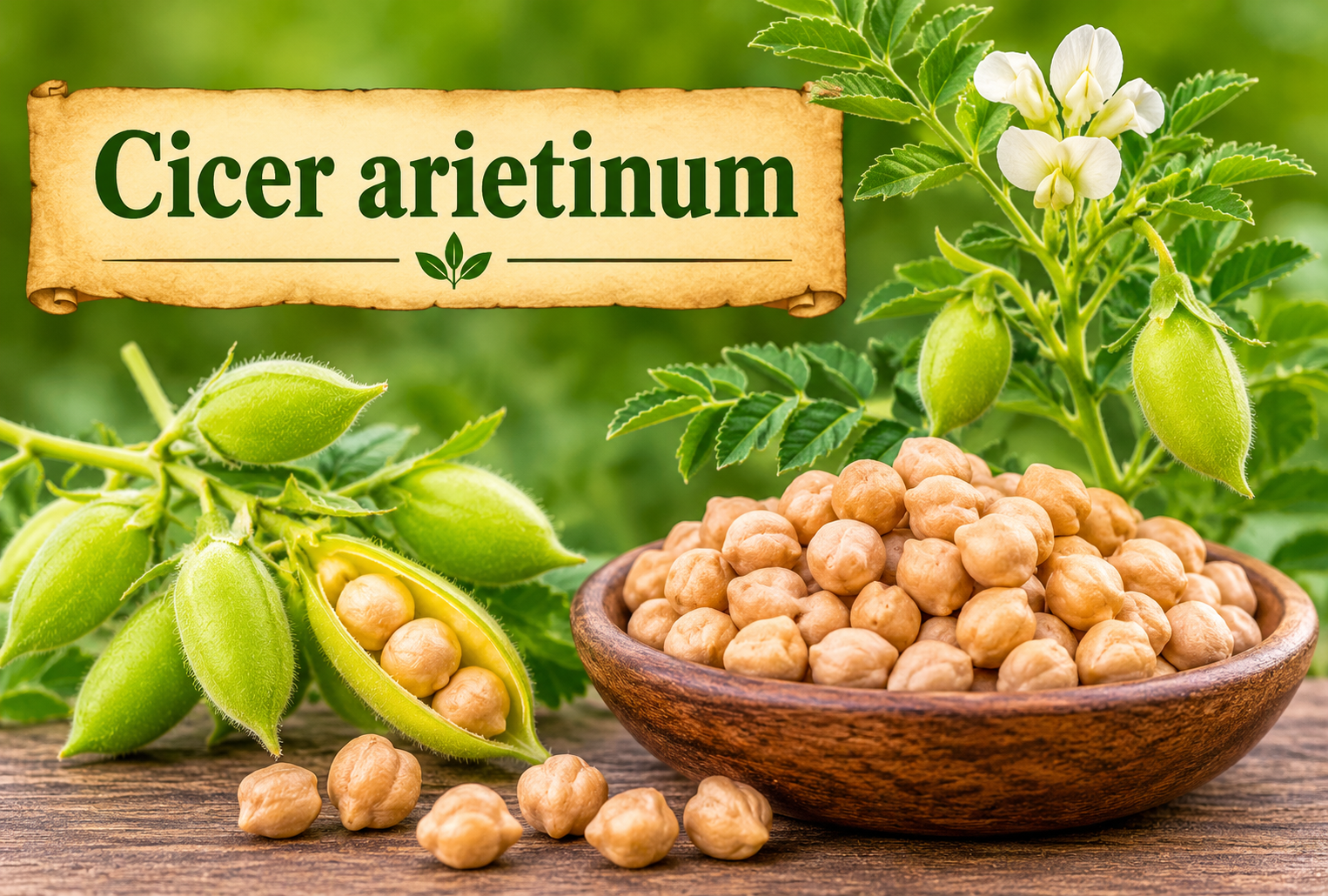
Chickpea
Chanaka (Cicer arietinum), traditionally classified under Kadhānya Varga (legumes), is a potent herbo-dietetic agent celebrated for its unique therapeutic energetics. Possessing Kashāya-Madhura Rasa (astringent-sweet taste), Rūkṣa-Śīta (dry-cool) properties, and a Katu Vipāka (post-digestive effect), it efficiently pacifies aggravate Kapha and Pitta while mildly stimulating Vāta. Rich in bioavailable plant protein, resistant starch, and essential trace minerals (folate, iron, zinc), modern phytochemistry validates its role in regulating glycemic response and optimizing gut microbiome integrity through short-chain fatty acid synthesis. In classical therapeutics, processed Chanaka serves as an effective Lekhana (tissues-scraping) and Sthoulyahara (anti-obesity) formulation, bridging traditional Dhatu nutrition with modern metabolic health.
Synonyms
- Chanaka (चणक) : The classical Sanskrit name for chickpea or Bengal gram
- Harimantha (हरिमन्थ)
- Sakalapriya (सकलप्रिय): interpretable as “beloved by all” or “pleasing to many”
Vernacular Names
- English : Chickpea, Bengal gram
- Hindi : Chana, Chola, But
- Punjabi : Chana, Boot, Chola
- Sanskrit : Chanaka
Description Of Plant
Cicer arietinum (chickpea) exhibits classic Fabaceae morphology across its two main cultivars, Desi and Kabuli. The plant features an erect, herbaceous stem with alternate compound leaves and characteristic papilionaceous flowers (white to purplish). Its well-developed taproot system forms symbiotic nodules with Mesorhizobium bacteria for atmospheric nitrogen fixation, enhancing soil fertility. The plant produces small, inflated pods containing one or two seeds with rich cotyledonary reserves. While Kabuli cultivars bear larger, lighter seeds with smooth coats, Desi types yield smaller, darker seeds with thicker seed coats. Both varieties anchor critical agricultural nitrogen cycling and plant-based protein production.
Habitat
Chickpea is an annual leguminous plant that grows mainly in regions with a cool, relatively dry climate. It is cultivated extensively in India and other parts of Asia, the Mediterranean region, Africa, Australia, and the Americas. The plant grows well in well-drained loamy to clay-loam soils with adequate aeration and moderate soil fertility. It is generally suited to areas with mild winters, limited rainfall during the growing season, and relatively dry conditions during maturity. In India, chickpea is predominantly cultivated as a rabi crop, with sowing generally taking place after the monsoon season and harvesting in spring. Its ability to grow under comparatively low-moisture conditions makes it an important pulse crop in semi-arid and subtropical agricultural environments.
Scientific Classification
- Kingdom: Plantae
- Class: Magnoliopsida (dicotyledons)
- Family: Fabaceae (Leguminosae)
- Genus: Cicer
- Species: Cicer arietinum L.
Pharmacological Properties
- Rasa (Taste) : Primarily Kashaya (astringent)
- Guna (Quality) : Ruksha (dry), Laghu (relatively light)
- Veerya (Potency) : Sheeta (cooling)
- Vipaka (Post digestive effect) : Generally reduces Kapha ; may increase Vata, especially when dry or insufficiently cooked
- Karma (Action) : absorbent (Grahi), drying and supportive of strength
Sanskrit Shloka
Charaka Samhita , Sutra Sthana, Chapter 27, Annapanavidhi Adhyaya.
“ चणकाश्चमसूराश्च खण्डिकाः सहरेणवः।
लघवः शीतमधुराः सकषाया विरूक्षणाः ”॥२८॥
Chickpea, lentil, vetchling and pea are described as light to digest, cooling in potency, sweet and astringent in taste and drying in their effect.
Reference : Bhavaprakasha Nighantu, Dhanya Varga.
“ चणकः शीतलो रूक्षः पित्तरक्तकफापहः।
लघुः कषायो विष्टम्भी वातलो ज्वरनाशनः॥४५॥ ”
Chanaka possesses cooling (Shita), dry (Ruksha), light (Laghu), and astringent (Kashaya) properties. It is traditionally described as pacifying Pitta, Rakta and Kapha while potentially increasing Vata.
According To Bhavaprakasha Nighantu, Purva Khanda, Dhanya Varga
Bhrishta Chanaka (Roasted Chickpea)
“ स चाङ्गारेण सम्भृष्टस्तैलभृष्टश्च तद्गुणः।
आर्द्रभृष्टो बलकरो रोचनश्च प्रकीर्तितः॥ ९/५४॥ ”
Chickpea roasted over charcoal and chickpea roasted in oil retain the properties described for the original substance. Moist-roasted chickpeas are described as Balakara (strength-promoting) and Rochana (appetizing).
Shushka Bhrishta Chanaka (Dry-Roasted Chickpea)
“ शुष्कभृष्टोऽतिरूक्षश्च वातकुष्ठप्रकोपणः।
स्विन्नः पित्तकफौ हन्यात् सूपः क्षोभकरो मतः॥ ९/५५॥ ”
Extremely dry in quality is traditionally described as aggravating Vata and Kushtha. Swinna Chanaka (boiled chickpea) is described as reducing Pitta and Kapha. Chanaka soup is considered Kshobhakara , meaning irritating or disturbing.
Ardra Chanaka (Fresh or Moist Chickpea)
“ आर्द्रोऽतिकोमलो रुच्यः पित्तशुक्रहरो हिमः।
कषायो वातलो ग्राही कफपित्तहरो लघुः॥ ९/५६॥ ”
Very soft or tender chickpea improves taste or appetite , traditionally described as reducing Pitta and Shukra. It has Cooling potency , Astringent in taste , Increases Vata , good Absorbent(tends to bind stool) , reduces Kapha and Pitta and is Light in quality.
Bioactive Constituents
- Polyphenols: Gallic acid, ferulic acid, caffeic acid, chlorogenic acid and p-coumaric acid. These compounds possess antioxidant properties.
- Flavonoids: Quercetin, kaempferol, catechin and isoflavones such as biochanin A and formononetin have been reported in chickpea, depending on the variety and plant part.
- Saponins: Triterpenoid saponins are present in chickpea seeds and may contribute to cholesterol-related and other biological activities.
- Proteins and bioactive peptides: Chickpea contains globulins, albumins, and other storage proteins. Peptides derived from these proteins have demonstrated potential antioxidant and angiotensin-converting enzyme (ACE)-inhibitory activities.
- Phytosterols: Compounds such as β-sitosterol, campesterol and stigmasterol may contribute to the plant’s lipid profile and potential cholesterol-related effects
- Tannins: These polyphenolic compounds, particularly in coloured seed coats, exhibit antioxidant activity and can influence protein digestibility.
- Carotenoids: Chickpea contains carotenoid pigments in varying amounts, including lutein and β-carotene, which contribute to antioxidant activity.
- Vitamins: Folate, thiamine, riboflavin and vitamin B6 contribute to normal metabolic and physiological functions.
- Minerals: Iron, zinc, magnesium, phosphorus, potassium and manganese support various enzymatic, metabolic and physiological processes.
- Oligosaccharides: Raffinose, stachyose and verbascose are present in chickpea seeds. They act as fermentable carbohydrates and may support beneficial intestinal microorganisms, although they can also cause flatulence.
Pharmacological Activities
- Antioxidant Activity : Chickpea contains antioxidant compounds such as polyphenols, flavonoids, and phenolic acids. These compounds may help neutralize free radicals and reduce oxidative stress.
- Antidiabetic Activity : Chickpeas may help regulate blood glucose levels due to their low glycaemic index, high dietary fibre content, and slowly digestible carbohydrates. Their protein and resistant starch content may also improve satiety and influence glucose absorption.
- Hypolipidemic Activity : The dietary fibre, plant protein, unsaturated fatty acids, and phytochemicals present in chickpea may help improve lipid metabolism. Regular consumption may contribute to reductions in total cholesterol and LDL cholesterol in some dietary studies. These effects may support cardiovascular health when chickpeas are included as part of a balanced diet.
- Anti-inflammatory Activity : Phenolic compounds and other bioactive constituents of Cicer arietinum have shown potential anti-inflammatory effects. They may influence oxidative stress and inflammatory signalling pathways.
- Analgesic Activity : The methanolic extracts of black (Desi) and white (Kabuli) chickpea seeds have demonstrated analgesic activity. The extracts reduced pain responses in tests involving thermal and chemically induced pain.
- Antidiarrhoeal Activity : Chickpea has been traditionally used for certain gastrointestinal complaints.
- Diuretic Activity : Methanolic extracts of black and white chickpea seeds have shown diuretic activity .
Clinical Uses
- Prameha: Traditionally associated with disorders of excessive urination; it should not be considered a substitute for diabetes treatment.
- Sthoulya: Used as part of dietary regimens for obesity and weight management.
- Atisara: Certain preparations may be used traditionally for diarrhoea, although clinical evidence is limited.
- Arsha: Chickpea may be included in dietary regimens for piles.
- Medoroga: Traditionally associated with disorders of excess body fat and impaired lipid metabolism.
- Daurbalya: Used as a nutritious food to support strength and nourishment.
Systemic Actions
- Gastrointestinal system : Chickpea provides dietary fibre that supports bowel regularity, promotes satiety and helps maintain normal digestive function.
- Endocrine system : Its low glycaemic index, fibre and slowly digestible carbohydrates may help regulate post-meal blood glucose levels.
- Cardiovascular system : Dietary fibre, plant proteins and unsaturated fatty acids may contribute to improved cholesterol levels and cardiovascular health.
- Nervous system : Chickpea provides nutrients such as folate, vitamin B6, and other B-group vitamins that support normal nervous system function.
- Immune system : Proteins, minerals, vitamins, and antioxidant compounds support normal immune function.
- Hepatic system : Antioxidant constituents may help protect cells against oxidative stress.
- Musculoskeletal system : Chickpea provides plant-based protein, phosphorus, magnesium and other nutrients that contribute to normal muscle function and bone maintenance.
Home Remedies
- Soaked chickpeas : Provides protein and fibre that support normal bowel function and help maintain satiety.
- Cooked chickpea soup : general weakness and nutritional support
- Roasted Bengal gram : blood sugar and weight management support
- Soft-cooked chickpeas : prevents constipation
Recent Research
- Recent studies on Cicer arietinum L. (chickpea) have explored its nutritional value, phytochemical composition and potential pharmacological activities. Shahzad et al. (2025) investigated the antidiabetic potential of Cicer arietinumand Hordeum vulgareextracts using experimental and computational approaches, providing preliminary insights into their possible effects on glucose-regulating pathways
- Sayed et al. (2024) investigated a chickpea-derived phytosome formulation in rats with fatty liver disease and examined its effects on lipid metabolism and liver-related parameters. Further research published in 2025 explored the influence of hydrogen peroxide treatment during chickpea sprouting on protein digestibility, phenolic content and antioxidant activity, indicating that processing conditions can affect its nutritional characteristics.
Part Used
Seeds (Beeja)
Conclusion
At last , we can say Beyond its morpho-botanical profile, Cicer arietinum stands as an indispensable sustainable pulse crop. Its exceptional resilience to arid climates, combined with natural bio-fertilizing capabilities, minimizes synthetic input dependencies in crop rotations. Nutritionally, its synergistic blend of high-protein density, complex carbohydrates, and key micronutrients positions chickpea as a cornerstone candidate for global food security, preventive metabolic nutrition, and functional food formulation.




