


Cucumis melo Linn. / Melon / Musk Melon / Kharbuja – Medicinal Properties, Benefits & Dosage
Abstract
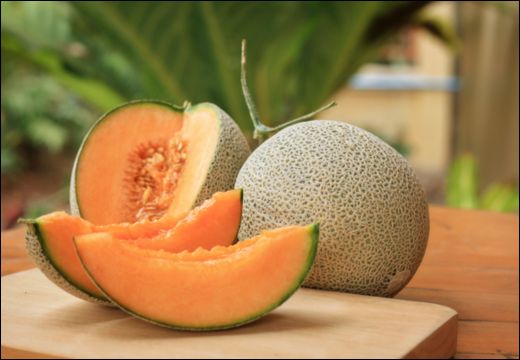
Cucumis melo Linn., commonly known as musk melon or Kharbuja, belongs to the family Cucurbitaceae and is widely cultivated across India, particularly in arid and thermally intense north-western regions. The plant is an annual climber or creeping herb characterised by an angular, scabrous stem, simple, soft, hairy orbicular-reniform leaves, and persistent tendrils that can be easily trained over trellises. This species has gained considerable attention in both culinary and scientific domains due to its highly palatable and succulent fruit. Musk melon is valued for its rich nutritional profile, containing significant amounts of vitamins A and C, potassium, and dietary fiber, which contribute to hydration, antioxidant activity, and overall health benefits. In addition to its nutritional importance, Cucumis melo also holds substantial economic value, as its cultivation supports agricultural livelihoods, generates employment opportunities, and strengthens local markets in many regions worldwide.
Classical References Of Cucumis melo Linn. / Melon / Musk Melon / Kharbuja
- Bhavprakash Nighantu Amradi Phala varga
- Raj Nighantu Mulakadi varga
Scientific Classification Of Cucumis melo Linn. / Melon / Musk Melon / Kharbuja
- Kingdom – Plantae
- Division – Magnoliophyta
- Class – Magnoliopsida
- Order – Cucurbitales
- Family – Cucurbitaceae
- Genus – Cucumis
- Species – Cucumis melo Linn.
Synonym Of Cucumis melo Linn. / Melon / Musk Melon / Kharbuja
- Shadarekha – Fruit having six distinct lines or ridges
- Dashangula – Fruit measuring about ten finger breadths in size
- Madhupaka – Sweet when ripe; honey-like taste
- Shanamukha – Fruit having multiple segments or faces
- Tikta – Slightly bitter in taste (especially when unripe)
- Kharbuja – Common name for musk melon
- Madhuphala – Honey-sweet fruit
- Tiktaphala – Bitter fruit (generally referring to unripe fruit)
- Madhukarkati – Sweet cucumber-like fruit or sweet melon
Vernacular Names Of Cucumis melo Linn. / Melon / Musk Melon / Kharbuja
- English – Melon, Sweet Melon, Musk Melon
- Sanskrit – Madhuphala, Kalinga, Kharbuja, Madhupaka, Amritavha, Dashangula, Karkati, Phalaraja, Shadbhuja, Shadrekha, Tikta, Tiktaphala, Vrittakarkatti
- Hindi – Kharbooza, Khurbuza, Sakkarteli, Kachra, Patkira, Phut, Tuti, Kakni, Kakri
- Tamil – Thumattikai, Vealapalam, Vellari-verai, Mulampazham, Mulam
- Kannada – Budame, Kalingada
- Telugu – Velipanda, Kharbuzadosa, Putzakova, Velipandu, Mulam
- Marathi – Kharbuja, Khurbuj, Valuk, Chibunda
- Gujarati – Turbuch, Kharbuja, Teti, Chibdu, Shakarateli, Tarbucha
- Punjabi – Kharbuja, Gilas, Girasa
- Bengali – Kharmuj
- Sindhi – Gidhro
- Urdu – Kharbuzah
- Persian – Kharbuzeh, Kharpaza
- Arabic – Battikh
- Chinese – Kankua, Then kwa, Hiang-kwa, Tien Kua
- French – Cantaloup, Melon
- German – Melonegurke, Melone
- Russian – Melon
- Latin (Botanical) – Cucumis melo
- Madras (Regional) – Mulam
- Bombay (Regional) – Kharabuja
- Unani – Khafis
Habitat Of Cucumis melo Linn. / Melon / Musk Melon / Kharbuja
Cucumis melo Linn. (Musk melon) is widely distributed in tropical and subtropical regions of the world. The native range of the plant includes Iran, South Africa, India, the Philippines, China, and Australia. It is also cultivated extensively in exotic regions such as Pakistan, Japan, Sri Lanka, Saudi Arabia, Indonesia, and Yemen. In Africa, the plant is commonly found in countries including Angola, Ethiopia, Kenya, Mali, Nigeria, and Senegal. Additionally, its cultivation extends to Pacific regions such as Fiji Island, Guam, Tonga, New Britain, and Samoa. In the United States, musk melon is grown in states like California, New York, Georgia, Arizona, Texas, and Colorado. In India, Cucumis melo is widely cultivated, particularly in arid and semi-arid regions, with the North-Western parts of the country providing favourable conditions due to warm temperatures, sandy loamy soil, and adequate sunlight. The plant thrives best in well-drained soils, warm climates, and areas with moderate irrigation, making it suitable for summer cultivation in many regions.
Morphology Of Cucumis melo Linn. / Melon / Musk Melon / Kharbuja
Cucumis melo Linn. (Musk melon) is an annual creeping or climbing herb belonging to the family Cucurbitaceae, characterised by long, angular, rough, and scabrous stems with branched tendrils that help the plant spread over the ground or climb supports. The leaves are large, rough, dark green, and simple, measuring about 5–8 cm in diameter, with 5–7 lobes, cordate base, dentate margins, and orbicular to ovate shape, borne on petioles 4–10 cm long. The plant bears yellow, unisexual flowers with male and female flowers present on the same plant (monoecious), where male flowers are clustered while female flowers are solitary with a prominent ovary at the base. The calyx is five-lobed, and the petals are free, rounded, and about 1–3 cm in diameter. The fruits vary in size, shape, and rind texture, appearing spherical to oval with smooth, ribbed, wrinkled, or netted surfaces and colours ranging from green to yellow. The ripe fruit has juicy, sweet, aromatic flesh with a gritty texture and yellowish-green rind. Seeds are numerous, smooth, flattened, and elliptic, measuring about 0.5–1.2 cm long, and show epigeal germination. The seeds are rich in oils, proteins, fatty acids, and carotenoids, contributing to their nutritional and medicinal value.
Classical Categorisation Of Cucumis melo Linn. / Melon / Musk Melon / Kharbuja
- According to Bhavprakash Nighantu: Amradi Phala varga
- According to Raj Nighantu: Mulakadi varga
Ancient Verse Of Cucumis melo Linn. / Melon / Musk Melon / Kharbuja
दशाङ्गुलं तु खर्बूजं कथ्यन्ते तद्गुणा अथ ॥
खर्बूजं मूत्रलं बल्यं कोष्ठशुद्धिकरं गुरु ।
स्निग्धं स्वादुतरं शीतं वृष्यं पित्तअनिलापहम् ॥
तेषु यच्चाम्लमधुरं सक्षारं रसाद्भवेत् ।
रक्तपित्तकरं तत्तु मूत्रकृच्छ्रकरं परम् ॥
(Bhavprakash Nighantu Amradi Phala varga 44-46)
According to the above shloka, Muskmelon (also called Dashangula) is a diuretic (promotes urination), provides strength, and cleanses the digestive tract. It is heavy to digest (Guru), oily/unctuous (Snigdha), very sweet, and cooling in nature. It acts as an aphrodisiac and balances Pitta and Vata doshas. If the melon is a mix of sour and sweet with an alkaline taste, it can aggravate bleeding disorders (Raktapitta) and cause difficulty in urination (Mutrakrichra).
अथ खरबुजा मधुफला षड्रेखा वृत्तकर्कटी तिक्ता।
तिक्तफला मधुपाका वृत्तेवारुश्च षण्मुखा नवधा।।
तिक्तं बाल्ये तदनु मधुरं किञ्चिदम्लं च पाके निष्पक्वं चेत्तदमृतसमं तर्पणं पुष्टिदायि।
वृष्यं दाहभ्रमविशमनं मूत्रशुद्धि विधत्ते।
पित्तोन्मादापहरकफदं खर्बुजं वीर्यकारि।।
(Raj Nighantu Mulkadi varga 200-201)
According to the above shloka, it is known by nine distinct names, including Madhuphala (sweet fruit), Shadrekha (six-lined), and Vrittakarkati (round cucumber). The musk melon undergoes a significant transformation as it matures, evolving from a bitter, unripe state into a sweet, nourishing fruit with a slightly sour post-digestive quality (vipaka). When fully ripe, it is considered as wholesome as nectar, providing vital nourishment and satiety while acting as a potent aphrodisiac that boosts seminal secretions. Its therapeutic value is extensive; it effectively relieves fatigue, internal burning sensations, and giddiness while acting as a diuretic to purify the urine. Furthermore, it serves as a valuable remedy for alleviating conditions associated with pitta imbalance and mental instability, though it should be used judiciously as it may increase kapha levels in the body.
Ayurvedic Properties Of Cucumis melo Linn. / Melon / Musk Melon / Kharbuja
- Taste (Rasa)- Sweet (Madhur)
- Physical property (Guna) – Heavy (Guru), Unctuous (Snigdha)
- Potency (Veerya )- Cold Potency (Sheet)
- Post-digestion effect (Vipaka)- Sweet (Madhur)
- Effect on tridosha– Balance Vata and Pitta dosha
Therapeutic Indications Of Cucumis melo Linn. / Melon / Musk Melon / Kharbuja
- Acts as an aphrodisiac (Vrishya – enhances reproductive vitality)
- Supports seminal secretion and reproductive strength
- Helps reduce fatigue and physical weakness
- Alleviates burning sensation (Daha – heat in body)
- Useful in managing giddiness and dizziness
- Promotes urination (Mutrala – diuretic action)
- Provides strength and nourishment (Balya – body strengthening)
- Helps cleanse the digestive tract and supports digestion
- Exhibits anti-ulcer activity, protecting the gastric lining
- Shows analgesic properties helpful in mild pain relief
- Possesses anti-inflammatory effects
- Acts as a free radical scavenger, supporting cellular protection
- Demonstrates antioxidant activity
- Shows anthelmintic (anti-parasitic) action
- Exhibits antiplatelet activity supporting circulation
- Possesses antimicrobial properties
- Shows hepatoprotective (liver-protective) effects
- Demonstrates antidiabetic potential
Systemic Actions Of Cucumis melo Linn. / Melon / Musk Melon / Kharbuja
Internal Uses
- Reproductive System: It contains aphrodisiac properties, due to which it enhances reproductive vitality.
- Digestive System: It helps in cleansing the digestive system.
- Urinary System: It contains diuretic properties that help to purify urine and manage burning sensations.
Chemical Composition Of Cucumis melo Linn. / Melon / Musk Melon / Kharbuja
Phenolic Compounds
- Gallic acid
- Amentoflavone
- Caffeic acid
- Phenolic glycosides
- (E)-4-hydroxycinnamyl alcohol derivatives
Sterols
- β-Sitosterol (major phytosterol present in seed oil)
Tocopherols
- α-Tocopherol
- γ-Tocopherol
- Contribute to antioxidant activity and cellular protection
Carotenoids
- β-Carotene
- Phytoene
- Present mainly in orange-fleshed varieties
Volatile Constituents
- Methyl acetate
- Ethyl acetate
- Ethanol
- Ethyl butanol
- Benzaldehyde
- Benzyl acetate
- Phenyl methyl acetate
- Benzyl alcohol
- Eugenol
Terpenoids
- β-Pinene
- 1,8-Cineol
- Limonene
- p-Cymene
Non-Volatile Constituents
- β-Carotenes
- Flavonoids
- Carbohydrates
- Linoleic acid
- α-Linolenic acid
- Glycolipids
- Phospholipids
- Amino acids
- Phenolic glycosides
Fatty Acids Identified
Saturated Fatty Acids
- Tetradecanoic acid
- Pentadecanoic acid
- Hexadecanoic acid
- Heptadecanoic acid
- Eicosanoic acid
- Octadecanoic acid
Unsaturated Fatty Acids
- 9-Hexadecenoic acid
- 9-Octadecenoic acid (Z)
- 11-Octadecenoic acid
Other Identified Compounds
- β-D-glycopyranoside derivatives
- Multiflor-8-en-3α,7β,29-triol derivatives
- Benzoyl multifunctional compounds
Actions And Properties Of Various Chemical Constituents Of Cucumis melo Linn. / Melon / Musk Melon / Kharbuja
Diuretic Activity
Cucumis melo (muskmelon) demonstrates notable diuretic activity, particularly through its seeds and fruit pericarp, which help increase urine output and promote the excretion of electrolytes such as sodium, potassium, and chloride. This effect is mainly attributed to the presence of bioactive compounds including flavonoids, saponins, sterols, and triterpenoids. Triterpenoids such as cucurbitacin B, D, and E, along with flavonoids like apigenin, rutin, and quercetin, contribute to improved renal function and reduction of inflammation. Additionally, phytosterols such as β-sitosterol and triterpene alcohols further support kidney health. The high potassium-to-sodium ratio in seeds enhances natural diuresis and helps regulate fluid balance. Due to these mechanisms, Cucumis melo is traditionally used for managing dysuria, kidney stones, edema, and hypertension, while also providing nephroprotective effects by reducing creatinine and blood urea nitrogen levels.
Aphrodisiac Activity
Cucumis melo (muskmelon), particularly its seeds and fruit extract, contains several bioactive compounds that contribute to aphrodisiac, reproductive, and hormonal health benefits. Phytosterols such as β-sitosterol help regulate reproductive hormones and support libido, while triterpenoids like multiflorenol, isomultiflorenol, and lupeol contribute to hormonal balance and reproductive vitality. The seeds are also rich in linoleic acid, which improves vascular health and enhances blood circulation, an important factor for sexual function. Additionally, the presence of saponins and amino acids such as arginine promotes nitric oxide production, improving blood flow and supporting reproductive performance. Chromone derivatives further add to the therapeutic potential by providing antioxidant and protective effects. Due to these mechanisms, Cucumis melo has been traditionally used as a reproductive tonic, fertility regulator, and supportive remedy for overall reproductive wellness.
Practical Uses / Health Benefits Of Cucumis melo Linn. / Melon / Musk Melon / Kharbuja
- Urinary Support: Seed decoction (5–10 g seeds boiled in 200 ml water) taken once daily helps relieve painful urination.
- Diuretic Effect: Fresh pulp juice (100–150 ml daily) promotes urination and helps flush toxins.
- Digestive Relief: Ground seeds (3–5 g) mixed with ginger decoction taken once daily reduces bloating.
- Mild Laxative: Fresh fruit pulp (100–200 g) consumed helps relieve constipation.
- Appetite Booster: Fresh pulp (50–100 g before meals) improves appetite and digestion.
- Skin Cooling: Seed paste (5 g crushed seeds with rose water) applied externally once daily for sunburn.
- Anti-Inflammatory Skin Use: Seed oil applied externally 1–2 times daily for heat rashes.
- Respiratory Support: Seed powder (3 g with warm water) taken once daily reduces cough.
- Hair Care: Seed oil applied to the scalp 2–3 times weekly strengthens hair.
Parts Used Of Cucumis melo Linn. / Melon / Musk Melon / Kharbuja
- Frut
- Seeds
Conclusion
Cucumis melo (Musk melon) is a nutritionally rich and therapeutically valuable plant widely cultivated in tropical and subtropical regions. It possesses significant medicinal properties, including diuretic, cooling, digestive, antioxidant, and reproductive health–supporting activities due to the presence of phytochemicals such as flavonoids, sterols, carotenoids, and fatty acids. The fruit, seeds, and peel are all beneficial and are traditionally used for managing urinary disorders, digestive issues, skin conditions, and general body weakness. In addition to its medicinal importance, musk melon also provides hydration, essential nutrients, and economic benefits through its cultivation. Thus, Cucumis melo serves as an important dietary and medicinal plant with broad applications in traditional and modern healthcare systems.
Frequently Asked Questions (FAQ’s)
1. What Are The Medicinal Uses Of Cucumis melo?
Cucumis melo is used as a diuretic, digestive aid, cooling agent, and for supporting urinary, skin, and reproductive health.
2. What Is The English Name Of Cucumis melo?
The English name of Cucumis melo is Musk melon or Sweet melon.
3. What Are The Benefits Of Cucumis melo?
It helps in hydration, improves digestion, supports kidney health, cools the body, and provides antioxidant benefits.
4. What Is The Family Name Of Cucumis melo?
Cucumis melo belongs to the Cucurbitaceae family.