

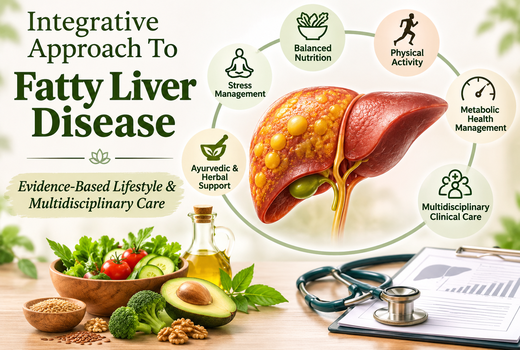
Integrative Approach To Fatty Liver Disease: Clinical Rationale For Hepatoprotective Drugs
Abstract
Fatty liver disease, currently classified as Metabolic Dysfunction-Associated Steatotic Liver Disease (MASLD), is a growing global health concern closely linked to obesity, insulin resistance and other metabolic abnormalities. Persistent hepatic fat accumulation may lead to inflammation, hepatocyte injury, fibrosis and cirrhosis. Its management primarily involves dietary modification, regular physical activity, weight reduction and control of associated metabolic disorders. Alongside these measures, hepatoprotective agents have gained attention for their potential to protect liver cells and regulate the mechanisms involved in disease progression. This article discusses the pathophysiology of fatty liver disease and its integrative management through conventional medical approaches and Ayurvedic principles. It examines the pharmacological rationale and available clinical evidence for selected hepatoprotective plants/ plant-derived compounds such as Bhumyamalaki, Kutki, Kalmegha and Daruharidra. The discussion also considers supportive agents such as N-acetylcysteine, vitamin E and omega-3 fatty acids, alongside conventional medicines used to address associated metabolic abnormalities Ayurvedic concepts such as Agnimandya, Ama, Medodushti and Srotorodha are also discussed in relation to metabolic health. Although several agents have shown promising effects, the strength of clinical evidence varies, and many proposed benefits require further confirmation through well-designed human studies. An integrative approach may provide a broader perspective on disease management when used alongside evidence-based medical care and appropriate lifestyle interventions.
Keywords: Fatty liver disease, hepatoprotective agents, oxidative stress, insulin resistance, Ayurveda.
Introduction
Fatty liver disease is characterised by excessive accumulation of fat, mainly in the form of triglycerides, within liver cells (hepatocytes). Although a small amount of fat is normally present in the liver, its excessive accumulation can interfere with normal hepatic functions and, in some individuals, lead to progressive liver damage. In the early stage, fat accumulation may occur without significant inflammation or hepatocyte injury, a condition known as simple hepatic steatosis. However, when fat deposition is accompanied by inflammation and hepatocyte damage, it develops into steatohepatitis. Persistent liver injury may further result in fibrosis, cirrhosis and, in advanced cases, liver failure or hepatocellular carcinoma. The terminology used to describe fatty liver disease has evolved with a better understanding of its metabolic basis. Metabolic Dysfunction-Associated Steatotic Liver Disease (MASLD), previously known as Non-Alcoholic Fatty Liver Disease (NAFLD), refers to hepatic steatosis accompanied by at least one cardiometabolic risk factor. Its inflammatory form, Metabolic Dysfunction-Associated Steatohepatitis (MASH), was previously termed Non-Alcoholic Steatohepatitis (NASH). This updated classification highlights the importance of metabolic dysfunction in the development and progression of the disease. The rising prevalence of fatty liver disease has become a major health concern worldwide. Excessive consumption of calorie-dense foods, sedentary lifestyles and increasing rates of obesity have contributed significantly to its occurrence. Insulin resistance plays a central role in hepatic fat accumulation by increasing the release of free fatty acids from adipose tissue and stimulating fat synthesis within the liver. Other metabolic conditions, including type 2 diabetes, dyslipidaemia, abdominal obesity and metabolic syndrome, further increase the risk of MASLD. Since many affected individuals remain asymptomatic during the initial stages, the condition may go undetected for several years. (1)
Management of fatty liver disease requires interventions targeting metabolic dysfunction, oxidative stress, inflammation and hepatic injury. Alongside conventional medical care, hepatoprotective agents have gained scientific interest because of their potential to protect hepatocytes and regulate pathways involved in disease progression. Plant-derived compounds along with Ayurvedic medicinal plants such as Bhumyamalaki, Kutki, Kalmegha and Daruharidra, are being investigated for their hepatoprotective properties. This article examines the pharmacological rationale, available clinical evidence and limitations of these interventions within an integrative approach. (2)
Pathophysiology Of Fatty Liver Disease
Fatty liver develops when the supply and production of fatty acids within the liver exceed the capacity of hepatocytes to oxidise or export them. Insulin resistance is a major factor behind this imbalance. It increases the release of free fatty acids (FFAs) from adipose tissue into the bloodstream, resulting in greater fatty acid delivery to the liver. At the same time, excess glucose and fructose stimulate de novo lipogenesis (DNL), a process through which the liver converts carbohydrates into new fatty acids. These fatty acids are subsequently converted into triglycerides and stored within hepatocytes. (3)
Pathogenesis of Fatty Liver Disease
Insulin Resistance and Metabolic Dysfunction
↓
Increased Free Fatty Acid Influx + Increased De Novo Lipogenesis
↓
Triglyceride Accumulation in Hepatocytes
↓
Lipotoxicity and Oxidative Stress
↓
Mitochondrial Dysfunction and Inflammatory Signalling
↓
Hepatocyte Ballooning and Inflammation
↓
Activation of Hepatic Stellate Cells
↓
Progressive Hepatic Fibrosis and Cirrhosis
Under normal physiological conditions, the liver maintains lipid balance through fatty acid oxidation and the export of triglycerides in the form of very-low-density lipoproteins (VLDL). In fatty liver disease, the increased supply of fatty acids places additional demands on these processes. When fatty acid oxidation and VLDL export are insufficient to manage the excess lipid load, triglycerides accumulate within hepatocytes. Although triglyceride storage represents a major feature of hepatic steatosis, certain lipid intermediates, particularly free fatty acids, diacylglycerols and ceramides, can contribute to lipotoxicity. These substances promote the generation of reactive oxygen species (ROS), resulting in oxidative stress and cellular damage. Mitochondrial dysfunction further aggravates this injury by disturbing normal energy production and fatty acid metabolism. As hepatocyte injury progresses, Kupffer cells, which are the resident macrophages of the liver, become activated and release inflammatory mediators such as tumour necrosis factor-alpha (TNF-alpha) and interleukins. These inflammatory signals promote further hepatocyte damage and sustain the inflammatory response. Persistent cellular injury also stimulates hepatic stellate cells, which produce excess collagen and other extracellular matrix components. Their continued activation results in fibrosis, which may gradually progress to cirrhosis in advanced disease. (4)
These interconnected mechanisms explain the progression of fatty liver disease from simple steatosis to steatohepatitis and fibrosis. They also provide the scientific basis for therapeutic interventions targeting lipid metabolism, oxidative stress, inflammation and fibrogenesis.
Integrative Management Of Fatty Liver
Management of fatty liver disease requires attention to both hepatic health and the metabolic abnormalities responsible for fat accumulation. Dietary changes, physical activity and proper control of associated disorders form the foundation of treatment. Alongside these measures, Ayurvedic principles can provide an additional perspective on digestion, metabolism and tissue health.
Dietary Management
Diet plays an important role in controlling hepatic fat accumulation. Overweight individuals should follow a calorie-deficit diet to achieve gradual and sustainable weight reduction. A Mediterranean-style diet containing vegetables, fruits, whole grains, pulses, nuts, fish and healthy fats can help improve metabolic health. Refined carbohydrates, sugary beverages, excess fructose, fried foods and ultra-processed products should be limited because they can promote fat accumulation in the liver. Adequate protein and dietary fibre should be included through sources such as pulses, milk products, vegetables and whole grains. Alcohol should preferably be avoided, particularly in patients with advanced liver disease. Patients with cirrhosis require individualised nutritional advice to maintain adequate energy and protein intake. (5)
Lifestyle And Physical Activity
Regular physical activity improves insulin sensitivity, promotes energy expenditure and helps reduce hepatic fat accumulation. Aerobic exercises such as brisk walking, cycling and swimming can be combined with resistance training to improve muscle strength and glucose utilisation. Avoiding prolonged sitting and maintaining adequate sleep further support metabolic health. Weight reduction is an important treatment target in overweight individuals. A sustained reduction of approximately 5% in body weight can improve hepatic steatosis, while a reduction of 7-10% may improve liver inflammation. Weight loss of 10% or more may also improve fibrosis in some patients. (1)
Management Of Associated Metabolic Risk Factors
Fatty liver frequently occurs alongside diabetes, obesity, dyslipidaemia and hypertension. These conditions should be identified and managed to improve overall metabolic health and reduce cardiovascular complications. Good glycaemic control through dietary modification, physical activity and appropriate antidiabetic medicines helps address insulin resistance. Dyslipidaemia should be managed through nutritional measures and lipid-lowering drugs such as statins when indicated. Blood pressure, body weight and waist circumference should also be monitored regularly. Hypothyroidism and obstructive sleep apnoea should be evaluated when clinically suspected. Since cardiovascular disease is an important concern in patients with MASLD, treatment should focus on overall metabolic health rather than liver enzymes alone.
Ayurvedic Perspective
Ayurveda explains metabolic health through the balanced functioning of Agni, Dosha, Dhatu and Srotas. Although fatty liver has no exact equivalent in classical Ayurvedic terminology, certain concepts provide a useful framework for understanding its possible metabolic features.
- Yakrit and Ranjaka Pitta: Yakrit (liver) is an important organ associated with Ranjaka Pitta, which is involved in the formation and colouring of Rakta Dhatu (blood tissue). This provides a classical basis for discussing liver function in Ayurvedic physiology.
- Agnimandya and Ama: Agnimandya refers to impaired digestive and metabolic activity, while Ama describes improperly processed products resulting from incomplete digestion. These concepts can be discussed in relation to disturbances in nutrient utilisation and metabolism.
- Medodushti and Medovaha Srotas: Meda Dhatu represents adipose tissue, while Medodushti refers to its disturbed functioning. Charaka Samhita describes excessive intake of fatty foods, lack of exercise and daytime sleeping as factors responsible for vitiation of Medovaha Srotas. These factors can be discussed alongside obesity and abnormal lipid metabolism.
- Srotorodha: This refers to obstruction or impaired movement within the body channels. In an integrative interpretation, it may be discussed in relation to disturbed tissue metabolism and the accumulation of excess Meda.
- Santarpanajanya Vyadhi: Charaka Samhita describes disorders arising from excessive nourishment, heavy food intake and lack of physical activity. These factors have conceptual relevance to obesity and metabolic disorders, which are important contributors to fatty liver disease.
Overall, Ayurvedic principles emphasise balanced nutrition, proper digestion, physical activity and maintenance of healthy tissue metabolism. These concepts can complement the discussion of modern metabolic management, although they should not be considered direct equivalents of biomedical disease mechanisms.
Clinical Rationale For Hepatoprotective Drugs
Hepatoprotective drugs and plant-derived compounds are being investigated for their potential to protect hepatocytes, reduce liver cell injury and regulate the pathological mechanisms involved in metabolic dysfunction-associated steatotic liver disease (MASLD). In fatty liver disease, excessive accumulation of lipids within hepatocytes, insulin resistance, oxidative stress and chronic low-grade inflammation contribute to hepatic dysfunction and may promote progression towards steatohepatitis and fibrosis. Therefore, hepatoprotective agents with antioxidant, anti-inflammatory, lipid-regulating and antifibrotic properties have gained considerable scientific interest.
Several Ayurvedic medicinal plants contain bioactive constituents that may influence multiple mechanisms involved in hepatic injury and metabolic disturbances. Among these, Bhumyamalaki (Phyllanthus amarus), Kutki (Picrorhiza kurroa), Kalmegha (Andrographis paniculata) and Daruharidra (Berberis aristata) have attracted scientific attention because of their diverse pharmacological properties. Their active phytochemicals have demonstrated promising hepatoprotective and metabolic activities, particularly in experimental investigations. Exploring these plant-derived compounds may help identify complementary therapeutic approaches for supporting hepatic health. However, further clinical research is necessary to establish their efficacy, safety, appropriate dosage and suitability for patients with MASLD. These medicinal plants should therefore be considered investigational or complementary candidates rather than established pharmacological treatments for fatty liver disease. Their active constituents and potential mechanisms of hepatoprotection are discussed below.
Bhumyamalaki (Phyllanthus Amarus)
Bhumyamalaki (Phyllanthus amarus) is an important medicinal plant containing several bioactive constituents, particularly lignans, flavonoids, tannins and polyphenolic compounds. Phyllanthin and hypophyllanthin are among its major lignans and have been investigated for their hepatoprotective potential. In Ayurveda, Bhumyamalaki is known as Tamalaki and is valued for its use in Kamala (jaundice) and other liver-related disorders. Its pharmacological properties are described as Tikta (bitter), Kashaya (astringent) and Madhura (sweet) Rasa (taste), Laghu (light) and Ruksha (dry) Guna (qualities), Sheeta Virya (cooling potency) and Madhura Vipaka (sweet post-digestive effect). It is considered Kapha-Pitta Shamaka, indicating its role in balancing Kapha and Pitta Doshas. These properties provide an Ayurvedic basis for its inclusion in discussions of liver health.
Hepatoprotective Activities:
- Antioxidant activity: Phyllanthin and other plant constituents may help protect hepatocytes against oxidative injury by reducing lipid peroxidation and supporting endogenous antioxidant enzymes such as superoxide dismutase (SOD), catalase (CAT) and glutathione peroxidase (GPx).
- Anti-inflammatory activity: Experimental findings suggest that Bhumyamalaki may regulate inflammatory mediators and reduce inflammatory responses involved in hepatic injury.
- Hepatocellular protection: Its bioactive constituents have demonstrated potential to maintain cellular membrane integrity and limit damage caused by certain hepatotoxic substances.
- Liver enzyme regulation: Experimental investigations have reported improvements in elevated serum transaminases, particularly alanine aminotransferase (ALT) and aspartate aminotransferase (AST), following treatment with certain extracts.
- Metabolic relevance: Its antioxidant and anti-inflammatory properties provide a basis for investigating its potential role in metabolic liver disorders.
However, clinical evidence specifically establishing its efficacy in MASLD remains limited. (6)
Kutki (Picrorhiza Kurroa)
Kutki (Picrorhiza kurroa) is a medicinal plant whose rhizomes and roots contain iridoid glycosides, particularly picroside I, picroside II and kutkoside. Ayurvedic Properties: Kutki (Picrorhiza kurroa) is described in Ayurveda as Tikta Rasa (bitter taste), Laghu (light) and Ruksha (dry) Guna, Sheeta Virya (cooling potency) and Katu Vipaka (pungent post-digestive effect). It is primarily considered Kapha-Pitta Shamaka (helps regulate Kapha and Pitta Doshas), Deepana (enhances digestive capacity), Pachana (supports digestion and metabolism) and Bhedana (promotes bowel evacuation). It is also recognised for its Yakrit-related therapeutic relevance and is used in classical Ayurvedic practice for Kamala (jaundice) and other Pitta-predominant disorders. These properties provide an Ayurvedic rationale for exploring Kutki in liver disorders. These properties provide an Ayurvedic rationale for its application in liver-related disorders.
- Antioxidant activity: Picrosides may help protect liver cells against oxidative damage by reducing reactive oxygen species and lipid peroxidation while supporting endogenous antioxidant defence.
- Anti-inflammatory activity: Experimental studies indicate that Kutki extracts may influence inflammatory signalling and regulate the production of pro-inflammatory mediators.
- Hepatocellular protection: Its active constituents have been investigated for their ability to maintain hepatocyte integrity and reduce cellular damage caused by toxic substances.
- Lipid-regulating potential: Preclinical research suggests that certain constituents may influence hepatic lipid metabolism and processes involved in excessive fat accumulation.
- Antifibrotic potential: Experimental investigations have examined the effects of Kutki constituents on fibrogenic pathways involved in collagen deposition and hepatic tissue remodelling.
These activities provide a pharmacological basis for investigating Kutki in liver disorders involving cellular injury and inflammation. Nevertheless, adequate clinical evidence establishing its therapeutic efficacy in MASLD is currently lacking. (7)
Kalmegha (Andrographis Paniculata)
Kalmegha (Andrographis paniculata) is a medicinal plant containing diterpene lactones, among which andrographolide is the principal bioactive constituent. According to Ayurveda, it is known as Kalamegha and possesses Tikta Rasa (bitter taste), Laghu (light) and Ruksha (dry) Guna, Ushna Virya (hot potency) and Katu Vipaka (pungent post-digestive effect). It is primarily considered Kapha-Pitta Shamaka (helps regulate Kapha and Pitta Doshas) and is described as Deepana (enhances digestive capacity), Pachana (supports digestion), Jwaraghna (helps manage fever) and Krimighna (helps manage parasitic conditions). Its bitter properties and classical use in Kamala (jaundice) provide an Ayurvedic rationale for exploring its application in liver disorders.
- Antioxidant activity: Andrographolide may activate the nuclear factor erythroid 2-related factor 2 (Nrf2) pathway, which regulates the expression of antioxidant enzymes involved in cellular defence. This may help reduce oxidative stress and protect hepatocytes.
- Anti-inflammatory activity: It may influence nuclear factor kappa B (NF-κB) signalling and regulate the production of inflammatory cytokines such as TNF-α and IL-6.
- Hepatocellular protection: Experimental studies have investigated its ability to reduce hepatocyte injury and maintain cellular integrity against oxidative and chemically induced damage.
- Regulation of lipid metabolism: Preclinical investigations suggest that andrographolide may influence lipid metabolic pathways and mechanisms involved in hepatic fat accumulation.
- Antifibrotic potential: Its effects on fibrogenic signalling and hepatic stellate cell activation have been examined in experimental models, indicating possible relevance in limiting excessive extracellular matrix deposition.
These pharmacological properties indicate its possible relevance in metabolic liver disorders. However, its effectiveness and safety in patients with MASLD require further clinical investigation. (8)
Daruharidra (Berberis Aristata)
Daruharidra (Berberis aristata) is a medicinal plant containing several isoquinoline alkaloids, particularly berberine, which has attracted considerable scientific interest because of its metabolic and hepatoprotective properties. According to Ayurveda, Daruharidra possesses Tikta Rasa (bitter taste) and Kashaya Rasa (astringent taste), Laghu (light) and Ruksha (dry) Guna, Ushna Virya (hot potency) and Katu Vipaka (pungent post-digestive effect). It is primarily considered Kapha-Pitta Shamaka (helps regulate Kapha and Pitta Doshas) and is described as Deepana (enhances digestive capacity), Pachana (supports digestion), Lekhana (helps reduce excessive tissue accumulation) and Kandughna (relieves itching). It is also used in Kamala (jaundice) and conditions involving Pitta and Kapha imbalance, providing an Ayurvedic rationale for its investigation in liver disorders.
- Regulation of lipid metabolism: Berberine has been investigated for its ability to activate AMP-activated protein kinase (AMPK), an important regulator of cellular energy balance and lipid metabolism. This pathway may regulate hepatic lipid synthesis and promote fatty acid oxidation.
- Improvement in insulin sensitivity: Berberine may influence glucose metabolism and insulin signalling, thereby improving insulin sensitivity and reducing the excessive delivery of free fatty acids to the liver.
- Antioxidant activity: It has demonstrated potential to regulate oxidative stress, influence antioxidant defence mechanisms and reduce lipid peroxidation in experimental investigations.
- Anti-inflammatory activity: Berberine may modulate NF-κB signalling and inflammatory cytokine production, potentially helping reduce inflammatory injury to hepatic tissue.
- Hepatocellular protection: Experimental research has examined its potential to reduce hepatic cellular injury and regulate biochemical markers of liver damage.
- Clinical evidence: Some clinical studies investigating berberine in patients with fatty liver disease have reported improvements in metabolic parameters, lipid profiles and liver enzyme levels.
However, variations in study design, dosage and preparation limit the interpretation of these findings. Further well-designed clinical trials are necessary to establish the therapeutic effectiveness of Daruharidra in MASLD. (9)
Conclusion
Fatty liver disease requires a comprehensive approach targeting metabolic dysfunction, oxidative stress, inflammation and hepatic injury. Lifestyle modification and management of associated metabolic disorders remain the foundation of treatment. Hepatoprotective selected Ayurvedic medicinal plants have demonstrated promising pharmacological activities, although their clinical effectiveness varies. Supportive nutritional agents and conventional metabolic medicines may further address specific disease-related abnormalities. An integrative approach combining these interventions with evidence-based medical care may provide a broader framework for MASLD management. Further clinical research is required to establish their safety, efficacy and appropriate therapeutic applications.
An integrative approach can help explain the possible role of herbal and conventional agents in liver health. Ayurvedic concepts related to Agni, Meda and Srotas also provide an additional perspective on metabolic health. Nevertheless, these approaches should complement evidence-based medical care rather than replace it. Treatment should be selected according to the patient’s metabolic condition, degree of liver damage and available clinical evidence.
References
- European Association for the Study of the Liver (EASL), European Association for the Study of Diabetes (EASD), European Association for the Study of Obesity (EASO). EASL-EASD-EASO clinical practice guidelines on the management of metabolic dysfunction-associated steatotic liver disease (MASLD). J Hepatol. 2024;81 (3):492-542. doi:10.1016/j.jhep.2024.04.031.
- Rinella ME, Neuschwander-Tetri BA, Siddiqui MS, et al. AASLD practice guidance on the clinical assessment and management of nonalcoholic fatty liver disease. Hepatology. 2023;77 (5):1797-1835. doi:10.1097/HEP.0000000000000323.
- Bessone F, Razori MV, Roma MG. Molecular pathways of nonalcoholic fatty liver disease development and progression. Cell Mol Life Sci. 2019;76:99-128. doi:10.1007/s00018-018-2947-0.
- Nassir F. NAFLD: mechanisms, treatments, and biomarkers. Biomolecules. 2022;12 (6):824. doi:10.3390/biom12060824.
- World Health Organization. Healthy diet. Geneva: World Health Organization.
- Pratima H, Shiraguppi A, Joojagar P, et al. Phytochemical profile and hepatoprotective potentiality of Phyllanthus genus: a review. Journal of Pharmacy and Pharmacology. 2025;77(2):189-205. doi: 10.1093/jpp/rgae040
- Raut A, Dhami-Shah H, Phadke A, et al. Picrorhiza kurroa, Royle ex Benth: Traditional uses, phytopharmacology, and translational potential in therapy of fatty liver disease. Journal of Ayurveda and Integrative Medicine. 2023;14(1):100558. doi: 10.1016/j.jaim.2022.100558
- A Diterpenoid, 14-Deoxy-11, 12-Didehydroandrographolide, in Andrographis paniculata Reduces Steatohepatitis and Liver Injury in Mice Fed a High-Fat and High-Cholesterol Diet. Nutrients. 2020;12(2):523. doi: 10.3390/nu12020523
- The clinical efficacy and safety of berberine in the treatment of non-alcoholic fatty liver disease: a meta-analysis and systematic review. PMC. 2024.