


Paratesticular Pleomorphic Leiomyosarcoma: Clinical Features, Diagnosis, and Holistic Ayurvedic Management
Abstract
Paratesticular pleomorphic leiomyosarcoma is an uncommon malignant soft tissue sarcoma arising from the smooth muscle structures of the paratesticular region. Due to its rarity and nonspecific clinical presentation, it is often misdiagnosed during the early stages. Timely diagnosis and appropriate management are essential because of its aggressive nature and potential for local recurrence and distant metastasis. Modern treatment primarily involves complete surgical excision, with radiotherapy and chemotherapy considered in selected cases. Alongside conventional management, Ayurveda offers a holistic approach aimed at improving overall health, supporting tissue metabolism, and enhancing the body’s natural healing capacity. This article provides a comprehensive overview of paratesticular pleomorphic leiomyosarcoma, including its anatomy, epidemiology, causes, risk factors, clinical features, diagnosis, Ayurvedic overview, herbal management that may help improve quality of life.
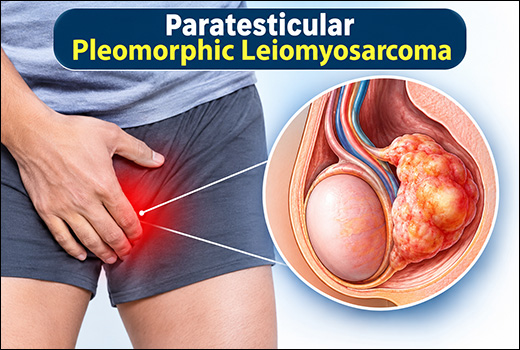
Key Facts About Paratesticular Pleomorphic Leiomyosarcoma
- Paratesticular pleomorphic leiomyosarcoma is a rare malignant soft tissue sarcoma arising from smooth muscle cells of the paratesticular region.
- It most commonly originates from the spermatic cord, epididymis, dartos muscle, or cremasteric muscle.
- It usually affects men between 50 and 80 years of age.
- The tumor often presents as a painless, slowly enlarging scrotal or inguinal swelling.
- Histologically, the pleomorphic subtype is considered a high-grade leiomyosarcoma with aggressive biological behavior.
- Local recurrence and distant metastasis are relatively common without adequate surgical margins.
- The lungs, liver, bones, and retroperitoneum are the most frequent sites of metastasis.
- Diagnosis requires histopathological examination supported by immunohistochemical markers such as Smooth Muscle Actin (SMA), Desmin, and h-Caldesmon.
- Radical inguinal orchiectomy with wide local excision remains the standard treatment.
- Long-term follow-up is essential because recurrence may occur several years after initial treatment.
Statistics For Paratesticular Pleomorphic Leiomyosarcoma
- Paratesticular tumors account for less than 5% of all intrascrotal tumors.
- Nearly 70% of paratesticular tumors are benign, while approximately 30% are malignant.
- Leiomyosarcoma represents approximately 10–20% of malignant paratesticular sarcomas.
- The spermatic cord is the most common site of origin.
- Most patients are diagnosed between the fifth and eighth decades of life.
- Pleomorphic leiomyosarcoma is considerably less common than conventional leiomyosarcoma.
- Local recurrence rates range from 30–50%, depending on surgical margins.
- Distant metastasis develops in approximately 20–40% of high-grade tumors.
- Complete surgical excision with negative margins significantly improves long-term survival.
- Due to its rarity, most available data are derived from individual case reports and small retrospective studies.
Introduction
Paratesticular tumors are rare neoplasms that arise from the tissues surrounding the testis rather than the testicular tissue itself. Among these, paratesticular pleomorphic leiomyosarcoma is an exceptionally uncommon and highly aggressive malignant tumor originating from smooth muscle cells present in structures such as the spermatic cord, epididymis, dartos muscle, or cremasteric muscle. The disease most commonly affects older men and usually presents as a painless scrotal or inguinal swelling, which can easily be mistaken for benign conditions like hydrocele, epididymal cyst, or inguinal hernia. Owing to its rarity, diagnosis is often delayed until histopathological evaluation confirms the malignancy. Although surgery remains the cornerstone of treatment, the risk of recurrence and metastasis necessitates long-term follow-up. From an Ayurvedic perspective, this condition can be understood through the concepts of Mamsarbuda, Granthi, and Mamsa Dushti, where disturbed Doshas and impaired tissue metabolism contribute to abnormal tissue growth. A holistic approach combining appropriate medical treatment with Ayurvedic principles may help support overall health and recovery.
Anatomy Of The Paratesticular Region
The paratesticular region comprises the supporting structures surrounding the testis rather than the testicular tissue itself. These structures include:
- Spermatic cord
- Epididymis
- Tunica vaginalis
- Cremasteric muscle
- Dartos muscle
- Scrotal connective tissue
These structures contain smooth muscle fibers, connective tissue, blood vessels, lymphatics, and nerves, making them potential sites for the development of various benign and malignant soft tissue tumors.
Risk Factors And Causes Of Paratesticular Pleomorphic Leiomyosarcoma
Although the precise cause remains unknown, several factors have been associated with the development of paratesticular pleomorphic leiomyosarcoma.
- Increasing Age: Most cases occur in men older than 50 years, suggesting that cumulative genetic alterations with aging contribute to tumor development.
- Previous Radiation Exposure: Therapeutic radiation administered for prior malignancies may induce DNA damage that increases the risk of secondary soft tissue sarcomas years later.
- Genetic Mutations: Accumulation of mutations affecting tumor suppressor genes and cell cycle regulatory pathways contributes to uncontrolled proliferation of smooth muscle cells.
- Chronic Lymphedema: Persistent lymphatic obstruction creates chronic inflammation and oxidative stress that may predispose susceptible tissues to malignant transformation.
- Environmental Carcinogens: Long-term exposure to industrial chemicals or environmental carcinogens has been suggested as a possible contributing factor, although evidence remains limited.
- Chronic Inflammation: Repeated tissue injury and chronic inflammatory processes may promote cellular proliferation and genetic instability within smooth muscle tissue.
- Immunological Factors: Alterations in immune surveillance may reduce the body’s ability to eliminate abnormal cells, allowing malignant transformation.
- Sporadic Occurrence: The majority of reported cases occur sporadically without any identifiable predisposing factor.
Symptoms Of Paratesticular Pleomorphic Leiomyosarcoma
The clinical presentation is often subtle during the early stages, contributing to delayed diagnosis. Symptoms usually develop gradually as the tumor enlarges.
Common Clinical Features
- Painless scrotal swelling
- Slowly enlarging inguinal or scrotal mass
- Firm, irregular, non-transilluminant swelling
- Sensation of heaviness in the scrotum
- Mild discomfort or dull aching pain in advanced cases
- Restricted mobility of the mass
- Skin ulceration (rare, in advanced disease)
- Local invasion into adjacent tissues
- Enlarged regional lymph nodes (uncommon but possible)
- Symptoms related to distant metastasis such as cough, breathlessness, bone pain, or weight loss in advanced disease
Diagnosis Of Paratesticular Pleomorphic Leiomyosarcoma
- Clinical Evaluation: Detailed medical history, duration of swelling, previous radiation exposure or malignancy, family history, and physical examination of the scrotum and inguinal region.
- Scrotal Ultrasonography (USG): First-line imaging to identify and differentiate paratesticular masses.
- Magnetic Resonance Imaging (MRI): Evaluates tumor extent, local invasion, and surrounding soft tissues.
- Contrast-Enhanced CT (CECT) / PET-CT: Detects regional lymph node involvement, distant metastasis, and disease recurrence.
- Histopathological Examination: Confirms the diagnosis by demonstrating pleomorphic spindle cells, marked atypia, frequent mitoses, necrosis, and infiltrative growth.
- Immunohistochemistry (IHC): Tumor cells are typically positive for Smooth Muscle Actin (SMA), Desmin, h-Caldesmon, and Vimentin, confirming smooth muscle origin.
Differential Diagnosis Of Paratesticular Pleomorphic Leiomyosarcoma
Several benign and malignant conditions may mimic paratesticular pleomorphic leiomyosarcoma clinically or radiologically.
Benign Conditions
- Lipoma of the spermatic cord
- Epididymal cyst
- Hydrocele
- Spermatocele
- Inguinal hernia
- Fibrous pseudotumor
- Leiomyoma
Malignant Conditions
- Liposarcoma
- Rhabdomyosarcoma
- Malignant fibrous histiocytoma (Undifferentiated pleomorphic sarcoma)
- Fibrosarcoma
- Malignant peripheral nerve sheath tumor
- Metastatic carcinoma
- Testicular germ cell tumors
Prognosis Of Paratesticular Pleomorphic Leiomyosarcoma
The prognosis depends upon multiple factors:
Favorable Prognostic Factors
- Small tumor size
- Low histological grade
- Negative surgical margins
- Early diagnosis
- Complete surgical excision
Poor Prognostic Factors
- Pleomorphic histology
- Large tumor size
- Positive surgical margins
- High mitotic index
- Tumor necrosis
- Local recurrence
- Distant metastasis (The lungs remain the most common site of metastatic spread)
Ayurvedic Overview On Paratesticular Pleomorphic Leiomyosarcoma
Although Paratesticular Pleomorphic Leiomyosarcoma is not described as a distinct disease entity in the classical Ayurvedic texts, its clinical features closely resemble the descriptions of Mamsarbuda (muscular tumor), Granthi (abnormal nodular swelling), Mamsa Dushti (vitiation of muscle tissue), and Tridoshaja Arbuda (tumor involving all three Doshas). Ayurveda explains that diseases develop due to an imbalance of the body’s fundamental biological energies (Doshas), impairment of tissue metabolism (Dhatu Agni), obstruction of bodily channels (Srotorodha), and accumulation of metabolic toxins known as Ama (Endotoxins).
Ayurvedic Pathophysiology of Paratesticular Pleomorphic Leiomyosarcoma (Samprapti) — Common Pathophysiology of Overgrowths according to Ayurveda
- Nidana Sevana (Causative Factors): Prolonged intake of Viruddha Ahara (incompatible foods), excessive consumption of heavy, oily, stale, and processed foods, unhealthy lifestyle, chronic stress, suppression of natural urges (Vegadharana), and impaired digestion (Mandagni) initiate the disease process.
- Agnimandya (Impaired Digestive and Tissue Metabolism): Weak digestive fire leads to incomplete digestion and improper tissue metabolism, resulting in the formation of Ama (metabolic toxins).
- Ama Formation: The accumulated Ama circulates throughout the body, obstructing the Srotas (body channels) and disturbing normal physiological functions.
- Tridosha Prakopa: Ama, along with causative factors, aggravates all three Doshas—Kapha, Pitta, and Vata, resulting in a Tridoshaja condition.
- Kapha promotes excessive tissue growth and the formation of a firm mass.
- Pitta contributes to inflammation, cellular degeneration, and abnormal metabolic activity.
- Vata facilitates irregular growth, tissue destruction, invasion, and disease progression.
- Dhatu Dushti (Vitiation of Body Tissues): The aggravated Doshas primarily affect Mamsa Dhatu (muscle tissue), along with Rakta Dhatu (blood tissue) and Meda Dhatu (adipose tissue), leading to abnormal tissue proliferation.
- Srotodushti (Channel Obstruction): Vitiation and obstruction of Mamsavaha Srotas (Channels carrying Muscle Tissue), Raktavaha Srotas (Channels carrying Blood Tissue), and Rasavaha Srotas (Channels Carrying Nutrient fluid) impair nourishment and waste elimination, creating conditions favorable for abnormal tissue growth.
- Granthi/Arbuda Formation: Continuous Dosha vitiation and impaired tissue metabolism result in the development of a hard, progressively enlarging, deep-seated mass resembling Mamsarbuda.
- Disease Progression: If left untreated, the persistent imbalance of Doshas, ongoing Ama accumulation, and progressive Dhatu involvement lead to enlargement of the mass, deeper tissue invasion, and systemic spread, reflecting the aggressive nature of the disease.
Supporting Management Of Paratesticular Pleomorphic Leiomyosarcoma Through Ayurveda
Ayurveda adopts a holistic approach that focuses on supporting the body’s natural healing processes and improving overall well-being. In Paratesticular Pleomorphic Leiomyosarcoma, Ayurvedic management should be used as a supportive approach alongside conventional cancer treatment under the guidance of qualified healthcare professionals.
The main principles of supportive Ayurvedic management include:
- Balancing the Doshas: Restoring the balance of Vata, Pitta, and Kapha to support normal body functions.
- Improving Agni (Digestive Fire): Enhancing digestion and metabolism to promote proper nourishment of the tissues.
- Reducing Ama (Metabolic Toxins): Helping eliminate accumulated toxins that may impair normal physiological processes.
- Supporting Healthy Tissue Metabolism: Promoting the proper functioning and nourishment of body tissues (Dhatus).
- Maintaining Healthy Srotas (Body Channels): Supporting the free flow of nutrients and waste products by keeping the body’s channels clear.
- Enhancing Vyadhikshamatva (Natural Immunity): Strengthening the body’s natural defense mechanisms and overall resilience.
- Promoting Physical and Mental Well-being: Encouraging a balanced diet, healthy lifestyle, stress management, adequate sleep, and appropriate yoga and meditation to improve quality of life.
Dietary Recommendations (Supportive Ayurvedic Diet)
Foods to Include
- Consume plenty of fresh, seasonal vegetables, especially leafy greens such as spinach, coriander, mint, lettuce, kale, and radish leaves.
- Include steamed or lightly cooked vegetables such as bottle gourd, pumpkin, cabbage, broccoli, cauliflower, beans, peas, and carrots.
- Eat antioxidant-rich fruits like pomegranate, papaya, apple, pear, guava, melon, and berries according to individual tolerance.
- Choose whole grains such as brown rice, millets (foxtail, kodo, barnyard, little millet), whole wheat, and sorghum instead of refined grains.
- Include easily digestible legumes such as green gram (moong dal), red lentils (masoor dal), and split chickpeas.
- Consume soaked almonds, walnuts, and figs in moderation as a source of healthy fats and nutrients.
- Include sprouts, fresh salads, and homemade vegetable soups whenever tolerated.
- Drink adequate water, coconut water, fresh vegetable juices, and herbal teas prepared with spices such as cumin, coriander, fennel, and carom seeds.
- Use mild spices like turmeric, cumin, coriander, ginger, cinnamon, fennel, and black pepper to support digestion.
- Prefer freshly prepared, home-cooked meals over stored or reheated foods.
Foods To Limit Or Avoid
- Avoid processed, packaged, canned, and ultra-processed foods.
- Restrict refined sugar, sweets, confectionery, and sugar-sweetened beverages.
- Cut down on refined flour products, bakery items, and deep-fried foods.
- Exclude carbonated drinks and commercially packaged juices.
- Avoid excessive intake of spicy, oily, and heavily processed meals.
- Cut down on foods containing unhealthy trans fats and highly refined oils.
- Avoid tobacco and alcohol.
Specific Supportive Ayurvedic Dietary Remedies
- Begin the day with warm water: Drinking a glass of lukewarm water in the morning may help stimulate digestion and support normal metabolic functions.
- Include turmeric in the daily diet: Turmeric can be added to cooked meals or consumed with warm water or milk (if suitable), as it is a natural source of antioxidants that supports overall health.
- Drink fresh wheatgrass juice: A small quantity of freshly prepared wheatgrass juice may provide chlorophyll, vitamins, minerals, and natural antioxidants that contribute to general well-being.
- Consume freshly prepared vegetable juices: Juices made from vegetables such as carrot, beetroot, bottle gourd, or amla may help improve nutrient intake. They are best consumed immediately after preparation without added sugar or artificial ingredients.
- Include homemade vegetable soups: Light soups prepared from vegetables such as bottle gourd, pumpkin, spinach, carrots, or broccoli are generally easy to digest and provide essential nutrients.
- Prefer freshly cooked meals: Freshly prepared foods are generally easier to digest and may help support healthy digestive function compared to stored or repeatedly reheated meals.
- Drink herbal digestive water: Water infused with cumin, coriander, and fennel seeds may support healthy digestion and help maintain adequate hydration.
- Eat small, frequent meals: Consuming smaller meals at regular intervals rather than large, heavy meals may improve digestive comfort and help maintain adequate nutritional intake.
- Choose seasonal fruits: Fresh fruits such as pomegranate, papaya, apple, guava, and berries can be included according to individual appetite and digestive tolerance.
- Use healthy fats in moderation: Moderate amounts of cold-pressed sesame oil, mustard oil, or cow’s ghee may be included in the diet according to individual digestive capacity.
- Maintain adequate hydration: Drink sufficient water, tender coconut water, fresh vegetable juices, or herbal beverages throughout the day to support hydration.
Supportive Lifestyle Measures
- Practice gentle yoga and stretching exercises only after approval from the treating physician.
- Perform breathing exercises such as Anulom Vilom Pranayama and Bhramari Pranayama to promote relaxation and support emotional well-being.
- Aim for 7–8 hours of restful sleep each night to support recovery and overall health.
- Refrain from smoking, tobacco use, alcohol consumption, and unnecessary exposure to environmental pollutants.
- Practice meditation, mindfulness, or other relaxation techniques to help manage stress.
- Engage in light physical activities, such as walking, according to individual strength and medical advice.
- Maintain regular meal timings and avoid skipping meals to support healthy digestion.
Herbal Remedies For Supportive Management In Paratesticular Pleomorphic Leiomyosarcoma By Planet Ayurveda
Planet Ayurveda is a GMP-certified Ayurvedic company dedicated to promoting authentic Ayurvedic healthcare through herbal formulations based on the principles of classical Ayurvedic texts. The company manufactures a wide range of herbal supplements using standardized extracts and high-quality medicinal herbs that are carefully selected and processed to maintain their purity and potency. All formulations are prepared under strict quality control standards and are free from preservatives, artificial colors, synthetic additives, chemicals, starch, yeast, gluten, and genetically modified ingredients (GMOs). The products are developed with the aim of supporting overall health and wellness while adhering to the traditional wisdom of Ayurveda. In Paratesticular Pleomorphic Leiomyosarcoma, Planet Ayurveda’s herbal formulations may be used as supportive management to help maintain overall health, support immune function, promote healthy tissue metabolism, enhance antioxidant defenses, and improve quality of life.
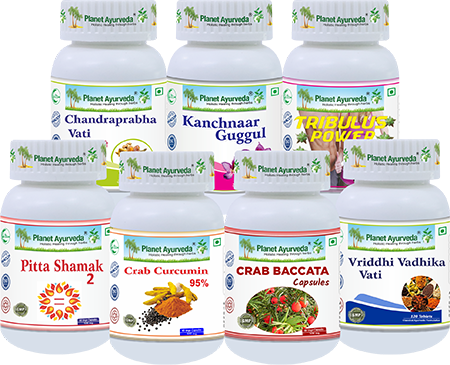
- Kanchnaar Guggul
- Tribulus Power
- Crab Baccata Capsules
- Crab Curcumin 95%
- Pitta Shamak – 2
- Chandraprabha Vati
- Vriddhi Vadhika Vati
Product Description
1. Kanchnaar Guggul
Kanchnaar Guggul by Planet Ayurveda is a classical Ayurvedic polyherbal formulation prepared according to authentic Ayurvedic texts. It contains Kachnar Bark (Bauhinia variegata), Varuna Bark (Crataeva nurvala), Guggul (Commiphora mukul), and other classical herbs. Traditionally, this formulation is widely used for supporting the healthy functioning of the lymphatic and glandular systems and maintaining the normal metabolism of Mamsa and Meda Dhatus. In Paratesticular Pleomorphic Leiomyosarcoma, it is included as supportive management to help maintain healthy tissue metabolism, support proper lymphatic circulation, assist in balancing aggravated Kapha Dosha, and promote physiological tissue homeostasis.
Dosage: 2 tablets twice daily with plain water after meals.
2. Tribulus Power
Tribulus Power is a single-herb formulation prepared from the standardized extract of Gokshura (Tribulus terrestris), one of Ayurveda’s renowned Mutravaha Rasayana herbs. It is traditionally used to maintain the healthy functioning of the urinary and reproductive systems, promote tissue nourishment, and enhance physical strength and vitality. Since Paratesticular Pleomorphic Leiomyosarcoma affects the tissues surrounding the testis, this formulation serves as supportive management by helping maintain urinary health, supporting reproductive tissue function, and promoting overall physiological strength during recovery.
Dosage: 1 capsule twice daily with plain water after meals.
3. Crab Baccata Capsules
Crab Baccata Capsules are prepared from the standardized extract of Sthauneya (Thuner) (Taxus baccata). This formulation is valued for its rich antioxidant content and its ability to support normal cellular function. As supportive management in Paratesticular Pleomorphic Leiomyosarcoma, it helps protect cells from oxidative stress, supports healthy tissue integrity, assists the body’s natural defense mechanisms, and contributes to maintaining cellular health during conventional treatment.
Dosage: 1 capsule twice daily with plain water after meals.
4. Crab Curcumin 95%
Curcumin 95% is a high-potency standardized extract of Haridra (Curcuma longa) containing 95% curcuminoids. It is widely recognized for its strong antioxidant activity and its ability to support a healthy inflammatory response. In Paratesticular Pleomorphic Leiomyosarcoma, it is used as supportive management to help reduce oxidative stress, support immune function, maintain healthy tissue physiology, and promote overall recovery and quality of life during ongoing conventional care.
Dosage: 1 capsule twice daily with plain water after meals.
5. Pitta Shamak – 2
Pitta Shamak – 2 by Planet Ayurveda is a herbal formulation prepared from the standardized extracts of Pitta Papda (Fumaria indica) and Patol (Trichosanthes dioica). In Ayurveda, this combination is traditionally used to pacify aggravated Pitta Dosha and support the healthy functioning of Rakta Dhatu (Blood Tissue). It helps maintain internal heat balance, supports normal liver function, and promotes the body’s natural cleansing processes. In Paratesticular Pleomorphic Leiomyosarcoma, Pitta Shamak is included as supportive management to help maintain a balanced internal environment, support healthy tissue physiology, and contribute to overall systemic wellness during conventional treatment.
Dosage: 1 capsule twice daily with plain water after meals.
6. Chandraprabha Vati
Chandraprabha Vati by Planet Ayurveda is a classical Ayurvedic polyherbal formulation prepared according to authentic Ayurvedic principles. It contains Shilajit (Asphaltum punjabianum), Guggul (Commiphora mukul), Vacha (Acorus calamus), Mustak (Cyperus rotundus), Haridra (Curcuma longa), and other classical ingredients. Traditionally, this formulation is valued for supporting the healthy functioning of the Mutravaha (urinary) and Shukravaha (reproductive) systems while promoting overall metabolic balance. In Paratesticular Pleomorphic Leiomyosarcoma, it is included as supportive Ayurvedic management to help maintain urinary tract health, support pelvic and reproductive tissues, promote healthy metabolism, and improve strength and vitality during recovery. Its antioxidant and rejuvenating properties further contribute to maintaining overall physiological well-being alongside conventional treatment.
Dosage: 2 tablets twice daily with plain water after meals.
7. Vriddhi Vadhika Vati
Vriddhi Vadhika Vati by Planet Ayurveda is a classical herbo-mineral Ayurvedic formulation prepared according to authentic Ayurvedic texts. It contains Shuddha Parada (Purified Mercury), Shuddha Gandhak (Purified Sulphur), Loha Bhasma (Iron calx), Vanga Bhasma (Tin calx), Tamra Bhasma (Copper calx), along with other classical ingredients. Traditionally, this formulation is used in Ayurveda for the management of Granthi (nodular swellings), Arbuda (abnormal growths), and conditions associated with enlarged glands and localized tissue enlargement. In Paratesticular Pleomorphic Leiomyosarcoma, it is included as supportive Ayurvedic management to support healthy tissue metabolism, maintain the balance of Vata and Kapha Doshas, promote the healthy functioning of the lymphatic system, and assist in maintaining normal tissue physiology.
Dosage: 2 tablets twice daily with plain water after meals.
Conclusion
Paratesticular Pleomorphic Leiomyosarcoma is a rare and aggressive soft tissue malignancy that requires prompt diagnosis, comprehensive evaluation, and individualized management because of its potential for local recurrence and distant metastasis. Owing to its nonspecific clinical presentation, awareness and timely recognition are essential for improving patient outcomes. From an Ayurvedic perspective, the condition can be correlated with the concepts of Mamsarbuda (muscular tumor), Granthi (abnormal nodular swelling), and Tridoshaja Arbuda (tumor involving the simultaneous vitiation of all three Doshas), where management focuses on restoring Dosha balance, supporting healthy tissue metabolism, and enhancing the body’s natural defense mechanisms. Alongside conventional medical care, Ayurvedic dietary measures, lifestyle modifications, and carefully selected herbal formulations may serve as supportive management to promote overall well-being, maintain physiological balance, enhance quality of life, and support patients throughout their treatment journey.




