


Petrea Volubilis / Sandpaper Vine / Purple Wreath / Queen’s Wreath – Ayurvedic Properties, Health Benefits & Dosage
Abstract
Petrea volubilis L. (family Verbenaceae), popularly known as the purple wreath or sandpaper vine, is a beautiful tropical climber admired for its clusters of violet flowers. Beyond its ornamental value, the plant has attracted scientific interest because of its traditional use in managing burns, wounds, inflammation and abscesses. Its leaves and other aerial parts contain several bioactive compounds, including flavonoids, phenolic compounds and terpenoids, which may contribute to its biological activities. Experimental studies have investigated its antioxidant, anti-inflammatory, analgesic and antimicrobial properties, providing a scientific basis for further exploration of its traditional uses. The plant’s combination of ornamental beauty and potential medicinal value makes it an interesting subject for pharmacognostic and phytochemical research. However, further studies are required to establish its safety, effective dosage and therapeutic benefits in humans.
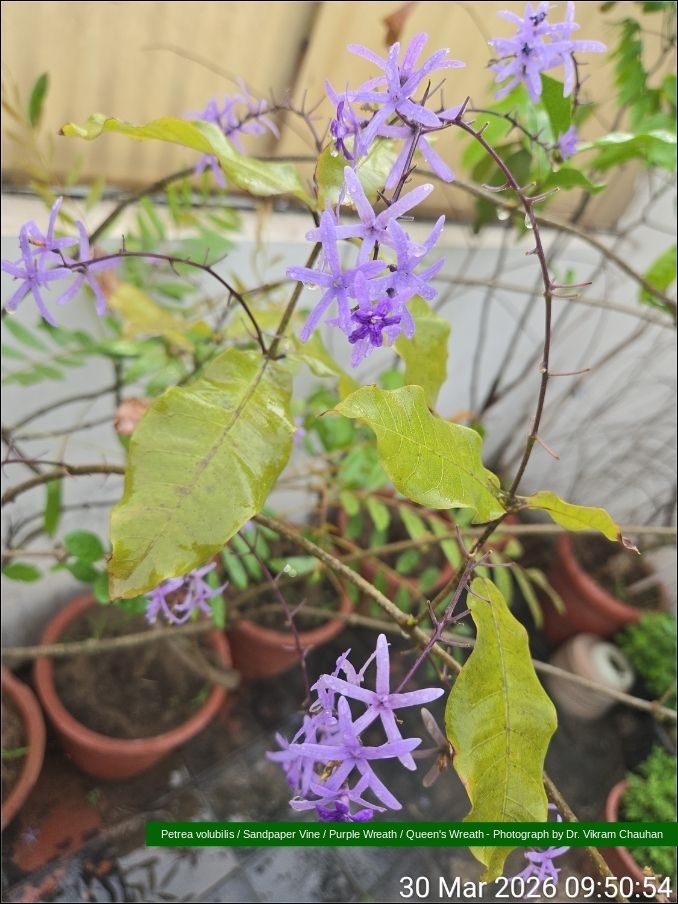
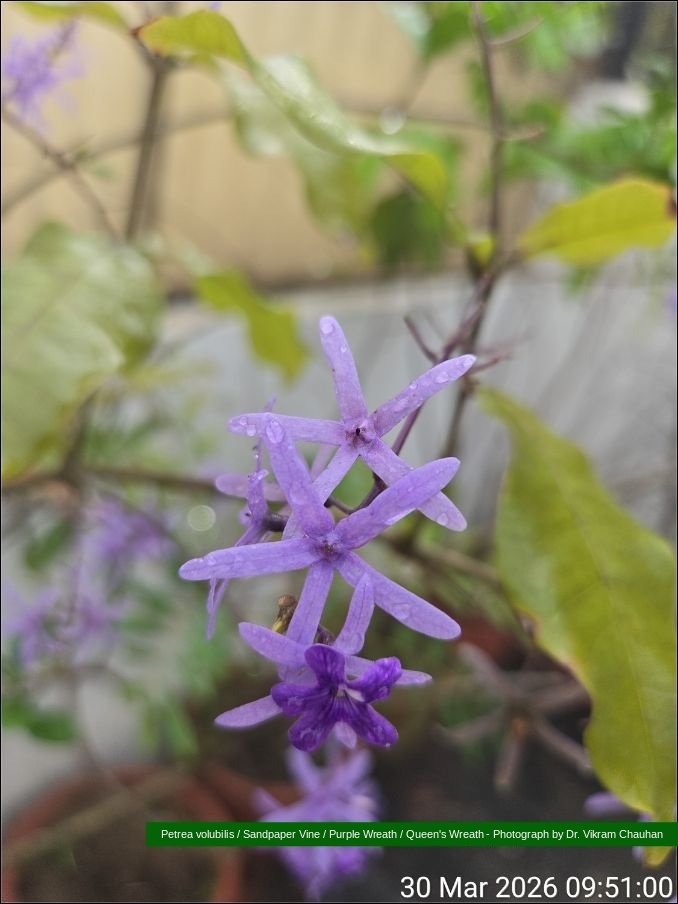
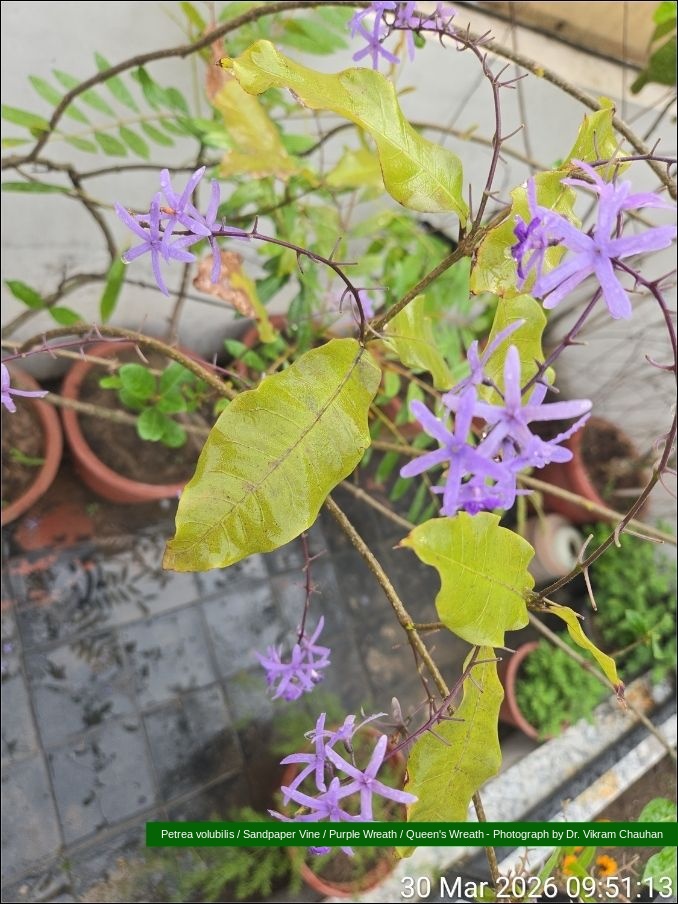
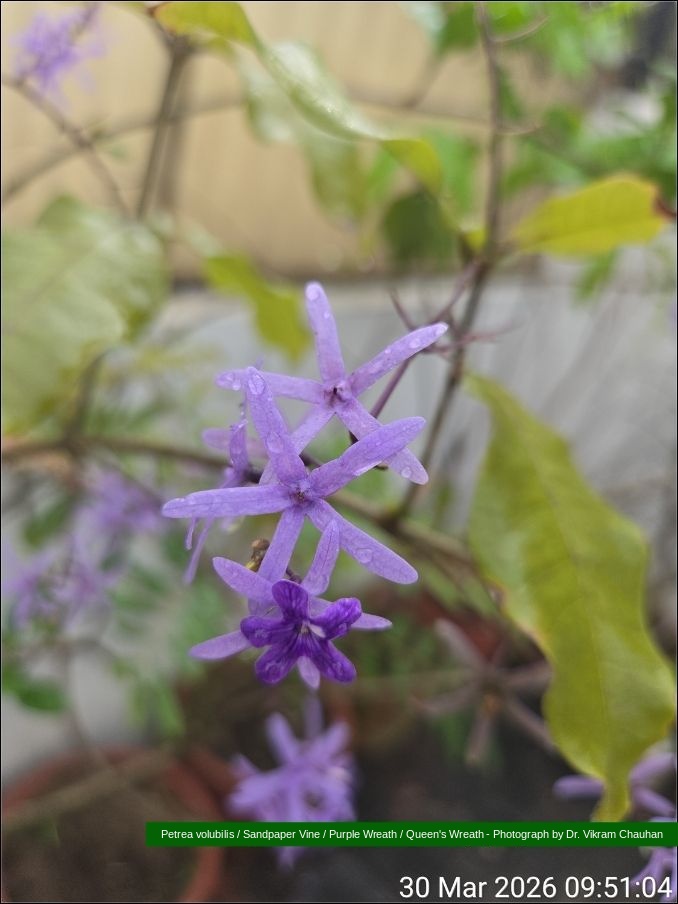
Scientific Classification of Petrea Volubilis / Sandpaper Vine / Purple Wreath / Queen’s Wreath
- Kingdom: Plantae
- Class: Equisetopsida
- Order: Lamiales
- Family: Verbenaceae
- Genus: Petrea
- Species: Petrea volubilis L.
Synonym of Petrea Volubilis / Sandpaper Vine / Purple Wreath / Queen’s Wreath
- Nilmani Lata
Vernacular Names of Petrea Volubilis / Sandpaper Vine / Purple Wreath / Queen’s Wreath
- English: Sandpaper Vine, Purple Wreath, Queen’s Wreath, Bluebird Vine
- Hindi: Nilmani Lata
- Bengali: Nilmanilata
- Tamil: Kudirai Valuppu
- Telugu: Nilipuvvula Teega, Aaku Rayi Teega
- Spanish: Bejuco de ajo, Nazareno, Jazmín azul, Pluma de reina
- French: Pétrée volubile, Liane violette
- German: Purpurkranz
- Portuguese: Viuvinha, Touca de viúva
- Slovak: Petrea ovíjavá
- Czech: Petrea ovíjivá
Habitat of Petrea Volubilis / Sandpaper Vine / Purple Wreath / Queen’s Wreath
Petrea volubilis L., commonly known as Sandpaper Vine, Purple Wreath or Queen’s Wreath, is a woody climbing plant belonging to the family Verbenaceae. It is native to tropical and subtropical America, including Mexico, Central America, the Caribbean and parts of South America. The plant typically grows in warm, humid environments, including tropical forests, woodland edges and thickets, where it climbs over surrounding vegetation or other supports. It thrives in tropical and subtropical climates and is widely cultivated as an ornamental plant in gardens and parks for its attractive clusters of violet or purple flowers. In India, it is primarily grown as an ornamental climber in suitable warm climates.
Morphology of Petrea Volubilis / Sandpaper Vine / Purple Wreath / Queen’s Wreath
Petrea volubilis L. is a perennial, woody, evergreen to semi-evergreen climbing shrub belonging to the family Verbenaceae, capable of reaching approximately 10–13 metres in height when supported. Its stems are woody and twining, with greyish bark in mature plants. The leaves are simple, opposite, oblong to elliptic, generally 3–21 cm long and 1.4–10.6 cm wide, with entire or slightly wavy margins, pointed or blunt tips, prominent veins and a leathery texture. Both leaf surfaces are rough to the touch, particularly the lower surface, giving rise to the common name Sandpaper Vine. The flowers are borne in abundant, elongated, axillary racemes that may be erect, arching or pendulous, measuring approximately 8–29 cm long or sometimes longer in cultivated plants. Individual flowers are typically violet, purple, blue or mauve, with a small, darker corolla surrounded by five conspicuous, petal-like calyx lobes. The corolla is five-lobed, while the persistent coloured calyx remains after the corolla falls, contributing greatly to the plant’s ornamental appearance. The fruit is a small, dry-looking drupe with a persistent calyx, containing seed-bearing structures.
Therapeutic Indications of Petrea Volubilis / Sandpaper Vine / Purple Wreath / Queen’s Wreath
- Burns: Traditionally used to soothe affected skin.
- Wounds: Used in traditional medicine to support wound care and healing.
- Inflammation: Traditionally employed to help manage inflammatory conditions.
- Abscesses: Used in traditional practices for localised swellings containing pus.
- Pain: Potential analgesic properties are associated with its traditional medicinal use.
- Fever: Traditionally associated with fever-relieving properties.
- Bacterial infections: Exhibits antibacterial properties against certain microorganisms.
- Oxidative stress: Contains antioxidant compounds that may help counter oxidative damage.
Systemic Actions of Petrea Volubilis / Sandpaper Vine / Purple Wreath / Queen’s Wreath
Internal Uses
- Musculoskeletal System: Its pain-relieving and anti-inflammatory properties may help alleviate discomfort associated with muscle and joint inflammation
- Temperature: Shows fever-reducing properties, supporting its traditional medicinal relevance in managing fever.
- Endocrine System: May support blood glucose regulation and glucose metabolism.
Chemical Composition of Petrea Volubilis / Sandpaper Vine / Purple Wreath / Queen’s Wreath
1. Specifically Identified Chemical Compounds
- Apigenin
- Quercetin
- 4, 6-Dimethylscutellarein
- 3,4-Dihydroxybenzoic acid (Protocatechuic acid)
- trans-Caffeic acid
- Vanillic acid
- Acteoside (Verbascoside)
2. Other Reported Chemical Constituents
- 1,2-Benzenedicarboxylic acid, mono(2-ethylhexyl) ester — reported in connection with potential blood glucose-lowering activity.
- β-Amyrin
- Stigmasterol
- β-Sitosterol
- Lupeol
- Ursolic acid
- Cineole (1,8-Cineole)
- Phytol
- Methyl palmitate
- Sucrose
- Galactose
- Glucose
- Rhamnose
- Xylose
- Arabinose
3. Additional Phytochemical Groups
- Unsaturated sterols
- Triterpenes
- Flavonoid aglycones
- Polyphenols
- Tannins
- Volatile oils
- Iridoid glycosides
- Carbohydrates and glycosides
- Phenylethanoid glycosides, including verbascoside, eukovoside, and cistanoside D.
Actions and Properties of Various Chemical Constituents of Petrea Volubilis / Sandpaper Vine / Purple Wreath / Queen’s Wreath
Antidiabetic Properties
The antidiabetic potential of Petrea volubilis (Sandpaper Vine, Purple Wreath, or Queen’s Wreath) is associated with 1,2-benzenedicarboxylic acid, mono(2-ethylhexyl) ester, identified through Gas Chromatography–Mass Spectrometry (GC-MS) analysis of the plant’s roots. This compound has been discussed for its potential to inhibit alpha-amylase (α\alphaα-amylase), a digestive enzyme responsible for breaking down complex carbohydrates into simpler sugars. Inhibiting this enzyme may slow carbohydrate digestion and help reduce post-meal blood glucose spikes. In addition, the leaves and aerial parts of Petrea volubilis contain flavonoids, including apigenin and quercetin, along with organic phenolic acids. These plant constituents possess antioxidant and anti-inflammatory properties that may help counter oxidative stress associated with diabetes.
Practical Uses / Health Benefits of Petrea Volubilis / Sandpaper Vine / Purple Wreath / Queen’s Wreath
- For Burns: The sap of Petrea volubilis has been traditionally applied to burns among the Wayapi people of South America.
- For Wounds: The plant’s sap has been reported in traditional medicine for external application to wounds and injuries.
- For Abscesses: Traditional medicinal practices have reported the external use of the plant’s sap for abscesses.
- For Diabetes: The leaves have been reported in traditional medicine for diabetes.
Parts Used of Petrea Volubilis / Sandpaper Vine / Purple Wreath / Queen’s Wreath
- Sap
- Leaves
- Flowers
Special Note
Several herbs described in classical Ayurvedic texts may be considered functional alternatives to Petrea volubilis based on their traditional therapeutic applications and reported pharmacological activities. Nirgundi (Vitex negundo L.) is traditionally used for pain and inflammatory conditions, while Haridra (Curcuma longa L.) is valued for its anti-inflammatory, antioxidant, antimicrobial, and wound-supporting properties. Guduchi (Tinospora cordifolia (Willd.) Hook. f. & Thomson) is recognised for its traditional use in fever management and its Rasayana (rejuvenative) properties, along with reported antioxidant and anti-inflammatory activities. These herbs share certain functional characteristics with Petrea volubilis and may therefore be considered for comparative pharmacological evaluation.
Conclusion
Petrea volubilis is a medicinal climbing plant belonging to the family Verbenaceae, traditionally valued for its uses in managing burns, wounds, inflammation, abscesses, and other health conditions. Its leaves, roots, sap, and aerial parts contain various phytochemicals, including flavonoids, phenolic compounds, and other secondary metabolites associated with antioxidant, anti-inflammatory, analgesic, and antipyretic properties. The plant also shows potential in diabetes management through compounds associated with alpha-amylase inhibition, while its diverse phytochemical composition contributes to its medicinal importance in traditional herbal practices.







