


Tenofovir vs Yakrit Plihantak Churna: Liver Health
Abstract
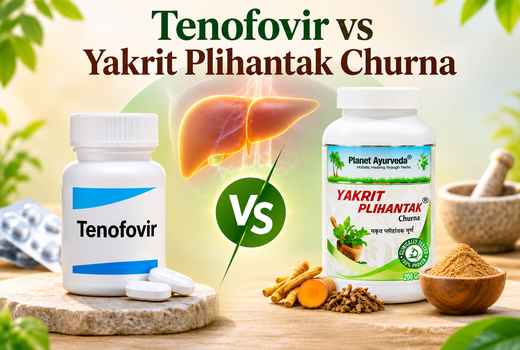
The liver is one of the most important organs of the human body, responsible for metabolism, detoxification, digestion, nutrient storage and several essential biochemical activities. Viral infections, unhealthy dietary habits, alcohol consumption, metabolic disorders and certain medications can affect normal liver function. Tenofovir is an antiviral medicine commonly prescribed for chronic hepatitis B (HBV) and used in specific HIV treatment regimens. It works by interfering with viral replication and helps reduce the amount of virus in the body. Ayurveda approaches liver health through the concept of Yakrit (liver), Pitta Dosha (functional principle associated with heat and metabolism), Agni (digestive and metabolic activity) and Rakta Dhatu (blood tissue). Planet Ayurveda’s Yakrit Plihantak Churna is a polyherbal formulation containing Bhumi Amla, Katuki, Punarnava, Kalmegh, Bhringraj, Kaasni, Makoy and Sharpunkha. These herbs have traditionally been used to support liver and spleen health. The formulation may be considered for complementary liver wellness after professional assessment. However, it does not have established antiviral efficacy against hepatitis B and should not replace Tenofovir or other prescribed antiviral medicines.
Introduction
The liver performs numerous functions that are essential for maintaining overall health. It processes nutrients absorbed from food, produces bile, regulates blood glucose, metabolises fats and proteins, stores vitamins and minerals, and helps eliminate waste products and certain harmful substances from the body. When the liver is affected by infection or metabolic disturbances, its normal functioning may become impaired. Hepatitis B is one such condition caused by the hepatitis B virus (HBV). It primarily affects liver cells and may cause inflammation, fibrosis, cirrhosis and, in some cases, hepatocellular carcinoma (liver cancer). Tenofovir is an important medicine used in the management of chronic hepatitis B. It helps control viral multiplication and reduces the risk of progressive liver damage. Alongside conventional treatment, interest in Ayurvedic approaches to liver wellness has increased. Ayurveda describes the liver as Yakrit, an important organ associated with Pitta Dosha and Rakta Dhatu. Herbal formulations containing traditionally recognised liver-supporting herbs are used to maintain liver function and metabolic balance. Yakrit Plihantak Churna by Planet Ayurveda is one such formulation. It combines eight herbs traditionally valued for their role in Yakrit (liver) and Pliha (spleen) health. Understanding the differences between Tenofovir and Yakrit Plihantak Churna helps establish their appropriate roles in liver care.
Understanding Tenofovir
Tenofovir is an antiviral medicine belonging to the nucleotide reverse transcriptase inhibitor (NRTI) class. It is available in different formulations, including Tenofovir disoproxil fumarate (TDF) and Tenofovir alafenamide (TAF). It is primarily used in combination with other antiretroviral medicines for HIV infection and as a standalone antiviral option for chronic hepatitis B, depending on the formulation and clinical indication.
How Does Tenofovir Work?
Tenofovir works by interfering with an enzyme required for viral replication. In hepatitis B infection, the virus uses an enzyme called HBV DNA polymerase, which plays an important role in producing new viral DNA. Tenofovir is converted into its active form inside cells and competes with the natural building blocks required for viral DNA formation. When incorporated into the growing viral DNA chain, it prevents further DNA elongation. This reduces viral replication and helps lower HBV DNA levels in the bloodstream. By controlling viral multiplication, Tenofovir helps reduce ongoing liver inflammation and the risk of complications associated with chronic hepatitis B.
Common Uses Of Tenofovir
- Chronic hepatitis B infection.
- HIV-1 infection as part of combination antiretroviral therapy.
- Prevention of mother-to-child transmission of hepatitis B in eligible pregnant women under medical protocols.
- Reduction of viral activity in patients who meet the clinical criteria for antiviral treatment.
Possible Side Effects And Precautions
Tenofovir is generally well tolerated, but some individuals may experience adverse effects. These can include:
- Nausea, diarrhoea or abdominal discomfort.
- Headache and fatigue.
- Changes in kidney function.
- Reduction in bone mineral density, particularly with long-term TDF use in susceptible individuals.
- Rare cases of lactic acidosis or severe liver enlargement with steatosis.
Kidney function and other relevant laboratory parameters should be monitored during treatment. The choice between TDF, TAF and other antiviral options depends on the patient’s medical history, kidney health, bone health and other clinical factors.
An important precaution: Patients taking Tenofovir should never discontinue it independently. Stopping antiviral treatment can cause hepatitis B to reactivate, sometimes resulting in a serious flare of liver inflammation.
Ayurvedic Perspective On Hepatic Pathophysiology
In classical Ayurvedic medicine, the liver is designated as Yakrit, serving as the primary root of the Raktavaha Srotas (channels of blood circulation and transformation). It is closely governed by Ranjaka Pitta, the specialised sub-dosha responsible for blood formation, colour imparting, and enzymatic transformation. Pathological deviations in hepatic function typically stem from Pitta aggravation, Kapha accumulation, and systemic metabolic stagnation. When digestive fire (Agni) falters at the tissue level (Dhatvagni), unprocessed metabolic intermediate toxins known as Ama (Toxins) accumulate within the microchannels of the liver and spleen (Pliha). This obstruction induces localised inflammation (Kamala or Udar Roga precursors), lipid engorgement (Yakrit Vikara), and progressive loss of tissue vitality. Ayurvedic treatment protocols prioritise clearing Ama (Toxins), pacifying vitiated Pitta and Kapha, restoring localised circulation, and promoting cellular regeneration through bitter (Tikta) and astringent (Kashaya) tastes.
What Is Yakrit Plihantak Churna By Planet Ayurveda?
Yakrit Plihantak Churna is a polyherbal Ayurvedic formulation developed by Planet Ayurveda for supporting liver and spleen health. It contains eight traditionally valued herbs selected for their Ayurvedic properties and their potential role in maintaining normal hepatic function. The formulation includes Bhumi Amla, Katuki, Punarnava, Makoy, Sharpunkha, Bhringraj, Kaasni and Kalmegh. These herbs are traditionally recognised for their Deepana (supporting digestive activity), Pitta-balancing, metabolic and liver-supportive properties. The formulation is intended to complement healthy liver-care practices. Its use in people with hepatitis B must be discussed with the treating physician, particularly when they are already taking antiviral medication.
Key Botanical Constituents And Their Mechanisms
The therapeutic efficacy of Yakrit Plihantak Churna stems from its carefully selected individual herbal components:
- Bhumi Amla (Phyllanthus niruri): Widely studied for its anti-hepatotoxic and antiviral properties, Bhumi Amla assists in clearing surface antigens associated with viral hepatitis and supports the downregulation of elevated liver enzymes.
- Katuki (Picrorhiza kurrao): Renowned for its bitter profile and active picrosides, Katuki stimulates bile flow, exhibits potent anti-inflammatory activity, and actively promotes hepatocellular regeneration.
- Punarnava (Boerhavia diffusa): Acting as a natural diuretic and rejuvenator, Punarnava assists in clearing excess fluid and lipid accumulations, reducing organ enlargement and cellular oedema.
- Makoy (Solanum indicum): Valued for its capacity to normalise elevated alkaline phosphatase and mitigate tissue damage arising from metabolic and chemical insults.
- Kalmegh (Andrographis paniculata): Often termed the "King of Bitters," Kalmegh supports deep tissue detoxification, boosts immunity, and improves overall hepatic metabolism.
- Bhringraj (Eclipta alba): Traditionally prescribed as a premier liver tonic, Bhringraj supports structural repair, enhances protein synthesis within hepatocytes, and protects against chemical toxicity.
- Kaasni (Cichorium intybus): Chicory exhibits profound protective actions on both hepatic and renal tissues, purifying the blood and supporting microvascular circulation.
- Sharpunkha (Tephrosia purpurea): Assists in managing fibrotic tendencies and structural degeneration within the hepatic matrix.
Comparative Analysis: Yakrit Plihantak Churna Versus Tenofovir
Evaluating Yakrit Plihantak Churna as a sustainable alternative or supportive paradigm to Tenofovir involves assessing several physiological and pharmacological dimensions:
- Mechanism of Action and Organ Scope: Tenofovir acts via targeted biochemical interference, specifically inhibiting viral DNA polymerase. Its therapeutic scope is predominantly antiviral. In contrast, Yakrit Plihantak Churna operates through polyvalent botanical pathways. It addresses viral replication indirectly via immunomodulation and direct virustatic phytoconstituents while simultaneously resolving lipid infiltration, reducing oxidative stress, and supporting overall tissue regeneration.
- Safety Profile and Systemic Tolerability: Synthetic antiviral agents like Tenofovir carry established monitoring requirements due to potential nephrotoxicity and bone mineral density reduction. Yakrit Plihantak Churna, being a natural polyherbal preparation, exhibits a high safety margin when consumed in recommended quantities. It works harmoniously with physiological pathways, avoiding the heavy renal clearance burdens associated with long-term synthetic nucleoside analogues.
- Comprehensive Tissue Restoration: While Tenofovir suppresses viral load, it does not heal damaged tissue architecture or correct the underlying metabolic sluggishness (Agni mandya) that permits disease progression. Yakrit Plihantak Churna cleanses the microchannels (Srotas), normalises lipid metabolism in non-alcoholic and metabolic fatty liver conditions, and restores native cellular vitality, aligning with the holistic recovery goals of chronic disease management.
Lifestyle And Dietary Management For Better Liver Health
Along with appropriate medical treatment, healthy dietary and lifestyle practices are important for maintaining liver function.
- Follow a Balanced Diet: Include fresh vegetables, seasonal fruits, whole grains and adequate protein in daily meals. Avoid excessive intake of processed foods, refined sugar and deep-fried foods.
- Avoid Alcohol: Alcohol can increase liver injury, particularly in individuals with chronic hepatitis B or existing liver damage. Complete avoidance is advisable.
- Maintain a Healthy Body Weight: Excess body weight and insulin resistance may contribute to fatty liver changes. Regular physical activity and gradual weight management can support metabolic health.
- Maintain Proper Hydration: Drink sufficient water throughout the day according to individual requirements. Avoid unnecessary use of sugary beverages.
- Follow Regular Medical Monitoring: People with chronic hepatitis B should undergo regular assessment of HBV DNA, liver enzymes and liver fibrosis when indicated. Screening for liver cancer may also be recommended in individuals at increased risk.
Conclusion
The management of complex hepatic pathologies demands therapies that balance viral suppression with cellular protection and metabolic restoration. While Tenofovir provides targeted antiviral utility in specific viral conditions, its synthetic nature introduces management challenges regarding long-term systemic tolerability. Yakrit Plihantak Churna offers a comprehensive, multi-targeted alternative rooted in classical Ayurvedic principles. By harnessing potent hepatoprotective botanicals like Bhumi Amla, Katuki, and Punarnava, the formulation addresses the root causes of hepatic distress—clearing metabolic toxins, reducing inflammation, and fostering tissue regeneration. Consequently, herbal formulations present a balanced, holistic pathway toward sustainable liver health and long-term vitality.