


Vacha, Sweet flag (Acorus Calamus) – Uses, Benefits, Dosage and Properties
Description of Plant
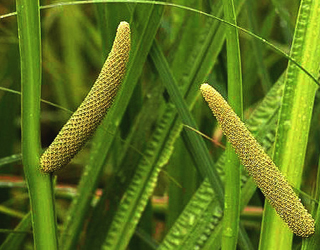
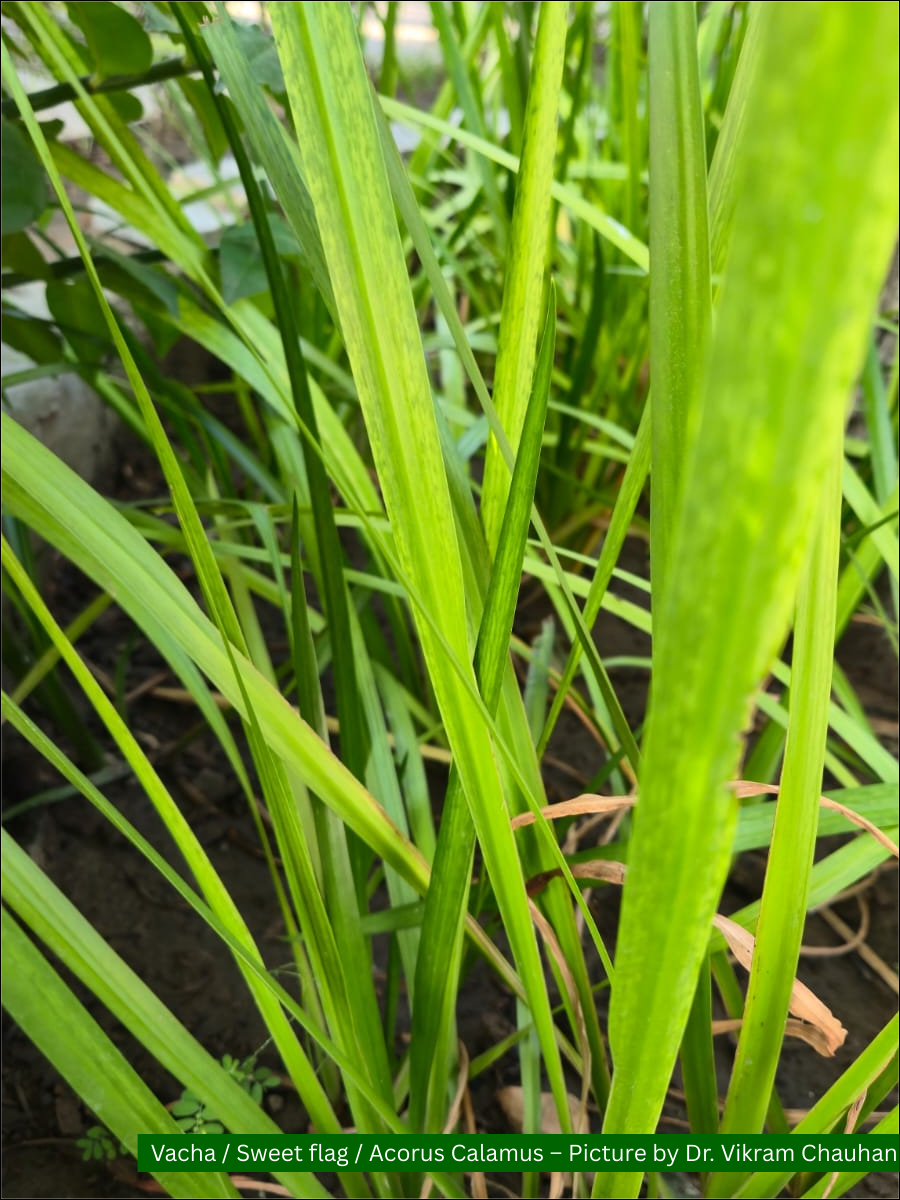
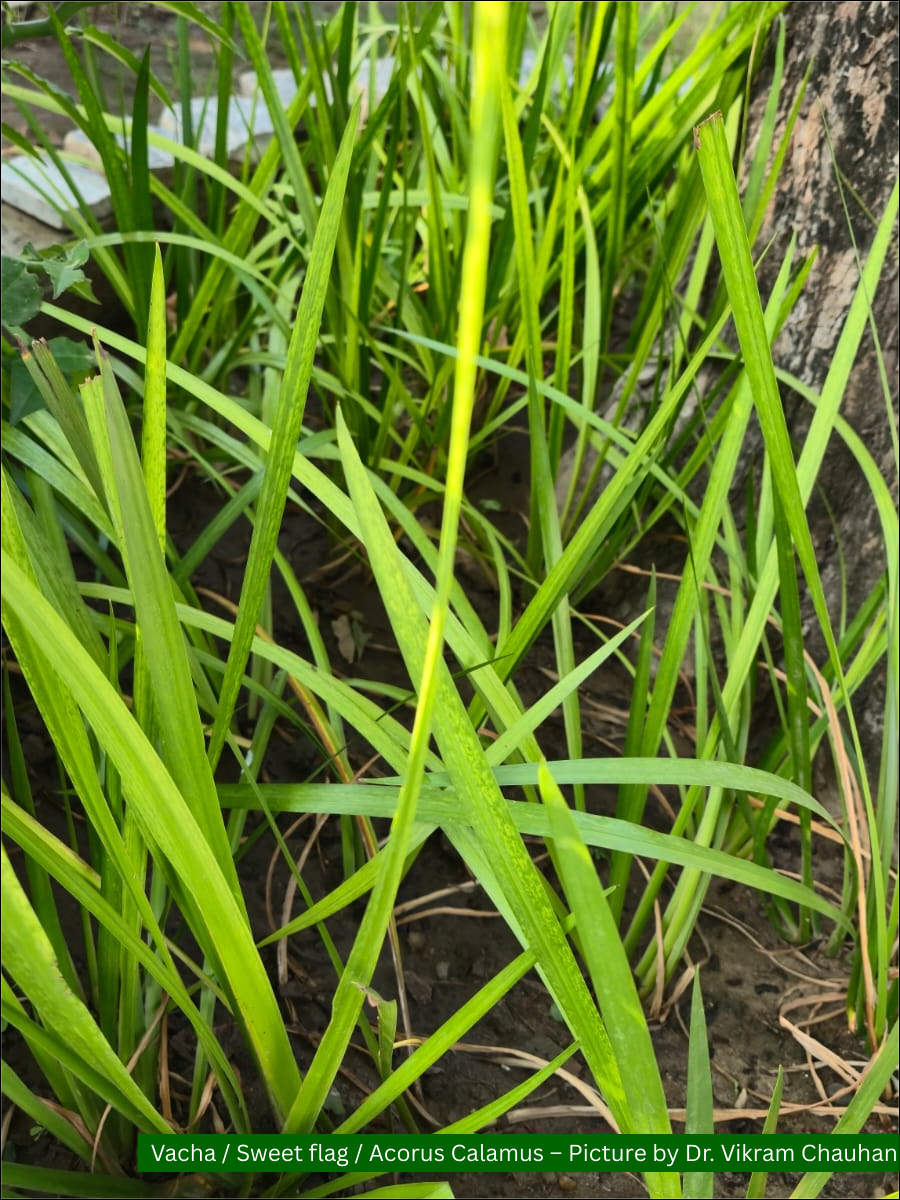
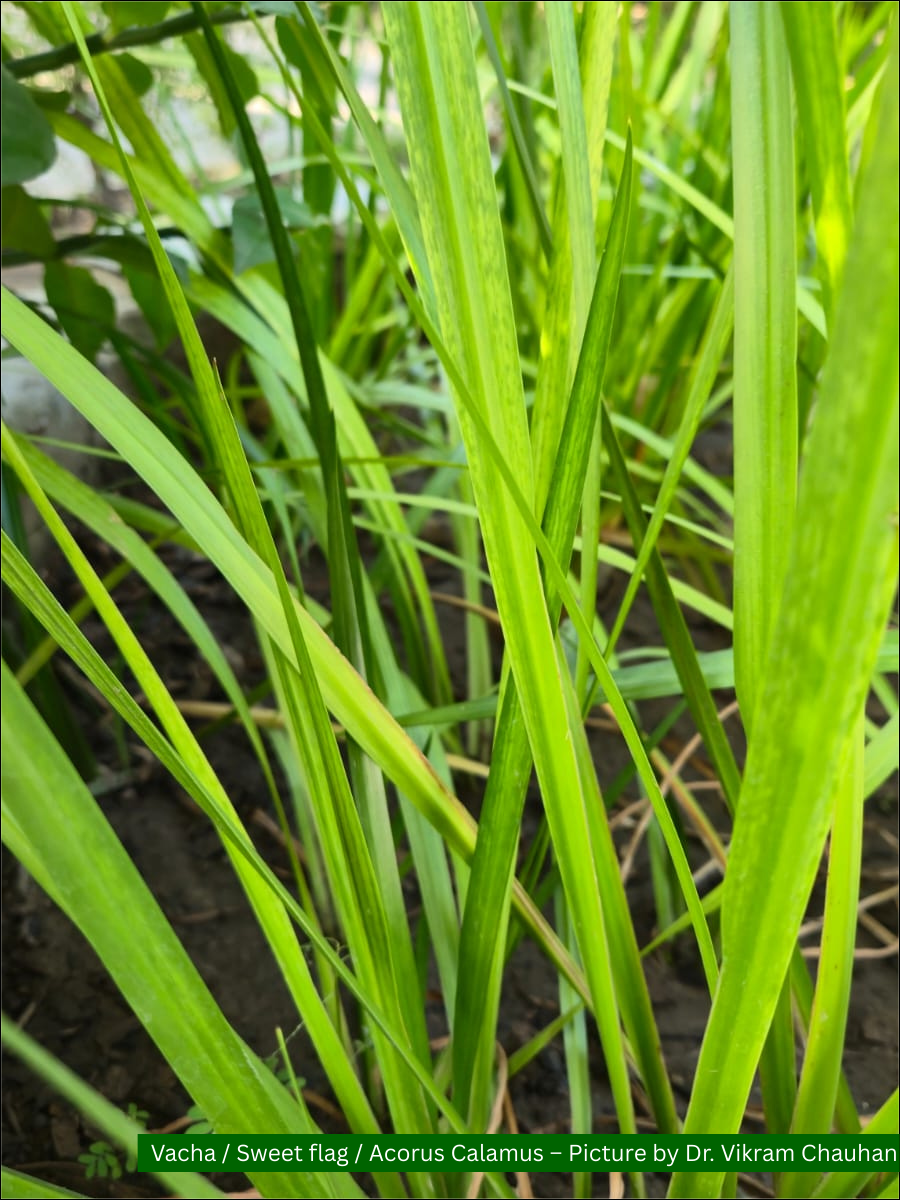
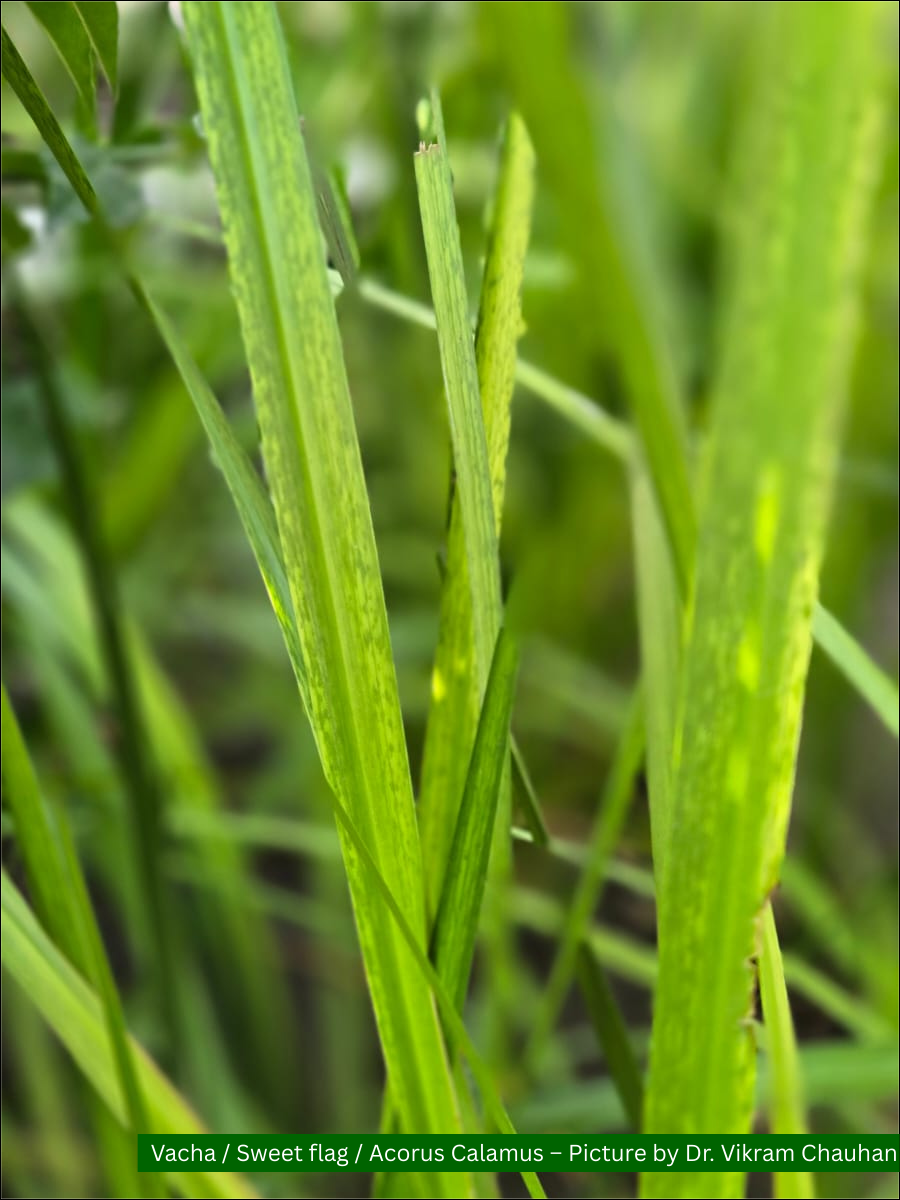
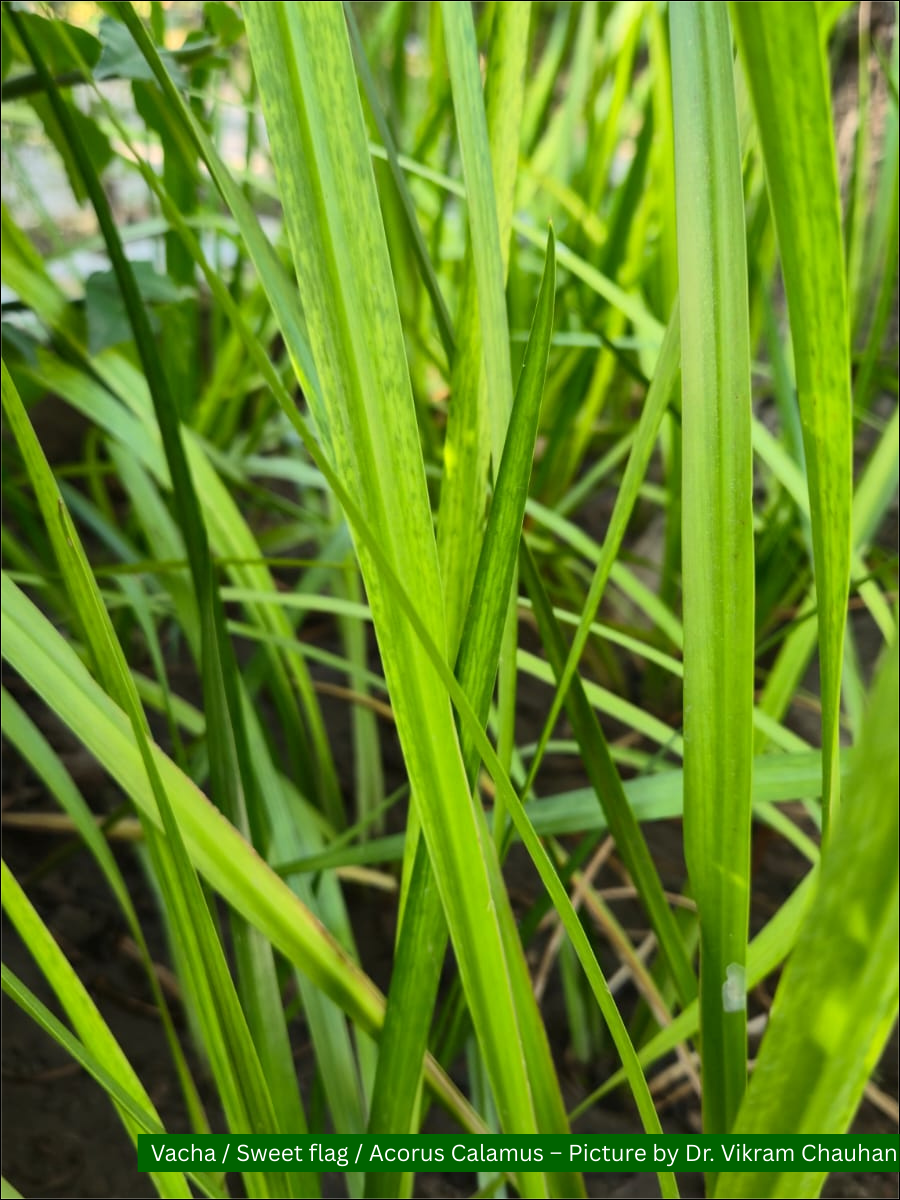
It is soft plant of 2-4ft height found in moist edges of streams and lakes. Green colored leaves with wavering edges are 2-4ft long and 1inch in breadth. Flowers are small, dense and whitish in color. Fruits are pulpy with numerous seeds. Its underground hairy and brownish root resembles to ginger rhizome. Leaves and roots of this plant are aromatic. Plant with very strong aroma is considered to be the best quality.
General Information
Acorus calamus, also known as “Vacha” in Sanskrit has been used for various reasons in different parts of the world. Be its action in counteracting hallucinatons, to acting as a medicine that improves memory and speech, alternative system of medicine has always found this monocot herb to be extremely beneficial.
With a strong aroma, this herb has rhizomes which resemble very closely to ginger. Having its very strong action on the nervous system, the potency of this herb’s chemical constituents like asarone cannot be questioned.
U.S. FDA however has banned its usage citing its chemical constituents to be strongly carcinogenic after multiple experiments conducted on rats which resulted in the development of cancer in them. However, the experiments cannot rule out the immense beneficial effects that this herb can have for human beings when used under medical supervision.
As per Ayurveda, Vacha is a very stimulating nervine tonic which increases the satvic content of the body constitution and energizes the kundalini. It is one of the best herbs till date for mental problems and has numerous other health benefits also.
Vacha is a semi aquatic perennial herb with strongly aromatic roots and long lesser aromatic leaves. The aroma is used for making perfumes.
Acharya Charak mention two varieties of vacha:-
- Vacha (Acorus calamus)
- Shweta vacha (Iris germanica)
Bhavprakash categorized this herb into five types:-
- Vacha (Acorus calamus)
- Parasika vacha (Iris germanica)
- Kulajana (Alpinia galangal)
- Sthoola granthi (Zingiber zerumbet)
- Dveepantra vacha (Chopachini – Smilax china)
Special note about Acorus Calamus
Acorus calamus is universally known for correcting mental problems especially linked with drug over dosage and memory. Beside these, it is a great detoxifying herb that removes ama and establishes long lasting health. Specific activity of this herb is in improving intellect naturally.
Classification
- Kingdom – Plantae
- Order – Acorales
- Family – Acoraceae
Names
- Sanskrit – Khadiravacha, golomi, ugragandha, shadgrantha, lomasha, jatila, hemavati etc.
- English – Sweet flag, Calamus, Myrtle grass, Rat root, German ginger etc.
- Hindi – Vach, Ghorvach, Safed vach
- Telugu – Vasa
- Tamil name – Vashambu
- Malyalam – Bavambu
- Gujarati name – Godavaj
- Urdu name – Vach, baj
- Nepali name – Bojho
Habitat
Calamus is semi-aquatic perennial monocot found throughout world. It is cultivated in damp marshy places in India and Burma. It is commonly available in Manipur and Naga hills of India. It is abundantly found on the edges of streams and lakes.
Ayurvedic Properties
| Hindi / Sanskrit | English | ||
| Rasa | Katu, Tikta | Taste | Pungent, Bitter |
| Guna | Laghu, Tikshna | Physical Property | Light, Sharp |
| Virya | Ushna | Potency | Hot |
| Vipaka | Katu | Metabolic Property (After Digestion) | Pungent |
Effects On Doshas
It balances Vata and Kapha doshas.
| Charak Samhita | Sushrut Samhita | Vagbhata | Bhavprakash |
|
Pipalayadi, Mustadi, Vachadi |
Mustadi, Vachadi, Vastadi, Haridradi chardana, Niruhana |
Deepana, Vamana |
Ancient Verse about Vacha (Acorus calamus)

Vacha, ugargandha, shadgrantha, golomi, shatparvika, shudarpatri, manglaya, jatila, ugra and lomasha are various synonyms of vacha. It has offensive nauseating smell, pungent bitter taste, hot potency, digestive, emetic, and used to relieve abdominal pain, constipation and flatulence. Rhizome of this herbis used to treat disorders associated with vata dosha and is useful in psychological disorders.
Practical uses of Vacha (Acorus calamus)
- Vacha dissolves and digests “Ama” or the toxic metabolites that accumulate in our body as a result of our faulty lifestyle and eating habits. It also acts on the digestive fire and improves digestion.
- Over dosage of the herb can induce strong vomiting so its dosage has to be very carefully monitored.
- As mentioned earlier, it is great for the mind and improves overall vitality of the body. Schizophrenia, Epilepsy, Neuralgia and paralysis are a few mental conditions in which Vacha can be very beneficial.
- People in the Himalayas use Vacha as a folk medicine to cure speech problems by tying the herb around the neck of children as a necklace and it is said that it has a very positive impact on the speech, especially if they are having any speech related problem.
- Vacha, as part of its detoxification properties helps to clear out bowel, relieving constipation and abdominal colic.
- Vacha has a very balancing effect on the deranged vata dosha in the body therefore, it is able to balance all kinds of nervous problems (mainly due to imbalanced vata) and digestive concerns like bloating, constipation etc.
- Another unusual action of Vacha is in reducing obesity, its udvartana is performed externally on the body in this case.
- Vacha can really relieve a difficult or delayed delivery by inducing strong uterine contractions. It can be given in dysmenorrhea as well. It should also be remembered that this herb should not be used during pregnancy for the same reason.
- To be administered with great care on Pitta type body constitution. Vacha is also very cautiously given to children and is best contra indicated at the time of lactation.
- Along with other herbs for the mind like Jatamansi, tagar etc. vacha is used in multiple combinations for different types of nervous disorders.
Dosage
Powder: 125-500 mg in divided dosage.
Useful Parts
Sweet flag Rhizome







1 thought on “Vacha / Sweet flag / Acorus Calamus”