


Yellow Thistle (Argemone mexicana Linn.) – Properties, Uses & Dosage
Abstract
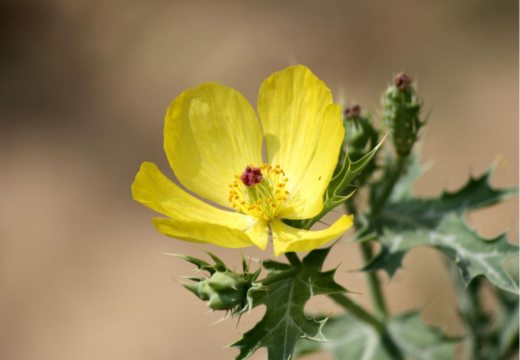
Argemone mexicana Linn., commonly known as Yellow Thistle or Mexican Poppy, is a wild, spiny plant known for its bright yellow flowers and significant medicinal potential. It is easily recognised by its deeply lobed leaves, thorny stems, and showy yellow flowers. The plant is hardy, drought-resistant, and often grows in wastelands and along roadsides. Traditionally used in various indigenous systems of medicine, this plant contains several active phytochemicals with antimicrobial, anti-inflammatory, analgesic, and hepatoprotective properties. Despite its toxic potential, controlled use of its extracts offers therapeutic benefits across multiple health conditions. This article explores its botanical features, ethnomedicinal applications, chemical constituents, and pharmacological relevance.
Introduction
Argemone mexicana is a widely recognised medicinal plant utilised in various traditional healing practices. It is commonly used for managing skin disorders, inflammation, warts, tumours, malaria, jaundice, rheumatism, leprosy, and microbial infections. The plant is rich in bioactive compounds, including alkaloids, flavonoids, terpenoids, long-chain aliphatic alcohols, amino acids, carboxylic acids, steroids, carbohydrates, and phenolic compounds. Its ethnopharmacological significance lies in its application in Ayurveda and other traditional systems as an antioxidant, antimicrobial, anti-inflammatory, anticancer, larvicidal, wound-healing, hepatoprotective, and sterilising agent. Its long-standing use in Ayurveda, Unani, and Siddha systems reflects its ethnobotanical importance.
Scientific Classification
- Kingdom: Plantae
- Phylum: Angiosperms
- Class: Eudicots
- Order: Ranunculales
- Family: Papaveraceae
- Genus: Argemone
- Species: mexicana
Synonyms
- Katu Parni (Leaves with pungent taste)
- Svarna Kshiri (Has golden yellow latex)
- Kanchana Kseeri (Has golden yellow latex)
- Karshani (Useful in weight loss)
- Hemadugdha (Has golden yellow latex)
- Kanchani (Has golden yellow latex and flowers)
- Tikta Dugdha (Latex with bitter taste)
- Peetadugdha (Has golden yellow latex)
Vernacular Names
- English: Mexican Poppy, Mexican Prickly Poppy, Flowering Thistle, Cardo, Cardosanto
- Hindi: Satyanashi, Bhadaband, Kataila
- Gujarati: Phirangi Dhattur, Dharudi, Darudi
- Telugu: Picchi Kusuma, Itturi
- Malayalam: Ponnummattam
- Tamil: Kudiyotti
- Kannada: Datturi
- Bengali: Shiyal Kanta, Shiyalkanta
- Marathi: Kantai Dhautra, Kantedhotra, Daruri
- Konkani: Redonoxi
- Oriya: Kantakusham
- Punjabi: Bhatkatheya
- Urdu: Baramdaandi
- French: Argemone
- German: Doppelklappen
- Persian: Baramdaandi
- Santhali: Gokuhla-Janum
Habitat
Argemone mexicana is native to tropical America, particularly Mexico, and has spread to regions like India, Southeast Asia, Africa and parts of the United States.
Morphology
Argemone mexicana is a spiny, herbaceous plant that typically grows to a height of 30-120 cm. The stem is erect, branched and covered with sharp, white spines. Its leaves are deeply lobed, dark green and have a rough, prickly texture, with distinct veins running along the surface. The bright yellow flowers are solitary, occurring at the ends of branches and consist of numerous stamens, giving them a showy appearance. The plant produces a cylindrical, elongated fruit capsule that contains numerous small, black seeds. The roots are fibrous, extending deep into the soil, which helps the plant withstand drought conditions.
Classical Categorisation:-
- According to Charaka: Bhedneeya (Purgative Herbs)
- According to Sushruta: Adhobhaghara (Herbs used to treat diseases of the lower body)
- Vranshodhana (Herbs used for wounds)
- According to Bhavprakash Nighantu: Haritkyadi Varga
- According to Raj Nighantu: Parpatadi Varga
Parpatadi Varga
हेमाव्हा रेचनी तिक्ता भेदिन्युत्क्लेशकारिणी।
क्रिमीकण्डूविषानाहकफपित्तास्रकुष्ठनुत।।(Bhavprakash Nighantu Haritakyadi varga 177)
According to the above shloka, Yellow thistle contains a laxative, a bitter taste and expels out the obstructed stools, helps to manage helminthiasis, itching, toxicity, blood disorder, skin diseases and balance Kapha and Pitta dosha.
Ayurvedic Properties
- Taste (Rasa)- Bitter (Tikta)
- Physical property (Guna)- Light (Laghu), Dry (Rooksha)
- Potency (Veerya)- Cold Potency (Sheet)
- Post-digestion effect (Vipaka)- Katu (Pungent)
- Effect on tridosha- Balance Pitta and Kapha dosha
Therapeutic Properties
- Antimicrobial
- Anti-inflammatory
- Antioxidant
- Hepatoprotective
- Analgesic
- Antimalarial
- Laxative
- Wound-healing
Systemic Actions
External- The leaf paste, seed oil and latex of this plant are used for wound healing and treating skin disorders. The root paste exhibits anti-poisonous properties, while the seeds have analgesic effects. Additionally, seed oil and seed paste can be applied to relieve arthritic joint pain.
Internal Use
- Digestive System: The root and seed oil have purgative properties and also exhibit anthelmintic activity. In some individuals, they may induce vomiting. They are indicated for conditions such as constipation, abdominal distension and colic pain. Root powder, in a dose of 3–4 grams, can be administered in cases of helminthiasis.
- Circulatory System: Root juice possesses blood-purifying properties, while the latex is effective in reducing oedema.
- Skin: It is recommended for the treatment of various skin disorders.
Chemical Composition
- Sanguinarine
- Berberine
- Protopine
- Dihydrosanguinarine
- Chelerythrine
- Quercetin
- Kaempferol
- Terpenoids
- Carboxylic acids
- Amino acids
- Phenolic compounds
- Carbohydrates
Modern Overview
Larvicidal Activities
Acetone and petroleum ether extracts of Argemone mexicana have demonstrated larvicidal activity and inhibited the development of Aedes aegypti from the second instar larval stage. Among the tested extracts, the ethanol extract of the flower showed the strongest larvicidal effect, suggesting its potential as an alternative mosquito control agent.
Antiinflammatory Activities
Chronic inflammation is a key factor in the development of many diseases. Sinigrin shows strong potential in reducing this risk by modulating immune responses. It influences macrophage activity by inhibiting lipopolysaccharide-induced nitric oxide production, suppressing tumour necrosis factor, and reducing interleukin-6 (IL-6) levels. By suppressing inflammatory mediators, Sinigrin exhibits significant immunomodulatory effects.
Anticancer Activity
The flowers of Argemone mexicana were evaluated for their anticancer activity against the human hepatoma (HepG2) cell line. In vitro studies assessed the cytotoxic potential of the solid material obtained from the ethyl acetate fraction of the flower extract at varying concentrations. The cytotoxic effects were validated using the methylthiazole diphenyl-tetrazolium bromide (MTT) assay to determine cell viability and relevant biomarkers.
Practical Uses
- For Skin Disorders: Leaf paste or latex is applied to skin disorders like eczema, scabies, and itching.
- For Wound Healing: Fresh leaf paste or latex helps in wound healing and prevents infection.
- For Constipation: Seed oil or root extract acts as a purgative and is used in constipation (with caution).
- For Intestinal Worms: Root powder (3–4 g) is taken with water to expel intestinal worms.
- For Swelling and Oedema: Latex is applied externally to reduce swelling and oedema.
- For Blood Purification: Root juice is used in small doses for blood purification.
- For Arthritic Pain: Seed oil or paste is massaged on joints to relieve arthritic pain.
Part Used
- Roots
- Seeds
- Latex
- Seed oil
Dosage
- Powder- 1-3 gms
- Latex- 5-10 drops
- Oil- 10-30 drops
- Fresh juice- 5-10 ml
Conclusion
Argemone mexicana is a traditionally valued medicinal plant known for its diverse therapeutic uses, particularly in skin disorders, wound healing, digestive issues and joint pain. While it offers potent purgative, anthelmintic, anti-inflammatory, and analgesic properties, its toxic nature requires cautious use. Proper dosage and guidance from a qualified practitioner are essential to ensure safe and effective application in both traditional and home remedies.