


Barley / Hordeum Vulgare L. / Yava – Classification, Ayurvedic Properties & Dosage
Abstract
Barley (Hordeum vulgare), commonly known as Yava in Ayurveda, is an important cereal grain recognized for its nutritional and therapeutic properties. It has been widely used in traditional Ayurvedic medicine and dietary practices due to its beneficial effects on health and well-being. According to Ayurvedic principles , Yava is generally described as Ruksha (dry), Laghu (light to digest) and Lekhana (scraping or reducing excess tissue and fat) and is traditionally considered beneficial in the management of Kapha and Meda (adipose tissue) disorders. It is used in various dietary preparations and traditional formulations to support digestion, metabolism and weight management. From a modern nutritional perspective, barley is a rich source of dietary fibre, particularly beta-glucan, along with vitamins, minerals, and other bioactive compounds. These constituents may contribute to improved bowel health, cholesterol management and regulation of postprandial blood glucose levels. The integration of traditional Ayurvedic knowledge with contemporary scientific research highlights the potential importance of barley as both a functional food and a supportive component of preventive healthcare.
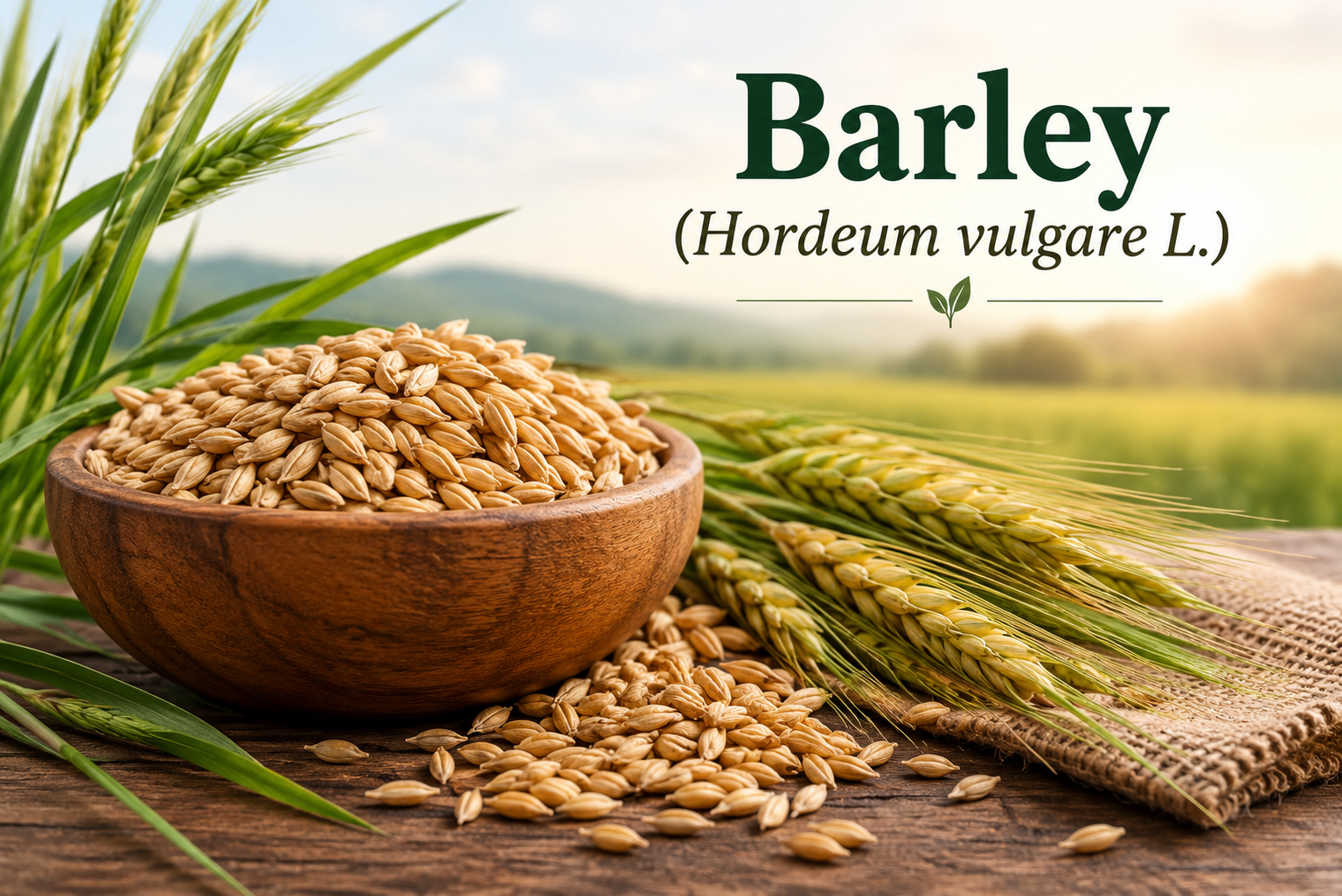
Introduction
Barley (Hordeum vulgare L.) is one of the oldest cultivated cereal crops and has been valued for its nutritional, dietary, and medicinal significance since ancient times. It belongs to the family Poaceae and is cultivated in various parts of the world due to its adaptability to different climatic conditions and its wide range of uses. Barley serves as an important source of carbohydrates, dietary fibre, proteins, vitamins, minerals and bioactive compounds that contribute to its nutritional value. In addition to its role as a food grain, barley has gained importance in traditional systems of medicine, particularly Ayurveda, where it is known as Yava.
Synonyms
- Yava (यव) : The most commonly used Sanskrit name for barley.
- Sthula Dhanya (स्थूल धान्य) : A term associated with a coarse grain.
- Aksata (अक्षत) : A term sometimes associated with grains; its specific use as a synonym for barley should be verified in the relevant classical text.
- Dhanyaraja (धानयराज) : King or chief among grains.
- Hayapriya (हयप्रिय) : Beloved of horses ; reflects the traditional use of barley as animal feed.
Vernacular Names
- In Sanskrit : Yava (यव)
- In Hindi : Jau (जौ)
- In English : Barley
- Kashmiri : Grumm
Historical View
Reference : Bhavaprakash Nighantu , Dhanya Varga, verse 28–29
“ यवः कषायो मधुरः शीतलो लेखनो मृदुः । वृष्यः तिलवत्पथ्यो रूक्षो मेधाग्निवर्धनः ॥ २८ ॥ कटुपाकोऽनभिष्यन्दी स्वयं बलकरो गुरुः । बहुवातामलो वर्ष्यश्च्यकारी च पिच्छिलः ॥ २९ ॥ ”
Barley (Yava) is described as having Kashaya (astringent) and Madhura (sweet) Rasa , Sheeta (cold) Virya and Katu (pungent) Vipaka. It possesses properties such as Ruksha (dry), Lekhana (scraping) , which is associated with reducing excess Meda (adipose tissue). Yava is also considered beneficial for Medha (intellect) and Agni (digestive and metabolic capacity) and is described as Vrishya (supportive of reproductive health). The verse also describes Yava as Balakara (strength-promoting) and Guru (heavy).
Habitat
Yava (Hordeum vulgare L.) is an annual cereal crop belonging to the family Poaceae. It is widely cultivated in temperate and subtropical regions of the world and grows well in cool , relatively dry climatic conditions. In India, barley is cultivated mainly during the winter season (Rabi season), particularly in states such as Rajasthan, Uttar Pradesh, Haryana, Punjab, Madhya Pradesh, and Uttarakhand. It is commonly grown in plains and suitable mid-hill regions, where cool temperatures during vegetative growth favour its development.
Ayurvedic Properties Of Yava
- Rasa (Taste) : Kashaya, Madhura
- Guna (Quality) : Ruksha
- Veerya (Potency) : Sheeta
- Vipaka (Post digestive effect) : Katu
- Karma (Action) : Kapha-Pittahara
- Part used : Whole plant
Dosage
“ अनुपानं हिमं वारि यवगोधूमयोर्हितम् ॥ ” (Astanga Hrdaya, Sutrasthana 8/47)
Cold water is beneficial as an accompanying drink after meals containing barley and wheat.
Pharmacological Activities
- Hypocholesterolemic : Beta-glucan forms a viscous gel in the intestine, helping reduce cholesterol absorption and increase bile acid loss, which can lower LDL cholesterol.
- Hypoglycemic : Soluble beta-glucan can slow digestion and glucose absorption, moderating post-meal blood glucose responses.
- Immunomodulatory : Barley beta-glucans may interact with immune-cell receptors and influence innate and adaptive immune responses.
- Anti-Inflammatory : Certain barley extracts and bioactive constituents have shown effects on inflammatory pathways in experimental studies.
Bioactive Constituents
- Beta-Glucan : A soluble dietary fibre primarily responsible for barley’s cholesterol-lowering properties and some of its effects on post-meal glucose.
- Phenolic Acids : Compounds such as ferulic acid that contribute to antioxidant activity.
- Flavonoids : Plant compounds investigated for antioxidant and anti-inflammatory effects.
- Arabinoxylans : Cell-wall polysaccharides that contribute to dietary fibre and may influence gut function.
- Tocopherols And Tocotrienols : Vitamin E-related compounds with antioxidant properties.
Classification
- Kingdom : Plantae
- Class : Liliopsida (monocotyledons)
- Order : Poales
- Family : Poaceae (Gramineae)
- Genus : Hordeum
- Species : Hordeum vulgare L.
Clinical Uses
- Sthaulya (Obesity): Yava is traditionally used in dietary regimens for managing excess body weight because of its Lekhana and Medohara properties.
- Prameha (Metabolic Disorders): Barley is recommended in certain Ayurvedic dietary approaches for Prameha. Its fibre content may also help moderate post-meal blood glucose responses.
- Kapha Disorders: Due to its traditionally described Ruksha quality, Yava is considered useful in dietary regimens intended to reduce excess Kapha.
- Medoroga (Disorders Involving Excess Adipose Tissue): Its traditional Lekhana action supports its use in diets aimed at reducing excess Meda.
- Agnimandya (Reduced Digestive Capacity): Yava is used in dietary preparations according to digestive capacity and method of cooking.
- Mutravikara (Urinary Disorders): Barley-based preparations are traditionally used in some dietary practices for urinary health; specific therapeutic effects require appropriate clinical evidence.
Systemic Actions
Digestive System
- Supports bowel regularity due to its dietary fibre content.
- Beta-glucan and other fibres can influence intestinal transit and gut microbial activity.
Cardiovascular System
- Barley beta-glucan can help reduce LDL cholesterol.
Endocrine And Metabolic System
- Soluble fibre may moderate post-meal blood glucose responses by slowing carbohydrate absorption.
- Fibre may improve satiety and support weight management.
Urinary System
- Barley water is traditionally consumed as a beverage to support fluid intake.
- Adequate fluid intake can help maintain normal urine production.
Nervous System
- Barley supplies B-group vitamins and other nutrients involved in normal nervous-system function.
Musculoskeletal System
- Barley provides carbohydrates, plant protein, phosphorus, magnesium, and other nutrients that contribute to normal energy metabolism and tissue function.
Immune System
- Barley contains beta-glucan and polyphenols that have been investigated for possible immunomodulatory and antioxidant effects.
Haematological System
- Barley contains some iron, folate, and other nutrients involved in normal blood formation.
Home Remedies
- Barley Water (Yava Jala) : Used as a refreshing drink and to increase fluid intake. It may be useful when additional fluids are appropriate, but it is not a proven treatment for urinary disorders.
- Barley Porridge (Yava Yavagu) : A simple food preparation that provides energy and fibre.
- Cooked Barley With Vegetables : A fibre-containing meal suitable for a balanced diet. Barley beta-glucan may help lower LDL cholesterol when consumed in adequate amounts regularly.
Recent Research
A review published in 2024 explored its traditional properties and possible relevance in addressing metabolic and lifestyle-associated conditions, such as obesity, diabetes mellitus, and cardiovascular disorders. From a nutritional perspective, barley contains substantial amounts of dietary fibre, particularly beta-glucan, along with various phenolic substances and antioxidant compounds that may contribute to improved bowel function, lipid metabolism, and post-meal glucose regulation. Furthermore, a systematic review and meta-analysis published in 2026, which assessed 31 controlled clinical trials, reported reductions in postprandial blood glucose and insulin levels following barley consumption.
Classical Formulations Containing Barley
- Yav kshar
- Chandanosiradi kashayam




