


Desmostachya bipinnata (L.) Stapf / Eragrostis cynosuroides Beauv. / Darbha Grass/ Halfa Grass/ Munja
Abstract
Desmostachya bipinnata (L.) Stapf, commonly known as Darbha or sacrificial grass, is an important medicinal plant recognised in the Ayurvedic Pharmacopoeia. It is widely distributed across the plains of India and extends from the Middle East to Indo-China, as well as North and tropical Africa. The plant typically thrives in open habitats, particularly in arid and semi-arid regions where the water table is close to the surface. It commonly grows in moist sandy loams, sand dunes, and coastal areas, especially along the Coromandel Coast and in the Deccan districts. It is known by various regional names such as Saved Gram, Darbh, Dabhdo, Dab, and Darbaipul. This grass also holds significance as one of the constituents of Trina Panchamoola. Due to its wide distribution and traditional importance, Desmostachya bipinnata is valued both medicinally and culturally in various traditional healthcare systems.
Classical References
-
- Bhavprakash Nighantu Guduchyadi varga
- Raj Nighantu Salmalyadi varga
Scientific Classification
- Kingdom: Plantae
- Order: Poales
- Family: Poaceae (Gramineae)
- Subfamily: Chloridoideae
- Genus: Desmostachya (Stapf) Stapf
- Species: Desmostachya bipinnata (L.) Stapf
Scientific Synonyms
This species has several scientific synonyms, including:
- Eragrostis cynosuroides (Retz.) P. Beauv.
- Briza bipinnata L.
- Desmostachya cynosuroides (Retz.) Stapf
- Poa cynosuroides Retz.
- Leptochloa bipinnata (L.) Hochst.
Synonyms
- Soochyagra – Leaves with needle-like pointed tips
- Soochimukha – Sharp, pointed leaf ends
- Pavithra – Sacred and pure grass
- Pavitraka – Used for purification rituals
- Yajna Samstara – Used as a sacred mat during yajna
- Yajnanga – Considered an essential part of yajna rituals
- Yajna Bhushana – Used as an adornment in sacrificial rituals
- Yajna Darbha – Sacred grass used in yajna ceremonies
- Deerghapatra – Long-leaved grass
- Ksurapatra – Leaves with sharp edges
- Soochyagra – Leaves tapering like a pin
- Khoorachjatha – Sharp-edged grass
- Brahmapavithra – Sacred grass associated with Brahma
- Kudtha – A traditional name of Kusha grass
- Varhi – Used in sacrificial rituals
- Mahadarbha – Large variety of Darbha grass
- Mahamoola – Grass with a strong root system
- Mahapathri – Broad or prominent leaves
- Yajnabhooshana – Used in sacred ceremonies
- Mahakusha – Large or superior Kusha grass
- Kusha – General name of sacred grass
- Darbha – Sacred ritual grass
- Hrasva Darbha – Short variety of Darbha
- Shveta Darbha – White variety of Darbha
- Pooti Darbha – Aromatic or distinct Darbha
- Mrudu Darbha – Soft variety of Darbha
- Lava Kusha – Fine or thin Kusha grass
- Barhi – Grass used in Vedic rituals
- Krutapa – Sacred ritual grass
- Kshudra Darbha – Small variety of Darbha
- Kshuracchada – Razor-sharp leaves
Vernacular Names
- Sanskrit: Kusha, Darbha, Barhi, Yajnyabhooshana, Kshurapatra
- Hindi: Kushta, Kusa, Dabh, Davoli, Kush Ghas, Durva
- English: Sacrificial Grass, Sacred Kusha Grass, Salt-reed Grass, Halfa Grass, Tadh Grass
- Bengali: Kush, Derbha
- Gujarati: Darbha, Darabha
- Kannada: Kusha, Dharbe
- Malayalam: Kusha Veru, Darbha
- Marathi: Darbha, Daabh
- Punjabi: Dhab, Dih, Kusa
- Tamil: Darbhaipul, Taruppai, Teruppai
- Telugu: Dharbha, Darbhagaddi, Kusa Dharbha
- Assamese: Kush
- Arabic: Halfa, Sanaiba
- Afghanistani: Drab, Kuthag
- Bolan Region: Drab
- Bombay Region: Drabh
- Bundelkhand: Dabvi
- Central Provinces: Chir, Dabhat, Kusha
Habitat
Desmostachya bipinnata is widely distributed in arid and semi-arid regions of South Asia, extending westward to the Middle East and North Africa. It is commonly found throughout India, particularly in hot, dry climates, and is also reported in countries such as Egypt, Syria, and across the Pakistan-India region. This halophytic grass thrives in sandy and alluvial soils, including riverbanks, fallow lands, field bunds, roadside margins, and degraded grasslands, from plains up to an altitude of about 1500 meters. Ecologically, Desmostachya bipinnata acts as a pioneer species on disturbed soils. Its long, vigorous rhizomes help bind loose substrates, reduce soil erosion, and improve water infiltration. The plant grows abundantly in neglected agricultural lands and dry sandy soils, where it forms dense tufts and spreads rapidly, creating extensive patches. Due to its strong root system and adaptability to salt and drought conditions, it is considered a highly persistent grass that is difficult to eradicate once established.
Morphology
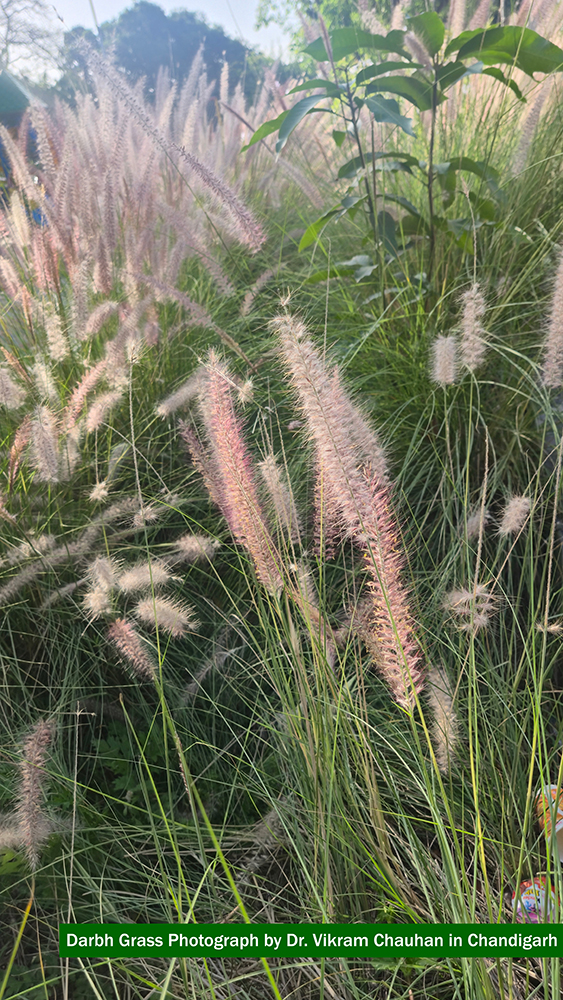
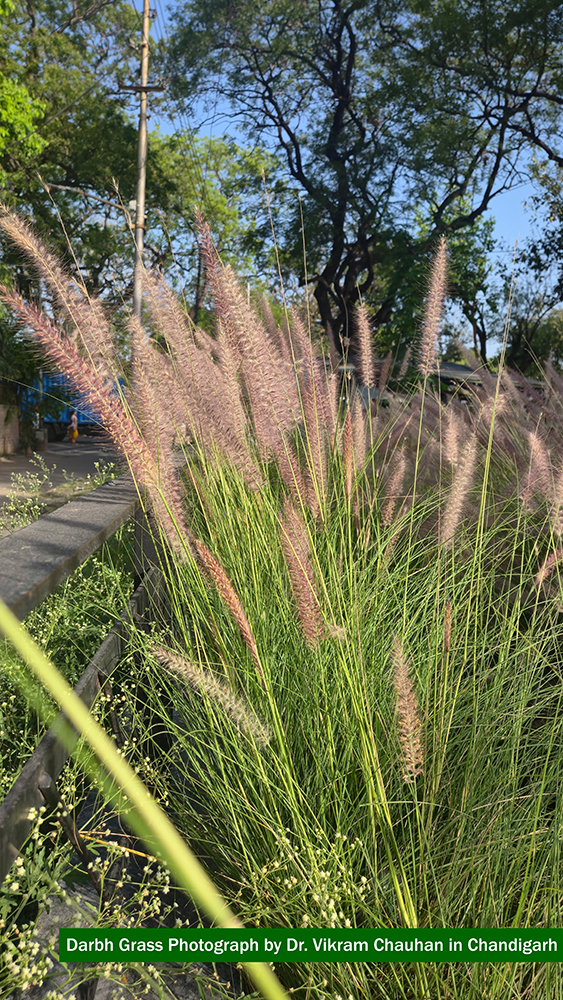
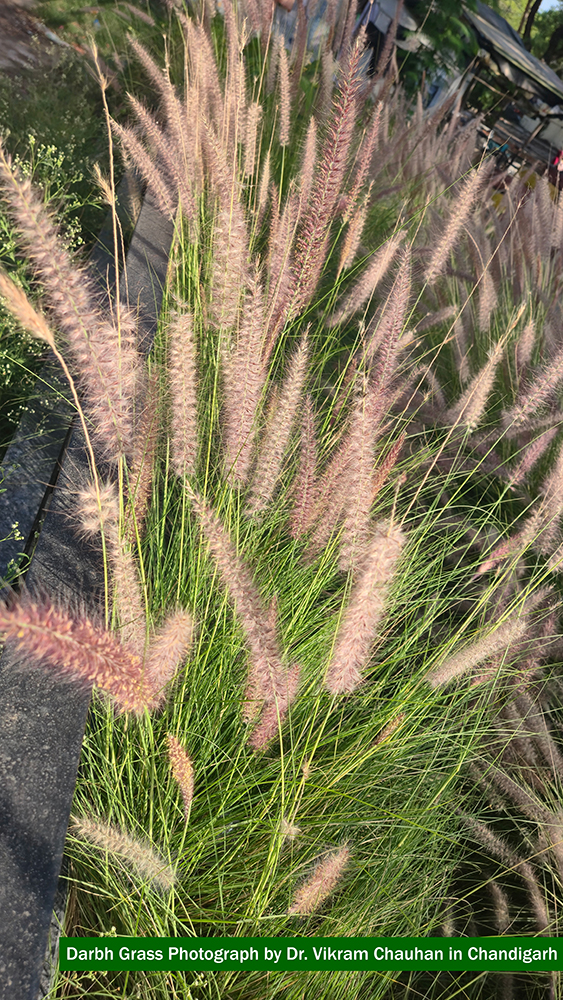
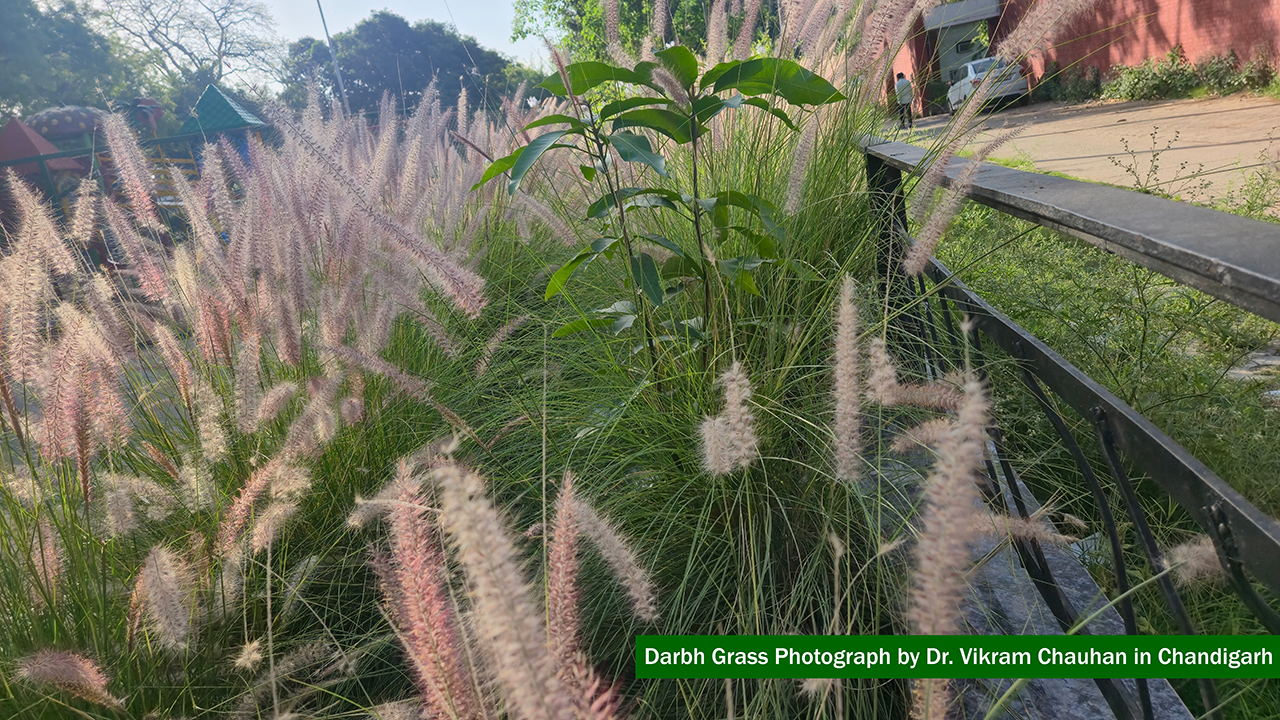
Desmostachya bipinnata is a rhizomatous, perennial grass forming dense tufted clumps that grow up to 1–1.2 meters tall. The culms are stout, erect, and rough, arising from a strong underground rhizome system. Leaves are rigid, linear, and narrow, reaching up to 65 cm in length and 3.8–10.5 mm in width, with setaceous tips and minutely scabrid margins; the lower leaf sheaths are thick, leathery, and flabellate, sometimes with long hairs at the mouth. The inflorescence is a strict, grey-green, racemiform panicle up to 60 cm long, linear to oblong, occasionally narrowly pyramidal, bearing densely arranged spikelets on the rachis or short branchlets. Spikelets are narrowly ovate to linear-oblong, 3–10 mm long, containing 3–17 florets; the upper glume is longer than the lower, and lemmas are coriaceous, ovate, and slightly rough along the keels, with palea nearly equal in length. The flowers are straw-colored or violet-tinged, measuring 1.8–2.7 mm, and flowering occurs from July to November, producing an obliquely ovoid, faintly trigonous caryopsis.
Special Note
In Bhavaprakasha Nighantu, Kusha and Darbha are described together, indicating that they share similar properties and therapeutic actions, although they are considered two distinct types of grasses. In classical Ayurvedic texts such as Charaka Samhita and Sushruta Samhita, Kusha, Kasha, and Darbha are frequently mentioned together and used in various formulations. Dalhana has described these three grasses distinctly: Kusha is identified as a short variety of Darbha, characterised by being small, soft, and having needle-like leaves; Kasha is recognised by its feathery flowers and soft leaves; while Darbha is described as taller, coarser, and having broader, rough leaves. Raja Nighantu also mentions a white variety known as Shweta Darbha, which is considered more potent in therapeutic use. The roots of these grasses are primarily used for medicinal purposes in Ayurveda.
Classical Categorisation
- According to Charaka Samhita: Classified under Mutravirechaniya, Stanyajanana, and Madhura Skandha groups
- According to Sushruta Samhita: Included under Trina Panchamoola
- According to Bhavaprakasha Nighantu: Mentioned in Guduchyadi Varga
- According to Kaiyadeva Nighantu: Classified under Oushadhi Varga
- According to Shodala Nighantu: Included in Karaveeradi Varga
- According to Dhanwantari Nighantu: Classified under Karaveeradi Varga
Ancient Verse
कुशो दर्भस्तथा बर्हिः सूच्यम्रो यज्ञभूषणः ।
ततोऽन्यो दीर्घपत्रः स्यात्क्षुरपत्रस्तथैव च ॥
दर्भद्वयं त्रिदोषघ्नं मधुरं तुवरं हिमम् ।
मूत्रकृच्छ्राश्मरीष्णावस्तिरुक्प्रदरास्त्रजित् ॥ Bhavprakash Nighantu Guduchyadi Varga 165-166
According to the above shloka, Kusha is known by several synonyms, such as Kusha, Darbha, Barhi, Soochyagra, and Yajnyabhooshana, whereas Dabh is referred to by the names Deerghapatra and Kshurapatra. Both varieties of Darbha (Kusha and Dabh) are described as having similar therapeutic properties. They are considered tridosha-balancing, possessing sweet and astringent tastes, and having cooling potency. Traditionally, they are used in the management of urinary disorders such as dysuria (Mutrakrichra), urinary calculi (Ashmari), excessive thirst, bladder-related disorders, and abnormal uterine bleeding (Rakta Pradara).
मुञ्जस्तु मधुरः शीतः कफपित्तजदोषजित् ।
प्रहरक्षासु दीक्षासु पावनो भूतनाशनः ।। Raj Nighantu Salmalyadi varga 86
According to the above shloka, Munja is sweet, cooling, and cures vitiated kapha and pitta. This alleviates the evil spirits from the house and saves them from bad stars. It is also used when a disciple is accepted by a Guru (Diksha).
मृदुदर्भः कुशो बर्हिः शुचिचीरः सुवृत्तकः ।
खरोऽन्यः पृथुलः शीरी गुन्द्रा च नीरजः स्मृतः ॥
दर्भयुग्मं पवित्रं स्यान्मूत्रकृच्छ्रघ्नशीतलम् ।
रक्तपित्तप्रशमनं केवलं पित्तनाशनम् ॥ Dhanwantari Nighantu Karaveeradi varga 86
According to the above shloka, this shloka lists the various names and synonyms for Darbha. These include Mridudarbha, Kusha, Barhi, Shuchichira, and Suvrittaka. It also mentions another variety characterised as Khara (rough), Prithula (broad), Shiri, Gundra, and Neeraja. The shloka describes the two varieties of Darbha as inherently sacred and pure, highlighting their significant therapeutic value in Ayurveda. It specifies that these grasses possess a cooling potency (Sheet), which makes them highly effective in treating dysuria (painful or difficult urination) and pacifying the Pitta dosha. Furthermore, the text emphasises their ability to alleviate Raktapitta (Bleeding disorders), a condition involving bleeding disorders caused by excessive internal heat, ultimately characterising Darbha as a premier medicinal herb for neutralising heat-related ailments and cooling the entire system.
Ayurvedic Properties
- Taste (Rasa)– Sweet (Madhur), Astringent (Kashaya)
- Potency (Veerya )- Cold Potency (Sheet)
- Effect on tridosha– Balance Vata, Pitta and Kapha dosha
Therapeutic Indications
- Helps in dysuria (Mutrakrichra)
- Useful in urinary calculi (Ashmari)
- Relieves excessive thirst (Trishna)
- Beneficial in bladder disorders (Basti roga)
- Helps manage abnormal uterine bleeding (Rakta Pradara)
- Reduces burning sensation (Daha)
- Pacifies aggravated Pitta dosha
- Useful in bleeding disorders (Raktapitta)
- Helps in heat-related conditions
- Provides an overall cooling effect to the body
Systemic Actions
Internal Uses
- Digestive System – Exhibits styptic properties; useful in bleeding per rectum and excessive thirst.
- Circulatory System – Beneficial in various bleeding disorders.
- Reproductive System – Helpful in menorrhagia, metrorrhagia, and supports breast milk production.
- Excretory System – Indicated in dysuria, renal calculi, renal colic, and helps increase urine output.
- Tapakrama – Helps reduce burning sensation and heat-related conditions.
- Skin (Tvak) – Useful in various skin disorders.
Chemical Composition
Major Phytochemical Groups
- Flavonoids
- Alkaloids
- Glycosides
- Saponins
- Steroids
- Triterpenoids
- Coumarins
- Phenolic compounds
- Tannins
- Volatile oils
- Carbohydrates
- Proteins
Flavonoids
- Apigenin
- Luteolin
- Quercetin
- Kaempferol
- Quercetin-3-glucoside
- 4′-Methoxy quercetin-7-O-glucoside
- Trycin
- Trycin-7-glucoside
Steroids And Triterpenoids
- β-Sitosterol
- Stigmasterol
- Daucosterol
- Stigmast-5-en-3β,7β-diol
- Stigmast-5-en-3β,7α-diol
- α-Amyrin
Coumarins
- Scopoletin
- Umbelliferone
Rootstock Components
- Cylindrin
- Arundoin
- Ferinole
- n-Hexadecanoic acid
- β-Eudesmol
- Juniper camphor
- 5-Hydroxymethyl-2-furfural
- β-Sitosterol-glucoside
Leaves And Aerial Parts
- Benzofuran 2,3-dihydro
- Octasiloxane
- Kaempferol
- Quercetin
Essential Oil Components
- L-Limonene
- Camphene
- Endoborneol
- Tricyclene
- Sobornyl acetate
- Caryophyllene oxide
- Caryophyllene diepoxide
Other Identified Compounds
- 2,6-Dihydroxy-7-methoxy-3H-xanthen-3-one
- Diphenyliodinium bromide
- 2-Cyclohexene-1-one
Physicochemical Properties
- Total ash value: 3.13%–3.30%
- pH: Approximately 6.8 (slightly acidic)
Actions And Properties Of Various Chemical Constituents
For Kidney Problems
Desmostachya bipinnata (Kusha or Darbha) supports kidney health through its diuretic, anti-urolithiatic, and antioxidant properties, mainly due to its diverse phytochemical constituents. Flavonoid glycosides such as kaempferol, quercetin, and tricin-7-glucoside help protect renal tissues from oxidative stress and cellular damage. Coumarins like scopoletin and umbelliferone exhibit anti-inflammatory and mild diuretic actions, which assist in improving urinary flow and reducing urinary tract irritation. Phytosterols, particularly β-sitosterol-D-glucopyranoside, show antimicrobial activity against pathogens such as E. coli and Klebsiella pneumoniae, thereby helping prevent kidney infections. Phenolic compounds and tannins further reduce inflammation and support urinary tract health. Additionally, terpenoids and steroidal constituents present in hydro-alcoholic extracts help reduce calcium oxalate crystal formation and enhance urinary electrolyte excretion, making the plant beneficial in kidney stone management.
For Menorrhagia
Desmostachya bipinnata (Kusha or Darbha grass) is traditionally used in menorrhagia due to its astringent, haemostatic, and anti-inflammatory properties, which are attributed to its bioactive phytochemicals. Flavonoids such as kaempferol, quercetin, quercetin-3-glucoside, tricin, and tricin-7-glucoside help reduce oxidative stress and inflammation, thereby supporting uterine health and balancing aggravated Pitta associated with excessive bleeding. Triterpenoids contribute to haemostatic action by helping control excessive menstrual flow. Coumarins like scopoletin and umbelliferone provide additional anti-inflammatory and mild antispasmodic effects, which help reduce uterine irritation. Tannins and alkaloids exert astringent and styptic properties that tighten tissues and reduce blood loss. Together, these compounds help shorten clotting time, contract uterine tissues, and manage heavy menstrual bleeding effectively.
Anti-diabetic Activity
Desmostachya bipinnata (Kusha or Darbha grass) exhibits anti-diabetic activity due to the presence of various phytochemicals that work synergistically to regulate blood glucose levels. Flavonoids such as quercetin, kaempferol, tricin, and tricin-7-glucoside provide strong antioxidant effects, helping reduce oxidative stress associated with diabetes. Phenolic compounds and tannins assist in improving lipid profiles by lowering cholesterol and triglyceride levels. Sterols and terpenoids, including β-sitosterol-D-glucopyranoside, contribute to glucose regulation and metabolic balance. Coumarins like scopoletin and umbelliferone further enhance the therapeutic effect through anti-inflammatory and antioxidant actions. These constituents collectively help reduce hyperglycemia, improve glucose uptake by peripheral tissues, inhibit α-amylase activity, and protect pancreatic and muscular tissues from diabetic damage.
Hepatoprotective Activity
Desmostachya bipinnata exhibits significant hepatoprotective activity mainly due to its polyphenolic fraction rich in flavonoids and flavonoid glycosides. Compounds such as quercetin, quercetin-3-glucoside, tricin, tricin-7-glucoside, apigenin, luteolin, and 4′-methoxy quercetin-7-O-glucoside act as potent antioxidants that protect liver cells from oxidative stress and lipid peroxidation. Coumarins like scopoletin and umbelliferone further contribute through anti-inflammatory and liver-protective actions. The presence of 2,6-dihydroxy-7-methoxy-3H-xanthen-3-one helps prevent LDL oxidation and supports antioxidant defence. Additionally, sterols such as β-sitosterol and stigmasterol, along with triterpenoids, help stabilise liver cell membranes and reduce inflammation. Together, these constituents help lower elevated liver enzymes, reduce cholesterol and bilirubin levels, and enhance antioxidant enzymes, thereby protecting against liver damage.
Practical Uses / Health Benefits
- Diarrhoea & Burning Sensation – Decoction of Kusha root is administered in a dose of 40–50 ml to relieve diarrhoea and reduce excessive body heat.
- Dysmenorrhea & Leucorrhea – Cold infusion prepared from the root of Desmostachya bipinnata is given in a dose of 40–50 ml.
- Eczema – Paste of Kusha root is applied externally over the affected area to help manage skin conditions.
- Lactation Support – Root of Kusha boiled in milk is given in a dose of 30–40 ml to help improve breast milk production in lactating women.
- Urinary Disorders – Decoction of Desmostachya bipinnata root (40–50 ml) is used for burning micturition, urinary retention, renal calculi, and bladder cleansing.
- Wound Cleansing – Decoction prepared with Kusha, Neem, Turmeric, and Triphala is used for washing fresh wounds.
- Trinapanchamoola Use – Kusha, along with Kasha, Nala, Darbha, and Ikshu, forms Trinapanchamoola, which is used for thirst, scanty urination, and Pitta-related disorders.
- Piles – Kusha root mixed with Bala root and taken with rice water helps control bleeding in piles and menometrorrhagia.
- Pradara (Excessive Bleeding) – Kusha root pounded with rice water and taken for three days helps reduce excessive bleeding.
- Wound Healing – Decoction prepared from Triphala, Khadira, Daruharidra, Nyagrodhadi (Panchavalkala), Bala, Kusha, and tender Neem leaves is used for wound cleansing.
- Dysuria (Painful Urination) – Decoction of Shatavari, Kusha, Kasha, Gokshura, Vidari, Shali, Ikshu, and Kaseruka with honey and sugar is used in Pitta-type dysuria.
- Diuretic Group – Kusha, Kasha, Sara, Darbha, and Ikshu together form Trina Panchamoola, which is useful as a diuretic and helpful in dysuria associated with aggravated Pitta.
Parts Used
Root
Dosage
Powder- 3-6 gms
Classical Products
- Chandanadi Oil
- Varanadi Kashayam
- Trinpanchmooladi Kashayam
- Sukumar Kashayam
Planet Ayurveda Products
- Trinpanchmool Ghan Vati
- Reno Plan Syrup
- Stono Plan Syrup
Conclusion
Eragrostis cynosuroides is an important medicinal grass widely recognised in Ayurveda for its cooling, diuretic, haemostatic, and Pitta-pacifying properties. Traditionally, it is used in urinary disorders, bleeding conditions, skin diseases, and reproductive health issues. The plant holds significant therapeutic value. Its rich phytochemical profile, including flavonoids, coumarins, sterols, and phenolic compounds, contributes to antioxidant, anti-inflammatory, hepatoprotective, and anti-urolithiatic activities. Additionally, its role in classical formulations such as Trinapanchamoola further highlights its clinical importance. Overall, this grass serves as a valuable natural remedy with both traditional relevance and modern scientific support for managing various health conditions.
Frequently Asked Questions (FAQ’s)
1. What is the common name of Desmostachya bipinnata?
The common names are Kusha grass, Darbha grass, Sacrificial grass, and Halfa grass.
2. What is the Sanskrit name of Desmostachya bipinnata?
The Sanskrit names include Kusha, Darbha, Barhi, Yajnyabhooshana, and Kshurapatra.
3. What are the medicinal uses of Desmostachya bipinnata?
It is used in urinary disorders, bleeding conditions, skin diseases, kidney stones, burning sensations, and reproductive disorders.
4. What is the Malayalam name of Desmostachya bipinnata?
The Malayalam names are Kusha Veru and Darbha.
5. What is the Tamil name of Desmostachya bipinnata?
The Tamil names are Darbhaipul, Taruppai, and Teruppai.
Was this Page Helpful?