


DCP (Des-gamma-carboxy Prothrombin) / PIVKA-II Test – What Is It? Why Is It Done? Ayurvedic Perspective on Liver Health
Abstract
The DCP (Des‑gamma‑carboxy Prothrombin) / PIVKA‑II Test is an important tumour marker used primarily for the detection and monitoring of liver cancer, particularly Hepatocellular Carcinoma. DCP, also known as PIVKA-II (Protein Induced by Vitamin K Absence or Antagonist-II), is an abnormal form of prothrombin produced due to impaired vitamin K–dependent carboxylation in liver cells. This test plays a significant role in early detection, prognosis, and monitoring treatment response in patients at high risk for liver cancer. It is often used alongside the Alpha‑fetoprotein (AFP) test to improve diagnostic accuracy. This article discusses the scientific basis, procedure, interpretation, clinical significance, and Ayurvedic perspective of the DCP/PIVKA-II test.
Introduction
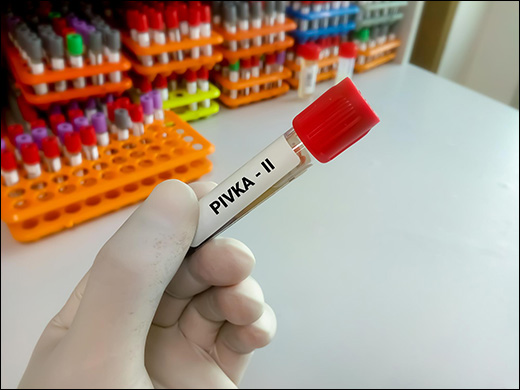
The DCP (Des-gamma-carboxy Prothrombin) or PIVKA-II test is a specialised blood test used to detect abnormal prothrombin produced by malignant liver cells. Normally, prothrombin synthesis in the liver requires Vitamin K for proper carboxylation. When liver cells become cancerous or vitamin K metabolism is impaired, an abnormal form of prothrombin called DCP is produced. This abnormal protein accumulates in the blood and serves as a biomarker for hepatocellular carcinoma. The DCP test has gained importance because it can detect liver cancer even when AFP levels remain normal. Therefore, it is widely used for screening high-risk individuals, monitoring disease progression, and evaluating treatment effectiveness.
Scientific Principle Behind The Test
The scientific foundation of the DCP test lies in the Post-translational Modification of Prothrombin.
- Normal Prothrombin Synthesis: In a healthy liver, prothrombin (a blood-clotting factor) is synthesised with the help of Vitamin K. Vitamin K acts as a cofactor for the enzyme γ-glutamyl carboxylase, which adds carboxyl groups to specific glutamic acid residues. This allows the prothrombin to bind calcium and function correctly in the clotting cascade.
- Malignant Transformation: In Hepatocellular Carcinoma cells, the enzyme activity of γ-glutamyl carboxylase is severely reduced, or the Vitamin K transport mechanism is disrupted.
- The Rise of PIVKA-II: Because the carboxylation process is incomplete, the liver secretes an immature, non-functional form of prothrombin into the bloodstream. This is Des-gamma-carboxy Prothrombin (DCP) or PIVKA-II.
- Tumour Specificity: The concentration of DCP in the blood is directly related to the mass and metabolic activity of the liver tumour. Because it is a product of abnormal cell metabolism rather than general inflammation, it is a highly specific "signpost" for malignancy.
Key Components Of The Test
- Serum or Plasma Sample: The test is performed on blood collected in standard biochemical tubes.
- Monoclonal Antibodies: The test utilises highly specific antibodies that recognise the undercarboxylated portion of the prothrombin molecule, ignoring normal prothrombin.
- Automated Immunoassay: Typically measured using Enzyme-Linked Immunosorbent Assay (ELISA) or high-sensitivity Chemiluminescent Enzyme Immunoassay (CLEIA).
- Units of Measure: Results are generally reported in milli-arbitrary units per millilitre (mAU/mL) or ng/mL.
What Is The Procedure?
The DCP test is a non-invasive "liquid biopsy" procedure:
- Blood Collection: A standard venous blood draw is performed, usually from the antecubital vein in the arm.
- Sample Processing: The blood is centrifuged to separate the serum or plasma from the cellular components.
- Analysis: The sample is processed in an automated analyser. The immunoassay identifies the concentration of the abnormal prothrombin (PIVKA-II).
- Duration: The laboratory analysis typically takes a few hours, with results usually available to the patient within 24 to 48 hours.
Interpretation Of The Test
The clinical interpretation of DCP levels is based on established threshold values:
- Normal Range: Generally, a value below 40 mAU/mL is considered normal.
- Elevated Levels (40 mAU/mL): This suggests the potential presence of HCC. Higher values (100 mAU/mL) are strongly correlated with more aggressive tumours, larger tumour size, and a higher likelihood of vascular invasion (the tumour growing into the portal vein).
- Low AFP/High DCP: This profile is common in certain types of HCC that do not produce AFP, highlighting why both tests are often ordered together.
Health Issues Where The DCP (Des-Gamma-Carboxy Prothrombin) / PIVKA-II Test Is Advised
- Surveillance of High-Risk Patients: Patients with cirrhosis, Hepatitis B, or Hepatitis C are often screened every 6 months using DCP and ultrasound.
- Differential Diagnosis: To distinguish between a benign regenerative nodule in a cirrhotic liver and actual Hepatocellular Carcinoma.
- Staging and Prognosis: To assess the aggressiveness of a known tumour before surgery.
- Monitoring Treatment: To evaluate if a tumour is shrinking after chemotherapy, radiofrequency ablation (RFA), or surgical resection.
- Detection of Recurrence: To catch the early return of cancer in post-operative patients.
Factors Affecting The Results
Several non-cancerous factors can lead to a "false positive" or elevated DCP:
- Vitamin K Deficiency: Since the carboxylation of prothrombin requires Vitamin K, a simple nutritional deficiency can cause DCP to rise even without cancer.
- Warfarin (Coumadin) Therapy: Warfarin is a Vitamin K antagonist. Patients on blood thinners will naturally have very high DCP levels, making the test uninterpretable for cancer screening.
- Broad-Spectrum Antibiotics: Some antibiotics kill the gut bacteria that produce Vitamin K, leading to a temporary rise in DCP.
- Severe Obstructive Jaundice: Bile is required for Vitamin K absorption; if bile flow is blocked, DCP levels may rise.
Advantages Of The Test
- High Specificity: DCP is rarely elevated in chronic hepatitis or cirrhosis without cancer, unlike AFP.
- Predictive Power: DCP levels are a better predictor of portal vein invasion (the cancer spreading into the blood vessels) than AFP.
- Independence: It can detect "AFP-negative" tumours, providing a safety net for patients whose cancers don’t trigger traditional markers.
- Early Detection: It can often detect changes in liver cell health months before they become visible on an ultrasound or CT scan.
Ayurveda Insight
In Ayurvedic science, the liver (Yakrit) is the root of the Raktavaha Srotas (blood-carrying channels). A malignancy like HCC is viewed as a deep-seated imbalance leading to Yakrit-Arbud (liver tumour).
- DCP as a sign of Dhatu-Paka: The production of an "abnormal" protein like DCP indicates Dhatu-Paka—a state where the metabolic fire (Agni) is so corrupted that it produces Ama (toxic byproducts) instead of healthy tissue (Dhatu).
- Ranjaka Pitta Dysfunction: The liver is the seat of Ranjaka Pitta. In HCC, this Pitta becomes "Vidagdha" (corrupted/acidic), leading to the loss of cellular intelligence (the "gene silencing" mentioned in modern science).
- Integrative Management: While the DCP test provides the physical evidence of the tumour, Ayurveda focuses on Srotoshodhana (clearing the channels) and the use of Tikta-Rasayana (bitter tonics) like Bhumyamlaki (Phyllanthus niruri) and Kutki (Picrorhiza kurroa) to stabilise the liver’s Agni and potentially manage the environment in which these abnormal proteins are formed.
Herbs For Liver
Kalmegh (Andrographis paniculata)
Kalmegh is known in Ayurveda as a powerful liver stimulant and Pitta-pacifying herb used in Yakrit disorders. It helps detoxify the liver, improves bile flow, and supports healthy liver cell regeneration. Modern studies show that its active compound, andrographolide, exhibits anti-cancer, anti-inflammatory, and hepatoprotective properties, which may help inhibit abnormal liver cell proliferation seen in Hepatocellular Carcinoma. Research also indicates that Kalmegh reduces oxidative stress and improves immune response against tumour cells. It helps lower liver enzymes and protects hepatocytes from damage. This supportive action may help stabilise tumour markers such as DCP (Des-gamma-carboxy Prothrombin) / PIVKA-II Test. Thus, Kalmegh plays an important supportive role in liver cancer management.
Punarnava (Boerhavia diffusa)
Punarnava is widely used in Ayurveda for liver enlargement, inflammation, and fluid accumulation. It helps remove toxins, reduce swelling, and improve liver metabolism. The herb contains bioactive compounds like boeravinones and punarnavoside that exhibit hepatoprotective and anti-tumour activities. Modern research suggests Punarnava reduces oxidative stress and protects liver cells from carcinogenic damage. It also improves liver function and reduces fibrosis, which is a major risk factor for liver cancer. By supporting liver health, Punarnava may help regulate abnormal levels detected in the DCP/PIVKA-II test. Therefore, it serves as a supportive herb in preventing liver disease progression.
Kutki (Picrorhiza kurroa)
Kutki is considered one of the most potent liver-protective herbs in Ayurveda. It balances Pitta dosha, enhances bile secretion, and promotes liver detoxification. Its active compounds, such as picroside I and kutkoside, have shown hepatoprotective and anti-cancer properties in modern studies. These compounds help reduce liver inflammation and prevent abnormal cell growth. Kutki also supports antioxidant defence mechanisms and protects liver tissues from oxidative damage. By improving liver function and reducing tumour progression, Kutki may help maintain stable DCP/PIVKA-II levels. Thus, it is highly valuable in supportive liver cancer management.
Bhumyamalaki (Phyllanthus niruri)
Bhumyamalaki is traditionally used in Ayurveda for hepatitis, jaundice, and liver disorders. It is known to pacify Pitta and purify Rakta dhatu, supporting liver detoxification. Modern research highlights compounds like phyllanthin and hypophyllanthin that possess antiviral, antioxidant, and anti-cancer properties. These compounds help inhibit liver cancer cell growth and reduce inflammation. Bhumyamalaki also improves liver enzyme levels and supports liver regeneration. By protecting hepatocytes, it may help reduce abnormal elevations seen in the DCP/PIVKA-II test. Hence, it plays a protective role in liver cancer support.
Kaasni (Cichorium intybus)
Kaasni is well known in Ayurveda for its cooling and liver-protective properties. It helps improve digestion, detoxify the liver, and reduce Pitta aggravation. Modern studies show that chicoric acid, lactucin, and inulin present in Kaasni exhibit hepatoprotective and anti-tumour activities. These compounds reduce oxidative stress and inflammation associated with liver cancer. Kaasni also supports bile secretion and improves liver metabolism. By enhancing liver health, it may help regulate tumour markers such as DCP/PIVKA-II. Therefore, Kaasni acts as a supportive herb in managing liver cancer conditions.
Conclusion
The DCP (Des-gamma-carboxy Prothrombin) / PIVKA-II test represents a significant leap forward in the biochemical surveillance of liver health. By focusing on the specific metabolic failure of malignant hepatocytes to process Vitamin K, it provides a highly specific and prognostic marker that complements traditional imaging and AFP testing. While Vitamin K status and medication must be considered during interpretation, the DCP test’s ability to predict vascular invasion and detect AFP-negative tumours makes it an indispensable tool. Combining this high-tech molecular insight with Ayurvedic strategies for liver detoxification and Pitta balance offers a more robust framework for the early detection and holistic management of liver malignancy.