

Herbal Remedies For Iliotibial Band Syndrome – Causes, Symptoms, Diagnosis & Treatment
Abstract
The Iliotibial Band is the silent architect of lateral stability, yet under the strain of repetitive ambition, it becomes a source of searing friction. This "runner’s curse" manifests as a sharp, rhythmic sting where the dense fascia meets the femoral bone—a physical protest against weak hip foundations and sudden training surges. In the modern clinic, we silence this friction through progressive loading and biomechanical tuning, while Ayurveda cools the "Vata" fire with medicated oils and Snehana. It is more than an injury; it is a signal to recalibrate the balance between movement and stability. Let’s discuss it in detail!
Introduction
Iliotibial Band Syndrome is one of the most common overuse injuries among athletes, particularly runners, where it accounts for 5% to 14% of all running-related injuries. In cycling, it is responsible for nearly 24% of overuse complaints. The condition occurs when the thick band of connective tissue running from the outer hip to the shin becomes inflamed due to friction against the lateral femoral epicondyle during repetitive movement. The prognosis is generally very positive, with 50% to 90% of cases resolving within 4 to 8 weeks through conservative management like physical therapy and hip strengthening. However, if the underlying biomechanical issues—such as weak glutes or improper gait—are ignored, recurrence is common. While most individuals return to full activity without surgery, persistent cases may require longer rehabilitation to prevent the pain from becoming a chronic obstacle to training.
What Are The Causes?
This condition generally develops due to repeated stress on the knee. Common causes include:
- Excessive running or cycling
- Running on uneven surfaces or downhill
- Weak hip muscles
- Tight iliotibial band
- Poor running posture
- Sudden increase in training intensity
- Improper Footwear
It is very common in runners, cyclists, hikers, and athletes.
Symptoms
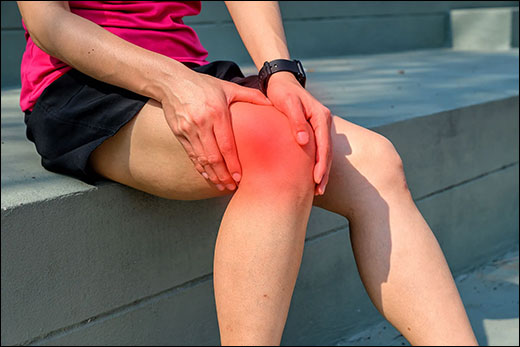
The primary symptom of Iliotibial Band Syndrome is a persistent, aching, or sharp pain on the outer side of the knee, just above the joint line.
Common Signs
- Localized Pain: A stinging sensation that becomes more intense during repetitive movements like running or cycling.
- Worsening with Hills: Pain typically flares up when running downhill or walking down stairs, as the knee stays in the "friction zone" (around 30° of flexion) longer.
- Palpable Tenderness: The area on the outside of the femur (the lateral epicondyle) feels very tender or "hot" to the touch.
- Clicking or Popping: You may feel a physical "snapping" or flicking sensation as the band moves across the bone during knee extension.
- Delayed Onset: In early stages, the pain might not start until you are 10–15 minutes into a workout, but it often lingers afterward.
Diagnosis
Diagnosis is typically clinical, meaning a healthcare professional (like a physical therapist or sports doctor) can identify it through your history and physical tests without needing expensive scans.
- The Clinical Interview – A provider will first look for the "classic" ITB story: pain that starts 10–15 minutes into a run, gets worse going downhill, and disappears shortly after you stop. They will also ask about recent "spikes" in your training volume.
- Physical Provocation Tests – There are two primary manual tests used to confirm the diagnosis:
- Noble’s Compression Test: While you lie on your back, the clinician applies pressure to the outside of your knee and slowly straightens your leg. If you feel sharp pain at roughly 30° of bend, it’s a strong indicator of ITBS.
- Ober’s Test: You lie on your side, and the clinician lifts and moves your top leg to check for tightness. If the leg stays "propped up" and cannot drop toward the table, it indicates significant ITB or hip tightness.
- Imaging (Rarely Needed)
- X-rays: These are usually normal but are used to rule out bone issues like stress fractures.
- MRI: Reserved for chronic cases that aren’t healing. An MRI might show thickening of the band or fluid (inflammation) deep to the tissue, but it’s mainly used to rule out a meniscus tear or ligament injury.
Modern Treatment
Modern treatment for ITB Syndrome has moved away from passive rest and toward active loading and biomechanical correction. The goal is no longer just to "stretch" the band, but to strengthen the muscles that control it.
- Active Recovery & Loading – Instead of stopping all activity, modern protocols use relative rest. You continue moving within a pain-free range, using the "24-hour rule": if pain doesn’t increase the day after exercise, the load is acceptable.
- Hip & Glute Strengthening – This is the "gold standard" of modern rehab. Strengthening the Gluteus Medius prevents the knee from collapsing inward, which is the primary cause of ITB friction. Key Moves include Clamshells, side-lying leg raises, and lateral band walks.
- Gait & Cadence Retraining – Small technical shifts can reduce knee strain by up to 20%:
- Increase Cadence: Taking shorter, quicker steps (increasing SPM by 5-10%) reduces the impact force.
- Widen Stance: Avoiding a "tightrope" gait where feet cross the midline helps reduce the lateral pull on the band.
- Focused Soft Tissue Work – Modern therapy targets the Tensor Fasciae Latae (TFL) and glutes rather than the IT band itself. Since the IT band is non-elastic, foam rolling the band directly is often painful and ineffective; rolling the muscles attached to it provides better relief.
Ayurveda’s View
In Ayurveda, Iliotibial Band Syndrome is primarily viewed as a Vata Vyadhi (Vata disorder), specifically a localized imbalance of the Vata Dosha, which governs movement, dryness, and the nervous system. When Vata becomes aggravated—often due to excessive physical exertion (overtraining), irregular routines, or a diet that is too "cold" or "dry"—it manifests in the musculoskeletal system as Stambha (stiffness) and Shoola (pain). Ayurveda looks beyond the friction at the knee and examines the "dryness" or lack of lubrication (Snehana) in the connective tissues. The Iliotibial band is considered part of the Mamsa Dhatu (muscle tissue) and Snayu (tendons/ligaments). Chronic tension in the hips and lateral thigh suggests that the Vata has depleted the natural protective fluids (Kapha) around the joint, leading to the "burning" friction characteristic of this disease.
रूक्षशीताल्पलघ्वन्नव्यवायातिप्रजागरैः |
विषमादुपचाराच्च दोषासृक्स्रवणादति ||
लङ्घनप्लवनात्यध्वव्यायामातिविचेष्टितैः |
धातूनां सङ्क्षयाच्चिन्ताशोकरोगातिकर्षणात् ||
दुःखशय्यासनात् क्रोधाद्दिवास्वप्नाद्भयादपि |
वेगसन्धारणादामादभिघातादभोजनात् ||१७||
मर्माघाताद्गजोष्ट्राश्वशीघ्रयानापतंसनात् |
देहे स्रोतांसि रिक्तानि पूरयित्वाऽनिलो बली ||
करोति विविधान् व्याधीन् सर्वाङ्गैकाङ्गसंश्रितान् | Charak Samhita Chikitsa Sthana 15-19
This profound shloka from Charaka Samhita (Chikitsa Sthana, Chapter 28, Verses 15-18) serves as the definitive "pathology report" for Iliotibial Band Syndrome when viewed through the lens of Ayurveda The shloka lists specific triggers that directly mirror modern risk factors for ITBS:
- Vyayama & Ativicheshtitaih: "Excessive exercise" and "abnormal movements." In modern terms, this refers to overtraining and poor running biomechanics (like a crossover gait).
- Plavana &atyadhva: "Leaping" and "excessive walking/running." This correlates to the high-impact, repetitive nature of distance running that fatigues the IT band.
- Ruksha-Sheeta-Anna: "Dry and cold food." This increases internal dryness, reducing the natural lubrication (synovial fluid/fascial glide) around the lateral knee.
- Abhighata: "Trauma" or physical stress, which triggers the initial inflammatory response in the fat pad beneath the band.
The Mechanism (The “How”)
- Dehe Srotamsi Riktani: This translates to "empty channels in the body." In ITBS, this represents the depletion of muscle strength (weak glutes) and the loss of moisture in the fascia.
- Purayitva Anilo Bali: The "powerful Vata" (Anila) rushes into these empty, weakened spaces. Because Vata is dry and mobile, it turns a smooth gliding motion into painful friction.
The Manifestation (The “What”)
- Sarvanga-Ekanga-Samshritan: Vata creates diseases that affect the "whole body or a single limb/part." ITBS is a classic Ekanga Vata (localized Vata disorder) because the pain is pinpointed specifically at the lateral femoral epicondyle.
- Vividhan Vyadhin: It produces "various diseases" characterized by Stambha (stiffness) and Shoola (sharp pain)—the two hallmark symptoms of a tight IT band.
According to this shloka, your ITB pain isn’t just a surface issue; it is a Vata-overflow into a site that has been "emptied" by over-exertion and physical stress. To heal, you must not only stop the "Ativyayama" (excessive exercise) but also "refill" those empty channels through Snehana (internal and external oiling) and Brimhana (strengthening/nourishing therapies) as explained below:
- External Oil Therapy (Snehana) The most critical treatment is the application of warm, medicated oils to pacify Vata and restore elasticity to the tissues.
- Mahanarayan Oil: A classical blend of over 50 herbs that is specific for joint and tendon issues.
- Dhanwantaram Thailam: Highly effective for neuromuscular conditions and relieving muscle tightness.
- Application: Perform a gentle Abhyanga (massage) on the hip and lateral thigh. Note: Unlike modern foam rolling, Ayurveda suggests gentle, downward strokes to calm Vata, rather than aggressive "trigger point" pressure.
- Localized Heat (Swedana) After oil application, localized steam or heat helps the oil penetrate deeper into the Snayu (tendons).
- Janu Basti: A unique treatment where a "well" of dough is built around the knee and filled with warm medicated oil. This deeply lubricates the lateral epicondyle area.
- Patra Pinda Sweda: Using a bolus of medicinal leaves (like Neem or Nirgundi) dipped in warm oil to foment the outer thigh.
- Internal Herbal Support
- Guggulu Preparations: Kaishore Guggulu or Yogaraj Guggulu are standard for removing "Ama" (toxins) from the joints and reducing inflammation.
- Ashwagandha: Acts as a rejuvenative (Rasayana) for the muscular system, helping the IT band recover from the stress of overtraining.
- Lifestyle and "Vata-Pacifying" Diet To prevent recurrence, Ayurveda suggests avoiding cold, raw foods during recovery. Instead, favor warm, cooked meals with healthy fats (like Ghee) to lubricate the body from the inside out.
Herbal Remedies For Iliotibial Band Syndrome By Planet Ayurveda
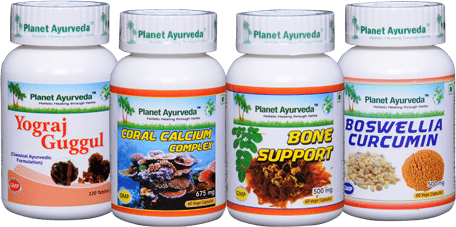
Planet Ayurveda is a herbal manufacturing company dedicated to promoting natural wellness through the principles of Ayurveda. The company formulates a wide range of herbal supplements and classical Ayurvedic preparations using standardized plant extracts and traditional herbs. All products are prepared under strict quality standards without the use of artificial additives, preservatives, or chemicals. Planet Ayurveda focuses on maintaining authenticity by following classical Ayurvedic texts and modern manufacturing practices. The formulations are designed to support overall health and balance in the body. For managing Ileotibial band syndrome Planet Ayurveda has so many formulations out of which some are discussed below:-
- Bone Support
- Coral Calcium Complex
- Boswellia-Curcumin
- Yograj Guggul
Dosage / Usage
- Bone Support – 1 Capsule twice daily with lukewarm water, after meals.
- Coral Calcium Complex – 1 Capsule twice daily with lukewarm water, after meals.
- Boswellia-Curcumin – 1 Capsule twice daily with lukewarm water, after meals.
- Yograj Guggul – 2 Tablets twice daily with lukewarm water, after meals.
Product Description
1. Bone Support
Bone Support is a herbal-mineral formulation available in capsule form designed to maintain bone strength and joint stability. Its major ingredients include Laksha (Laccifer lacca), Hadjod (Cissus quadrangularis), Arjuna (Terminalia arjuna), Mukta Shukti Bhasma (pearl oyster calcium), and Praval Pishti (coral calcium). These ingredients are traditionally known to nourish Asthi dhatu (bone tissue) and support proper mineralization. In the management of iliotibial band syndrome, Bone Support helps strengthen the bones and connective tissues around the hip and knee joints, improving structural support.
2. Coral Calcium Complex
Coral Calcium Complex is a capsule-based mineral formulation that supports bone density and musculoskeletal health. The major ingredients include Praval Pishti (coral calcium), Mukta Pishti (pearl calcium), Akik Pishti (agate calcium), and Jahar Mohra Pishti. These natural calcium compounds are easily absorbable and help nourish Asthi dhatu while maintaining mineral balance in the body. In iliotibial band syndrome, this formulation helps strengthen the bones of the hip and knee joints, which bear repetitive stress during walking or running.
3. Boswellia-Curcumin
Boswellia-Curcumin is a herbal capsule formulation well known for supporting joint comfort and mobility. Its major ingredients are Shallaki (Boswellia serrata) and Curcumin (Curcuma longa extract). These herbs are widely recognized for their natural anti-inflammatory and antioxidant properties. In iliotibial band syndrome, inflammation and irritation of the iliotibial band cause pain along the outer knee and thigh. Boswellia and Curcumin help modulate inflammatory pathways and support tissue healing. This also may help to reduce inflammation around the iliotibial band, improve joint flexibility, and promote comfortable movement, especially in individuals experiencing overuse injuries related to running or physical activity.
4. Yograj Guggul
Yograj Guggul is a classical Ayurvedic tablet formulation traditionally used for maintaining healthy joints and musculoskeletal function. Its major ingredients include Guggul (Commiphora mukul), Chitrak (Plumbago zeylanica), Pippali (Piper longum), Ajwain (Trachyspermum ammi) and other digestive and Vata-balancing herbs. This formulation helps balance aggravated Vata dosha, which is often associated with joint stiffness and musculoskeletal discomfort. In iliotibial band syndrome, Yograj Guggul supports proper circulation in the muscles and connective tissues around the hip and knee. It helps support flexibility and healthy functioning of the iliotibial band and surrounding structures.
Conclusion
In conclusion, Iliotibial Band Syndrome is a multifaceted challenge where modern biomechanics and ancient Ayurvedic wisdom converge. Whether viewed as an "impingement of the lateral fat pad" or an "aggravation of Vata," the solution remains rooted in restoring balance. Recovery is not found in passive rest alone, but in the active strengthening of the hip stabilizers and the careful recalibration of training loads. By addressing the root mechanical cause rather than just the symptomatic "sting" at the knee, athletes can transform this setback into an opportunity for greater structural resilience and long-term functional health.