


Moth Bean / Phaseolus Aconitifolius – Indications, Properties & Uses
Abstract
Phaseolus aconitifolius, commonly known as Moth bean or Matki, is a widely consumed legume in India known for its nutritional and health-supporting properties. It supports healthy digestion and metabolism and helps maintain overall strength when consumed in proper form. Moth bean is particularly beneficial for managing excess body weight, digestive sluggishness, and metabolic imbalance. It is also used as a supportive dietary food in conditions related to blood sugar imbalance. It is rich in plant-based proteins, dietary fiber, essential amino acids, polyphenols, and important minerals; it contributes to balanced nutrition and sustained energy. When properly cooked or sprouted, Phaseolus aconitifolius acts as a functional food that supports digestive health, metabolic regulation, and overall wellbeing, making it suitable for regular dietary use.
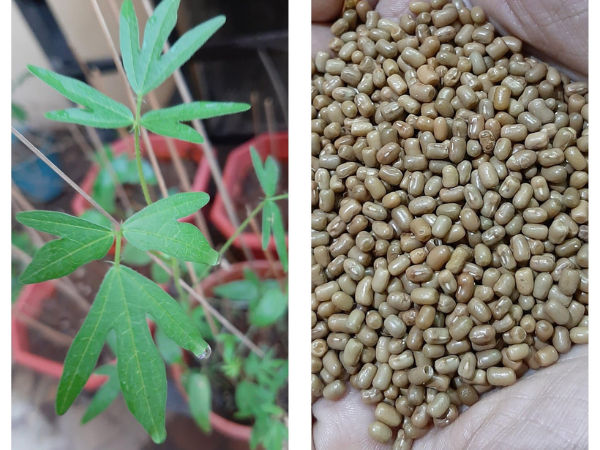
Classical Reference Of Moth Bean / Matki (Phaseolus Aconitifolius)
Bhavprakash Nighantu Dhanya Varga Page No. 634
Scientific Classification Of Moth Bean / Matki (Phaseolus Aconitifolius)
- Kingdom: Plantae
- Subkingdom: Tracheobionta (Vascular plants)
- Superdivision: Spermatophyta (Seed plants)
- Division: Magnoliophyta (Angiosperms)
- Class: Magnoliopsida (Dicotyledons)
- Order: Fabales
- Family: Fabaceae
- Genus: Phaseolus
- Species: aconitifolius
Synonyms Of Of Moth Bean / Matki (Phaseolus Aconitifolius)
- Makusthaka or Mayastha: Primary names for the Moth bean.
- Vanamudga or Aranyamudga: Forest Mung bean or Wild Mung.
- Krmilaka: Traditional name referring to its properties.
- Amrta: Meaning Nectar, implying it is highly nutritious.
- Vallimudga: Refers to its growth habit as a creeping legume.
Vernacular Names Of Moth Bean / Matki (Phaseolus Aconitifolius)
- Sanskrit: Mothaka, Mudga Bheda
- Hindi: Moth, Matki
- English: Moth Bean
- Marathi: Matki
- Gujarati: Moth
- Punjabi: Moth
- Bengali: Moth
- Tamil: Thatta Payaru
- Telugu: Matki Pappu
- Kannada: Matki
- Malayalam: Matki Payaru
- Urdu: Moth
Habitat Of Moth Bean / Matki (Phaseolus Aconitifolius)
Geographical Distribution
- Widely cultivated in India, especially in arid and semi-arid regions.
- Major states: Rajasthan, Gujarat, Maharashtra, Madhya Pradesh, Andhra Pradesh, Telangana, Karnataka.
- Also grown in Pakistan, Sri Lanka, and Southeast Asian countries.
Climate Preference
- Thrives in hot and dry climates.
- Highly drought-tolerant, making it suitable for rainfed agriculture.
- Optimal growth occurs during warm seasons, particularly the kharif (monsoon) season.
Rainfall Requirement
- Performs well under low to moderate rainfall: 300–750 mm annually.
- Excessive rainfall or waterlogged soils can reduce yield and seed quality.
Soil Requirements
- Prefers well-drained sandy loam to loamy soils.
- Tolerates poor, low-fertility soils; suitable for marginal lands.
- Slightly alkaline to neutral soils are ideal for optimal growth.
Altitude Range
It grows well in low to medium altitudes, up to ~1,000 meters above sea level.
Ecological Adaptability
- Exhibits strong drought resistance due to its deep taproot system.
- Commonly grown as a rainfed crop and in crop rotation systems to improve soil fertility.
Habitat Type
- Found in cultivated fields, dry farmlands, and open plains.
- Also seen along field margins, wastelands, and roadside areas, indicating its resilience to disturbed habitats.
Morphology Of Moth Bean / Matki (Phaseolus Aconitifolius)
- Plant Habit: Moth bean is an annual herbaceous legume with a creeping or prostrate growth form, spreading horizontally to form a low mat on the soil. The main stem is slender, semi-erect, and can reach a height of about 30–40 cm, while lateral branches often extend beyond 1 meter, allowing the plant to cover ground efficiently.
- Root System: The plant has a deep, robust taproot with lateral fibrous roots. This extensive root system allows it to absorb water from deeper soil layers, making it highly drought-tolerant. The roots also develop nodules housing nitrogen-fixing bacteria, which enrich the soil naturally.
- Stem: Stems are branched, cylindrical, and covered with fine hairs. This structure helps support sprawling growth and contributes to drought resistance. Some stems may exhibit slight stickiness due to glandular trichomes.
- Leaves: Leaves are alternate and trifoliolate, meaning each leaf has three leaflets. Leaflets are ovate to lanceolate, with soft hairs on the surface, which help reduce water loss and protect against environmental stress.
- Inflorescence and Flowers: Flowers appear in axillary racemes, with bright yellow, papilionaceous (butterfly-shaped) blossoms typical of legumes. Each flower consists of a standard petal, wings, and keel, facilitating pollination. The plant generally undergoes self-pollination, although insects may occasionally assist.
- Fruit (Pods): Fruits are slender, cylindrical pods, measuring approximately 2–5 cm in length, containing multiple seeds. Pods are initially green and mature to a brownish shade. The surface is slightly hairy, aiding in seed dispersal.
- Seeds: Seeds are small, hard, and oblong, with colors ranging from yellowish to brown depending on variety. Each pod contains 4–9 seeds, which are nutritionally rich in proteins, fiber, and essential minerals.
Classical Categorisation Of Moth Bean / Matki (Phaseolus Aconitifolius)
- Dhanwanthari Nighantu: Suvarnadi Varga
- Raj Nighantu: Shalyadi Varga
- Bhavprakash Nighantu: Dhanya Varga
Ancient Verses For Moth Bean / Matki (Phaseolus Aconitifolius)
Verse No. 1
मकुष्ठको मयष्ठश्च वनमुद्गः कृमीलकः।
अमृतोऽरण्यमुद्गश्च वल्लीमुद्गश्च कीर्तितः॥
मकुष्ठकः कषायः स्यान्मधुरो रक्तपित्तजित्।
ज्वरदाहहरः पथ्यो रुचिदः सर्वदोषहृत्॥Raj Nighantu / Shalyadi Varga / Verse No. 92-93
Verse Interpretation
Synonyms:
- Makusthaka or Mayastha: Primary names for the Moth bean.
- Vanamudga or Aranyamudga: Forest Mung bean or Wild Mung.
- Krmilaka: Traditional name referring to its properties.
- Amrta: Meaning Nectar, implying it is highly nutritious.
- Vallimudga: Refers to its growth habit as a creeping legume.
Medical effects:
- Taste and Nature: It is Astringent (Kasaya) and Sweet (Madhura).
- Clinical Indications: It treats bleeding disorders (Raktapitta), fever (Jvara), and burning sensations (Daha). It balances all three doshas (Vata, Pitta, and Kapha).
- Dietary Benefits: It is considered wholesome (Pathya) and improves appetite (Rucida).
Verse no. 2
मुकुष्ठको निसृष्टश्च वनमुद्गः कृमीलकः।
मकुष्ठो वातलो ग्राही कफपित्तहरो लघुः॥ Dhanwanthari Nighantu / Suvarnadi Varga / Verse no. 89
Verse Interpretation
This verse describes the characteristics and medicinal effects of Makusthaka (Moth bean). It identifies the plant through synonyms like Nisrstasca, Vanamudga, and Krmilaka. Therapeutically, the bean is noted for being Vatalo, meaning it increases the Vata dosha, and Grahi, which refers to its ability to absorb fluids and bind stools. Furthermore, it is described as Kaphapittaharo, indicating it pacifies both Kapha and Pitta doshas. Finally, the text highlights that the bean is Laghuh, making it very light and easy for the body to digest.
Verse No. 3
मकुष्ठो वनमुद्गः स्यान्मकुष्ठकमुकुष्ठकौ ॥
मकुष्ठो वातलो ग्राही कफपित्तहरो लघुः ।
वह्निजिन्मधुरः पाके कृमिकृज्ज्वरनाशनः ॥ Bhavprakash Nighantu / Dhanya Varga / Verse No. 48-49
According to this verse, Moth bean possesses a complex profile of medicinal properties. It is classified as Vatala, meaning it can increase Vata dosha, and Grahi, which means it has a binding effect on the bowels, making it useful for diarrhea. While it effectively balances Kapha and Pitta and is Laghu (light/easy to digest), it is also described as Vahni-jit, implying it may slightly suppress the digestive fire if not used correctly. After digestion (Vipaka), it turns sweet, and while it is remarkably effective at curing fevers (Jvaranashana), the verse interestingly notes it can be Krimikrit (conducive to worms) in certain conditions.
Ayurvedic Properties Of Moth Bean / Matki (Phaseolus Aconitifolius)
- Rasa (Taste): Sweet
- Guna (Quality): Laghu (light), Ruksha (dry)
- Veerya (Potency): Shita (cooling)
- Vipaka (Post-digestive effect): Madhura (sweet)
Action On Tridosha Of Moth Bean / Matki (Phaseolus Aconitifolius)
Moth Bean (Matki / Phaseolus aconitifolius) increases Vata and destroys Kapha and Pitta.
Therapeutic Indications Of Moth Bean / Matki (Phaseolus Aconitifolius) – Importantly As Diet
- Fever
- Burning sensation / Heat disorders
- Bleeding disorders
- Diabetes mellitus
- Hypercholesterolemia
- Obesity
- Digestive disorders
- Constipation
- Inflammatory conditions
- Anemia
- Nutritional deficiency / General debility
Systemic Actions Of Moth Bean / Matki (Phaseolus Aconitifolius)
- Digestive System: Moth bean exhibits Deepana (appetizer) and Pachana (digestive) actions, supporting proper digestion, assimilation, and bowel regulation.
- Metabolic / Endocrine System: It acts as Medohara (lipid-reducing) and Pramehahara (anti-diabetic supportive), helping in regulation of blood sugar and fat metabolism.
- Circulatory System: Matki supports the circulatory system through Raktashodhaka (blood-purifying) and Hridya (cardiotonic) actions, aiding lipid balance and vascular health.
- Hematological System: Due to its nutritive nature, it acts as Raktavardhaka (blood-nourishing), useful in nutritional anemia and general debility.
- Immune & Inflammatory System: It exhibits Shothahara (anti-inflammatory) and Rasayana-like (rejuvenative supportive) effects by reducing oxidative stress.
- Excretory System: Moth bean shows Mutrala (mild diuretic) action, supporting fluid balance and renal excretion.
- General Systemic Effect: Overall, it acts as Balya (strength-promoting) and Brimhana (nourishing), improving vitality and systemic nourishment.
Chemical Composition Of Moth Bean / Matki (Phaseolus Aconitifolius)
- Proteins: Rich in plant proteins containing essential amino acids (lysine, leucine, isoleucine), contributing to nutritive and strengthening properties.
- Carbohydrates: Mainly complex carbohydrates and resistant starch, providing sustained energy and supporting glycemic control.
- Dietary Fiber: High content of soluble and insoluble fiber, aiding digestion, bowel regularity, and lipid metabolism.
- Lipids: Low total fat with presence of beneficial fatty acids (linoleic and oleic acids).
- Vitamins: B-complex vitamins such as thiamine (B1), riboflavin (B2), niacin (B3), and folate, supporting metabolism and nervous system health.
- Minerals: Good source of iron, calcium, magnesium, potassium, phosphorus, and zinc, supporting hematological, bone, and metabolic functions.
- Polyphenols: Includes flavonoids and phenolic acids with antioxidant activity.
- Tannins: Present in moderate amounts, contributing to antioxidant and anti-inflammatory effects.
- Phytates: Natural antinutrients that may reduce mineral absorption but are significantly lowered by soaking and sprouting.
- Enzyme Inhibitors: Trypsin inhibitors present in raw seeds, reduced by cooking and processing.
Practical Uses / Health Benefits Of Moth Bean / Matki (Phaseolus Aconitifolius)
- Improves digestion and appetite (Deepana–Pachana).
- Relieves constipation and supports bowel regularity.
- Supports blood sugar regulation (Pramehahara) in diabetes.
- Helps manage obesity by promoting fat metabolism (Medohara).
Lowers cholesterol and supports cardiovascular health (Hridya). - Provides antioxidant protection to reduce oxidative stress.
- Rich in proteins, iron, and essential minerals (Raktavardhaka).
- Helps prevent anemia and improves general vitality.
- Reduces inflammation and boosts immunity (Shothahara).
- Protects the body from oxidative stress and chronic low-grade inflammation.
- Supports bone strength and mineral balance.
- Exhibits mild diuretic effect (Mutrala) for fluid regulation.
- Acts as a nutritive and strengthening food (Balya–Brimhana).
- Sprouted matki enhances digestibility and nutrient absorption.
Part(S) Used Of Moth Bean / Matki (Phaseolus Aconitifolius)
- Seeds
Home Remedies With Moth Bean / Matki (Phaseolus Aconitifolius)
- Sprouted Matki Salad for Digestion and Immunity: Soak matki seeds overnight, sprout them for 1–2 days, and mix with vegetables and lemon. Helps improve digestion (Deepana–Pachana) and boosts immunity.
- Matki Soup for Diabetes and Weight Management: Boil matki seeds in water with mild spices like turmeric and cumin. Supports blood sugar regulation (Pramehahara) and healthy metabolism.
- Boiled Matki for Constipation: Boil soaked matki seeds and consume with a little ghee. Provides dietary fiber to relieve constipation and regulate bowel movements.
- Sprouted Matki for Anemia and General Weakness: Eat sprouted seeds with lemon juice or in salads. Rich in iron and nutrients (Raktavardhaka), useful for anemia and debility.
- Matki Lentil Curry for Heart Health: Cook matki seeds as a dal with spices. Helps lower cholesterol and supports cardiovascular function (Hridya).
Research On Moth Bean / Matki (Phaseolus Aconitifolius)
Moth bean, also known as Matki, is a nutritionally rich legume recognized for its high content of proteins, complex carbohydrates, fiber, vitamins, minerals, and bioactive compounds. Multiple scientific studies have highlighted its potential in promoting health and preventing metabolic disorders.
- Nutritional and Health Benefits: Research confirms that moth bean seeds provide essential nutrients and bioactive compounds that support metabolic health. Their antioxidant, anti-diabetic, and lipid-regulating properties make them valuable for maintaining overall wellness.
- Antioxidant Properties: Sprouting moth bean seeds enhances their levels of proteins, carbohydrates, minerals, and phenolic compounds. These bioactive constituents help reduce oxidative stress and protect cellular health.
- Phytochemical Profile: Moth bean contains protease inhibitors, tannins, and flavonoids, which contribute to its antioxidant and anti-inflammatory effects. This phytochemical diversity underlies many of its health-supportive actions.
- Processing and Digestibility: Studies show that traditional processing methods like cooking, soaking, and fermentation reduce antinutrients and improve the digestibility of proteins and starch, making moth beans easier to absorb and utilize.
- Bioactive Peptides: Protein-derived peptides from moth beans demonstrate a range of beneficial activities, including antioxidant, antidiabetic, antibacterial, and potential anticancer effects, indicating its nutraceutical potential.
- Agronomic Importance: Research on genotypes and cultivation patterns shows that moth bean is highly resilient to heat and drought conditions, making it an important legume for sustainable agriculture in arid regions.
- Preventive Health Role: Regular consumption of moth beans may help in controlling obesity, regulating blood sugar, lowering cholesterol, and supporting cardiovascular health due to its rich nutritional and bioactive profile.
Conclusion
Moth bean (Phaseolus aconitifolius), commonly known as Matki, is a highly nutritious and functional legume widely cultivated in India, especially in arid and semi-arid regions. Rich in plant proteins, dietary fiber, essential amino acids, polyphenols, and minerals, it supports digestion, metabolism, and overall vitality. Its Ayurvedic properties—Deepana, Pachana, Medohara, Pramehahara, Balya, and Brimhana—make it beneficial in managing obesity, blood sugar imbalance, anemia, and general debility. Sprouting or proper cooking enhances nutrient availability and digestibility. Scientific studies highlight its antioxidant, anti-inflammatory, and lipid-regulating activities, while agronomic research underscores its drought tolerance. Overall, Moth bean serves as a valuable dietary legume that promotes metabolic health, supports systemic nourishment, and contributes to preventive nutrition in daily diets.