


Khakhas / Opium / Papaver Somniferum – Indications, Properties & Dosages
Abstract
Papaver somniferum, commonly known as Opium or Khakhas, is a medicinal plant belonging to the family Papaveraceae. It has been widely recognized in traditional medicine systems, including Ayurveda, for its analgesic, sedative, and antispasmodic properties. The plant produces a latex known as opium, which contains alkaloids such as morphine, codeine, and thebaine, responsible for its pharmacological actions. Traditionally, it has been used to manage pain, induce sleep, relieve cough, and treat gastrointestinal disorders. Pharmacologically, Papaver somniferum exhibits central nervous system depressant effects and has notable uses in modern medicine as a source of pain-relieving agents. Due to its potent bioactive compounds, it is also associated with a risk of dependence and must be used under controlled conditions. The plant continues to hold significance both in therapeutic applications and in research exploring safer derivatives and formulations for clinical use. Now, let’s unravel the secrets of this fascinating herb and explore its medicinal wonders in detail!
Classical Reference Of Khakhas (Papaver Somniferum)
Bhavprakash Nighantu Haritkyadi Varga Page No. 141
Scientific Classification Of Khakhas (Papaver Somniferum)
- Kingdom: Plantae
- Order: Ranunculales
- Family: Papaveraceae
- Genus: Papaver
- Species: somniferum
Synonyms Of Khakhas (Papaver Somniferum)
- Phaniphena – Latex is as strong as snake venom.
- Nagaphena – Latex is as strong as snake venom.
- Aaphooka – A source of opium.
- Khasaphalakshira – Injury done to fruit yields latex.
- Sukshma bija – Seeds are very small.
- Sukshma tandula – Small seeds.
Vernacular Names Of Khakhas (Papaver Somniferum)
- Sanskrit: Khakhas, Karkatashringi
- Hindi: Afim, Khakhas, Afeem
- English: Opium, Opium Poppy, Poppy
- Bengali: Afim, Opium Poppy
- Gujarati: Afim, Khakhas
- Marathi: Afim, Khakhas
- Tamil: Afeem, Thuthi Poo
- Telugu: Afim, Opium Poppy
- Kannada: Afim, Khakhas
- Malayalam: Afim, Opium Poppy
- Urdu: Afim
Habitat Of Khakhas (Papaver Somniferum)
- Origin: Believed to be native to the Mediterranean region.
- Climate: Prefers temperate climates with cool, dry conditions. It grows best in regions with moderate rainfall.
- Soil: Thrives in well-drained, fertile loamy soils rich in organic matter; avoids waterlogged areas.
- Altitude: Can grow from sea level up to 2,000 meters, depending on climate and soil conditions.
- Cultivation: Widely cultivated in Asia, Europe, and parts of the Middle East, primarily for medicinal and industrial purposes.
- Growth Conditions: Requires full sunlight and tolerates mild frost; sensitive to excessive heat or humidity.
- Natural Habitat: Often found in farmlands, open fields, and garden plots, where it can be deliberately sown for seed or latex production.
Morphology Of Khakhas (Papaver Somniferum)
- Plant Type: Annual herb, erect, and herbaceous. Height ranges from 30–120 cm, depending on variety and growing conditions.
- Stem: Erect, hollow, and glabrous (smooth). Green to bluish-green in color, often branched at the upper part.
- Leaves: Large, oblong to lanceolate, lobed or pinnatifid, with wavy margins. Covered with a thin layer of fine white hairs, giving a bluish-green appearance. Petioles are long and sheath the stem at the base.
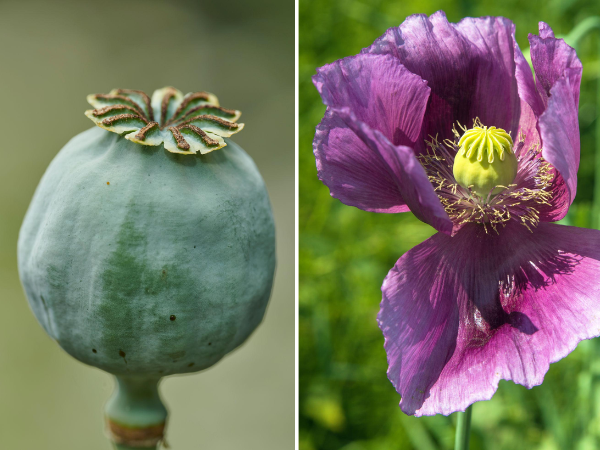
- Flowers: Solitary, large, and showy. Petals are 4–6 in number, colors range from white, pink, red to purple. Flowers are cup-shaped and have numerous stamens surrounding a superior ovary.
- Fruit (Capsule): Globular or oblong capsule (pod) with a poricidal dehiscence (releases seeds through small openings). Green when immature, turns brown when mature. Contains numerous tiny, rounded seeds, which are edible and oil-rich.
- Latex (Opium): Milky white latex exudes from incised green capsules. Latex dries to form raw opium, which contains alkaloids such as morphine and codeine.
- Root: Taproot system, moderately deep, supporting nutrient and water absorption.
- Seed: Tiny, kidney-shaped, grayish to black in color. Rich in oil and protein, used both medicinally and nutritionally.
Classical Categorisation Of Khakhas (Papaver Somniferum)
- Bhavprakash Nighantu: Haritkyadi Varga
- Raj Nighantu: Pippalyadi Varga
- Dhanwanthari Nighantu: Suvarnadi varga
Ancient Verses For Khakhas (Papaver Somniferum)
Verse No. 1
तिलभेदः खसतिलः खाखसश्चापि स स्मृतः । स्यात् खाखसफलोद्भूतं वल्कलं शीतलं लघु ॥
ग्राहि तिक्तं कषायञ्च वातकृत् कफकासहृत् । धातूनां शोषकं रूक्षमदकृद्वाग्निवर्धनम् ॥
मुहुर्मोहकरं रुच्यं सेवनात्पुंस्त्वनाशनम् ॥ Bhavprakash nighantu Haritkyadi Varga Verse No. 235-237
According to the above verse the medicinal properties of Khakhas (Poppy or Papaver somniferum), identifying it by names such as Tilabhedha and Khasatila. The fruit’s rind is characterized as cooling, light, and absorbent, possessing both bitter and astringent tastes. While it effectively alleviates cough and balances Kapha dosha, it is noted to increase Vata and can cause dryness or depletion of the body’s tissues (dhatus). Furthermore, the text highlights that while it stimulates digestion and improves appetite, it is also intoxicating and can cause mental delusion; significantly, it warns that regular or excessive consumption leads to the loss of virility.
Verse No. 2
खस्तिलस्तिलभेदस्तु शुभ्रपुष्पो लसत्फलः।
वृष्यो बल्यश्च खस्तिलः श्लेष्मघ्नो वातजिद्गुरुः॥
वल्कलस्तत्समो ज्ञेयो रूक्षो ग्राही विशेषणः॥ Dhanwanthari Nighantu, Suvarnadi varga, Verse No. 106-107
According to the above verse Khakhas have synonyms such as Tilbhedha, shubhrapushpa and lastaphala. It provides strength to the body (Balya) and acts as an aphrodisiac (Vrushya) by improving reproductive health. It is heavy to digest (Guru) and is used to pacify or balance the Kapha and Vata doshas. The outer shell or husk (Valkala) of the poppy pod is similar in properties to the seeds, but it is specifically noted for being dry (Ruksha) and having a binding effect (Grahi) on the bowels, making it useful for managing diarrhea.
Ayurvedic Properties Of Khakhas (Papaver Somniferum)
- Guna (qualities): Laghu (lightness), Rooksha (dryness), Sookshma (minuteness), Vyavayi (spreads to all parts of the body swiftly)
- Rasa (taste): Tikta (bitter), Kashaya (Astringent)
- Vipaka (Post Digestive Effect): Katu (Pungent)
- Veerya (Potency): Ushna (Hot potency)
Action On Tridosha Of Khakhas (Papaver Somniferum)
- Opium Latex: It is Kaphahara, meaning it balances the Kapha Dosha.
- Dosha Increase: The latex increases Vata and Pitta Dosha.
- Poppy Seeds: Unlike the latex, the seeds increase Kapha Dosha and decrease Vata Dosha.
Therapeutic Indications Of Khakhas (Papaver Somniferum)
- Headache
- Neuralgia
- Insomnia
- Anxiety & Nervous tension
- Cough (especially dry cough)
- Asthma
- Diarrhea
- Dysentery
- Colic (Abdominal cramps)
- Gastrointestinal spasms
- Musculoskeletal pain
- Arthritis / Joint pain
Systemic Actions Of Khakhas (Papaver Somniferum)
Nervous System
- Acts as a central nervous system depressant
- Produces analgesic, sedative, and hypnotic effects
- Reduces anxiety, stress, and neural irritability
Musculoskeletal System
- Exhibits antispasmodic activity, relieving muscle cramps and joint pain
- Reduces muscle stiffness and neuralgic pain
Respiratory System
- Antitussive action suppresses cough reflex
- Relieves respiratory irritation and mild asthma symptoms
Gastrointestinal System
- Reduces intestinal motility and spasms
- Helps in diarrhea, dysentery, and colic
Cardiovascular System
- Mild effect in reducing peripheral pain-related stress
- Not a primary cardioactive herb but may indirectly relieve tension
Metabolic / Nutritive
- Seeds are nutritive and slightly laxative
- Provide energy, protein, and essential fatty acids
Dermatological / Local Action: Latex can be applied externally for localized pain relief or poultice therapy
Chemical Composition Of Khakhas (Papaver Somniferum)
Latex
- Contains morphine, codeine, thebaine, papaverine, noscapine, narcotine.
- Responsible for analgesic, sedative, antispasmodic, and antitussive effects.
Seeds
- Rich in fixed oils, proteins, carbohydrates, and minor alkaloids
- Acts as nutritive and mild laxative; used in medicinal oils
Leaves
- Contain small amounts of alkaloids, flavonoids, and tannins
- Provide anti-inflammatory and mild analgesic effects
Stem
- Contains minor alkaloids and mucilage
- Supports herbal formulations with mild analgesic properties
Pods / Capsules
- Rich in alkaloids (morphine, codeine), saponins, and sugars
- Offers antispasmodic and gastrointestinal benefits
Flowers
- Contain flavonoids and anthocyanins, trace alkaloids
- Exhibit antioxidant and mild sedative properties
Practical Uses / Health Benefits Of Khakhas (Papaver Somniferum)
- Relieves headaches, joint pain, neuralgia, and abdominal pain.
- Helps in insomnia, restlessness, and nervous tension.
- Reduces colic, cramps, and smooth muscle spasms in the gut and body.
- Suppresses dry or irritating cough.
- Supports digestion and helps in diarrhea and dysentery.
- Relieves stress, anxiety, and mild neurological discomfort.
- Seeds are edible, nutritious, and slightly laxative.
- Latex or poultices can be applied externally for localized pain relief.
- Mildly helps in asthma and bronchial irritation.
- Contains antioxidants and anti-inflammatory compounds that reduce oxidative stress.
Part(S) Used Of Khakhas (Papaver Somniferum)
- Raw Opium (Concentrated Sap): This is the dehydrated latex harvested by making small cuts in the immature seed pods of the Papaver somniferum plant.
- Poppy Seeds: These are the edible seeds harvested directly from the mature poppy capsules.
- Poppy Straw: This term refers to the entire plant (excluding the seeds) after it has been dried, specifically the stalks and husks.
Dosage Of Khakhas (Papaver Somniferum)
- Opium (purified resin): 30 – 125 mg. (quarter to one Gunja)
- Churna (Powder): 1- 2 g
- Bija (Seeds): 2-5 g
- Fatal dose: Crude opium – 1- 2 g, Tincture opium- 3- 4 ml, Morphine – 60 – 180 mg, Heroin – 20 – 30 mg
- Fatal Period: 45 min – 12 hrs
Home Remedies Of Khakhas (Papaver Somniferum)
- For Pain Relief: Mix a small amount of poppy seeds with honey and consume to relieve minor aches and joint pain.
- For Insomnia: Take poppy seeds soaked in milk before bedtime to promote sleep and calm the mind.
- For Cough: Prepare a mixture of poppy seeds and jaggery to soothe dry cough.
- For Digestive Issues: Chew a few poppy seeds or mix them in warm water to ease colic and mild diarrhea.
- For Nervous Tension: Grind poppy seeds with sugar and consume to relieve stress and nervous fatigue.
- For Topical Pain Relief: Make a paste of poppy seeds with water or ghee and apply on aching joints or muscles.
- For Nutritional Boost: Add poppy seeds to meals or milk to enhance protein, energy, and healthy fats intake.
Conclusion
Papaver somniferum, commonly known as Khakhas or Opium, is a remarkable medicinal plant with diverse therapeutic properties. Its latex, seeds, and other plant parts provide analgesic, sedative, antispasmodic, antitussive, and nutritive benefits. Traditionally used in Ayurveda for pain, insomnia, cough, and digestive disorders, it continues to hold significance in modern medicine as a source of powerful alkaloids like morphine and codeine. While highly effective, its use requires caution due to the risk of dependence and toxicity. Overall, Khakhas exemplifies the balance of traditional herbal wisdom and modern pharmacological potential in promoting health and managing ailments.