


KL-6 (Krebs von den Lungen-6) – What Is It? Why Is It Done? How Can Ayurvedic Herbs Help?
Abstract
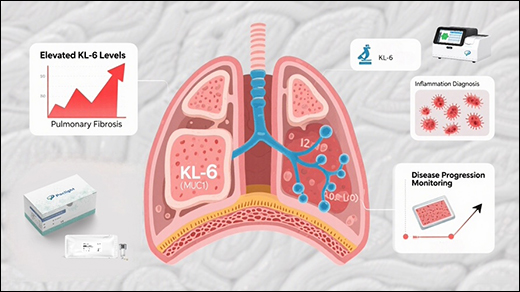
Interstitial lung diseases (ILDs), encompassing idiopathic pulmonary fibrosis (IPF), connective tissue disease-associated ILD, and hypersensitivity pneumonitis, progressively scar lung parenchyma, impairing gas exchange and leading to dyspnea, cough, and respiratory failure. Primary causes include genetic predispositions (e.g., MUC5B promoter variants), environmental exposures (asbestos, silica), autoimmune triggers (rheumatoid arthritis, scleroderma), and idiopathic mechanisms involving aberrant wound healing with fibroblast activation and excessive extracellular matrix deposition. Chronic alveolar epithelial injury, particularly of type II pneumocytes, drives fibroproliferation, evidenced by oxidative stress, TGF-β signaling, and inflammation. KL-6 (Krebs von den Lungen-6), a mucin-like glycoprotein released from damaged type II cells, serves as a sensitive serum biomarker for early detection, severity assessment, progression prediction, and treatment monitoring in ILD, correlating inversely with lung function.
Introduction
KL-6, or Krebs von den Lungen-6, serves as a vital serum biomarker for evaluating alveolar epithelial damage and fibrotic advancement in interstitial lung diseases, such as idiopathic pulmonary fibrosis and those linked to connective tissue disorders. Unlike high-resolution computed tomography, which involves radiation exposure and overlooks subtle functional deterioration, this blood test provides a straightforward measure of type II pneumocyte injury, disease intensity, and response to treatment. As a high-molecular-weight MUC1 isoform, it emerges from proliferating or harmed alveolar cells, facilitating early identification of fibrosis in conditions including pleural mesothelioma and acute respiratory distress syndrome from COVID-19. Offering radiation-free superiority over markers like surfactant protein-D, especially in non-idiopathic pulmonary fibrosis cases, elevated levels exceeding 500 units per milliliter indicate active pathology and inform antifibrotic interventions, while inversely associating with forced vital capacity and diffusing capacity for carbon monoxide for precise progression tracking.
Key Applications
KL-6 aids in distinguishing clinically significant interstitial lung disease from milder interstitial lung abnormalities using cutoffs around 419-465 U/mL.
Prognosis And Monitoring
It predicts disease progression and mortality in idiopathic pulmonary fibrosis, connective tissue disease-associated ILD, and non-IPF forms, with levels over 900 U/mL signaling poor outcomes. Serial measurements track response to antifibrotics like nintedanib, outperforming imaging for early functional decline.
Specific Conditions
KL-6 evaluates severity in COVID-19 acute respiratory distress syndrome, chronic obstructive pulmonary disease exacerbations, pleural mesothelioma, and hypersensitivity pneumonitis. Higher concentrations correlate with reduced forced vital capacity and diffusing capacity, guiding transplant or intensive therapy decisions.
Clinical Applications
- In connective tissue disease-associated interstitial lung disease, such as scleroderma or polymyositis, it monitors activity and response to immunosuppression.
- KL-6 evaluates disease severity in idiopathic pulmonary fibrosis, with elevated levels correlating to reduced forced vital capacity and poor survival.
- It distinguishes clinically significant interstitial lung disease from incidental abnormalities on computed tomography, using thresholds around 410-465 units per milliliter for improved diagnostic accuracy.
- KL-6 predicts outcomes in COVID-19 acute respiratory distress syndrome, hypersensitivity pneumonitis, and pleural mesothelioma, guiding intensive care or oncologic decisions.
Procedure Overview
Patients undergo a standard venipuncture to collect 2-5 milliliters of venous blood into a plain red-top or serum separator tube, with no fasting required.
Allow the sample to clot fully at room temperature for 30 minutes, then centrifuge at 3000 revolutions per minute for 10 minutes to separate serum.
Serum is analyzed using chemiluminescent enzyme immunoassay or latex-enhanced turbidimetric methods on automated platforms, yielding results in units per milliliter within hours to days.
Clinical Advantages
- KL-6 provides high sensitivity for detecting early alveolar epithelial injury, often identifying interstitial lung disease progression before changes appear on high-resolution computed tomography scans.
- Its strong inverse correlation with forced vital capacity and diffusing capacity outperforms pulmonary function tests alone in predicting mortality and therapeutic response to antifibrotics like nintedanib.
- As a simple, radiation-free blood test, it enables cost-effective serial monitoring in outpatient settings, distinguishing significant disease from incidental findings with cutoffs like 419 units per milliliter.
Ayurvedic View
Elevated KL-6 levels indicate dysfunction in the Pranavaha Srotas, the respiratory channels, primarily due to Kapha-Vata imbalance leading to epithelial tissue depletion and channel obstruction in interstitial lung diseases.
Ayurvedic Pathophysiology
High KL-6 reflects mucus-toxin accumulation blocking pneumocyte regeneration, with Vata causing irregular fibrosis patterns and Pitta contributing to oxidative tissue wasting, similar to chronic dyspnea disorders.
Management Principles
Begin with channel purification using steam therapy, nasal herbal oils, and gentle purgation to clear toxins, followed by rejuvenative formulas like Chyawanprash to restore lung tissue integrity and reduce KL-6 alongside modern antifibrotic treatments.
Recommended Herbs
These herbs address Kapha-Vata imbalances, clear alveolar blockages, and promote epithelial repair to lower KL-6 levels.
- Vasaka (Adhatoda vasica)
- Pippali (Piper longum)
- Haridra (Curcuma longa)
- Giloy (Tinospora cordifolia)
- Ashwagandha (Withania somnifera)
- Tulsi (Ocimum sanctum)
- Talispatra (Abies webbiana)
1. Vasaka (Adhatoda vasica)
Vasaka (Adhatoda vasica) dissolves thick mucus in damaged alveoli through vasicine, relaxing bronchial muscles and enhancing clearance in fibrotic lungs. It reduces inflammation, widens airways, and supports respiratory channel balance with bronchodilator effects.
2. Pippali (Piper longum)
Pippali (Piper longum) deeply penetrates lung tissues, breaking toxin accumulations and fortifying pneumocytes in elevated KL-6 states. Piperine improves absorption, eases breathlessness, and acts as a rejuvenative for chronic fibrosis.
3. Haridra (Curcuma longa)
Haridra (Curcuma longa) curbs inflammation fueling KL-6 rise via curcumin, inhibiting fibrotic pathways in interstitial disease. It restores lung capacity, balances excess doshas, and prevents progression through antioxidant actions.
4. Giloy (Tinospora cordifolia)
Giloy (Tinospora cordifolia) detoxifies vascular toxins raising KL-6 through polysaccharides, bolstering immunity in autoimmune fibrosis. It harmonizes doshas, improves exchange, and fights oxidation effectively.
5. Ashwagandha (Withania somnifera)
Ashwagandha (Withania somnifera) revitalizes depleted lung tissues via withaferin A, easing hyperreactivity and boosting vital capacity. It calms Vata, enhances tolerance, and aids KL-6 normalization as an adaptogen.
6. Tulsi (Ocimum sanctum)
Tulsi (Ocimum sanctum) mends type II cell injury with eugenol, dampening cytokines that spike KL-6. It clears respiratory toxins, stabilizes function, and modulates immunity for better outcomes in autoimmune lung conditions.
7. Talispatra (Abies webbiana)
Talispatra (Abies webbiana) loosens alveolar congestion with alpha-pinene, bronchodilating to alleviate obstruction-linked KL-6 elevation. It soothes spasms, improves flow, and tonifies lungs as a mucolytic.
Conclusion
KL-6 (Krebs von den Lungen-6) transforms interstitial lung disease management through sensitive blood-based monitoring of epithelial injury and fibrosis, surpassing radiation-heavy imaging in early progression detection and therapy response tracking. The seven recommended herbs synergize Ayurvedic restoration with modern care: Vasaka and Pippali dissolve blockages, Haridra and Tulsi quench inflammation, Ashwagandha and Giloy rejuvenate tissues, while Talispatra enhances clearance—collectively normalizing KL-6 by balancing Pranavaha Srotas. Integrating pre- and post-test herbal protocols with antifibrotics fosters holistic recovery, reduces heterogeneity, and pioneers integrative pulmonology for optimal lung function and patient outcomes.