


Marsilea minuta Linn. / Choupattiya / Shitivaar – Ayurvedic Uses, Benefits, Dosage & Therapeutic Actions
Abstract
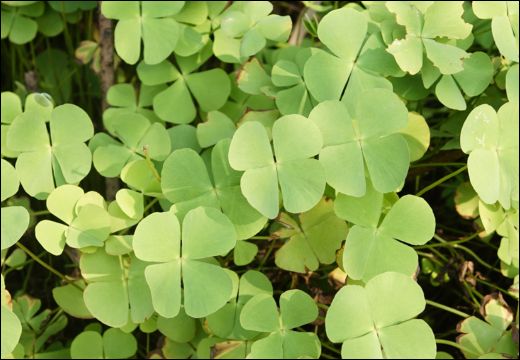
Marsilea minuta L., belonging to the family Marsileaceae, is a small aquatic or semi-aquatic pteridophytic fern commonly known as dwarf water clover due to its characteristic four-leaf clover-like appearance. It is widely distributed across tropical and humid regions of India and is locally known as Sunsunia saga or Sunsuniya in different regions. The plant typically grows in wetlands, at the edges of ponds, flooded lowlands, and rice fields, adapting well to both aquatic and terrestrial environments. Marsilea minuta exhibits a creeping and spreading habit in water, while on land it may develop a compact, cushion-like form. The genus Marsilea includes several species, of which a number are reported in India. The leaves and young shoots of M. minuta are commonly consumed as vegetables and have long been used in traditional and ethnomedicine for managing various health conditions. Due to the presence of diverse bioactive compounds, the plant has gained attention for its nutritional and medicinal significance, making it an important species in both traditional healthcare and dietary practices.
Classical References Of Marsilea minuta Linn. / Choupattiya/ Shitivaar
- Bhavprakash Nighantu Shaaka varga
Scientific Classification Of Marsilea minuta Linn. / Choupattiya/ Shitivaar
- Kingdom – Plantae
- Subkingdom – Tracheobionta
- Division – Polypodiophyta
- Class – Polypodiopsida
- Order – Salviniales
- Family – Marsileaceae
- Genus – Marsilea L.
- Species – Marsilea minuta L.
Other Species Of Marsilea
- Marsilea aegyptica
- Marsilea ancyclopoda
- Marsilea apposita
- Marsilea burchellii
- Marsilea coromandelina
- Marsilea crenata
- Marsilea crotophora
- Marsilea deflexa
- Marsilea distorta
- Marsilea drummondii
- Marsilea ephippiocarpa
- Marsilea farinosa
- Marsilea fenestrata
- Marsilea hirsuta
- Marsilea macrocarpa
- Marsilea macropoda
- Marsilea minuta L.
- Marsilea mollis
- Marsilea mutica
- Marsilea nubicam
- Marsilea oligospora
- Marsilea quadrifolia L.
- Marsilea schelpeana
- Marsilea unicornis
- Marsilea vera
- Marsilea vestita
- Marsilea villifolia
- Marsilea villosa
Synonym Of Marsilea minuta Linn. / Choupattiya/ Shitivaar
- Shitivaar – Cooling herb that helps reduce body heat
- Shitivar – Plant having cooling and soothing properties
- Swastika – Leaves arranged in four directions resembling a swastika shape
- Shreevaraka – Auspicious plant considered beneficial for health
- Soochipatra – Plant with slender or needle-like leaf stalks
- Parnaka – Small-leafed plant
- Kukkuta – Resembling the shape of a cock’s foot
- Shikhi – Plant resembling a crest or plume
- Sushnisaka – Tender leafy herb commonly used as a vegetable
Vernacular Names Of Marsilea minuta Linn. / Choupattiya/ Shitivaar
- English – Small Water Clover, Hairy Pepperwort, Dwarf Water Clover
- Sanskrit – Sunisannaka
- Hindi – Chaupatiya
- Bengali – Sushni sak
- French – Marsilea à quatre feuilles
- Mayotte (Kibushi) – Madiro antany be, Volo antany be
- Mayotte (Shimaore) – Shirerema
Habitat Of Marsilea minuta Linn. / Choupattiya/ Shitivaar
Marsilea minuta is widely distributed across many states of India and is commonly found in tropical regions of Africa and Asia. The plant typically grows in freshwater habitats such as ponds, wetlands, and rice fields, but it can also tolerate brackish water conditions. It thrives well on sandy as well as clayey substrates, showing adaptability to different soil types. This species is frequently observed in marshy areas, swamps, and flooded lowlands. It prefers humid and warm climates that support its growth and spread. Due to its adaptability, Marsilea minuta can grow both in aquatic and semi-aquatic environments. This wide ecological range contributes to its extensive distribution.
Morphology Of Marsilea minuta Linn. / Choupattiya/ Shitivaar
Marsilea minuta is a small, heterosporous, aquatic or semi-aquatic perennial fern characterised by a slender, creeping, and branching rhizome that is brown to green in colour and often roots at the nodes. The plant bears long-petioled leaves arranged alternately along the rhizome, each consisting of four clover-like leaflets that are obovate or wedge-shaped with smooth or slightly crenate margins. Young leaves show circinate vernation, where the fronds remain coiled during early development. The leaf structure varies depending on habitat, with longer petioles and floating leaflets in deep water, while in shallow or terrestrial conditions, the plant appears more compact. The reproductive structures, known as sporocarps, are hard, bean-shaped, and brownish, usually attached at the base of the petiole singly or in pairs. These sporocarps contain both microsporangia and megasporangia, enabling heterosporous reproduction. The plant also develops fibrous adventitious roots from nodes along the rhizome, helping it anchor in muddy or aquatic environments.
Classical Categorisation Of Marsilea minuta Linn. / Choupattiya/ Shitivaar
- According to Bhavprakash Nighantu: Shaaka varga
Ancient Verse Of Marsilea minuta Linn. / Choupattiya/ Shitivaar
शितिवार शितिवरः स्वस्तिकः सुनिषण्णकः ।
श्रीवारकः सूचिपत्रः पर्णकः कुक्कुटः शिखी ॥
चाङ्गेरीसदृशः पत्रैश्चतुर्दल इतीरितः ।
शाको जलान्विते देशे चतुष्पत्रीति चोच्यते ॥
सुनिषण्णो हिमो ग्राही मेदोदोषत्रयापहः ॥
अविदाही लघुः स्वादुः कषायो रूक्षदीपनः ।
वृष्यो रुच्योऽज्वरश्वासमेहकुष्ठभ्रम प्रणत् ॥
(Bhavprakash Nighantu Shaaka varga 29-32)
According to the above shloka, the plant known as Chaupatiya (scientifically Marsilea minuta) is identified in Sanskrit by numerous synonyms such as Shitivar, Swastika, and Sunishannaka, names that often reflect its physical form or cooling nature. It is characterised by its unique four-leaflet structure that resembles the wood sorrel (Chingeri). It thrives primarily in marshy or aquatic environments. Medicinally, it is valued in Ayurveda for its cooling (Sheet), light (Laghu), and dry (Ruksha) properties, offering a taste profile that is both sweet and astringent. Beyond its use as a digestive aid and appetite stimulant, it is a potent therapeutic herb used to balance the three doshas, manage obesity, and treat a wide range of conditions, including fever, asthma, skin diseases, and urinary disorders.
Special Note
Many traditional commentators have listed Shitivar (a type of herb) as Sunishannaka (Chaupatiya), but in reality, they are distinct from one another. The plant being described in these specific verses, which is known as Chaupatiya, is the one that is truly the leafy vegetable (Shaka). Shitivar is actually different from this; it is classified under the Kapuradi Varga (aromatic group) and is identified as Kavartmustak.
Ayurvedic Properties Of Marsilea minuta Linn. / Choupattiya/ Shitivaar
- Taste (Rasa)- Sweet (Madhur), Astringent (Kashaya)
- Physical property (Guna) – Light (Laghu), Dry (Ruksha)
- Potency (Veerya )- Cold Potency (Sheet)
- Effect on tridosha– Balance Vata, Pitta and Kapha dosha
Therapeutic Indications Of Marsilea minuta Linn. / Choupattiya/ Shitivaar
- Acts as a digestive stimulant and improves appetite
- Helps balance the three doshas (Vata, Pitta, Kapha)
- Useful in the management of obesity
- Beneficial in fever
- Helps manage asthma and respiratory disorders
- Useful in skin diseases
- Supports urinary tract health
- Helps in inflammatory conditions
- Beneficial for general weakness and fatigue
- Acts as a cooling and detoxifying herb
Systemic Actions Of Marsilea minuta Linn. / Choupattiya/ Shitivaar
Internal Uses
- Nervous System – Acts as a brain tonic, analgesic, and mild sedative; beneficial for eye health and indicated in mental disorders, lower back stiffness (Urustambha), rheumatoid arthritis, and cataract.
- Digestive System – Works as a carminative and absorbent; useful in hemorrhoids, malabsorption syndrome, and reduced digestive strength.
- Respiratory System – Beneficial in Vata-type cough and various breathing disorders.
- Reproductive System – Acts as an aphrodisiac and is helpful in oligospermia.
- Satmikarana – Exhibits anti-poisonous and detoxifying properties.
Chemical Composition Of Marsilea minuta Linn. / Choupattiya/ Shitivaar
Primary Phytoconstituents
- Phenols
- Flavonoids
- Saponins
- Quinones
- Tannins
- Terpenoids
- Coumarins
- Anthraquinones
- Total sugars
Major Bioactive Compounds
- Marsiline
- Marsileagenin-A
- β-Sitosterol
- Hentriacontane
- Farnesol acetate
- Benzoic acid-4-ethoxy-, ethyl ester
Flavonoids And Phenolic Compounds
- Quercetin-3-O-glucoside
- Kaempferol-3-O-glucoside
- Quercetin-3-O-galactoside
- Chalcone-O-glucoside
- Naringenin-7-O-glucoside
- Quercetin-3-rutinoside (Rutin)
- Gallic acid
- Ferulic acid
- Chlorogenic acid
Leaf Extract Constituents (GC-MS Reported)
- Phytol
- n-Hexadecanoic acid
- 9-Pentadecadien-1-ol
- 9,12,15-Octadecatrienoic acid
- 3,7,11,15-Tetramethyl-2-hexadecane-1-ol
- 1,19-Eicosadiene
Stem Extract Constituents
- Glycerin
- n-Hexadecanoic acid methyl ester
- 10-Octadecenoic acid methyl ester
- Benzofuran derivatives
Other Chemical Constituents
- Terpenoids
- Steroids
- Alkaloids
- Reducing sugars
- Calcium and phosphorus
Pharmacological Significance
- Antioxidant activity
- Antibacterial properties
- Antidepressant effects
- Anxiolytic activity
- Hepatoprotective action
- Sedative and anticonvulsant activity (Marsiline & Marsileagenin-A)
Actions And Properties Of Various Chemical Constituents Of Marsilea minuta Linn. / Choupattiya/ Shitivaar
Neuroprotective Effect
Marsilea minuta Linn. contains important neuroactive compounds such as marsiline, flavonoids, phenolic acids, and triterpenoids that support nervous system health. Marsiline, a major active ester, exhibits sedative and anticonvulsant properties, helping manage insomnia, anxiety, and epilepsy. Flavonoids like quercetin and kaempferol protect neurons by reducing oxidative stress and preventing cellular damage. Phenolic acids, including gallic acid and chlorogenic acid, help reduce neuroinflammation and improve brain function. Marsileagenin-A contributes to mild CNS depressant activity, promoting relaxation and sleep. Additionally, these compounds enhance GABA activity, regulate serotonin receptors, and inhibit acetylcholinesterase, thereby improving memory, reducing anxiety, and providing overall neuroprotective effects.
Hepatoprotective Activity
Marsilea minuta Linn. shows hepatoprotective activity due to the presence of polyphenolic compounds such as gallic acid and chlorogenic acid, which act as powerful antioxidants and protect liver cells from toxin-induced damage. Flavonoids like quercetin and kaempferol further support liver health by reducing inflammation and preventing oxidative stress. Triterpenoids, including marsileagenin-A, contribute to liver protection by improving cellular regeneration and stabilising hepatocyte membranes. These bioactive compounds help inhibit cytochrome P450 enzymes involved in toxin-related liver injury. Additionally, the plant extracts reduce elevated liver enzymes such as AST, ALT, and ALP, indicating improved liver function. Overall, Marsilea minuta works by scavenging free radicals, lowering lipid accumulation, and promoting detoxification, thereby supporting healthy liver function.
For The Respiratory System
Marsilea minuta Linn. is beneficial in managing respiratory disorders such as cough and bronchitis due to the presence of saponins, flavonoids, terpenoids, and phenolic compounds. These bioactive constituents help reduce airway inflammation and support the removal of excess mucus from the respiratory tract. Compounds like marsileagenin-A contribute to expectorant and anti-inflammatory actions, while flavonoids such as quercetin and kaempferol protect respiratory tissues through antioxidant activity. Sesquiterpenes like farnesol acetate provide antimicrobial effects that help combat respiratory infections. Phenolic acids, including gallic acid and chlorogenic acid, further reduce oxidative stress associated with respiratory disorders. Together, these compounds act as natural antitussive and expectorant agents, helping relieve cough, clear congestion, and improve breathing.
Practical Uses / Health Benefits Of Marsilea minuta Linn. / Choupattiya/ Shitivaar
- Fresh plant decoction is administered twice daily for 10–12 days to relieve spasmodic contractions of the urethra and urinary bladder.
- Root paste is applied externally to manage atopic dermatitis and soothe skin inflammation.
- Leaves are cooked with rice and consumed to relieve indigestion.
- Plant extract is used as an aphrodisiac to support reproductive health.
- Leaf juice is administered to help control nosebleeds.
- Swollen gums – Boiled leaves of Sunishannaka along with Shorea robusta are applied to reduce gum swelling.
- Spasmodic contractions of the urethra and bladder are treated by consuming plant decoction twice daily for 10–12 days.
- Root paste of Sunishannaka is applied externally to manage atopic dermatitis.
- Respiratory problems – Fresh shoot juice and leaf decoction are used to relieve cough and respiratory discomfort.
- Young fronds (fern leaves) of Chaupathiya are used to manage insomnia and mental disorders.
- Regular consumption of the plant is beneficial in hypertension, headache, and sleep disturbances.
Parts Used Of Marsilea minuta Linn. / Choupattiya/ Shitivaar
- Whole Plant
Conclusion
Marsilea minuta, commonly known as Chaupatiya or Sun-sunia, is a highly valued aquatic fern in traditional medicine, primarily recognised for its unique four-leaflet structure and its prevalence in marshy environments. From a therapeutic perspective, it is concluded to be a potent “functional food” that serves both as a nutritious leafy vegetable and a medicinal herb. Its primary strength lies in its cooling (Sheet) nature and its ability to balance the three doshas, making it an effective remedy for inflammatory conditions, fever, and respiratory issues like asthma.
Frequently Asked Questions (FAQ’s)
1. What Are The Uses Of Marsilea minuta?
Marsilea minuta is used as a brain tonic, digestive aid, aphrodisiac, and for managing insomnia, cough, hypertension, skin disorders, and urinary problems.
2. What Is The Common Name Of Marsilea minuta?
The common name of Marsilea minuta is Dwarf Water Clover or Small Water Clover.
3. What Is The Family Name Of Marsilea minuta?
Marsilea minuta belongs to the family Marsileaceae.
4. What Is The Hindi Name Of Marsilea minuta?
The Hindi name of Marsilea minuta is Chaupathiya.
5. What Is The Tamil Name Of Marsilea minuta?
The Tamil name of Marsilea minuta is Arai Keerai / Sunisannakai (regional variation).
6. What Is The English Name Of Marsilea minuta?
The English name of Marsilea minuta is Dwarf Water Clover.