

Herbal Remedies for Squint (Strabismus) Disease – Symptoms, Causes, Diagnosis & Treatment
Abstract
The eyes work together as a coordinated pair to provide clear, single, and three-dimensional vision. This coordination depends on the proper alignment of both eyes, healthy extraocular muscles, intact cranial nerves, and effective communication between the eyes and the brain. Any disruption in this finely regulated system can result in ocular misalignment, leading to visual disturbances and, if left untreated, permanent impairment of binocular vision. One of the most common disorders of ocular alignment is Squint, medically known as Strabismus. It is characterized by the inability of both eyes to focus on the same object simultaneously, causing one eye to deviate inward, outward, upward, or downward while the other maintains fixation. Squint affects individuals of all ages but is particularly significant during childhood, when visual pathways are still developing. Early diagnosis and appropriate treatment are crucial to prevent amblyopia (lazy eye), impaired depth perception, and long-term visual disability. In this article, we will discuss Squint (Strabismus), including its causes, clinical manifestations, diagnosis, management in contemporary medicine, and its Ayurvedic perspective along with supportive Ayurvedic management.
Introduction
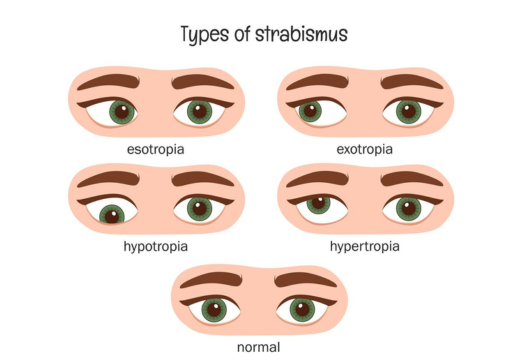
Squint, or Strabismus, is an ocular condition in which the visual axes of the two eyes are not properly aligned. Normally, both eyes move synchronously and focus on the same object, allowing the brain to merge the two images into a single three-dimensional image. In strabismus, one eye remains fixed on the object while the other deviates, resulting in misalignment.
The deviation may be:
- Inward (Esotropia)
- Outward (Exotropia)
- Upward (Hypertropia)
- Downward (Hypotropia)
The condition may be constant or intermittent and can affect one or both eyes alternately. In young children, the brain often suppresses the image from the deviated eye to avoid double vision, but prolonged suppression may lead to amblyopia. Adults with newly developed squint commonly experience double vision because the brain is unable to suppress one of the images. Squint may be congenital or acquired and can result from abnormalities involving the extraocular muscles, cranial nerves, refractive errors, neurological disorders, trauma, or systemic diseases. Advances in pediatric ophthalmology have significantly improved treatment outcomes through early detection, refractive correction, orthoptic therapy, and surgical intervention.
Causes
The causes of squint vary according to age and underlying pathology.
Congenital Causes
- Genetic predisposition
- Family history of strabismus
- Premature birth
- Low birth weight
- Congenital cranial nerve abnormalities
- Developmental ocular muscle imbalance
Ocular Causes
- Uncorrected refractive errors
- Hypermetropia (farsightedness)
- Cataract
- Retinal disorders
- Optic nerve abnormalities
- Poor vision in one eye
Neurological Causes
- Cerebral palsy
- Hydrocephalus
- Brain tumors
- Stroke
- Multiple sclerosis
- Cranial nerve palsies
Systemic Causes
- Diabetes mellitus
- Thyroid eye disease
- Myasthenia gravis
- Muscular disorders
Other Risk Factors
- Head injury
- Ocular trauma
- Eye surgery
- Infections involving the nervous system
Signs and Symptoms
Clinical features vary depending on age, severity, and type of squint.
Common Symptoms
- Misalignment of one or both eyes
- One eye turning inward, outward, upward, or downward
- Double vision (especially in adults)
- Reduced depth perception
- Blurred vision
- Eye strain
- Headache
- Difficulty focusing
In Children
- Closing one eye in bright sunlight
- Tilting or turning the head
- Poor hand-eye coordination
- Frequent blinking
- Delayed visual development
- Amblyopia (lazy eye)
In Adults
- Persistent diplopia
- Difficulty reading
- Difficulty driving
- Eye fatigue
- Loss of binocular vision
Investigations
Accurate diagnosis requires a comprehensive ophthalmic evaluation.
Investigations include:
- Detailed medical and family history
- Visual acuity assessment
- Refraction test
- Hirschberg corneal light reflex test
- Cover-uncover test
- Alternate cover test
- Prism cover test
- Ocular motility examination
- Binocular vision assessment
- Stereoacuity testing
- Fundus examination
- Cycloplegic refraction (in children)
Where indicated:
- MRI of the brain and orbit
- CT scan
- Neurological evaluation
- Thyroid function tests
- Blood glucose testing
- Electromyography (for selected neuromuscular disorders)
Management
Management depends on the patient’s age, cause, severity, and duration of the condition.
Optical Correction
- Prescription spectacles
- Contact lenses
- Correction of refractive errors
Amblyopia Therapy
- Eye patching
- Atropine penalization
- Vision therapy
Orthoptic Exercises
- Eye muscle exercises
- Convergence training
- Binocular vision therapy
Medical Management
Treatment of associated systemic diseases, including:
- Diabetes mellitus
- Thyroid disorders
- Neurological diseases
- Myasthenia gravis
Botulinum Toxin
Selected patients may benefit from botulinum toxin injection into extraocular muscles.
Surgical Treatment
Strabismus surgery may involve:
- Muscle recession
- Muscle resection
- Muscle transposition
- Adjustable suture surgery
Surgery aims to improve ocular alignment and binocular function. Some patients may require more than one procedure.
Ayurvedic View and Management
Squint is not described as an independent disease entity in the classical Ayurvedic texts. However, its clinical features can be understood through disorders affecting the Netra (eye), particularly disturbances of Vata Dosha, which governs movement and neuromuscular coordination. The proper functioning of the extraocular muscles depends upon balanced Vyana Vata, Prana Vata, healthy Mamsa Dhatu (muscle tissue), and efficient nourishment of the ocular structures. When Vata becomes aggravated due to congenital factors, developmental abnormalities, trauma, neurological disorders, or depletion of tissues (Dhatu Kshaya), the coordinated movement of the eyes may become impaired. This can result in ocular misalignment and disturbed binocular function. Ayurvedic management is supportive and aims to improve the nourishment of ocular tissues and promote neuromuscular balance. It should be considered an adjunct to conventional ophthalmic care rather than a replacement, particularly in cases requiring optical correction or surgery.
The principles of Ayurvedic management include:
- Pacification of aggravated Vata Dosha
- Nourishment of ocular tissues
- Strengthening of extraocular muscles
- Supporting healthy nerve function
- Improving coordination between sensory and motor pathways
- Enhancing overall eye health
- Promoting proper tissue metabolism
Supportive lifestyle measures include:
- Adequate sleep
- A balanced and nourishing diet
- Eye relaxation exercises
- Limiting prolonged screen exposure
- Practicing appropriate yoga eye exercises under guidance
Herbal Remedies by Planet Ayurveda for Squint
Planet Ayurveda is a GMP-certified Ayurvedic herbal manufacturing company dedicated to providing authentic herbal formulations prepared according to classical Ayurvedic principles. The products are manufactured using standardized herbal extracts and premium-quality raw herbs without artificial preservatives, synthetic chemicals, artificial colours, or harmful additives. These formulations are designed to support the body’s natural healing processes while helping maintain dosha balance. In individuals with ocular disorders, selected Ayurvedic herbs and classical therapies may support eye health, neuromuscular function, tissue nourishment, and overall well-being. These remedies are intended to complement, not replace, appropriate ophthalmologic evaluation and treatment.
Products List
- Tapyadi Loha
- Yasthimadhu Ghan Vati
- Sameer Pannaga Ras
1. Tapyadi Loha
Tapyadi Loha is a classical Ayurvedic formulation containing purified iron along with herbs such as Amla (Phyllanthus emblica), Vidang (Embelia ribes), Pippalimula (root of Piper longum), Devdaru (Cedrus deodara) and others that are used for maintaining eye health. It is described in Ayurveda for supporting healthy vision, nourishing ocular tissues, and promoting proper functioning of the eyes. It also acts as a Rasayana (rejuvenator), helping improve tissue strength and vitality.
Dosage: 1 tablet twice a day.
2. Yastimadhu Ghan Vati
Yastimadhu Ghan Vati is prepared from the concentrated extract of Yastimadhu (Glycyrrhiza glabra). Yastimadhu is regarded as a Chakshushya (beneficial for the eyes) herb in Ayurveda. It possesses antioxidant, nourishing, and rejuvenating properties that support ocular tissues and promote healthy nerve function. It also helps maintain normal tissue healing and overall eye comfort.
Dosage: 1 tablet twice a day.
3. Sameer Pannaga Ras
Sameer Pannaga Ras is a classical Ayurvedic herbo-mineral formulation used in disorders involving aggravated Vata Dosha and neuromuscular dysfunction. It is valued for supporting nerve function, improving muscular coordination, and promoting balanced neuromuscular activity. Because it contains processed mineral ingredients, it should be used only under the supervision of a qualified Ayurvedic physician.
Dosage: As advised by the physician.
To buy these Products, please visit store.planetayurveda.com
Procedures
- Bahya Trataka (External Trataka Practice)
- Netra Tarpana (Therapeutic Procedure)
- Shashtika Shali Pinda Sweda (Therapeutic Procedure)
Bahya Trataka (External Trataka Practice)
Bahya Trataka is a yoga eye exercise in which attention is steadily focused on a fixed external object without excessive blinking. Traditionally, it is believed to improve concentration, encourage coordinated eye movements, reduce visual fatigue, and support ocular muscle function. It should be practiced under trained supervision, especially in children.
Netra Tarpana
Netra Tarpana is a classical Ayurvedic ocular therapy in which medicated ghee is retained around the eyes for a specified duration. This procedure is used to nourish ocular tissues, lubricate the eyes, reduce fatigue, and support healthy vision. It should be performed only by qualified Ayurvedic professionals after a thorough clinical evaluation.
Shashtika Shali Pinda Sweda
Shashtika Shali Pinda Sweda is a specialized Panchakarma therapy that involves gentle fomentation using boluses prepared from Shashtika Shali rice, herbal decoctions, and medicated milk. It is traditionally employed to nourish muscles, improve circulation, reduce Vata dosha aggravation, and enhance neuromuscular function. While primarily used for musculoskeletal and neurological conditions, it may be recommended as supportive therapy in selected patients based on individual assessment.
Conclusion
Squint (Strabismus) is a common ocular alignment disorder that can significantly affect visual development, binocular vision, and quality of life if not diagnosed and treated early. Advances in pediatric and adult ophthalmology have made early detection, refractive correction, amblyopia therapy, vision exercises, and surgical correction highly effective in preserving vision and restoring ocular alignment. From an Ayurvedic perspective, the condition is understood in relation to Vata imbalance affecting ocular muscles, nerves, and tissue nourishment. Supportive Ayurvedic management focuses on balancing Vata, nourishing the eyes, strengthening neuromuscular function, and promoting overall ocular health through classical herbal formulations and specialized therapies. These approaches should always be integrated with regular ophthalmic evaluation to achieve the best possible visual outcomes.