


Bandhujeev / Pentapetes Phoenicea – Indications, Home Remedies & Dosage
Abstract
Bandhujeev (Pentapetes phoenicea) is an important Ayurvedic herb known for its cooling, soothing, and wound-healing properties. It is especially useful in Pitta-dominant disorders such as burning sensation (Daha), inflammation, bleeding tendencies, and various skin diseases. Classical texts describe Bandhujeev as having Vishahara guna, indicating its traditional use in conditions related to poisoning, insect bites, and toxic effects, both internally and externally. Apart from its physical therapeutic actions, Bandhujeev is also traditionally regarded as a Raksha-kari dravya, believed to offer protection from negative influences and evil spirits, and is therefore used in certain ritualistic and protective practices. Phytochemical constituents like flavonoids, phenolics, and mucilage support its anti-inflammatory, antioxidant, and antimicrobial activities. Overall, Bandhujeev plays a significant role in Ayurveda for detoxification, skin healing, Pitta balance, and holistic protection.
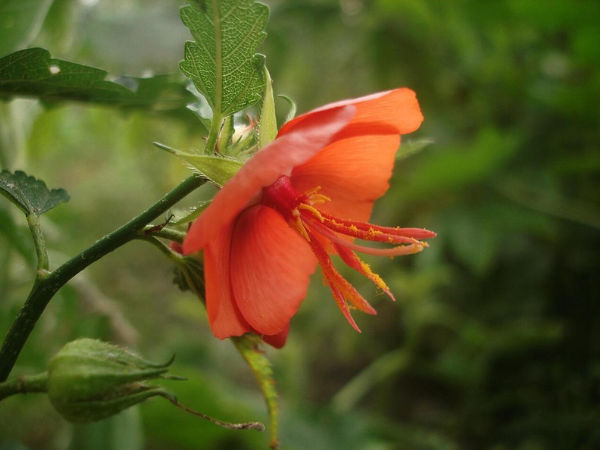
Classical Reference Of Bandhujeev (Pentapetes Phoenicea)
Bhavprakash Nighantu Pushpavarga Page No. 493
Scientific Classification Of Bandhujeev (Pentapetes Phoenicea)
- Kingdom: Plantae
- Subkingdom: Tracheobionta (Vascular plants)
- Superdivision: Spermatophyta (Seed plants)
- Division: Magnoliophyta (Angiosperms)
- Class: Magnoliopsida (Dicotyledons)
- Order: Malvales
- Family: Malvaceae
- Genus: Pentapetes
- Species: phoenicea
Synonyms Of Bandhujeev (Pentapetes Phoenicea)
- Bandhuka: A tree whose name literally means friend or kinsman.
- Bandhujiva: A plant that lives with its kin or relatives.
- Oshthapushpa: Its bright red flowers resemble the color of human lips.
- Arkavallabha: Known as the lover of the sun.
- Madhyandina: A plant that reaches its peak or blooms at noon.
- Raktapushpa: A tree characterized by its striking red flowers.
- Ragapushpa: A flower with an intense or passionate red color.
- Haripriya: A flower that is dear to Lord Vishnu.
Vernacular Names Of Bandhujeev (Pentapetes Phoenicea)
- Sanskrit: Bandhujeev, Bandhujiva, Rakta-Pushpa
- Hindi: Lal Phul, Bandhujiv
- English: Scarlet Mallow, Noon Flower, Red Pentapetes
- Tamil: Nandhiya Vattai
- Telugu: Erravirala, Erra Ganneru (regional usage)
- Kannada: Kempu Mulla
- Malayalam: Chuvanna-Poovu
- Marathi: Lal Ambadi
- Gujarati: Lal Phool
- Bengali: Lal Bandhujib
Habitat Of Bandhujeev (Pentapetes Phoenicea)
- Geographical Distribution: Bandhujeev is widely distributed in tropical regions of India, especially in southern and central parts. It is also found in Sri Lanka and other parts of Southeast Asia.
- Climate Preference: The plant prefers a hot and humid tropical climate and grows best during warm seasons with moderate to high rainfall.
- Soil Requirement: Bandhujeev grows well in moist, fertile, and well-drained soils. It is commonly seen in garden soils, agricultural margins, and cultivated lands.
- Habitat Type: It is frequently found in open fields, roadside areas, wastelands, and farm boundaries, indicating its ability to thrive in disturbed habitats.
- Growth Behavior: Bandhujeev is an annual herb that shows rapid growth during the monsoon season, completing its life cycle within a short period.
Morphology Of Bandhujeev (Pentapetes Phoenicea)
- Habit: Bandhujeev is an erect, annual herb, typically growing 30–90 cm in height, with a slender and softly hairy appearance.
- Root: The root system consists of a thin taproot with fibrous lateral roots, supporting rapid seasonal growth.
- Stem: Stems are erect, branched, cylindrical, and covered with fine hairs. The surface may appear slightly sticky due to glandular trichomes.
- Leaves: Leaves are simple, alternate, ovate to lanceolate, with entire or slightly toothed margins. The leaf surface is soft and hairy, especially on the underside.
- Flowers: Flowers are large, bright red to scarlet, solitary, and axillary. They typically open in the afternoon, a characteristic feature of the plant. The calyx has narrow lobes, and the corolla consists of five showy petals.
- Fruits: The fruit is a capsule, which splits open on maturity to release seeds.
- Seeds: Seeds are small, dark, and rounded, aiding easy dispersal.
Classical Categorisation Of Bandhujeev (Pentapetes Phoenicea)
- Bhavprakash Nighantu: Pushpa Varga
- Raj Nighantu: Karveeradi Varga
Ancient Verses For Bandhujeev (Pentapetes Phoenicea)
Verse no. 1
बन्धूको बन्धुजीवः स्यादोष्ठपुष्पोऽर्कवल्लभः ।
मध्यन्दिनो रक्तपुष्पो रागपुष्पो हरिप्रियः ।।
असितसितपीतलोहितपुष्पविशेषाच्चतुर्विधो बन्धूकः ।
ज्वरहारी विविधग्रहपिशाचशमनः प्रसादनः सवितुः स्यात् ।। Raj Nighantu Karveeradi Varga Verse No. 117-118
Shloka Interpretation
Synonyms of herb
- Bandhujiva: Another common name for the plant.
- Oshthapushpa: Refers to the flowers looking like lips.
- Arkavallabha: Means it is a lover of the sun.
- Madhyandina: Indicates that the flowers bloom at midday.
- Raktapushpa or Ragapushpa: Describes its bright red flowers.
- Haripriya: Means it is dear to Lord Vishnu.
Varieties: There are four types of Bandhuka based on the color of the flowers. These are black, white, yellow, and red.
Health and Spiritual Benefits: The plant is a healer of fevers. It is also used to calm various negative spiritual influences or planetary effects. Additionally, it is used in worship to please the Sun God.
Verse No. 2
बन्धीको बन्धुजीवश्च रक्तो माध्याह्निकोऽपि च ।
बन्धूकः कफकृद् ग्राही वातपित्तहरो लघुः ॥ Bhavprakash Nighantu Pushpa Varga Verse no 57
Shloka Interpretation
Synonyms
- Bandhujiva: Friend of the living.
- Rakta: Named for its vibrant red color.
- Madhyahnika: Referring to its habit of blooming at midday (noon).
Effect on Doshas
Vata-Pitta Haro: It balances and reduces the Vata (air/ether) and Pitta (fire/bile) doshas. This makes it useful for cooling the body and calming the nervous system.
Kapha-krid: It has the potential to increase Kapha (water/earth) if used in excess.
Medicinal Actions
- Grahi: It has “binding” or “absorbent” properties. In Ayurveda, this means it helps in drying up excess moisture in the intestines, making it effective for treating diarrhea or dysentery.
- Laghu: It is “light” in nature, meaning it does not burden the digestive system and is easily processed by the body.
Ayurvedic Properties Of Bandhujeev (Pentapetes Phoenicea)
- Rasa (Taste): Tikta (Bitter), Kashaya (Astringent)
- Guna (Quality): Laghu (Light), Ruksha (Dry)
- Veerya (Potency): Sheeta (Cooling)
- Vipaka (Post-digestive effect): Katu (Pungent)
Action On Tridosha Of Bandhujeev (Pentapetes Phoenicea)
- Pacifies Pitta and Vata
- Mildly increases Kapha if used excessively
Therapeutic Indications Of Bandhujeev (Pentapetes Phoenicea)
- Tvak Roga (Skin Disorders)
- Daha (Burning Sensation)
- Vrana (Wounds)
- Jwara (Fever)
- Vishadosha (Poisoning/Toxicity)
- Atisara (Diarrhea)
- Graha Chikitsa (Protection from Evil Spirits)
- Shotha (Inflammation)
Systemic Actions Of Bandhujeev (Pentapetes Phoenicea)
- Digestive System: Bandhujeev exhibits Grahi property, which helps in absorbing excess fluid from the intestines. It supports digestion and is beneficial in conditions like Atisara (diarrhea). Being Laghu (Light to digest), it does not burden the digestive fire and supports gentle gut regulation.
- Skin and External System: Due to its Sheeta Veerya (cooling nature), Tikta–Kashaya (Bitter – Astringent) Rasa (Taste), and wound-healing qualities, Bandhujeev is useful in Tvak Roga (skin disorders), Daha (burning sensation), Vrana (wounds), and Shotha (inflammation). It supports purification of the skin and promotes natural healing.
- Circulatory and Blood Tissue: Its cooling and Pitta-pacifying action makes it helpful in conditions associated with impure blood tissue, such as burning sensations, inflammation, and bleeding tendencies. It supports purification of blood and calming of excess heat in the body.
- Nervous System: By pacifying Vata and Pitta, Bandhujeev provides a soothing influence on the mind and nerves. Traditionally, it is considered calming and is used in disturbances caused by mental agitation and heat-related imbalance.
- Immune Response: Classical texts describe Bandhujeev as Jwarahara (fever-relieving) and Vishahara (detoxifying). It supports the body’s defense against toxins, insect bites, and subtle toxic influences.
- Spiritual and Subtle Action (Daivika / Raksha Karma): Traditionally, Bandhujeev is considered a Raksha-kari dravya, used in protection rituals. Classical texts mention its role in Graha-Pishacha Shamana, indicating its use in calming negative subtle influences and promoting positivity.
Chemical Composition Of Bandhujeev (Pentapetes Phoenicea)
Leaves
- Flavonoids (including rutin): antioxidant, anti-inflammatory, wound healing, tissue protection
- Phenolic compounds: antioxidant, supports skin repair and reduces burning sensation
- Tannins: astringent action, helpful in wounds, ulcers, and diarrhea
- Saponins: antimicrobial action, useful in skin infections
- Phytosterols: anti-inflammatory, supports tissue healing
Flowers
- Flavonoids: cooling effect, antioxidant, supports Pitta disorders and inflammation
- Phenolic compounds: skin protection, reduces irritation and burning
- Anthocyanins: antioxidant, vascular protection, soothing action
Stem
- Tannins: astringent, useful in diarrhea and excessive discharge
- Phenolic compounds: anti-inflammatory, mild antimicrobial action
Roots
- Alkaloids (trace): antimicrobial, detoxifying support
- Flavonoids: anti-inflammatory, antioxidant support
- Triterpenoids: anti-inflammatory, immune supportive action
Practical Uses / Health Benefits Of Bandhujeev (Pentapetes Phoenicea)
- Promotes wound healing and skin repair, useful in skin disorders, burns, and inflammation.
- Neutralizes toxins and supports recovery from insect bites and mild poisoning.
- Reduces fever and strengthens immunity.
- Regulates digestion and helps in diarrhea due to its absorbent and light nature.
- Pacifies Pitta and Vata, calming the nervous system and reducing heat-related imbalances.
- Traditionally used for protection against evil spirits and negative energies.
- Exhibits anti-inflammatory and antimicrobial effects.
- Supports overall holistic well-being, including skin, digestion, immunity, and mental calmness.
Part(S) Used Of Bandhujeev (Pentapetes Phoenicea)
- Leaves
- Flowers
- Roots
Dosage Of Bandhujeev (Pentapetes Phoenicea)
- Powder (Churna): 1–3 g, 1–2 times daily
- Decoction (Kwath): 5–10 g herb boiled in water, 1–2 cups daily
- Paste (Lepa) / Topical: Apply once or twice daily on affected area
- Infused Oil (Taila): 10–15 drops externally once daily
Home Remedies With Bandhujeev (Pentapetes Phoenicea)
- Leaf Paste for Wounds and Burns: Crush fresh leaves into a paste and apply on cuts, wounds, or minor burns. Studies show it has anti-inflammatory and healing effects.
- Flower Decoction for Fever: Boil 5–10 g of flowers in water and drink 1 cup daily. Research indicates cooling and mild antipyretic properties.
- Leaf Juice for Mouth Ulcers or Sore Throat: Fresh leaf juice used as a gargle can soothe oral inflammation and irritation.
- Topical Paste for Skin Inflammation / Rashes: Mix crushed leaves or flowers with honey and apply externally. Exhibits antioxidant and anti-inflammatory activity.
- Infused Oil for Joint Pain: Leaves or flowers infused in sesame oil and massaged on affected joints can relieve mild inflammation and discomfort.
Research On Bandhujeev (Pentapetes Phoenicea)
Pentapetes phoenicea, commonly known as Bandhujeev, has been studied for multiple therapeutic properties in preclinical research.
- Neuropharmacological Effects: Extracts of Bandhujeev have shown sedative and anxiolytic effects in animal studies, including prolongation of sleep time and reduction of spontaneous activity, likely due to modulation of the GABAergic system.
- Cerebroprotective Action: Methanolic leaf extract demonstrated protective effects against oxidative stress in rat models of cerebral ischemia, enhancing antioxidant enzyme activity and reducing neuronal damage.
- Hypoglycemic Activity: Hydro-alcoholic leaf extracts significantly lowered blood glucose in diabetic rat models, suggesting potential blood sugar–regulating effects.
- Safety Profile: Preliminary toxicity studies indicate that leaf extracts are relatively safe at tested doses.
- Phytochemical Composition: Bandhujeev contains flavonoids, alkaloids, saponins, phenolics, steroids, and triterpenoids, which support its medicinal activities.
- Antimicrobial Potential: Leaf extracts have been used to synthesize silver nanoparticles that show antibacterial activity, indicating possible biomedical applications.
Conclusion
Bandhujeev (Pentapetes phoenicea) is a valuable Ayurvedic herb with diverse therapeutic and protective properties. Its cooling, bitter, and astringent qualities, make it particularly effective in pacifying Pitta and Vata doshas, while its grahi and laghu actions support digestion and regulate diarrhea. Traditionally, it is used for skin disorders, wounds, fever, inflammation, and detoxification, and also for subtle protective purposes in spiritual practices. Phytochemicals such as flavonoids, phenolics, tannins, saponins, and triterpenoids underlie its antioxidant, antimicrobial, and wound-healing effects. Research supports its neuroprotective, hypoglycemic, and antimicrobial potential, with a safe toxicity profile. Overall, Bandhujeev serves as a multi-purpose herb promoting physical, mental, and holistic wellbeing.