


Hrivera / Fragrant Swamp Mallow / Pavonia Odorata – Indications, Properties & Dosages
Abstract
Hrivera (Pavonia odorata), commonly known as Fragrant Swamp Mallow, is an important aromatic medicinal herb mentioned in classical Ayurvedic texts. The plant is especially valued for its fragrant roots and cooling nature. In Ayurveda, Hrivera is described as cold in potency, making it useful in conditions associated with excess heat such as burning sensations, excessive thirst, urinary discomfort, fever, and certain skin disorders. Due to its pleasant aroma, it is also traditionally used to manage excessive sweating and body odor. The herb contains essential oils and aromatic phytoconstituents that contribute to its anti-inflammatory, antimicrobial, and antioxidant properties. The following discussion sheds light on the Ayurvedic importance of this unique herb.
Classical Reference Of Hrivera (Pavonia Odorata)
Bhavprakash Nighantu Karpooradi Varga 227
Scientific Classification Of Hrivera (Pavonia Odorata)
- Kingdom: Plantae
- Subkingdom: Tracheobionta (Vascular plants)
- Superdivision: Spermatophyta (Seed plants)
- Division: Magnoliophyta (Angiosperms)
- Class: Magnoliopsida (Dicotyledons)
- Order: Malvales
- Family: Malvaceae
- Genus: Pavonia
- Species: odorata
Synonyms Of Hrivera (Pavonia Odorata)
- Bala / Balaka: This name indicates the nourishing and strengthening nature of the herb. It is considered useful in many conditions, therefore regarded as a valuable medicinal plant.
- Barhishta: This synonym refers to the natural habitat of the plant. Hrivera commonly grows near water sources and in moist or marshy areas.
- Udeechya: This name suggests the geographical distribution of the plant, indicating that it is mainly found in the northern regions of India.
- Keshanama: It denotes the physical characteristics of the plant. Hrivera is covered with fine, soft, and slightly sticky hairs.
- Keshambunama: This synonym highlights the hairy texture along with the moisture retaining nature of the plant surface.
- Keshya: It indicates that the herb is beneficial for hair health and has been traditionally used in hair care preparations.
- Ambunam / Ambu / Toya / Vari: These names reflect the succulent nature of the plant. When the leaves are crushed, they feel moist and fleshy due to high water content.
- Vajra: This term represents the firm and potent medicinal action of the herb.
- Lalanapriya: It signifies the pleasant and soothing nature of the plant, often associated with its fragrance and cooling effect.
Vernacular Names Of Hrivera (Pavonia Odorata)
- Sanskrit: Balaka
- Hindi: Sugandabala or Netrabala
- Kannada: Bala rakkasi
- Gujarati: Vaalo
- Marathi: Kaalaa vaalaa
- Telugu: Etta kutti, Era kutti, or muthupalaagamu
- Tamil: Peraamutiver or peramutti
- Malayalam: Iruveli
- English: Fragrant Swamp Mallow
Habitat Of Hrivera (Pavonia Odorata)
- Geographic Distribution: Hrivera is native to the tropical regions of the Indian subcontinent, including states like Punjab, Kerala, and West Bengal. It is also found in Sri Lanka, Pakistan, Southeast Asia, and parts of Africa.
- Climate: The plant thrives in tropical and subtropical climates, preferring warm temperatures with moderate to high rainfall.
- Soil Type: It grows well in moist, well-drained soils, such as loamy, red, and lateritic soils, showing adaptability to different soil conditions.
- Forest and Vegetation: Hrivera is commonly found in tropical moist and dry deciduous forests, often forming part of the undergrowth.
- Disturbed and Open Areas: Apart from forests, it also grows in open lands, wastelands, and other disturbed sites, demonstrating its ability to colonize secondary habitats.
- Growth Habit: It is a terrestrial herb, typically growing on land rather than as a climbing or aquatic plant.
- Ecological Role: Hrivera can act as a pioneer species in areas of secondary growth, helping stabilize soil and support other vegetation in recovering ecosystems.
Morphology Of Hrivera (Pavonia Odorata)
- Habit & Stem: Hrivira is an erect perennial herb with branched stems.The stems are covered with glandular and stellate hairs, giving a slightly sticky texture.
- Leaves: Arrangement: Leaves are alternate along the stem. Shape: They are generally heart-shaped (cordate) to ovate, sometimes with 3–5 shallow lobes. Size: Typically 4–6 cm long and 5–7 cm wide. Margin & Surface: Leaf edges are dentate to almost smooth, and both surfaces have soft hairs, denser underneath. Petiole: Leaves are attached by short stalks (petioles).
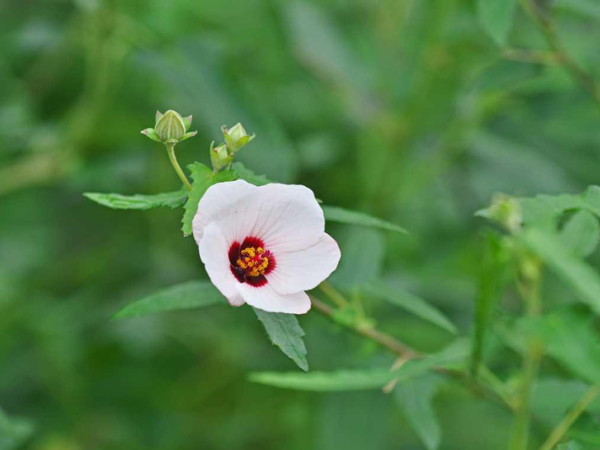
- Flowers: Position: Flowers grow solitarily in leaf axils, occasionally in clusters at branch tips. Calyx & Bracts: Each flower has 5-lobed calyx and 10–12 linear epicalyx bracts. Corolla: The corolla is showy, pink, and roughly twice the length of the calyx. Reproductive Parts: Stamens form a column surrounding the style, and the ovary contains multiple carpels with a branched style ending in several stigmas.
- Fruit: The fruit is spherical (globose) schizocarp, divided into smooth segments (mericarps), each carrying a single seed.
- Seeds: Seeds are small, brown, and kidney-shaped (reniform). Each mericarp of the fruit contains one seed.
Classical Categorisation Of Hrivera (Pavonia Odorata)
- Bhavprakash Nighantu: Karpooradi Varga
- Raj Nighantu: Karviradi Varga
Ancient Verses For Hrivera (Pavonia Odorata)
Verse no. 1
बालकं वारिपर्यायैरुक्तं ह्रीबेरकं तथा ।
केश्यं वज्रमुदीच्यञ्च पिङ्गा ललनाप्रियम् ।
बालञ्च कुन्तलोशीरं कचामादं शशीन्दुधा ।।
बालकं शीतलं तिक्तं पित्तवान्तितृषापहम् ।
ज्वरकुष्ठातिसारघ्नं केश्यं श्वित्रव्रणापनुत् ।। Raj Nighantu Karviradi Varga Verse No. 166-167
Verse Interpretation
Synonyms and Names
- Balaka and Hrivera: The herb is known by the names Balaka and Hrivera.
- Other Names: It is also referred to as Udichya, Vajra, Pinga, Kesya, Kunthaloshira, and Lalanapriya.
Regional Recognition: It is commonly called Sugandhabala in Hindi, Vaalo in Gujarati, and Peramutti in Tamil.
Physical and Medicinal Qualities
- Cooling Nature (Sheetalam): The plant has a cooling potency (Virya).
- Taste (Tiktham): It possesses a bitter taste (Rasa).
Digestive Properties: It is light to digest (Laghu) and dry (Ruksha) in nature.
Metabolic Action: It acts to kindle the digestive fire (Deepana) and aids in the digestion of toxins (Pachana).
Therapeutic Benefits
- Pitta and Kapha Balance: The herb is used to balance the Pitta and Kapha doshas.
- Relief from Thirst and Vomiting: It is effective in treating excessive thirst (Trishnapaha) and vomiting (Vantiharnam) caused by Pitta imbalance.
- Treatment of Fever and Diarrhea: It is traditionally used to manage fever (Jvara) and diarrhea (Atisara).
- Skin and Hair Care: The term Keshyam indicates it is beneficial for hair health. It is also used in treating skin diseases (Kushta), leucoderma (Shvitra), and for healing wounds (Vrana).
- General Actions: It serves as an anti-pyretic (fever reducer), anti-inflammatory, and stomachic agent.
Verse No. 2
बालं ह्रीबेरबर्हिष्ठोदीच्यं केशाम्बुनाम च ।
बालकं शीतलं रूक्षं लघु दीपनपाचनम् ।।
हल्लासारुचिवीसर्पहृद्रोगामातिसारजित् ।। Bhavprakash Nighantu karpooradi Varga Verse No. 83
Verse Interpretation
Names and Synonyms
- The plant is identified by the names Balam, Hribera, Barhishtha, and Udichya.
- It is also known by all terms synonymous with hair (Keshnama) and water (Ambunama).
Medicinal Properties (Guna & Virya)
- Potency: It has a cooling effect on the body (Sheetavirya).
- Texture: It is dry in nature (Ruksha).
- Digestibility: It is light and easy for the body to process (Laghu).
Therapeutic Actions (Karma)
- Digestive Stimulant: It kindles the digestive fire (Deepana).
- Digestive Aid: It promotes proper digestion and neutralizes toxins (Pachana).
Diseases Treated This herb is used to overcome or cure the following conditions
- Hallasa: Nausea or the urge to vomit.
- Aruchi: Loss of appetite or tastelessness.
- Visarpa: Herpes or spreading skin inflammations.
- Hridroga: Heart-related disorders.
- Ama: Accumulation of undigested toxic metabolic by-products.
- Atisara: Diarrhea or dysentery.
Ayurvedic Properties Of Hrivera (Pavonia Odorata)
- Taste (Rasa): Bitter (Tikta)
- Potency (Virya): Cold (Sheetal)
- Physical Attributes (Guna): Ruksha (dry) and Laghu (light to digest)
- Post Digestion effect (Vipaka): Pungent (Katu)
Action On Tridosha Of Hrivera (Pavonia Odorata)
This herb balances Pitta and Kapha Dosha.
Therapeutic Indications Of Hrivera (Pavonia Odorata)
- Hrillasa (Nause)
- Aruchi (Loss of taste)
- Visarpa (Herpes)
- Hridroga (Disorders related to the heart)
- Ama (Endotoxins)
- Atisara (Diarrhea)
- Vomiting (Emesis)
- Trishna (Excessive thirst)
- Kushta (Skin disorders)
- Keshya (Enhances hair health and quality)
- Shvitra (Conditions like vitiligo or leucoderma)
- Vrana (Wounds)
- Daha (Burning sensation)
- Raktapitta (Bleeding disorders)
Systemic Actions Of Hrivera (Pavonia Odorata)
1. Digestive System
- Helps in proper digestion and nutrient absorption.
- Relieves indigestion, acidity, nausea, and diarrhea.
- Smooth muscle relaxant effect supports gut motility.
- Bitter taste (Tikta rasa) contributes to stimulating digestive enzymes.
2. Respiratory System
- Soothes cough and congestion when used in decoctions or steam inhalation.
- Traditional use for clearing excessive mucus and respiratory irritation.
- Mild anti-inflammatory effects reduce throat inflammation.
3. Nervous System
- Acts as a mild sedative, reducing stress, anxiety, and mental tension.
- Calming effect on the mind, useful in nervous agitation.
- Supports overall mental well-being in traditional formulations.
4. Cardiovascular System
- Hypotensive effect observed in preliminary studies (animal models).
- Smooth muscle relaxants may improve blood circulation.
- Antioxidant activity reduces oxidative stress on the cardiovascular system.
5. Immune / Infection Control
- Antibacterial and antifungal properties due to essential oils.
- Helps protect against minor infections in skin and mucous membranes.
- Traditionally used for wound healing and reducing inflammation.
6. Metabolic System
- Preliminary research indicates possible antidiabetic activity (reduces blood glucose in experimental models).
- Bitter and astringent properties may support liver and metabolic health.
7. Integumentary System (Skin & Wounds)
- Promotes wound healing and skin recovery.
- Soothes inflammation, irritation, and minor infections.
- Traditionally included in herbal pastes and topical formulations.
8. Reproductive System
- Traditional use supports female reproductive health and menstrual regulation importantly in case of heavy menstrual bleeding.
- Cooling and anti-inflammatory effects help relieve Pitta-related menstrual discomfort.
Chemical Composition Of Hrivera (Pavonia Odorata)
1. Roots
Primary medicinal use: Digestive support, cooling, anti-inflammatory, wound healing.
Key Phytochemicals
- Ageratochromene: Antioxidant, anti-inflammatory
- β‑Eudesmol: Anti-inflammatory, antimicrobial
- β‑Caryophyllene oxide: Anti-inflammatory, analgesic
- Flavonoids & Phenolics: Antioxidant, antimicrobial
- Alkaloids (trace): Bioactivity support
- Mucilage / Polysaccharides: Soothes mucous membranes
2. Leaves
Primary medicinal use: Respiratory support, stress relief, topical anti-inflammatory applications.
Key Phytochemicals
- Volatile oils: (E)-Pinocarveol, Hexahydrofarnesyl acetone – antimicrobial, aroma
- Palmitic acid: Minor fatty acid, supports systemic effects
- Flavonoids & Phenolics: Antioxidant, anti-inflammatory
- Terpenes & Terpenoids: α-Terpinene, Aromadendrene – antimicrobial, cooling
- Mucilage: Soothes throat and GI tract
3. Flowers / Aerial Parts
Primary medicinal use: Traditional cooling, calming, and digestive support.
Key Phytochemicals
- Volatile oils: contribute to aroma, antimicrobial, anti-inflammatory
- β‑Eudesmol & β‑Caryophyllene oxide: anti-inflammatory
- Flavonoids & Phenolics: antioxidant and free radical scavenging
- Mucilage: Minor soothing effect
Practical Uses / Health Benefits Of Hrivera (Pavonia Odorata)
- Helps digestion and relieves acidity or bloating.
- Reduces body heat and inflammation.
- Supports wound healing when applied as a paste.
- Soothes throat irritation and excessive sweating.
- Relieves cough and congestion.
- Reduces swelling and inflammation.
- Calms stress and nervous tension.
- Helps skin problems like rashes or minor wounds.
- Cools the body and balances Pitta.
- Supports digestion and appetite.
- Provides antioxidant benefits.
Part(S) Used Of Hrivera (Pavonia Odorata)
- Roots
- Leaves
- Flowers
Dosage Of Hrivera (Pavonia Odorata)
- Powder: 3 – 6 grams
- Hot Infusion: 40 – 80 ml
Home Remedies With Hrivera (Pavonia Odorata)
- Decoction of 3–5 g roots relieves indigestion, acidity, bloating, and nausea
- Hot infusion of leaves or aerial parts (40–80 ml) reduces body heat, fever, and burning sensations
- Steam inhalation with leaves or warm leaf decoction soothes cough, congestion, and throat irritation
- Fresh root or leaf paste applied externally promotes wound healing and reduces inflammation
- Herbal tea from leaves calms stress, anxiety, and mental fatigue
- Powdered roots or leaves mixed with oil and applied to the scalp strengthens hair and improves scalp health
Classical Products With Hrivera (Pavonia Odorata)
- Khadiradi Vati
- Shatavari Modak
- Chandanasava
- Dashmoolarishta
- Nasika Churna
- Lavangadi Churna
- Bhunimbadi Kadha
- Chandanadi Kashayam
- Pachanamrita Kashayam
- Chandanbala Laxadi Oil
- Brihat Gangadhara Churna
Planet Ayurveda’s Products With Hrivera (Pavonia Odorata)
- Dashmoolarisht
- Barleria Sehchar Thailam
- Maha Narasimha Thailam
Research On Hrivera (Pavonia Odorata)
- Antimicrobial and Antifungal Activity: Research demonstrates that essential oils from the rhizomes and aerial parts are effective against various bacteria, including Staphylococcus aureus, Escherichia coli, and Klebsiella, as well as fungal pathogens like Aspergillus and Trichophyton species. This aligns with its traditional use in skin infections, wounds, and dysentery.
- Antioxidant Potential: Laboratory studies indicate that Hrivera extracts, especially from leaves and aerial parts, can scavenge free radicals and reduce oxidative stress. This activity is attributed to its flavonoids and phenolic compounds, which help protect cells from damage and support overall health.
- Digestive and Metabolic Support: The herb’s traditional digestive benefits are supported by research showing its ability to stimulate digestive enzymes and support gut motility. Early studies also suggest antidiabetic potential, where root extracts helped lower blood glucose in experimental models.
- Preclinical Anticancer Effects: Some studies indicate that methanol extracts of Hrivera exhibit cytotoxic activity against human cancer cell lines in laboratory assays, pointing to potential anticancer properties that require further investigation.
Conclusion
Hrivera (Pavonia odorata), also known as Fragrant Swamp Mallow, is a valuable aromatic medicinal herb in Ayurveda, traditionally used for its cooling, digestive, anti-inflammatory, and antimicrobial properties. The roots, leaves, and flowers are all therapeutically significant, offering benefits such as relief from digestive disorders, fever, cough, excessive thirst, skin problems, and stress-related nervous tension. Its bioactive compounds, including volatile oils, flavonoids, phenolics, β‑eudesmol, and ageratochromene, contribute to antioxidant, antimicrobial, and wound-healing activities. Research supports many traditional uses, particularly for digestion, immunity, respiratory health, and skin care. Hrivera’s cooling nature and pleasant aroma make it ideal for balancing Pitta and Kapha doshas, enhancing overall well-being and supporting both internal and external health applications.