


Biological Clock – When Cells Follow Time, Health Follows Rhythm
Abstract
Ayurveda prophesizes that humans achieve optimal health when they live in harmony with nature’s cycles. Modern science reinforces this wisdom through the biological clock, or circadian rhythm which actively governs daily physiological, behavioral, and molecular functions. The brain maintains this internal timekeeper and continuously synchronizes the body with the rhythm of day and night. The biological clock directly shapes immune function by regulating cytokine production and directing the activity of immune cells such as T cells and B cells. It fine-tunes immune responses, supports defense mechanisms and promotes timely repair. When individuals disrupt this natural rhythm, immune imbalance and inflammation in the body arise. By consciously aligning lifestyle, sleep, and activity with natural cycles, the biological clock strengthens immunity, preserves internal harmony and sustains long-term health. Let’s learn how it controls bodily functions and what we can do to manage this!
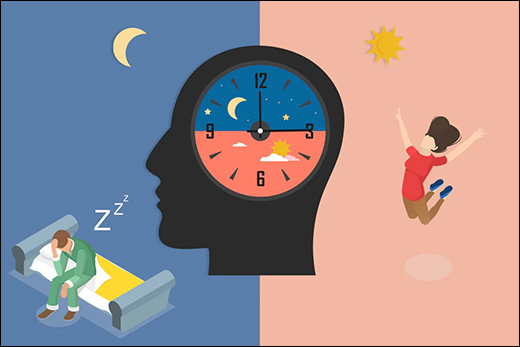
What Is Circadian Rhythm?
Circadian rhythm is the body’s internal biological clock that follows a ~24-hour cycle, regulating when we sleep, wake, eat, release hormones, digest food, and repair tissues. It is mainly controlled by the suprachiasmatic nucleus in the brain and is synchronized by light and darkness—daylight signals alertness, while darkness triggers melatonin release for sleep.
Key Functions It Controls
- Sleep–wake cycle
- Body temperature
- Hormone secretion (melatonin, cortisol)
- Metabolism & digestion
- Immune activity
How Does It Work?
The rhythm is controlled by a tiny part of the brain called the Suprachiasmatic Nucleus located in the hypothalamus.
- The Light Connection: Your eyes detect light levels and send signals to the SCN.
- Daytime: When the SCN senses light, it triggers the release of cortisol to make you feel alert and suppresses sleep-inducing hormones.
- Night time: When it gets dark, the Suprachiasmatic Nucleus signals the pineal gland to produce melatonin, which makes you sleepy.
Key Functions Affected!!
Your circadian rhythm doesn’t just manage sleep, it acts like a conductor for a biological symphony
- Metabolism: It dictates when your body is most efficient at processing food and insulin.
- Body Temperature: Your temperature naturally drops to its lowest point in the early morning (around 4:00 AM) and peaks in the late afternoon.
- Hormones: It controls the timing of growth hormones and stress responses.
- Cognitive Function: It influences when you are most focused, creative, or reactive.
What Happens When It’s Out Of Sync?
When your internal clock doesn’t match the external world (A “circadian mismatch”) you may experience:
- Jet Lag: Traveling across time zones forces your clock to reset.
- Social Jet Lag: Staying up late on weekends and waking up early on weekdays.
- Shift Work Issues: Working at night forces the body to fight its natural urge to sleep when it’s dark.
- Health Risks: Long-term disruption is linked to obesity, diabetes, depression, and cardiovascular issues
The Biological Clock And The Immune System: A Deep Connection
Research reveals that our immune system is not a static shield but a rhythmic force governed by the circadian clock. Key immune actors, including macrophages and neutrophils, possess internal molecular oscillators that dictate their activity. During the day, the body prioritizes patrolling and defence, peaking leukocyte counts in the blood to intercept pathogens. At night, the rhythm shifts toward tissue repair and memory, as cells migrate into lymph nodes to “record” new threats.
Disrupting this cycle through shift work or blue light blunts the morning cortisol surge, potentially leading to chronic inflammation, reduced vaccine efficacy, and heightened susceptibility to viral infections.
The Cost Of Circadian Disruption
In modern society, we increasingly live on a 24/7 clock that often clashes with our internal biological timepiece. Shift work, artificial lighting, screen exposure, and erratic schedules can desynchronize circadian rhythms. This desynchronization as research shows, is associated with:
- Sleep disorders and chronic fatigue
- Metabolic dysfunction and obesity
- Mood disorders and cognitive decline
- Increased inflammation and immune imbalance
- Higher risk of cardiovascular disease and cancer
This growing body of evidence underscores how critical circadian harmony is not only for sleep but for overall health and longevity.
Ayurveda’s Insight!
In Ayurveda, the circadian rhythm is understood through the concept of Dinacharya (Daily Regimen). This ancient science views the 24-hour cycle not as a clock of numbers, but as a cycle of energy governed by the three Doshas: Vata, Pitta, and Kapha. According to the AshtangaHridaya, aligning with these rhythms is the key to Swasthya (optimal health) and longevity.
Ayurvedic perspective on circadian rhythms is centered on the principle of “As is the Macrocosm, so is the Microcosm.” This means your body is a reflection of the universe, when the sun rises, your internal systems must “ignite,” and when the sun sets, they must “cool.” Here is a deeper look into the specific phases and the logic behind them.
Brahma Muhurta (The Creator’s Hour)
Modern science notes that just before dawn, there is a spike in cortisol and adrenalin to prepare the body for waking. Ayurveda calls the time between 2:00 AM and 6:00 AM the “Vata” period. Vata is characterized by movement and space. So by waking before 6:00 AM, you infuse your mind with this lightness.
The Consequence: If you wake up after 6:00 AM (during the Kapha period), you are waking up during the window of “heaviness.” This is why even if you get 9 hours of sleep but wake up at 8:00 AM, you often feel groggy and “heavy” throughout the day.
Agni (The Internal Sun)
Ayurveda places massive importance on Agni (digestive fire). It believes our digestion is directly tied to the strength of the sun.
- Peak Pitta (10:00 AM – 2:00 PM): Just as the sun is strongest at noon, your internal “fire” is strongest now. This is why Ayurveda insists that lunch be your biggest meal. This aligns with “Circadian Dieting,” where research shows that calories consumed at noon are processed more efficiently than the same calories consumed at 9:00 PM.
- Late Night Pitta (10:00 PM – 2:00 AM): If you stay awake past 10:00 PM, you hijack the Pitta energy meant for internal cleaning. Instead of the liver detoxifying your blood, that energy is used for “midnight cravings” or mental over-activity.
Sandhya (Transition Points)
Ayurveda emphasizes the “junctions” of the day—sunrise, noon, and sunset. These are called Sandhyas.These are moments when the Doshas shift. It is recommended to be quiet or meditative during these times.
Evening Transition: Between 6:00 PM and 10:00 PM (Kapha evening), the atmosphere becomes heavy and slow. Eating a heavy meal at 9:00 PM goes against this natural slowing down, leading to the accumulation of Ama (undigested metabolic waste).
Ayurveda always says health is not a fixed state but a fluid negotiation with time. If you ignore the time (Kala), you invite Pragyaparadha (the “crime against wisdom”) which Ayurveda considers the root cause of all physical and mental suffering.
How To Restore The Biological Clock!
- Wake in Brahma Muhurta: Always Aim to wake between 4:30 AM and 6:00 AM. This is the Vata-dominant time characterized by lightness and clarity. Waking after 6:00 AM (Kapha time) causes “heavy” energy to settle in the body, leading to daytime grogginess.
- Sun Salutation (Surya Namaskar): Within 30 minutes of waking, expose your eyes to natural morning light. This signals the brain to halt melatonin and start the cortisol clock.
- Tongue Scraping (JivhaNirlekhan): Use a copper or steel scraper. This removes Ama (toxins) that accumulate overnight and signals your digestive system that the day has begun.
- Peak Pitta Lunch (10:00 AM – 2:00 PM): Eat your largest, most complex meal at noon. Your body is biologically primed to metabolize heavy nutrients when the sun is highest.
- The Sunset Supper: Eat dinner by 6:00 PM or 7:00 PM. As the sun goes down, your digestive fire dims. Eating late at night (during the second Pitta cycle) forces the body to use energy for digestion that should be used for cellular repair and detoxification.
- Digital Fast: Turn off screens by 8:00 PM. Blue light “scatters” Vata and tricks the brain into thinking it is still in the Pitta (midday) phase.
- Abhyanga (Oil Massage): Rub warm sesame oil on the soles of your feet and your scalp before bed. This grounds the “moving” energy of Vata and induces deep sleep.
- The 10:00 PM Hard Stop: You must be asleep by 10:00 PM. If you stay awake past this time, you enter the “Night Pitta” phase, often leading to a “second wind” of hunger or mental activity that disrupts the next day’s rhythm.
If your rhythm is severely broken (e.g., from jet lag or shift work), these traditional remedies help “anchor” the nervous system:
- Ashwagandha (Withania somnifera): An adaptogen that regulates the stress response (cortisol) to help you sleep and wake naturally.
- Brahmi (Bacopa monnieri): A brain tonic that repairs the “synaptic lag” caused by sleep deprivation. It calms the mind during the day while improving the quality of deep sleep at night.
- Tagara (Indian valerian): The most direct herb for Anidra (insomnia). It is a natural sedative that clears the “heaviness” of a broken rhythm and helps the body recognize the onset of night.
- Jatamansi (Spikenard): Known for its “Nidrajanana” (sleep-inducing) properties. It is excellent for “jet-lagged” brains that are exhausted but too wired to rest.
- Shankhapushpi (Convolvulus pluricaulis): A cooling herb that settles the Pitta (heat) in the brain. It is used when a broken rhythm causes irritability, burning eyes, or mental overheating.
- Sarpagandha (Rauwolfia serpentina): The most potent herb for severe sleep-cycle disruption. It acts as a powerful sedative to “force-reset” the clock when the nervous system is in a state of extreme agitation.
- Yastimadhu (Licorice): Though often used for the throat, in the context of rhythms, it nourishes the adrenal glands and helps stabilize the “energy crashes” that happen during the day when your clock is broken.
- Vacha (Acorus calamus): Used in very small quantities to “wake up” the senses in the morning, helping to clear the morning brain fog associated with circadian mismatch.
Some Remedies
- Golden Milk: Warm milk with turmeric and a pinch of nutmeg (a natural sedative) 30 minutes before bed.
- Nasya: Applying 2 drops of warm ghee or AnuTaila in each nostril in the morning to clear the “doorway to the brain.
- The Sleep Anchor: Mix ½ tsp Ashwagandha powder and a pinch of Nutmeg in a cup of warm milk. Nutmeg is a natural sedative (Nidrajanana), and Ashwagandha grounds the nervous system.
- The Agni Reset : Drink Ginger-Cumin tea in the morning. This wakes up your “digestive fire” (Agni), which is the metabolic equivalent of your internal clock.
- The Brain Cooler: If your mind is racing, drink Rose petal tea or milk with a pinch of Cardamom. This cools the “Sadhaka Pitta” (the fire in the heart/mind) that keeps people awake.
- Padabhyanga (Foot Massage): Rub Warm Sesame Oil or Brahmi Oil on the soles of your feet for 5 minutes before bed. It pulls the “Vata” (excess movement/energy) down from your head to your feet.
- Karna Purana (Ear Oiling): Gently massage a drop of warm sesame oil just inside the ears. The ears are a “seat” of Vata, calming them signals the nervous system to stop the “alert” mode.
- The Cold Water Splash: Upon waking, splash your eyes with cool water while holding a little water in your mouth. This ancient technique instantly signals the brain that the solar cycle has begun
- Aromatherapy: Use Sandalwood or Jasmine essential oils in the evening to induce Kapha (stability). Use Lemon or Peppermint in the morning to induce Vata/Pitta (alertness).
- The “Darkness Habit”: Ayurveda suggests covering the eyes with a silk cloth or eye pillow if you cannot get the room fully dark. This protects the Alochaka Pitta (the fire in the eyes) and triggers melatonin.
If you have stayed up all night and need to reset
- The Oil Pulling (Gandusha): Swish sesame oil in your mouth for 5–10 minutes. This stabilizes the “Prana” in the head.
- The Warm Bath: Instead of caffeine, take a warm bath with Epsom salts or Ginger powder. This “fake-starts” the body temperature rhythm.
Conclusion
In a nut shell. It can be concluded that harmonizing your internal clock is the most potent cost-free medicine available. It serves as the foundation for a robust immune system, efficient metabolism, and mental clarity. Ultimately, respecting these rhythms is the key to preventing chronic disease and achieving sustainable longevity. Health is not just what we do, but when we do it. By aligning our modern lives with the ancient Doshic clock, we transition from a state of biological friction to one of natural flow. So you must follow this biological clock and keep yourself healthy.